Festival of Light takes place in Ayodhya: Processions and folk dances recreate the stories of Ramayana
Read more
Aaj Tak
www.aajtak.in

Festival of Light takes place in Ayodhya: Processions and folk dances recreate the stories of Ramayana

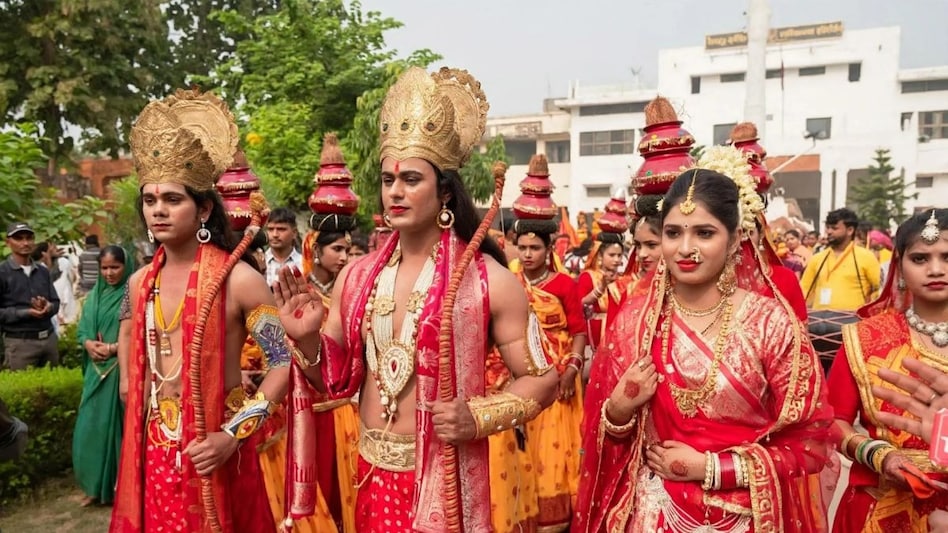
A spectacle unfolded in Ayodhya on Saturday, as if the pages of the Ramayana had come alive in the streets. The event was connected to the celebration of Dipotsava-2026, the city's tenth festival of light. Pantomimes related to the life of Lord Rama were displayed on the streets, accompanied by melodies of folk songs set to the rhythm of drums and brass instruments.

Among the dance performances presented were the Mayur dance from Mathura and the Dhobiya dances from Gajipur.

The opening of the tenth Dipotsava began with a grand procession, which Tourism and Culture Minister Jaivir Singh led from Saket Mahavidyalaya. This procession moved towards Ramaksha Park. The pantomimes, which visually depicted all seven Kandas of the Ramayana, were of particular value to the procession. Furthermore, the audience's attention was drawn to folk arts from various regions of Uttar Pradesh and the state of Uttarakhand.

In these pantomimes, various episodes from the life of God Rama were shown: from the beginning of his existence to his exile, the search for Sita, the victory over Lanka, and the return to Ayodhya. By passing through the streets, these scenes aimed to connect people with the story of the Ramayana, serving not merely as decoration but as a way to revive Ramksha before the public.

The attraction of the audience was ensured not only by the Ramayana pantomimes. Folk arts from different regions of Uttar Pradesh added vibrant colors to the procession. Among them were the Mayur dance and Bom Rasia from Mathura, as well as Dhediya from Prayagraj, Pai Danda from Banda, Mandal and Singh from Sonbhandra. Badhawa from Ayodhya, Dhobiya from Gajipur, Vantangya from Gorakhpur, Farvahi, and Sultanpur Natwari from Ayodhya and Gorakhpur were also presented. Artists from Uttarakhand also demonstrated their traditional folk dances.

These performances allowed viewers to see the cultural diversity and traditions of various regions in Ramnagari. Participants in the procession showcased their local arts in traditional costumes and through dance.

After the start of the procession, Tourism and Culture Minister Jaivir Singh noted that an atmosphere of enthusiasm and joy prevails in Ayodhya, and all of Ramnagari is colored in the hues of Dipotsava. He stated that Dipotsava 2026 will surpass all records of the previous nine years, setting a new history. According to him, this event has become a symbol of people's faith in God Rama, the region's cultural heritage, and public participation.

Jaivir Singh emphasized that under the guidance of Mukhimaster Yogi Adityanath, Dipotsava has been conducted at a high level since 2017, gradually transforming into a major festival that unites faith, culture, and citizen participation.
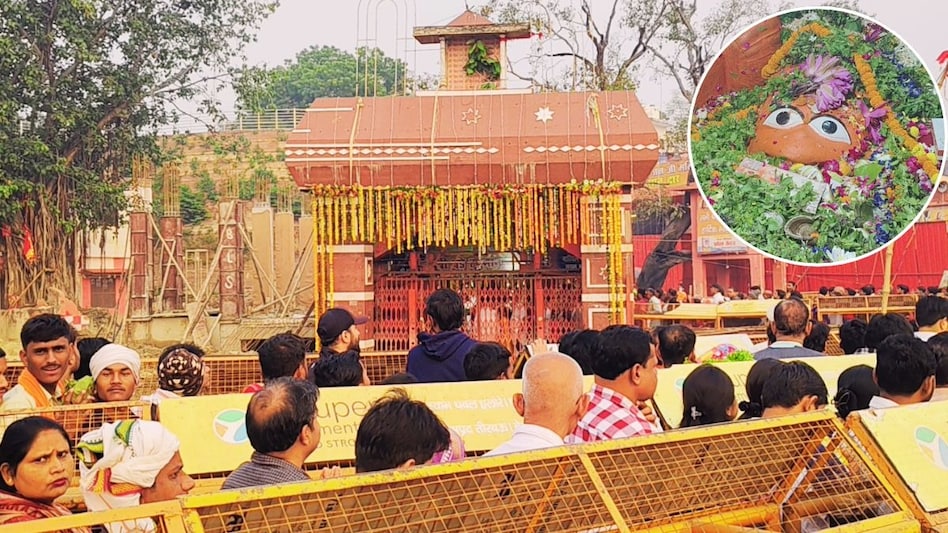
The minister also noted that Dipotsava has played an important role in Ayodhya gaining recognition as a major tourist center. The scale of this event increases annually, thereby lending new fame to the cultural heritage of Ayodhya. The procession, which started at Saket Mahavidyalaya and concluded at Ramaksha Park, was the first part of the Dipotsava events, which lasts all day, allowing the city to immerse itself again in the atmosphere of Ramksha and folk culture through pantomimes, folk songs, and traditional dances.

Similar stories

Wave of piety floods the Flying Hanuman temple in Prayagraj on Hanuman Jayanti
Read more
www.aajtak.in

Wave of piety floods the Flying Hanuman temple in Prayagraj on Hanuman Jayanti

On Hanuman Jayanti, a huge number of devotees gathered at the Flying Hanuman temple, located on the banks of the Sangam in Prayagraj. From early morning, there was special activity along the bank: some arrived with flowers in their hands, others with prasad. Some visited the temple with family, while others came from afar solely for darshan of Bajangbali. A long queue of pilgrims formed in front of the temple, and shouts of 'Jai Shri Ram' and 'Jai Bajangbali' echoed from inside.

The event is dedicated to celebrating Hanuman Jayanti at the famous Flying Hanuman temple in Prayagraj. This temple is renowned because Bajangbali rests in a reclining posture, receiving pilgrims. Bright flowers were brought to the temple, and Bajangbali was adorned in a special attire. Devotees streamed here from the early morning.

Some bowed down, some prayed for prosperity for their families, and others silently closed their eyes, meditating on Bajangbali. Every visitor to the temple has their own request, but the cry of all is the same—'Jai Bajangbali.'

The Flying Hanuman temple, situated on the banks of the Sangam in Prayagraj, is among the unique shrines where Bajangbali is depicted in a reclining position. Usually, temples dedicated to Hanuman feature his standing or sitting statue, but his form here is different. This is what makes the temple a special attraction for pilgrims coming to Prayagraj.

On Hanuman Jayanti, the splendor of this temple increases. Pilgrims begin arriving early in the morning. Decorations of flowers and the adornment of Bajangbali make this day even more special.

Special events were organized at the temple to celebrate Hanuman Jayanti. The temple is decorated with colorful flowers, and the statue of Bajangbali is richly adorned. Arriving pilgrims offer worship and pray for peace, tranquility, and the prosperity of their families. The atmosphere around the temple is also filled with spirituality: some shout loudly, while others engage in bhajan-kirtan.

The enthusiasm is clearly visible on the faces of people coming to the temple. The festive mood spreads not only along the banks of the Sangam; fairs (bhandaras) are being held in all parts of Prayagraj. Processions are also organized in different parts of the city, involving a large number of people. City residents celebrate Bajangbali's birthday in various ways: some distribute prasad, while others treat people to food at bhandaras.

Given the huge number of pilgrims at the temple, the police and administration have taken appropriate measures. Police personnel were stationed within the temple premises. Barriers were set up to regulate the flow of people, and surveillance is conducted using CCTV cameras. The administration strives to ensure that pilgrims can visit the temple without difficulty and to manage the crowd effectively. On Hanuman Jayanti, the banks of the Sangam in Prayagraj are immersed in an atmosphere of devotion. The flower-decorated Flying Hanuman temple, the adornments of Bajangbali, and the shouts of the pilgrims make this day unforgettable. Some came with hope, others simply for the darshan of their patron. This chain of acts of faith continues from the early morning.

Dipotsav Festival 2026 in Ayodhya: Cultural Exchange on the Banks of the Sarayu River
Read more
www.aajtak.in

Dipotsav Festival 2026 in Ayodhya: Cultural Exchange on the Banks of the Sarayu River

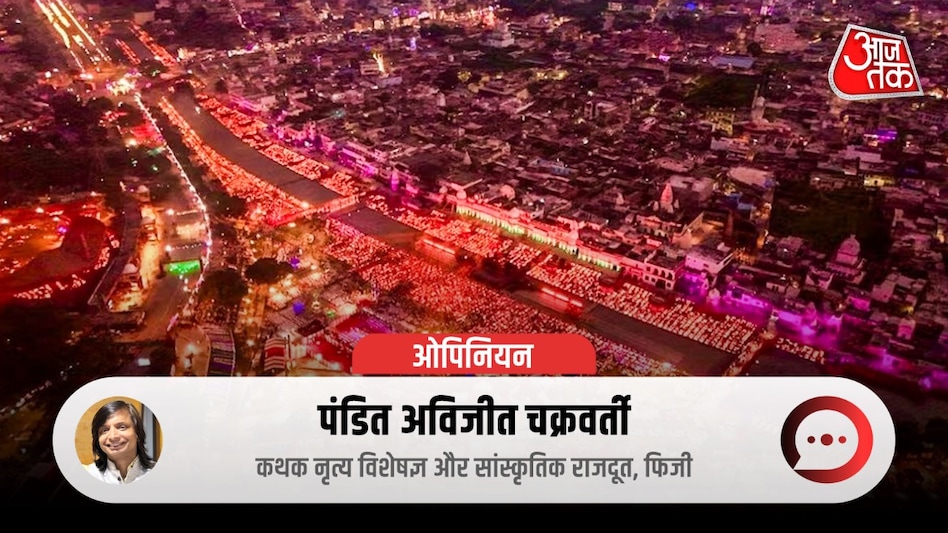
When millions of oil lamps shimmer simultaneously on the banks of the sacred Sarayu River in Ramnagri Ayodhya, this spectacle symbolizes not only the victory of light over darkness but also becomes a transcendental experience illuminating the inner world of all humanity. Dipotsav-2026 represents another golden chapter where the sacred city of Ayodhya has established itself on the world stage as the largest and most radiant center of 'cultural confluence.'

This event transcends religious boundaries, transforming into a grand global platform for artists from all over the world, where art communicates directly with the divine. As artists from different countries, cultures, and languages embody the ideals of Ram-katha through their artistic, musical, dance, and theatrical performances on Ram-Padi, the entire world unites in a single harmony. This is a declaration that Shri Ram belongs not just to a specific territory, but to the whole world.

This Dipotsav, which celebrates a decade this year, is a living reflection of the faith and vision of Chief Minister Yogi Adityanath. The tenth stage in any journey is a moment to pause, look back, and determine the path forward. What began ten years ago with lighting up the embankments of Ayodhya today has transformed into a global cultural festival awaited not only by the residents of the country but also by many corners of the world.

As the sweetness of languages, the colors of costumes, the hum of folk melodies, and the reverence of many nations merge with the flame of candles, the festival begins to expand beyond Ayodhya, becoming a celebration of global cultural consciousness. A particularly noteworthy feature this year is the presentation of Ramlila by five countries, each in its own tradition and style. Artists from South Africa, as well as Sri Lanka, Nepal, Laos, and Thailand, will present the story of Shri Rama on the sacred land of Ayodhya in their own way.

Preparations are also underway for the participation of artists from the Philippines, Thailand, and Russia. This fact itself testifies that Lord Ram is not the heritage of any single geographical point, language, or community. He is a symbol of the human ideal that every culture has recognized, accepted, and celebrated in its own voice.

The journey of Ram-katha resonates in many countries around the world. In the stages of Southeast Asia, the Ramayana has lived for centuries in dance, theatre, and puppet shows. The lands of Thailand, Laos, Nepal, and Sri Lanka are steeped in memories of the Ramayana. Although the names of characters, costumes, and styles of Ramlila arriving from other countries may differ, the core tone of the narrative remains unified—it is the triumph of dignity, self-sacrifice, truth, and duty. These diverse streams converge in Ayodhya. Just as many rivers flow into one sea, all these presentations are directed towards one Ram-tva.

The greatest trait of Indian culture is its inclusive nature. Our tradition has never insisted that truth be presented in only one way. This is why the same Ram-katha was told and heard in hundreds of ways. The international character of Dipotsav is a modern evolution of this generous outlook. When an African artist presents the scene of Ravana's killing in their rhythm, or a Laotian dancer portrays Sita's suffering in their movements, the audience feels that the language of compassion and dharma needs no translation; it reaches heart to heart.

Diversity within the country itself will also enrich this event. Artists from Assam, Bengal, Uttarakhand, Jammu and Kashmir, and Kerala will present productions based on Ramcharitra and Ram-katha. Every corner, every state of India sees Rama in its own understanding. This diversity, stretching from east to west and north to south, is a testament to the unity that has connected the name Rama for centuries.

In this sense, the stage of Ayodhya will become both a small India and a small world. According to the plan of the Department of Culture, six small, four medium, and two large stages will be prepared, where about 2500 Indian and foreign artists will showcase their art. This number is proof of the belief that providing a stage for art is one of the most significant services to society. The flow of music, dance, and theatre running simultaneously on twelve stages for several days will transform Ayodhya into a living capital of art.

After the Pranapratishtha ceremony at the Rama Temple, a new chapter has been added to the identity of Ayodhya. This city has now become not only a place of pilgrimage but also a major center for cultural tourism. Pilgrims come here for Darshan (worship), and cultural tourists come for the experience. They want to hear this story, understand the traditions, and feel something new within themselves. The international character of Dipotsav connects two emotions here—reverence with experience, and experience with understanding.

It is important to understand the spiritual message of this cultural confluence. The special quality of the lamp is that by burning itself, it gives light to others, and even if thousands of lamps are lit by its flame, its light does not diminish. The dialogue of cultures is similar to this. When we respectfully give space to the traditions of others on our stage, our own identity becomes brighter. The greatest message of Ram-katha is that dignity is not just a personal quality, but the foundation of collective life. Ram during exile...

2

Popular