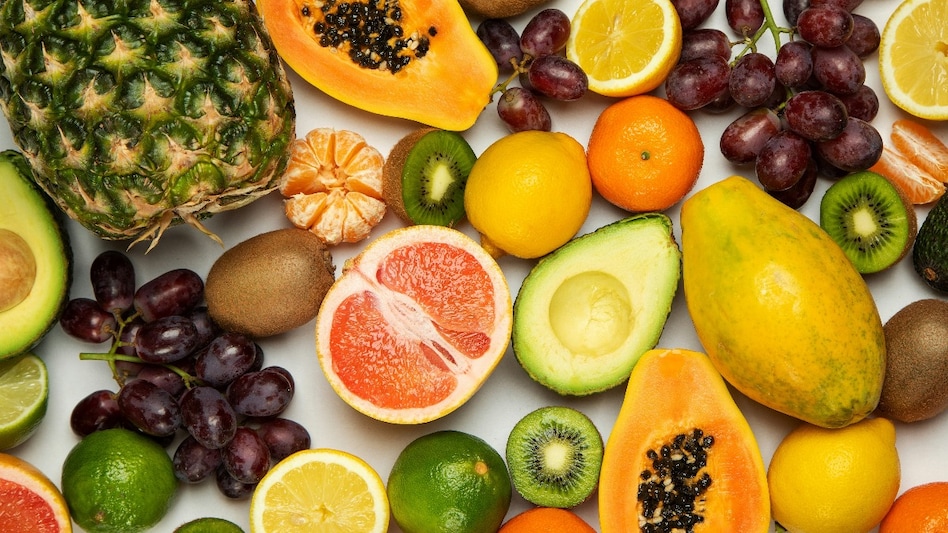
AIIMS Expert Discusses Proper Fruit Consumption for Diabetics
Read more
Aaj Tak
www.aajtak.in

AIIMS Expert Discusses Proper Fruit Consumption for Diabetics

Diabetic patients often encounter conflicting advice regarding fruit consumption, especially first thing in the morning on an empty stomach: some claim it causes a sharp rise in blood sugar levels, while others believe morning is the best time to eat fruit. Due to this uncertainty, many patients are unsure when and which fruits they should consume. However, having diabetes does not mean that fruits must be completely excluded from the diet.

Professor of Endocrinology at Delhi AIIMS, Dr. Rajesh Hargawat, explains that people with diabetes can eat fruit at any time of the day. There is no strictly fixed time for consuming fruit, but patients need to monitor the quantity. It is also recommended to avoid fruits with a high glycemic index.

According to Dr. Rajesh, eating fruit on an empty stomach in the morning is not absolutely wrong. The timing of fruit intake is not as critical as its portion size and the choice of the fruit itself. That is, a patient can eat fruit in the morning, afternoon, or evening, but excessive consumption at once can lead to an increase in blood glucose levels. Therefore, instead of completely eliminating fruits from the diet, it is important to consume them in moderation, based on the patient's individual sugar level and dietary plan.

Dr. Rajesh Hargawat advises that when consuming fruit, it is beneficial for diabetic individuals to combine it with a small amount of fatty food. This can help slow down the rate of blood sugar increase in the body. For example, a few walnuts can be added to the fruit. The fats and fiber in nuts help slow down the digestive process. Nevertheless, this does not guarantee that sugar will not rise; controlling the fruit portion remains necessary.

Special caution should be exercised when choosing fruits with a high glycemic index, such as mango and grapes. The glycemic index indicates how strongly a particular food item will affect blood sugar levels after consumption.

Similar stories

Expert explains why consuming large amounts of oil is not harmful to health if balance is maintained
Read more
www.aajtak.in

Expert explains why consuming large amounts of oil is not harmful to health if balance is maintained

Currently, the problem of fatty liver disease is no longer limited to people who consume alcohol. The rise in non-alcoholic fatty liver diseases is due to improper nutrition and fast food consumption. Because of this, people have doubts about consuming ghee, as there is a belief that it promotes fat gain and can damage the liver.

Dr. Shiv Kumar Sarin, Director of the Institute of Liver and Biliary Tract in Delhi, commented on this issue. He noted that while home-cooked food is a healthier alternative, not all ingredients in it can be considered automatically healthy. Using oil as an example, Dr. Sarin emphasized that having four tablespoons of oil in a dish does not mean it is of poor quality.

In his opinion, oil itself is not a harmful product; however, it is crucial to consider the total calorie intake and the level of physical activity a person maintains to burn those calories.

Speaking at the Healthwealth Summit, Dr. Sarin compared the process of tracking income and expenses conducted by an accountant to the need to monitor calories consumed and expended in the body. He warned that a calorie surplus without physical exertion can negatively affect weight and metabolic health.

From a medical perspective, oil contains a significant amount of fats and calories, including saturated fats. Therefore, its permissible amount must be determined individually, based on the overall diet, weight, cholesterol level, and the person's current health status.

Dr. Sarin assured that consuming oil is not inherently bad. He stated that taking three to four tablespoons of oil is possible, provided there is regular physical exercise. If a person simply consumes oil but does not exercise, there will be no benefit from it.

He considers it mistaken to label oil as harmful, but he also stressed that the claim of complete safety of four tablespoons of oil for every person is unfounded. Overall, the key to healthy eating is not the complete exclusion of oil or any other product, but rather its consumption in a balanced amount.

Scientific study points out that peels and discarded parts of fruits and vegetables are richer in fiber
Read more
super.abril.com.br

Scientific study points out that peels and discarded parts of fruits and vegetables are richer in fiber

There is a debate about whether consuming the peels of fruits and vegetables brings health benefits, and a new study reinforces this hypothesis. Parts such as peels, seeds, and stems are often thrown away after consuming fruits and vegetables, but some people already suspected that these residues could be more nutritious than the pulp.

The research, published in the scientific journal International Journal of Food Sciences and Nutrition, demonstrated that, in fact, the peels, seeds, and stems contain a higher concentration of fiber than the habitually ingested parts of these plants.

A group of scientists from King's College London initiated an analysis focused on the fiber content of twelve types of fruits and vegetables, including pumpkin, kiwi, watermelon, broccoli, bell pepper, pineapple, leek, fennel, cabbage, celery, cauliflower, and beetroot. The objective was to quantify and compare the amount of fiber in both the most consumed portions and the usually discarded parts, such as peels, seeds, and stems.

The investigation results indicated that, in ten of the twelve tested foods, the unconsumed portions showed a higher fiber content. A notable example was pineapple, where the peel and core had approximately 450% more fiber compared to the pulp. In pumpkin, the seeds and peel registered 9.25 grams of fiber per 100 grams, while the pulp contained only 2 grams.

Utilizing these food parts through an approach called 'root-to-tip' by the authors has the potential to significantly increase fiber intake among the population. This aspect is particularly relevant given that a significant portion of people do not meet the recommended daily fiber goal. Data from the Family Budget Survey (POF) reveals that 68% of Brazilians consume insufficient fiber.

However, one obstacle is that these parts of fruits and vegetables tend to be hard, difficult to chew, and often do not have a very palatable taste when eaten raw. For this reason, researchers suggest that these parts can be incorporated into recipes, being grated, crushed, baked, or using other preparation methods. In addition to potential nutritional gains, this practice can also contribute to reducing food waste and, in the context of restaurants, reducing kitchen operational costs.

The authors concluded that, although fruit and vegetable byproducts have been studied to increase fiber content, the level of fiber in many 'root-to-tip' components is still unknown. They state that these findings suggest that 'root-to-tip' consumption can promote higher dietary fiber intake while helping to reduce food waste.

Popular