Explanation of the Tradition of Worshipping the Pen During Chitragupta Puja in 2026
Read more
Aaj Tak
www.aajtak.in

Explanation of the Tradition of Worshipping the Pen During Chitragupta Puja in 2026

After the Diwali festival, the Bhai Duj festival is celebrated, which holds special significance for worshipping the god Chitragupta. On this day, people worship not only the god Chitragupta but also the pen (kalam) and the inkpot (davat). This tradition is especially observed by members of the Kayastha community, although there is a question regarding the religious justification for honoring the pen and inkpot on this day.

Chitragupta Puja in 2026

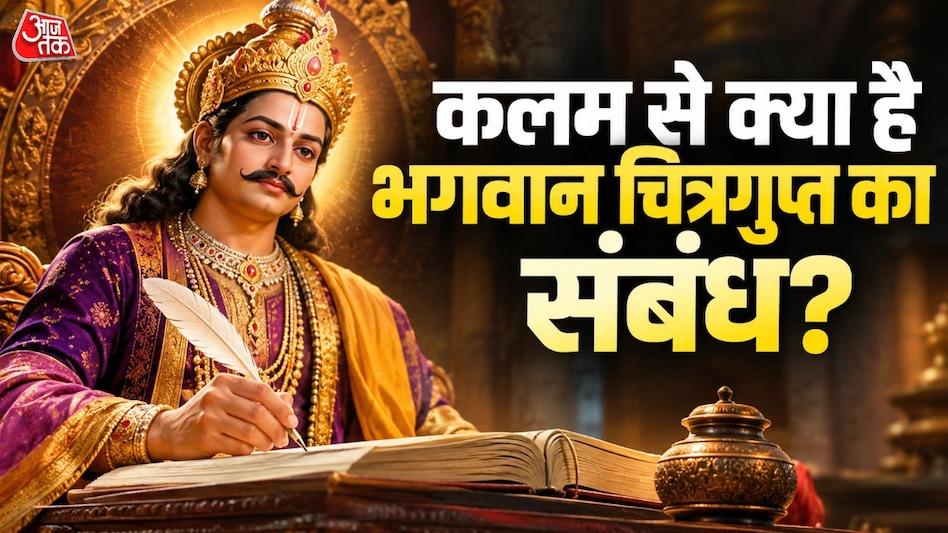
According to religious beliefs, the god Chitragupta is an assistant to the deity Yamaraja. His function is to keep account of a person's good and bad deeds. It is believed that all actions performed by a person in life are recorded by the god Chitragupta. It is based on this record that the decision about their karma after death is made, so the god Chitragupta is considered the deity responsible for accounting deeds.

Why is the Pen Worshipped During Chitragupta Puja?

The tradition of worshipping the pen and inkpot during Chitragupta Puja has existed for many centuries. According to belief, the god Chitragupta is the patron of writing and the recording of deeds. He records every good and bad deed of a person in his records. Consequently, the pen is seen as a symbol of his writing activity. For this reason, the pen, inkpot, and account books are worshipped on this day. Especially members of the trading class start their new account books on this day, praying to the god Chitragupta for progress and prosperity in their work.

How is Chitragupta Puja Performed?

On this day, after morning ablutions, one should wear clean clothes. An image or statue of the god Chitragupta is placed at the ritual site. Then, flowers, akshat, rolls, sweets, and fruits are offered. The pen, inkpot, and account books are also placed during the worship. After this, meditation is performed on the god Chitragupta, asking for wisdom, the strength to do good deeds, and success in life.

Similar stories

According to legends, why is a lamp lit in honor of Yama on Dighanteras night
Read more
www.aajtak.in

According to legends, why is a lamp lit in honor of Yama on Dighanteras night

Dighanteras holds special significance in Hinduism. This festival, which precedes Diwali, is dedicated to the worship of the goddesses Lakshmi and Kubera, and the god Dhanvantari. On this day, people purchase gold and silver jewelry, new utensils, and brooms. According to religious beliefs, performing rituals on Dighanteras brings happiness, prosperity, and well-being into the home, making this day extremely auspicious.

Dighanteras is also known as Dhanatrayodashi. There is a belief that buying new things on this day attracts wealth into the home. Furthermore, there is a tradition of lighting a lamp in honor of Yamaraj on Dighanteras. However, many wonder how the celebration of this day began and what mythological stories lie behind it.

Why is Dighanteras celebrated?

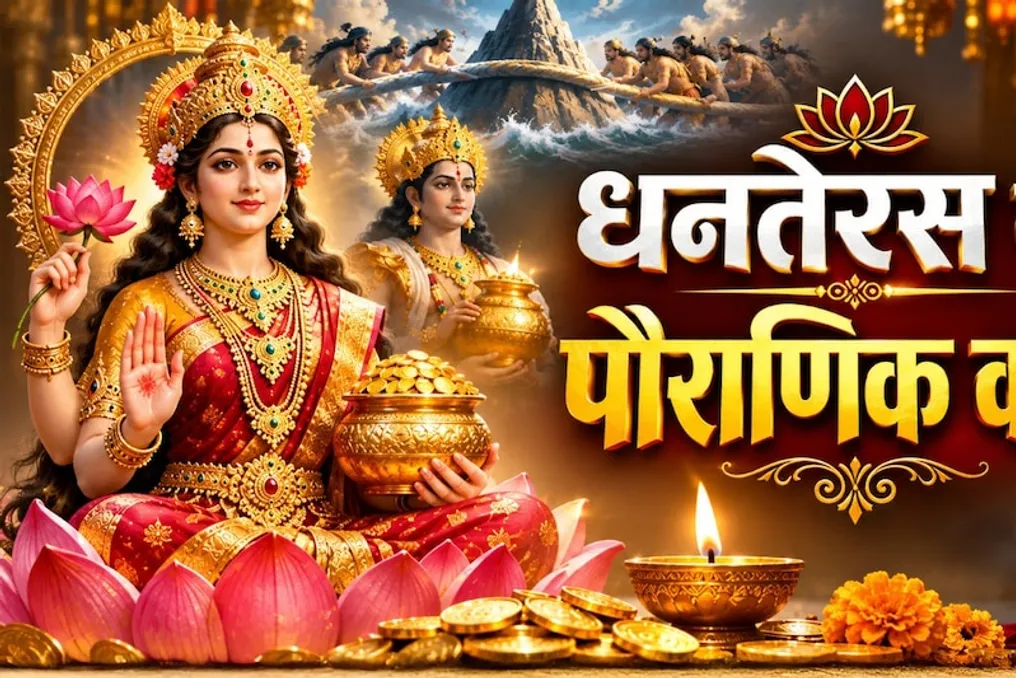
According to one of the mythological stories, Dighanteras is connected to the Milk Ocean. It is said that during the mixing of the ocean by gods and asuras, on the thirteenth day of the dark month of Kartik, the god Dhanvantari appeared with a vessel filled with amrita. God Dhanvantari is revered as the deity of medicine and health, as well as an avatar of Vishnu. Since Dhanvantari held a vessel with amrita, the tradition of purchasing utensils on Dighanteras arose. It is believed that acquiring new utensils and metals on this day brings prosperity to the home, and also grants good health and long life to family members.

Mythological story related to Dighanteras

There is another common story: once Mata Lakshmi was forced to live in a farmer's house for twelve years due to a curse. During this time, the farmer's life experienced a significant rise; his house never lacked wealth or harvest, and the family lived happily. When twelve years were up, it was time for Mata Lakshmi to return. The farmer did not want to part with her, as his fate changed after her arrival. Hearing the farmer's words, Mata Lakshmi offered him a solution.

She advised him to clean the house on the thirteenth day of the dark month of Kartik, light a ghee lamp, and perform worship by placing coins in a vessel. Mata Lakshmi also said that whoever sincerely worshipped her and lit a lamp on this day would find happiness and prosperity in their home. The farmer followed Mata Lakshmi's advice, and it is believed that after this, he never lacked money or grain in his life. Since then, the tradition of worshipping Mata Lakshmi and lighting lamps on Dighanteras is considered established.

Second mythological story related to Dighanteras

There is also a mythological story explaining the tradition of lighting a lamp in honor of Yamaraj on Dighanteras. According to this story, Yamaraj asked his messengers if there had ever been a time when their hearts grieved at taking a human life. One of the yamadutas recounted that his heart was troubled when he saw a widowed woman weeping over the death of her husband. He then told the story of a prince.

It is told that a king named Hans went hunting and got lost, ending up in another state. King Hema from that state showed him great respect. Soon, a son was born in King Hema's house. Astrologers, having studied the child's horoscope, predicted that he would die four days after the wedding. The king decided to leave his son in a cave by the Yamuna river so that no women would pay attention to him and he would not marry. However, fate decided otherwise. One day, the king Hans's daughter accidentally came there. She was captivated by the prince, and they entered into a Gandharva marriage. As predicted, the prince died four days after the wedding. Seeing his wife's grief, the yamaduta felt compassion and asked Yamaraj if there was a way to save a person from premature death.

Then Yamaraj informed him that worshipping and lighting a lamp outside the house on the thirteenth day of the dark month of Kartik wards off the fear of premature death. This is why a lamp is lit in honor of Yamaraj on Dighanteras night, which is called Yam-dipdan.
The Importance of Joint Worship of Lakshmi and Ganesha During Diwali 2026 According to Religious Beliefs
Read more
www.aajtak.in

The Importance of Joint Worship of Lakshmi and Ganesha During Diwali 2026 According to Religious Beliefs

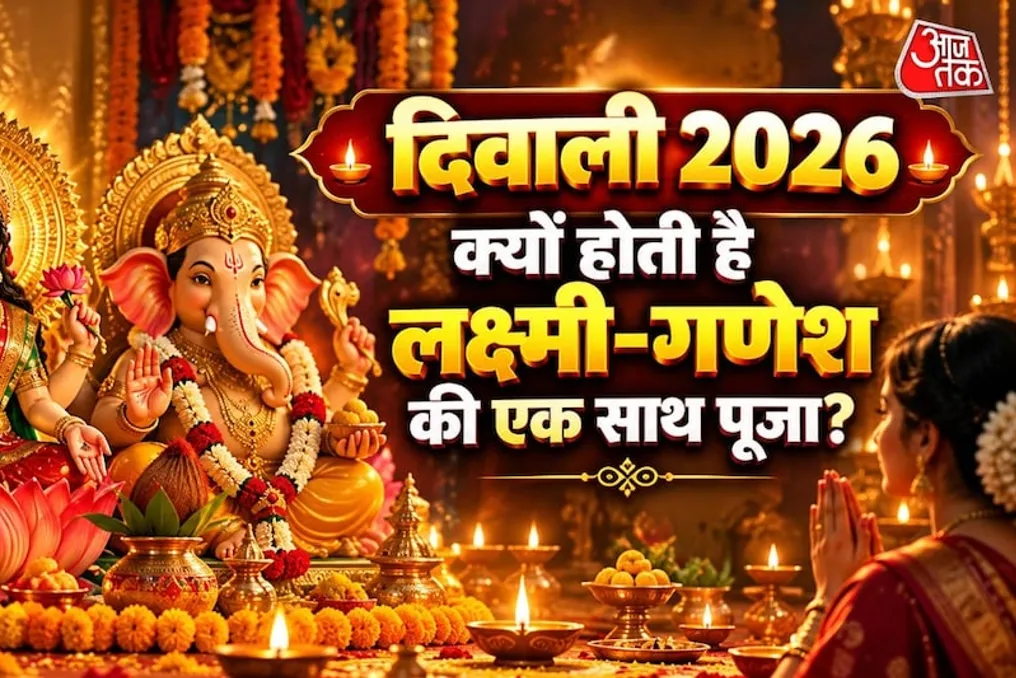
Diwali is one of the most significant festivals in Hinduism. This festival is celebrated every year on the new moon day of the Kartik month. In 2026, Diwali will take place on November 8th on a Sunday. On this day, people light lamps in homes and shops, wishing for prosperity and abundance. There is also a tradition of worshipping the goddess Lakshmi together with the god Ganesha. However, the question arises as to why the worship of the goddess of wealth, Lakshmi, is performed alongside the god Ganesha on this day. In reality, there is a religious belief and a mythological story behind this. The significance of the joint worship of Lakshmi and Ganesha and its special reason are presented below.

About Diwali 2026

In Hinduism, the goddess Lakshmi is revered as the goddess of wealth, splendor, and prosperity, while the god Ganesha is considered the deity of wisdom, prudence, and the beginning of auspicious deeds. Although earning money in life is extremely important, the ability to spend and manage it correctly is equally significant. This requires a good understanding of the situation and the ability to make sound decisions.

According to religious beliefs, merely having wealth is not enough to achieve happiness and prosperity in life; intellect and prudence are also necessary for this. This is why during Diwali, the goddess Lakshmi is worshipped for wealth and prosperity, and the god Ganesha is worshipped for wisdom and prudence. Thus, the joint worship of Lakshmi and Ganesha emphasizes the importance of common sense alongside material well-being.

Mythological Story Related to Mother Lakshmi and Ganesha

According to mythology, once the goddess Lakshmi became arrogant due to her wealth and splendor. Then the god Vishnu explained to her that although everyone in the world desires her blessings, life without motherhood remains incomplete. Hearing Vishnu's words, Lakshmi became sad. Seeing Lakshmi's sorrow, Mother Parvati placed her son, the god Ganesha, on her lap. Lakshmi was very happy about this and accepted Ganesha as her son. It is said that after this, Lakshmi bestowed a blessing: any devotee who worships her must necessarily also worship the god Ganesha. Only then will the devotee receive the blessings of both.

The Significance of Siddhi-Riddhi and Shubh-Labh

Riddhi and Siddhi are considered the consorts of the god Ganesha. Riddhi symbolizes prosperity and abundance, while Siddhi is associated with success and achievements. There is a belief that worshipping the god Ganesha brings the blessings of Riddhi and Siddhi to devotees. Furthermore, Shubh and Labh are considered the sons of Riddhi-Siddhi. Shubh means luck and well-being, and Labh means profit, progress, and growth. This is why many people write 'Shubh-Labh' at the entrances of their homes, shops, and places of worship during Diwali. According to religious beliefs, this helps maintain well-being and prosperity in the home.

Popular