In its weekly series 'India Invented This?', The Better India highlights the ideas and innovations of Indian scientists that have impacted modern life. This story focuses on solving the pollution problem associated with traditional fireworks.
The question of how to experience the thrill of an explosion without clouds of smoke and the smell of gunpowder prompted Dr. Samrat Ghosh, a chemical scientist from the Indian Institute of Science Education and Research (IISER) in Mohali, to seek an unconventional solution. His answer is a firework that uses a different approach to create the familiar spectacle without the smoke and solid particles characteristic of ordinary products.
Interestingly, the development started with an item that most people usually throw away—an empty plastic bottle.
From Bottle Waste to a New Type of Firework
In October 2017, amid growing concern over firework pollution and a temporary ban on their use in the NCR by order of the Supreme Court, then Union Environment Minister Dr. Harsh Vardhan urged scientists to create safer alternatives, including electronic fireworks.
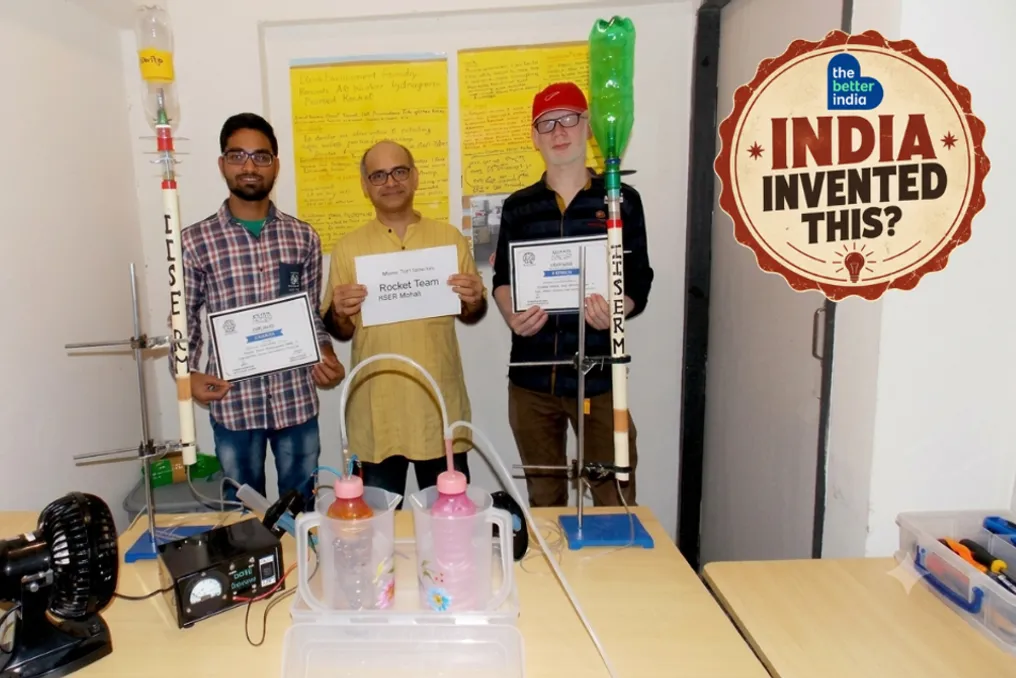
Dr. Samrat accepted this challenge. As an Associate Professor in the Department of Chemical Sciences at IISER Mohali, he applied his knowledge of combustion chemistry to create the so-called IISER-M smoke-free firework. The first prototype was assembled from recycled plastic bottles and a specially developed combustible composition. Instead of standard chemical packaging in a paper casing, his device functioned via a small launch mechanism.
The principle of operation was as follows: upon ignition by a spark, the combustible material ignited and created pressure, which propelled the bottle upwards, similar to a rocket. The launch produced a loud bang, recreating some of the excitement associated with traditional fireworks. However, the real novelty lay in what happened around this process.
This firework did not emit smoke, left no residue, and could even produce a fragrance! Unlike conventional fireworks, Ghosh's formula was designed not to produce visible smoke or solid particles. Furthermore, the device did not leave behind typical firework waste. Another unusual feature was the ability to regulate the sound level, allowing users to adjust the volume of the explosion. Depending on the components used in the combustible formula, the device could release a pleasant aroma into the air, replacing the familiar smell of gunpowder with something more fragrant.
The team developed both aerial and ground prototypes. The device was also designed to be reusable, as the bottle was launched rather than destroyed during the process.
The Next Experiment Included Something Unexpected
A year after creating the prototype, Ghosh and his team began exploring ways to make the formula more affordable. Their next experiment involved distilled cow urine. In 2019, the team developed a cheaper version of their eco-friendly firework using this ingredient. According to Ghosh, incorporating distilled cow urine reduced the cost of the formula by 50% without changing its characteristics in terms of sound, light, or flight. The team also claimed that its organic formula does not produce solid particle emissions. Emission studies were conducted at IISER to analyze gases released during combustion. This experiment was also driven by a practical consideration: making the technology accessible enough for wider adoption.
Another View on Celebration
For Ghosh, the idea was never just about creating another firework; the goal was to rethink the operating principle of fireworks while simultaneously addressing some issues related to traditional products. The innovation also had potential applications beyond Diwali. The device could theoretically be used to deter animals from agricultural fields or to assist in clearing airport runways. According to 2018 reports, the technology was still in the development stage, and its commercialization and widespread distribution had not been secured. The innovation was awaiting patenting at the time, and its path to broader commercial use remained a process.
However, perhaps that is what makes the experiment interesting: it demonstrates how even the most common traditions can make room for new ideas. A discarded plastic bottle, a scientist's curiosity, and the desire to reduce pollution came together to challenge our perception of fireworks. Who knows? With further research and development, innovations like Ghosh's could one day make the celebration of Diwali a little kinder to the air we all share.