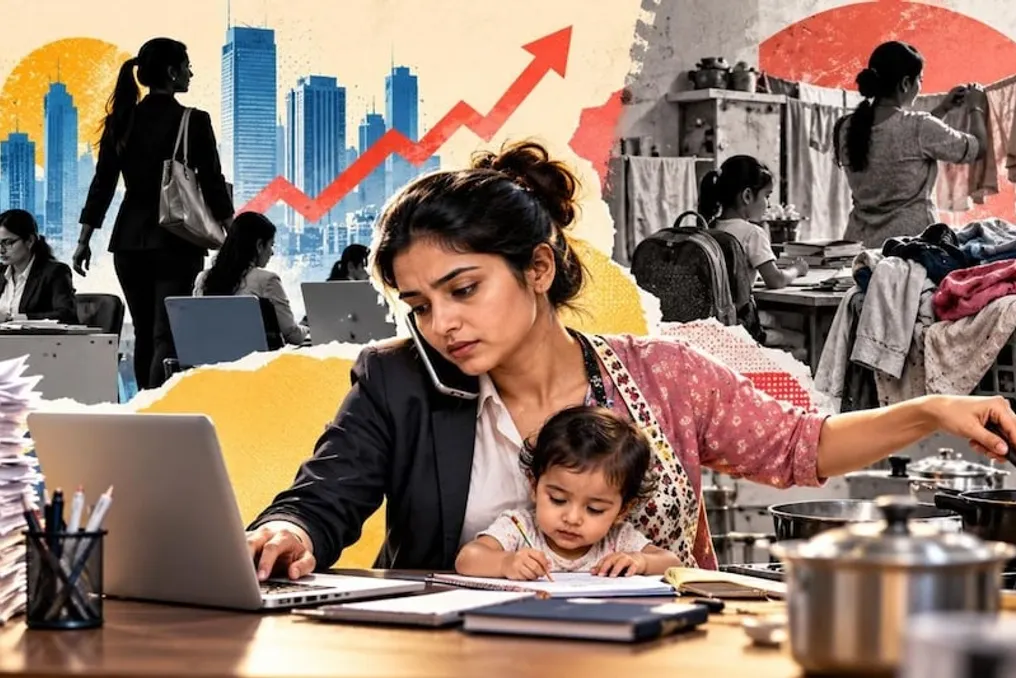
When Canva CEO Melanie Perkins announced the layoff of 1,271 employees as part of the company's restructuring, the discussion went beyond the simple number of dismissed staff. More attention was drawn to how the company treated departing employees. The provision of a six-month salary package, medical coverage, career support, and startup grants received widespread approval on social media.
This incident raised an important question: do female CEOs differ from their male counterparts in making layoff decisions? Although there is no definitive answer, recent academic research and the experience of female leaders paint a somewhat different picture.
According to a 2025 study published in the journal 'Equality, Diversity and Inclusion,' conducted across 1,283 companies in 10 countries, significant differences in layoff cases between companies led by women and men were not observed before the COVID-19 pandemic. However, during the pandemic, the percentage of layoffs in companies led by women turned out to be significantly higher. This study suggests that one cannot jump to conclusions that women completely avoid layoffs or make decisions differently based solely on assumptions of empathy.
Another report from the International Labour Organization (ILO) from November 2026, based on data from approximately 12,000 enterprises in 99 countries, showed that the probability of achieving better business results in companies managed by female CEOs was 6.4% higher. Nevertheless, this report does not confirm that female CEOs provide better severance packages or manage layoffs more empathetically.
Corporate experts believe that the approach to managing layoffs depends more on personal values and corporate culture than on gender. Chetna Israni, co-founder and director of Morning Star Brandcom, notes that it is not necessary to link this to gender, although she believes that female leaders often bring a special sensitivity to people and relationships. She emphasizes that a business decision can be commercial, but how it is delivered reflects the person's character.
Similarly, Tanya Singh, Global Vice President of Marketing and Transformation at Vertex Group, believes that compassion should not be limited only to women. She states that as a female leader, she avoids asserting that empathy is a trait of any single gender. Singh argues that empathy is shaped by experience and is available to any leader.
Experts also agree that empathy should never come at the cost of business stability. Tanya Singh insists that after announcing layoffs, leaders must maintain transparency, ensure adequate transition support, and remain visible. Chetna Israni also highlights that female leaders often face double standards: they are expected to show care, but when making tough decisions, they are subjected to closer scrutiny.
In conclusion, the question is not whether female CEOs make layoff decisions differently. The real question is whether any leader, regardless of gender, possesses enough sensitivity to prevent employees from feeling 'protected' (redundant or useless) when difficult business decisions are made. After all, business can fail, but basic human etiquette must always be maintained.