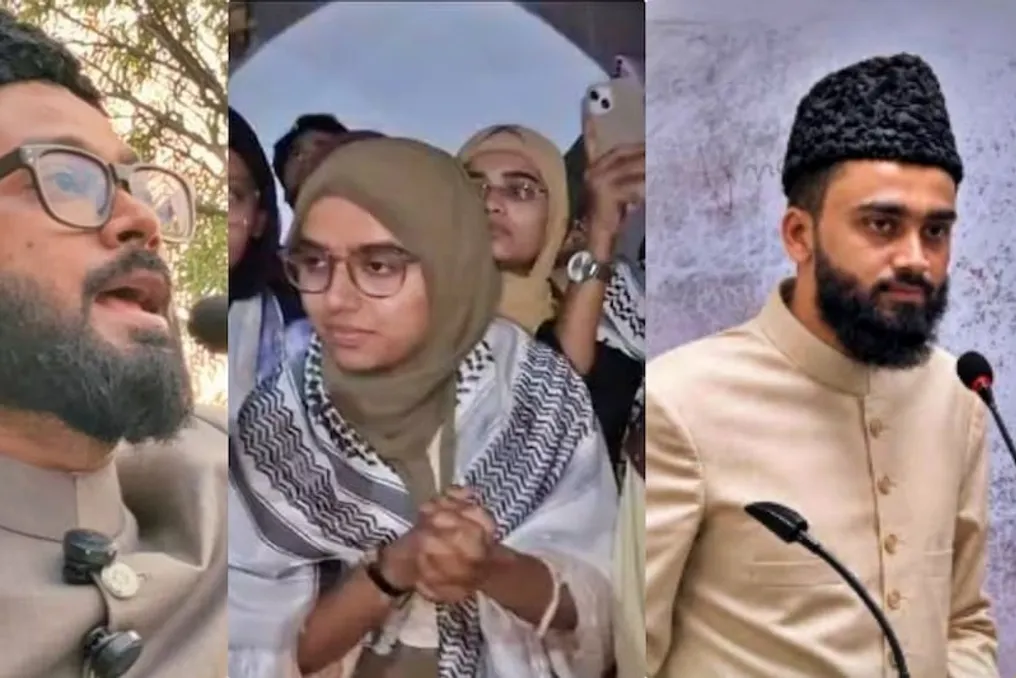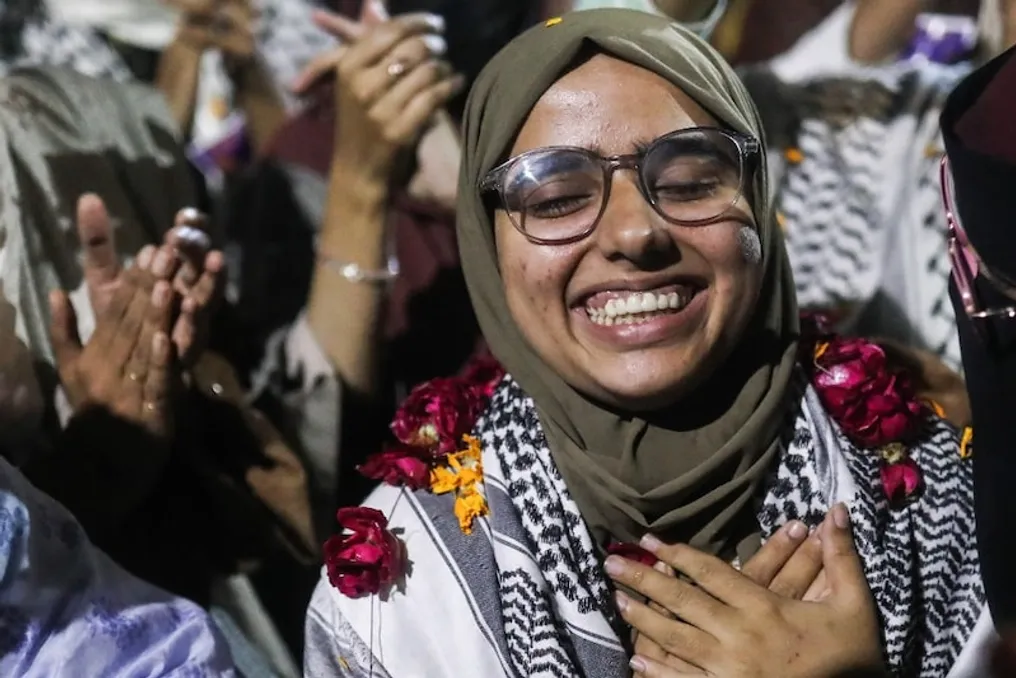
Nashra Naeem, a 22-year-old student at Aligarh Muslim University (AMU), achieved a historic milestone by winning the AMU student council elections on November 5, 2026, and becoming vice-president after an eight-year wait.
Born in Gorakhpur, Uttar Pradesh, Nashra received 7091 votes, surpassing her closest rival, Sakib Ali Khan, by 1273 votes. Her victory marks the beginning of a new discussion about women's representation in the university's student politics, as she became the first woman elected to one of the three top positions in the student council: president, vice-president, or honorary secretary.
Nashra's connection to AMU is deep: her father is an alumnus of the university, and Nashra herself studied at the AMU women's college at the senior secondary level. She now holds one of the highest elected positions at the same university.
Nashra Naeem resides in Gorakhpur, Uttar Pradesh. She is a student at AMU's Faculty of Law, pursuing a BA LLB program. Her father is in the IT business, and her mother is a homemaker. Nashra's involvement in university life is not limited to academics; she actively participated in movements for student politics and the restoration of the student council. Furthermore, she is a member of the National Executive Committee of the Fraternity Movement.
In an interview with The Indian Express, Nashra revealed that she initially planned to run for the presidency. However, her father felt it would be difficult to elect a woman to the presidency immediately after the student council was restored. Therefore, she decided to run for vice-president. Her family supported her throughout the campaign.
The AMU elections were held after almost eight years. Voting took place on November 5 across 13 polling stations, and the results were announced on the morning of November 6. Seven candidates ran for vice-president, and the contest was between Nashra Naeem and Sakib Ali Khan.
The voting results showed: Nashra Naeem — 7091 votes; Sakib Ali Khan — 5818 votes; the margin of victory was 1273 votes. Mohammad Noman Ashraf won the presidency with 7797 votes, and Mohammad Hamdan was elected honorary secretary with 8385 votes.
The elections also noted significant female participation: five female candidates secured seats in the 10-member student council cabinet, and two female student representatives were elected to the AMU Court.
Following her victory, Nashra expressed gratitude to her small team for their dedication. In a conversation with The New Indian Express, she emphasized that the success was achieved through the dedication, courage, and honesty of the people who supported her, despite limited resources and tight deadlines.
According to Nashra, this victory is not only her personal achievement but also the result of the work of everyone who supported her during the election.
Nashra believes that the coronavirus pandemic weakened the sense of community and collective thinking among youth. In her interview, she noted that young people have become more focused on individual views compared to the past, paying less attention to the broader social context and community.
She posits that politics should not be reduced solely to participating in elections or gaining power. Student politics gives young people the opportunity to understand their rights, administrative decisions, and social conditions.
Behind Nashra's victory is a long-standing student movement. AMU elections had not been held since 2018-19, and the university administration had suspended the student council since 2019. Students protested for many years, demanding elections. In September 2026, this movement gained momentum, and students began continuous demonstrations. A postgraduate student, Yasir Fahad, even went on hunger strike. After nearly 19 days of protests and negotiations with the administration, the university agreed to hold elections.
Nashra also participated in this movement. She is convinced that maintaining student politics at the university is crucial because it provides students with a platform to present their issues and rights against the administration.
Aligarh Muslim University was founded in 1920, and the history of the AMU student council dates back to 1884 with the establishment of the Siddons Union Club. Thus, Nashra's victory is an important milestone in the history of student self-governance. To date, there has never been a recorded instance of a woman being elected to one of the three top elected positions—president, vice-president, or honorary secretary. Nashra became the first woman to break this tradition. The election of five female cabinet members and two female representatives to the AMU Court in these elections also demonstrates the growing participation of women in campus life.