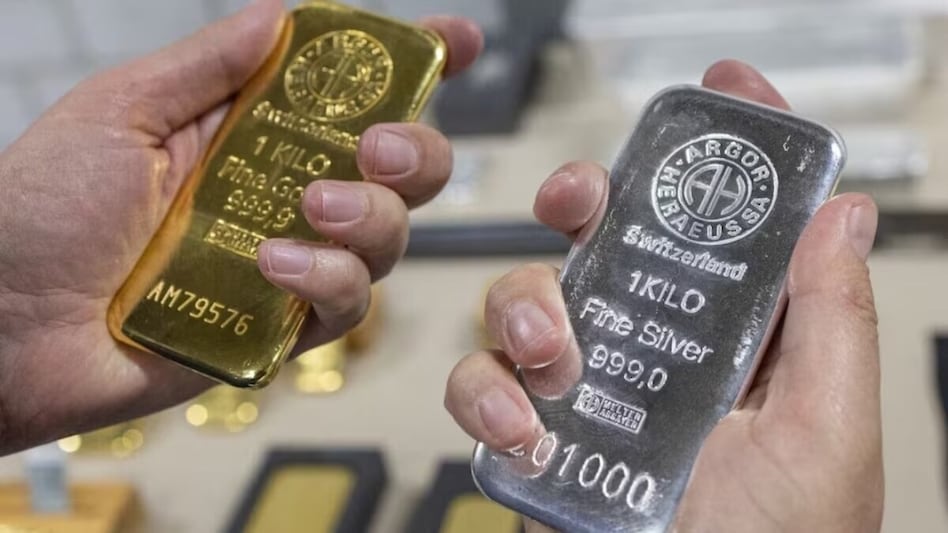
There has been a significant rise in gold prices in recent years, and now analysts are predicting a further increase in the value of the precious metal. According to the latest report from Motilal Oswal Financial Services Limited (MOFSL), over the next six to twelve months, the price of gold in the domestic market may reach a level of between 1.60 and 1.68 lakh rupees per 10 grams.
This forecast is based on MOFSL data. The report indicates that continuous purchases by central banks and high demand from investors could support gold prices. Furthermore, in the medium term, the international market is expected to see the price of gold reach between $4,500 and $4,700 per ounce. In the short term, however, the domestic market price may remain around 1.48 lakh rupees per 10 grams.
The main factors contributing to the increase in gold's value are cited as investor demand and central bank activity. Amid global economic and political uncertainty, investors view gold as a safe asset. Monetary policy of the US Federal Reserve, inflation levels, and the dynamics of the dollar exchange rate also influence prices.
In 2025, there was a steady rise in gold prices, but the situation changed in 2026. In January 2026, the international market reached a record $5,600 per ounce, followed by a sharp decline, with prices falling below $4,000 per ounce. Prices later began to recover. The main reasons for these fluctuations are considered to be concerns about interest rate hikes in the US, inflation, high bond yields, and various global events. Thus, the value of gold is determined not only by demand but also by global economic decisions.
Long-term trend analysis shows that gold has increased fivefold over the last decade. In 2016, around Diwali, the domestic gold price was about 30,000 rupees per 10 grams, whereas in 2026, it reached approximately 1.5 lakh rupees per 10 grams.
The MOFSL report mentions historical data on gold returns. Statistics show that gold traditionally demonstrates higher returns in the 30 days before Diwali compared to the 30 days after this festival. Nevertheless, this does not guarantee an annual price increase before Diwali. Demand for gold, imports, and the volume of physical purchases in the domestic market also influence prices during the festive season, which can create premium conditions.
According to Navneet Damani, a senior commodities specialist at MOFSL, gold retains its significance as a safe asset amid global economic instability. However, the future trajectory of prices will be determined by several major factors. These include changes in US interest rates (their rise or fall), inflation, the strengthening or weakening of the US dollar, and the real yield on US bonds. The volume of gold purchases by global central banks is also an important aspect.
When planning investments in gold, one should make decisions not only based on the forecast of reaching the 1.68 lakh rupee mark. Although the report does predict growth over the next 6–12 months, there was also a significant drop in prices this year. Therefore, before investing, it is necessary to assess one's needs, investment horizon, and risk tolerance. Instead of a single large purchase, phased investment can be considered. It is recommended to consult a certified financial advisor before making a final decision.