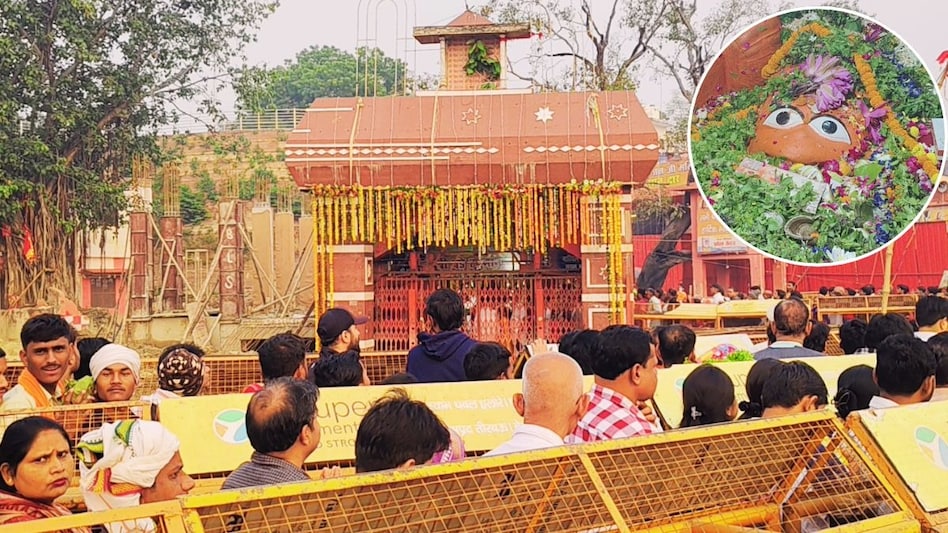
Wave of piety floods the Flying Hanuman temple in Prayagraj on Hanuman Jayanti
Read more
Aaj Tak
www.aajtak.in

Wave of piety floods the Flying Hanuman temple in Prayagraj on Hanuman Jayanti

On Hanuman Jayanti, a huge number of devotees gathered at the Flying Hanuman temple, located on the banks of the Sangam in Prayagraj. From early morning, there was special activity along the bank: some arrived with flowers in their hands, others with prasad. Some visited the temple with family, while others came from afar solely for darshan of Bajangbali. A long queue of pilgrims formed in front of the temple, and shouts of 'Jai Shri Ram' and 'Jai Bajangbali' echoed from inside.

The event is dedicated to celebrating Hanuman Jayanti at the famous Flying Hanuman temple in Prayagraj. This temple is renowned because Bajangbali rests in a reclining posture, receiving pilgrims. Bright flowers were brought to the temple, and Bajangbali was adorned in a special attire. Devotees streamed here from the early morning.

Some bowed down, some prayed for prosperity for their families, and others silently closed their eyes, meditating on Bajangbali. Every visitor to the temple has their own request, but the cry of all is the same—'Jai Bajangbali.'

The Flying Hanuman temple, situated on the banks of the Sangam in Prayagraj, is among the unique shrines where Bajangbali is depicted in a reclining position. Usually, temples dedicated to Hanuman feature his standing or sitting statue, but his form here is different. This is what makes the temple a special attraction for pilgrims coming to Prayagraj.

On Hanuman Jayanti, the splendor of this temple increases. Pilgrims begin arriving early in the morning. Decorations of flowers and the adornment of Bajangbali make this day even more special.

Special events were organized at the temple to celebrate Hanuman Jayanti. The temple is decorated with colorful flowers, and the statue of Bajangbali is richly adorned. Arriving pilgrims offer worship and pray for peace, tranquility, and the prosperity of their families. The atmosphere around the temple is also filled with spirituality: some shout loudly, while others engage in bhajan-kirtan.

The enthusiasm is clearly visible on the faces of people coming to the temple. The festive mood spreads not only along the banks of the Sangam; fairs (bhandaras) are being held in all parts of Prayagraj. Processions are also organized in different parts of the city, involving a large number of people. City residents celebrate Bajangbali's birthday in various ways: some distribute prasad, while others treat people to food at bhandaras.

Given the huge number of pilgrims at the temple, the police and administration have taken appropriate measures. Police personnel were stationed within the temple premises. Barriers were set up to regulate the flow of people, and surveillance is conducted using CCTV cameras. The administration strives to ensure that pilgrims can visit the temple without difficulty and to manage the crowd effectively. On Hanuman Jayanti, the banks of the Sangam in Prayagraj are immersed in an atmosphere of devotion. The flower-decorated Flying Hanuman temple, the adornments of Bajangbali, and the shouts of the pilgrims make this day unforgettable. Some came with hope, others simply for the darshan of their patron. This chain of acts of faith continues from the early morning.
Similar stories

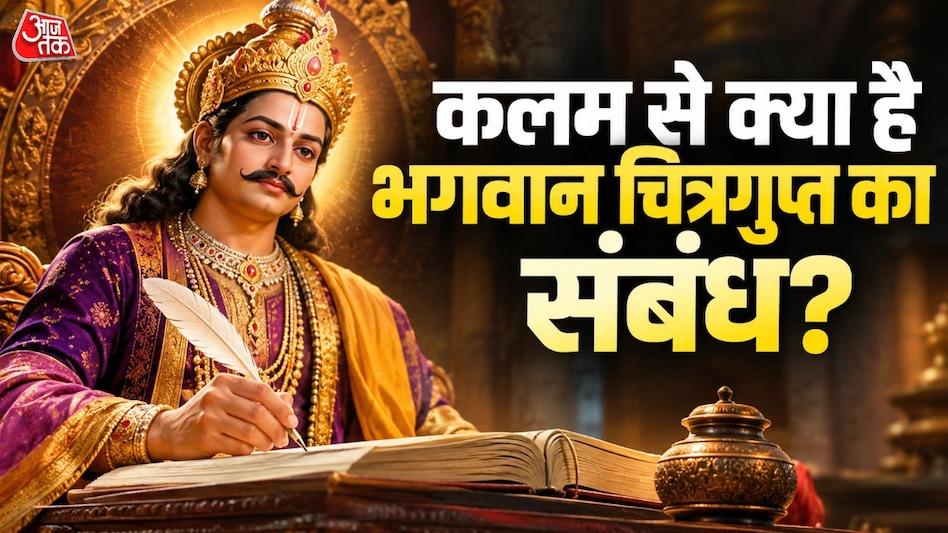
Explanation of the Tradition of Worshipping the Pen During Chitragupta Puja in 2026
Read more
www.aajtak.in

Explanation of the Tradition of Worshipping the Pen During Chitragupta Puja in 2026

After the Diwali festival, the Bhai Duj festival is celebrated, which holds special significance for worshipping the god Chitragupta. On this day, people worship not only the god Chitragupta but also the pen (kalam) and the inkpot (davat). This tradition is especially observed by members of the Kayastha community, although there is a question regarding the religious justification for honoring the pen and inkpot on this day.

Chitragupta Puja in 2026

According to religious beliefs, the god Chitragupta is an assistant to the deity Yamaraja. His function is to keep account of a person's good and bad deeds. It is believed that all actions performed by a person in life are recorded by the god Chitragupta. It is based on this record that the decision about their karma after death is made, so the god Chitragupta is considered the deity responsible for accounting deeds.

Why is the Pen Worshipped During Chitragupta Puja?

The tradition of worshipping the pen and inkpot during Chitragupta Puja has existed for many centuries. According to belief, the god Chitragupta is the patron of writing and the recording of deeds. He records every good and bad deed of a person in his records. Consequently, the pen is seen as a symbol of his writing activity. For this reason, the pen, inkpot, and account books are worshipped on this day. Especially members of the trading class start their new account books on this day, praying to the god Chitragupta for progress and prosperity in their work.

How is Chitragupta Puja Performed?

On this day, after morning ablutions, one should wear clean clothes. An image or statue of the god Chitragupta is placed at the ritual site. Then, flowers, akshat, rolls, sweets, and fruits are offered. The pen, inkpot, and account books are also placed during the worship. After this, meditation is performed on the god Chitragupta, asking for wisdom, the strength to do good deeds, and success in life.

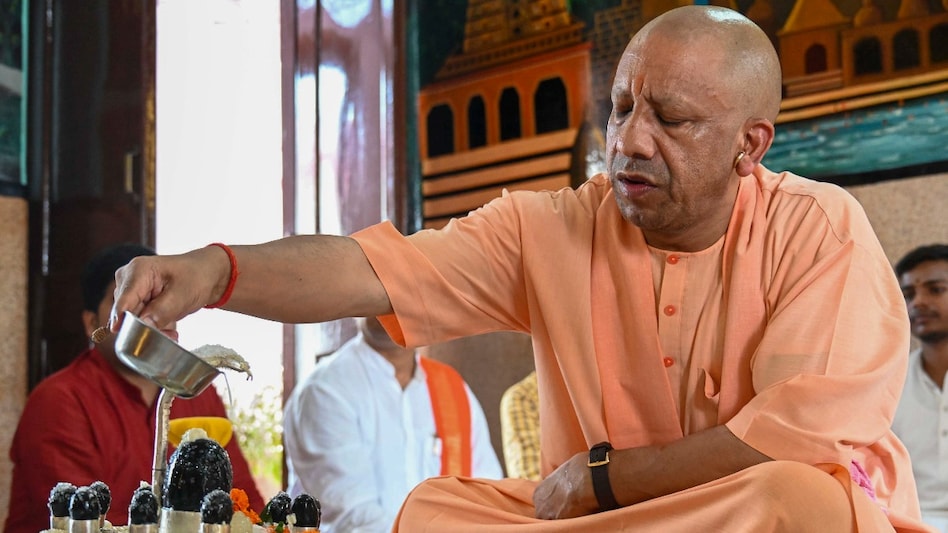
CM Yogi Adityanath urges state residents to light up homes during Dipotsava in Ayodhya
Read more
www.aajtak.in

CM Yogi Adityanath urges state residents to light up homes during Dipotsava in Ayodhya

Preparations for the tenth edition of Dipotsava in Ayodhya have been completed. On this occasion, Chief Minister Yogi Adityanath appealed to the residents of the state with a special request, asking everyone to light lamps not only at Ram Janmabhoomi but also in their homes and courtyards. He characterized Dipotsava as a great festival of the revival of beliefs, self-awareness, and Sanatana consciousness, founded on faith and pride.

On Saturday, Chief Minister Yogi Adityanath posted greetings for Diwali and the tenth Dipotsava on the social network X. He noted that the city of Ayodhya, situated in the sacred waters of the Saru River, is fully prepared for the magnificent Dipotsava celebration, filled with joy, pride, and devotion. The realization of the long-held expectations and faith of millions of people will once again display the golden glow of millions of lights.

The arrival of the Vice President, ambassadors from various countries, high-ranking commissioners, diplomats, as well as sadhus and guests from within and abroad is expected as part of Dipotsava. He welcomed these guests, emphasizing that this event, connected to the principles of equality, harmony, cultural integrity, and the concept of Vasudhaiva Kutumbakam, will be historic and unforgettable. He called on people to witness this great festival of religion, dignity, and light.

Explaining the significance of the diya, CM Yogi stated that the lamp is not just an earthen vessel but a symbol of awakening consciousness. He noted that this message has been passed down to us through the ages: to conquer darkness, one does not need to fight; it is enough to light one light. He added that the tenth Dipotsava is being held in Ayodhya, the city beloved by Lord Shri Rama, witnessed by the Saru River, and symbolizes the joy of the arrival of Pramaatma Rama and the faith of the people in his ideals.

The Prime Minister also mentioned the journey of Dipotsava over the previous nine years. He said that in 2017, a spark of determination lit on the banks of the Saru gave global recognition to Indian culture and the glory of Ayodhya. This ten-year period of Dipotsava is limited not only to the twinkling of lights and world records but also symbolizes the revival of Sanatana culture and the restoration of the country's cultural pride, as well as the ancient grandeur of Ayodhya in the Treta Yuga era. He emphasized that the millions of lights burning at Ram-Padi promote the spirit of ultimate well-being and local self-sufficiency along with faith. This event symbolizes the transformation of centuries of anticipation into a grand reality and the reassertion of Ayodhya with its cultural identity.

In conclusion, Chief Minister Yogi Adityanath urged the residents of the state to adopt the ideals of Lord Shri Rama in their lives during the tenth Dipotsava. He called for the establishment of such a Rajya Rama where the light of development reaches the person at the lowest level of society. May this light of faith, harmony, and service continue to shine for future generations.

Popular