China's Ministry of Industry Seeks Comments on Robot Identification Codes for All Categories
Read more
Pandaily
pandaily.com

China's Ministry of Industry Seeks Comments on Robot Identification Codes for All Categories

China's Ministry of Industry and Information Technology has requested public opinion regarding the draft temporary measures for robot product identification codes. It is proposed to assign a unique identifier to each machine regardless of the robot's category.

The official notice was published on November 6, and the consultation period will run until December 5. The goal of these measures is to establish a unified system for robot identification, as well as standardize production and ensure safety oversight. It is important to note that this is a consultation on the proposed measures, not an announcement of when the rules will come into effect.

Companies and stakeholders can submit written feedback during the specified public comment period. According to IT Home, the proposed identifier will consist of four parts: a manufacturer code, a product description code, a product sequence code, and other codes. Coding and assignment will follow the national standard indicated in the draft as GB/T 48541-2026.

The same report indicates that this standard itself is still under consultation, so it should not be considered proof of a fully implemented national coding system. Final requirements will depend on the completion of the measures and the applicable standard, rather than just this preliminary announcement.

The proposed structure covers industrial, service, and specialized robots, extending beyond the category of humanoid robots, which was the subject of a previous initiative. The main objective is to enable the identification of an individual product throughout its entire lifecycle: from manufacturing and circulation to use, decommissioning, or recycling, instead of relying solely on a model common to many machines.

IT Home reports that previously, in May, the ministry launched a humanoid robot lifecycle management platform as part of its work on standardizing humanoid robotics and embodied intelligence. This platform used a 29-digit four-part identifier, including country, enterprise, product, and serial number codes. According to the report, by May, this platform covered over 100 companies and more than 28,000 humanoid robots.

These figures relate to the previous platform, not the adoption of new measures concerning all categories. The new consultation pertains to the physical products of robots and must be separated from the AI agent identification registry, which was presented at the State Administration for Market Regulation this week and regulates the identification and compatibility of software agents. Both systems aim for traceability, but they identify different types of systems.

Similar stories

China introduces AI agent identification registry in Uzhgen; 20 organizations sign self-discipline pact
Read more
pandaily.com

China introduces AI agent identification registry in Uzhgen; 20 organizations sign self-discipline pact

At the forum in Uzhgen dedicated to trust, interconnectivity, and agent compatibility, a platform for registering and resolving AI agent identification data was presented on November 4th. This was reported by IT Home and the Chinese website China Daily. As part of the same event, 20 companies, including Huawei, Alibaba, Tencent, Xiaomi, and Baidu, adopted a convention on self-discipline in the development of AI agents.

The platform is currently under development. According to available data, it is being created jointly by state structures to ensure identifier coding, cross-domain resolution, and reliable compatibility. Additionally, operational environments will be placed on top of the platform to host access and publish agent capabilities. A pilot program has already been launched, connecting several service providers and operating platforms.

Ant Group was one of the first participants. The company integrated its agent collaboration infrastructure into the operating platform. Early services, such as the Alipay and Sesame Credit government service agents, established and completed trusted connections with agents on other platforms. Chen Liang, Vice President of Ant Group and CTO of its Alipay and Security business group, emphasized that the age of agents requires a trust infrastructure that embeds identification, authorization, and accountability into every interaction. He also mentioned Ant's unified identification account APASS and the ASL protocol, which the company is developing with over 20 partners.

The convention was developed by the Chinese Academy of Information and Communications Technology (CAICT) together with companies such as Huawei, Alibaba, Tencent, Xiaomi, Baidu, Volcano Engine, Ant Group, and Douyin. It includes eight commitments concerning agent trust systems, interconnectivity infrastructure, compatibility, security protection, management mechanisms, user rights, industry implementation, and open technology exchange. Signatories pledged to develop compliance verification and rule embedding technologies, as well as jointly combat the use of agents for fraud and algorithmic exploitation.

The infrastructure section requires establishing common standards for agent registration and resolution, capability discovery, intent translation, routing, and protocol compatibility. The forum was hosted by the Cyberspace Administration of China and GSMA. Wang Jintao, Deputy Director of the Cyberspace Administration of China, called for establishing basic rules for agent identification, trusted interconnectivity, authorization management, and appropriate operation, expanding online governance from content and model security to verifiable subjects, controlled behavior, and traceable accountability. Parties that signed the convention stated their readiness to accept supervision from industry bodies and the public.

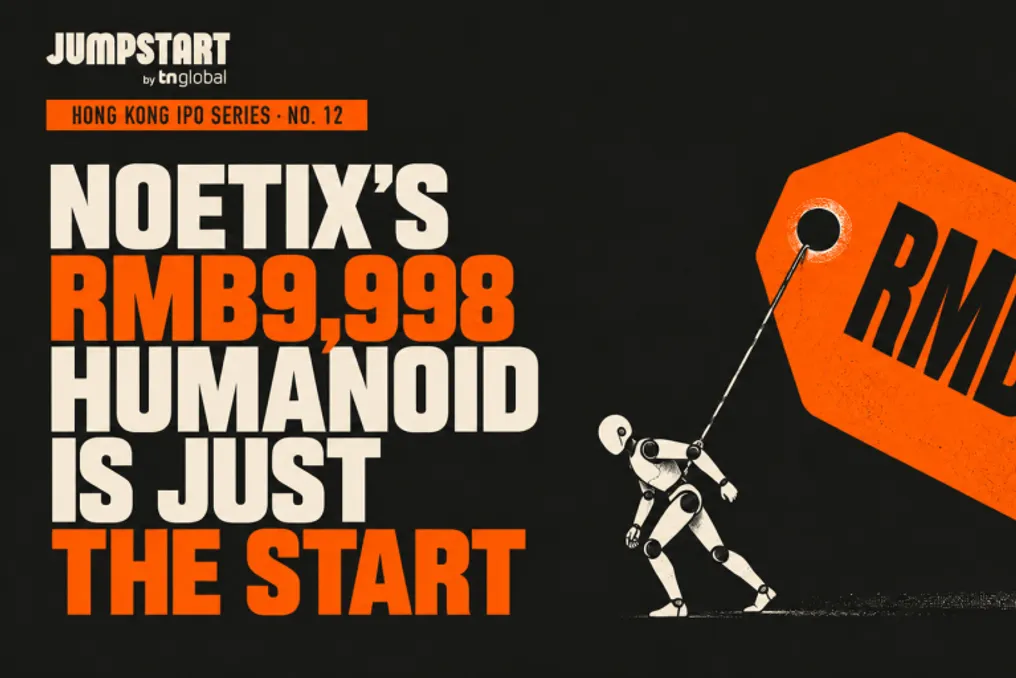
Noetix releases humanoid robot RMB9,998, marking the beginning of broader development plans
Read more
technode.com

Noetix releases humanoid robot RMB9,998, marking the beginning of broader development plans

Noetix Robotics has introduced a humanoid robot priced at RMB9,998 to buyers, offering a product previously available only in research laboratories, corporate demonstrations, or expensive technology exhibitions.

The small robot named Bumi, presented by the Chinese company in October 2025, was aimed at educational programming and companionship sectors. Its appeal lay in a simple proposition: children could program the robot's movements, watch it dance, and interact with the machine, which resembled a small human both externally and functionally.

This approach also reflected a broader vision for building a robotics company: first making the chassis affordable and sufficiently functional for sale, while more complex intelligence would be developed later. Over three years since its founding, the company has strived to turn this sequence into a large business by increasing supply volumes, investing in its own embodied intelligence models, and seeking international clients.

In October, media reports surfaced that Noetix had confidentially filed an application for listing in Hong Kong, potentially targeting an IPO in 2027. The central question linking these ambitions is whether the initially established hardware business can secure enough customers, experience, and capital to support further development.

Founder Jian Zheyuan completed his doctoral studies at Tsinghua University in 2023 and founded Noetix in September of the same year. His initial technical priority was focused on the robot's chassis and motion control—the mechanics and software allowing the robot to balance, move, and react stably.

It is important to distinguish these tasks: a robot can perform complex movements relying on external models for communication or high-level instructions, but creating an athletic machine differs from creating one capable of making autonomous decisions in an unfamiliar room. Jian's decision was to first solve the physical machine problem. He explained that in the early stages, the main bottlenecks for the company were unreliable chassis and limited production readiness. Furthermore, AI approaches were rapidly evolving, so Noetix concentrated resources on hardware, awaiting clearer direction in the intelligence stack.

Low cost was part of this engineering task. In a March interview, Jian discussed using composite materials in Bumi's chassis to reduce reliance on metal structures. The price was built into the design, not left for sales department negotiations after production. This approach allowed the company to have a product with a clear purpose: parents and schools could purchase a programmable humanoid robot for learning and interaction without waiting for general-purpose domestic robots to become commercially viable.

A narrower use case helped Noetix reach buyers faster. This also defined the next commercial objective: providing these buyers with sufficient ongoing value so that the robot became more than just an exciting first purchase.

Noetix's machines attracted widespread attention due to their performance. The N2 robot finished second in the Beijing Humanoid Robot Half Marathon in 2025. In 2026, the company's robots appeared in a sketch at the Chinese New Year Gala alongside comedian Cai Ming. This exposure linked technical demonstrations with a mass audience: the robot seen by families on television was also available through retail channels.

At the AWE exhibition in March, Jian stated that orders surged after the gala, and the company set a goal to sell over 10,000 units of Bumi during 2026. The company was transitioning from proving that people would pay attention to its robots to demonstrating the ability to supply them consistently.

Jian's description of obstacles was surprisingly practical. He cited component availability and production line management as central issues. A missing part can halt the assembly of an entire machine. As monthly production volume grows, the company must train and manage a larger staff while maintaining build quality. These issues have serious implications for a company whose market entry depends on accessibility. Every reworked unit, delivery delay, or service visit consumes some of the margin left at the low selling price.

Thus, the production goal is more significant than merely reaching a shipment milestone. It tests Noetix's ability to maintain the economy embedded in Bumi while manufacturing and supporting it in much larger quantities.

By September, Noetix made a clear next technical commitment: it launched the embodied intelligence sub-brand Scalabot and the HERON world modeling architecture, expanding its ambitions regarding how robots perceive their environment and learn to act within it. According to Jian's interview with Caijing in September, the company began assembling a specialized intelligence team back in July 2025. This work added a substantial research program to an organization already scaling physical production.

His logic connects these two activities. Cheaper and more reliable machines can be deployed more widely; these deployments can create opportunities for gathering experience to train better models. Turning this link into productive activity requires another layer of engineering. The robot in the class generates experience, but the useful training data still needs to be selected, recorded, organized, and mapped to the tasks the company wants its models to master. A large installed base provides access to potential data, and the collection and training system determines its value.

Jian told the 21st Century Business Herald that intelligence research has become a major expense item. He also noted that the hardware can serve as a source of funding for this work. This is a financial lever of Noetix's strategy. The chassis-oriented approach opened an earlier path to revenue. Now, the company wants this operational business to help sustain the more costly efforts whose commercial returns will take longer.

External capital helps bridge the time lag. Among its sponsors are Chendao Capital, an investment platform associated with CATL. A potential listing in Hong Kong will shift this financing process to public markets, where investors can examine in greater detail the relationship between hardware sales and research expenditures.

Noetix's internal path combined educational demand, accessible hardware, and unusually broad public resonance. Its overseas expansion will test how well this combination translates abroad. At the CES exhibition in January, co-founder Zhang Shipu identified five target regions: North America, Europe, the Middle East, Southeast Asia, Japan, and South Korea. He stated the aim to achieve thousands of units in overseas expansion by the second quarter, supported by local implementations, customer service, and repeatable reference projects.

This program involves more than just exporting robots. Schools require teaching materials and support. Distributors need spare parts and repair agreements. Families need an incentive to continue using the product after the novelty wears off. Noetix already has some of these connections that can be developed in China. Investor Beijing Industrial Development Investment Management reported partnerships with the coding education provider Codemao and retailer Kidswant, as well as implementations and donations in schools. These connections demonstrate how the robot can become part of an existing educational or retail system.

Overseas growth will require similar connections in markets with different curricula, languages, and purchasing habits. Product price might attract attention, but local utility and support will determine if that attention becomes a sustainable business. Noetix's first step was to make the humanoid robot accessible enough to penetrate more classrooms and homes. This choice gave it a product to sell while the broader intelligence problem was under development. Now, the company is trying to make this early foothold accomplish three tasks simultaneously: increasing production volume, enhancing intelligence capabilities, and achieving international growth. Establishing the chassis first secured Noetix's place in the market. The next stage is to make that position valuable enough to fund everything else it wants from the robot.

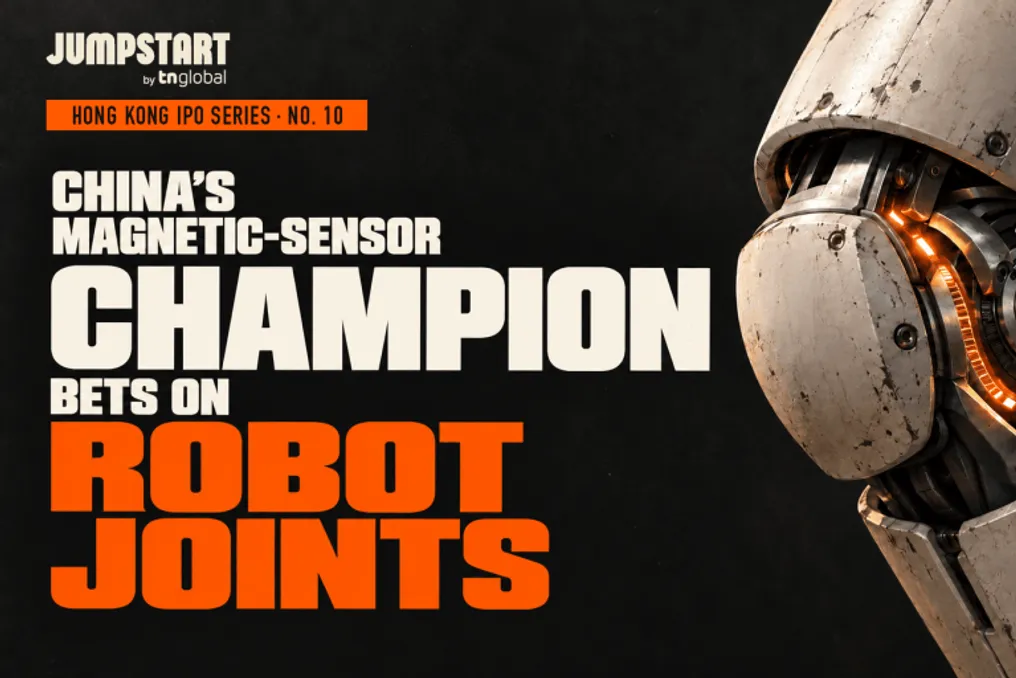
Sinomags, China's magnetic sensor production leader, plans IPO to develop robotic systems
Read more
technode.com

Sinomags, China's magnetic sensor production leader, plans IPO to develop robotic systems

Sinomags, a leader among Chinese manufacturers of magnetic sensors and holding the tenth position globally with a 0.6% market share, is preparing for an Initial Public Offering (IPO) in Hong Kong. These rankings are based on Frost & Sullivan data from 2025, according to information provided by the company after hearings.

The manufacturer from Anhui province presented a document to investors, emphasizing that its business integrates chip design, plate manufacturing, and sensor modules in both China and Germany. The company has achieved stronger positions in certain technologies and has recently become profitable.

The proposed listing will help finance further development, including expanding the production of precision sensors for areas such as robotics, as well as modernizing German production facilities acquired five years ago. For Sinomags, global expansion requires transforming accumulated competencies into a larger and more profitable business.

Magnetic sensors provide machines with information unavailable through simple visual inspection; they measure electric current, determine position, and track movement. For example, in a solar inverter, a current sensor monitors power flow, while in a robot joint, a magnetic encoder determines its position and trajectory.

These small components perform complex tasks, and their value depends on the ability to provide reliable measurements repeatedly under customer equipment operating conditions. Sinomags built its business around this requirement, starting operations in Ningbo in 2013 with a team of researchers in magnetic materials and electronics. Wang Jianguo gathered scientists, including Mao Xining and Bai Jianmin, to create a company whose commercial success depended on converting knowledge in magnetism into usable components.

Early focus areas for achieving production volume were solar energy and electric vehicles. By 2025, current sensors accounted for 82.6% of revenue. This segment gave Sinomags scale, a customer base, and manufacturing experience, closely linking its results to the needs of the energy and automotive markets.

The company's technological standing is stronger than its overall market share suggests. In the same 2025 rankings, Sinomags ranked second globally for Tunnel Magnetoresistance (TMR) sensors with a 4.7% share and fourth for current sensors with a 3.3% share.

TMR is one of the magnetoresistive technologies grouped under the general name xMR, which use changes in electrical resistance to detect magnetic fields. Sinomags operates across this family of technologies, and its position in TMR provides a foothold for expansion into a specific market segment.

A decisive step was the acquisition of Sensitec from Germany in 2021. Founded in 1999, Sensitec brought expertise in precision magnetic sensing and, critically, in plate manufacturing. This acquisition allowed Sinomags to link sensor chip design with their manufacturing and subsequent packaging into finished products for customers.

This is the essence of its Integrated Device Manufacturer (IDM) model. Owning most of the production chain gives the company greater control over how design transforms into a working component: magnetic materials, plate processes, chip characteristics, and module assembly all influence the final result.

Sensitec also provided the group with an established European business. The German company retained its name after the takeover and added Sinomags' current sensor portfolio to its European offering. This combines growing Chinese current sensor business with German capabilities in position and motion measurement.

Financial indicators show growth in the combined business. Revenue increased from 594.2 million yuan in 2023 to 845.3 million yuan in 2025. A loss of 66.6 million yuan turned into a profit of 9.9 million yuan in 2024, and then 52.6 million yuan in 2025. In the first five months of 2026, profit reached 47.9 million yuan on revenue of 418.7 million yuan.

Gross margin improved to 28% in the latest reporting period compared to 18% in 2023. However, the average selling price across the entire portfolio decreased from 7.16 yuan to 4.91 yuan, reflecting changes in products and sales structure. Sinomags earns more while selling a significantly higher volume of cheaper units on average.

This makes the structure of growth the central theme of its IPO. Volume growth strengthened the business, but entering more demanding sensing fields offers another path to increasing realized value.

Customer concentration creates pressure: the five largest clients account for over half of revenue, and the largest contributed 26.2% in the first five months of 2026. Thus, a relatively small group of buyers exerts a significant influence on the company's sales trajectory.

The offering documents also disclose a serious intellectual property dispute. A Chinese competitor in the magnetic sensor field challenged 25 of Sinomags' patents. Twenty were deemed invalid, two partially invalid, and three remained valid. Sinomags stated that it continues to challenge some decisions. The company asserts that the disputed patents relate to peripheral functions, while its most valuable technologies are protected as trade secrets.

These secrets include material preparation methods, temperature profiles, cutting parameters, and test data, as well as specialized equipment. These accumulated details determine whether a sensor can be produced stably at commercial scale. Revenue related to products containing the disputed patents dropped from 12% of the total in 2023 to 0.1% in the first five months of 2026. Commercial exposure has significantly decreased. Nevertheless, the dispute poses a pertinent question to potential shareholders: what part of Sinomags' advantage lies in enforceable intellectual property, and what part lies in manufacturing know-how that must remain in-house?

Future expansion will allow these insights to be applied in a different revenue structure. Robotics creates demand for precise position and motion measurement, and AI infrastructure opens opportunities in energy consumption monitoring and related components. For Sinomags, these markets expand from existing capabilities, although current sensors remain the highest revenue-generating business.

The planned use of IPO funds makes robotics ambitions tangible. Sinomags intends to build a scientific and production base in Xi'an with a maximum annual project capacity of 38 million high-precision magnetic sensors. Construction began in the first half of 2026, with operation expected in the first half of 2027.

Existing motion sensor module capacity is concentrated in Wettzell, Germany, at 6.5 million units annually as of May 2026. The new Chinese facility will bring production closer to domestic customers and expand the group's ability to serve robotics, automotive, and industrial applications.

There is also a telling detail behind the investments: Sinomags' current sensor lines in Benbu and Ningbo have spare capacity, but their equipment and processes cannot be easily transferred to motion sensor production. Transitioning to a new market requires additional production commitments.

The company also plans to use funds to upgrade its German plate manufacturing line from five-inch to eight-inch format. The acquisition that completed its production chain now requires new investment to improve efficiency and support further product development.

This gives the Hong Kong IPO a clear place in Sinomags' development. Research created the technical foundation, energy and automotive sector customers provided commercial scale, and Sensitec added manufacturing depth. Financing through the public market will support the next attempt to transform these elements into a broader precision sensing business.

The largest magnetic sensor manufacturer in China has secured its place in the industry. Its IPO calls on investors to fund the transition from this domestic position to greater global influence. What factories it builds, what products customers adopt, and what margins those products yield will determine how much its current 0.6% share grows.

Popular