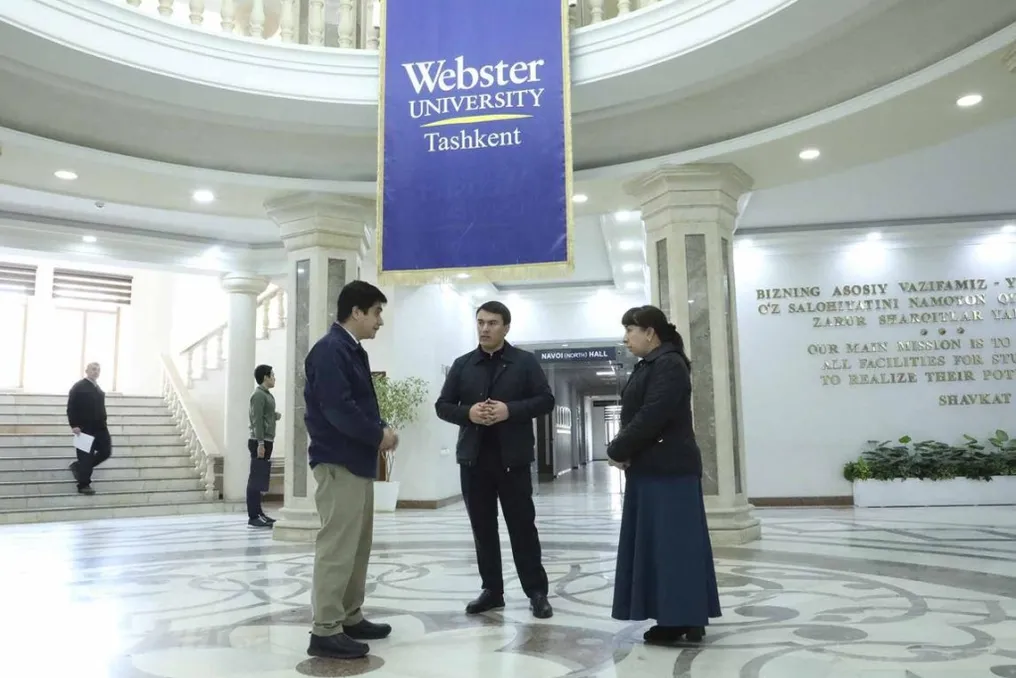
Webster University Students in Tashkent Express Dissatisfaction with Learning Conditions for 50 Million Sums
Read more
Podrobno.uz [uz]
podrobno.uz

Webster University Students in Tashkent Express Dissatisfaction with Learning Conditions for 50 Million Sums

Complaints from students of Webster University studying in Tashkent are actively being discussed on social media regarding the learning conditions, which cost 50 million sums annually. Students question whether the living conditions and interaction with university staff meet the expectations for expensive American education.

In one of the published videos, a female student highlights the state of the classrooms and the behavior of university employees. Among the voiced problems are malfunctioning air conditioners and low quality of student service. However, she emphasized that she is satisfied with the curriculum itself.

On November 6, the university issued an official statement confirming receipt of student appeals. The administration announced that it is studying all comments together with relevant departments to identify issues and determine necessary measures. The educational institution expressed gratitude to the students for the feedback provided and promised to inform them about further actions.

Webster University began its operations in Tashkent in 2019 and is positioned as the first full-fledged American university in the Central Asia region. Education at the university is conducted in English, and the diplomas obtained by graduates are American.

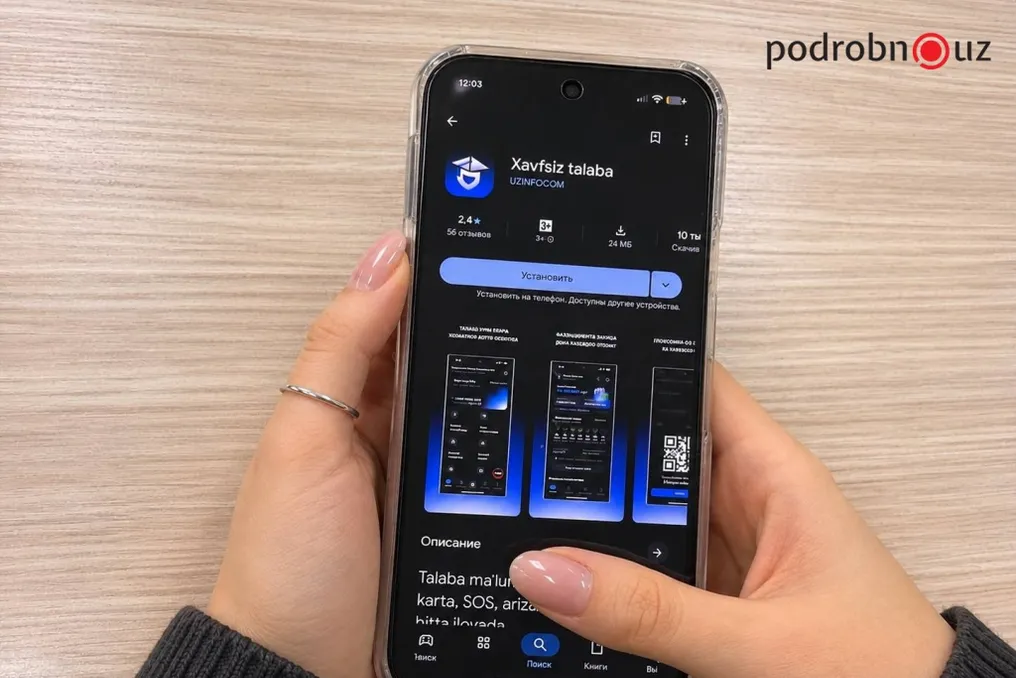
Previously, there was information that students at several Tashkent educational institutions complained about the requirement to install the 'Havfsiz Talaba' application on their personal mobile phones.
Similar stories

Student in Tashkent threatened with 15-day arrest for refusing to install 'Havfsiz Talaba' application
Read more
podrobno.uz

Student in Tashkent threatened with 15-day arrest for refusing to install 'Havfsiz Talaba' application

The scandal related to the forced installation of the 'Havfsiz Talaba' application took an unexpected turn: at one of the educational institutions in Tashkent, a student was informed of an arrest for up to 15 days for refusing to install the program.

Information about this situation became known on November 3. Students from UzGUMYA and the University of World Economy and Diplomacy reported that management and tutors insisted on the necessity of installing the application both upon entering the campus and during classes. In some cases, students were given only ten minutes to download the program, which led to a temporary halt of the lecture until everyone present complied with this requirement.

According to Kun.uz, similar demands were also made at the International University of Turkic States, located in the Uchtepinsky district. According to this publication, on November 3, representatives of the district internal affairs department entered the classroom during lessons, led by the deputy head of the Internal Affairs Department. These employees checked students' mobile phones and demanded the installation of the application.

One student expressed doubts about the security of transferring personal data through this program and noted that he could not install it on an iPhone because the application is only available in APK format for the Android operating system. According to this applicant, in response to his objections, an employee attempted to apply pressure, seize the phone, and threatened him with a 15-day arrest.

The Ministry of Internal Affairs press service did not provide comments regarding the incident in response to the publication's request. It should be noted that previously, in connection with this same scandal involving the installation of 'Havfsiz Talaba' at the Uzbek State University of World Languages, the dean of the translation faculty, Ulugbek Yuldashev, was dismissed from his position.

Fees for state accreditation of educational programs in Uzbekistan may be reduced by fourfold
Read more
podrobno.uz

Fees for state accreditation of educational programs in Uzbekistan may be reduced by fourfold

Educational institutions in Uzbekistan now have the opportunity to pay for state accreditation significantly cheaper, provided that a number of established requirements are met. According to the innovation, instead of the full amount of the basic fee, only 25% can be paid.

This change applies to both comprehensive and special state accreditation. The Ministry of Justice has officially registered amendments to the regulations governing the amounts and procedure for calculating these fees for educational organizations.

The new rules stipulate that when an educational institution applies, the basic accreditation fee can be reduced to one-fourth of the initially established amount. This benefit is provided if the institution meets at least one of the five listed criteria.

Conditions for receiving reduced fees

The first condition is compliance with state assignments. Accreditation is required if it is necessary for implementing tasks outlined in the documents of the President of Uzbekistan, the Head of the Presidential Administration, or the Cabinet of Ministers.

The second condition relates to having international accreditation: if at least half of the active educational programs have already been accredited by organizations included in the registry recognized in Uzbekistan, this allows for a reduction in the scope of additional evaluation work.

The third option is conducting remote accreditation, which is possible for special state accreditation. The benefit is also available if the organization simultaneously applies for special state accreditation for ten or more educational programs.

The last condition concerns the assessment of similar programs: if related programs do not require re-verification of the general material and technical base, personnel resources, and other infrastructure during accreditation, the scope of work is reduced.

It should be noted that a unified Ministry of Education and Science operates in Uzbekistan, which is responsible for administering the activities of all types of educational institutions—from kindergartens and schools to colleges and universities. This department also establishes standards for educational activities and handles licensing and accreditation.

Uzbekistan Ministry of Education warns about scammers offering illegal student transfers to courses
Read more
podrobno.uz

Uzbekistan Ministry of Education warns about scammers offering illegal student transfers to courses

Offers in Uzbekistan are circulating regarding the transfer of students to the third year for a significant sum of money, which can lead to financial losses and legal problems. The Ministry of Education of Uzbekistan strongly urges citizens to ignore such offers and familiarize themselves with the current rules for transferring between higher education institutions.

The warning was initiated following an incident in Namangan region. According to information from social networks, employees of the regional department of the Department for Combating Economic Crimes under the Prosecutor General's Office conducted an operation and detained an individual who promised to enroll a citizen in the third year of a private university for 18 million soums. The detention occurred at the moment of receiving the funds, and a criminal case has been initiated on this basis.

The Ministry of Education condemned such illegal schemes, emphasizing that the process of entering a university or moving from one educational institution to another must be carried out strictly in accordance with established norms. Applications are accepted annually from July 15 to August 5 through the specialized electronic platform of the Agency for Assessment of Knowledge and Qualifications, and the transfer itself takes place after successfully passing special tests.

There is also an additional mandatory condition: enrollment orders for non-state universities must be entered into the HEMIS system no later than October 1. If student information is missing from this system, diploma issuance in their name is impossible.

As part of the warning, the ministry drew citizens' attention to offers such as 'we will enroll you directly into the third year without exams,' 'we will transfer you after the official deadlines expire,' or 'we will process the documents later.' Citizens are advised to use only official resources, regularly check for the student's data in the HEMIS system after enrollment, and avoid handing over documents or money to third parties.

Any suspicious activities or identified violations can be reported by calling 1253 (Anti-Corruption Agency) or 1006 (Ministry).

Furthermore, annual psychological diagnostics are provided in Uzbekistan for kindergarten pupils, schoolchildren, students, and teachers, the results of which determine the need for routine observation or involvement of a school psychologist and specialists.

Popular