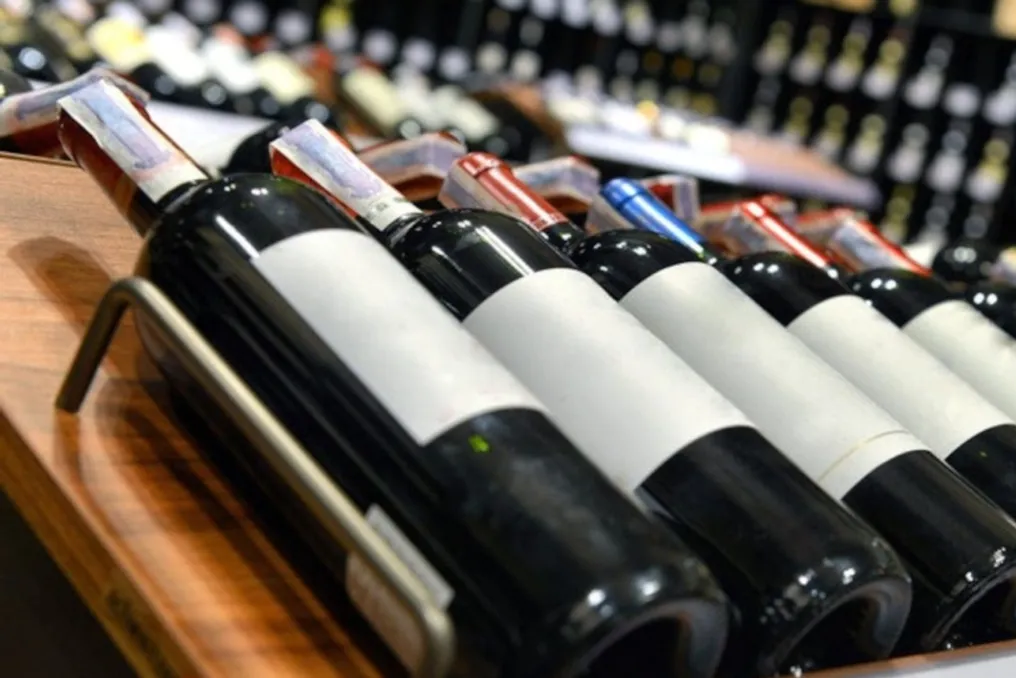
South Africa's Loss of Agoa Preferences Hits Wine Industry
Read more
Food For Mzansi
foodformzansi.co.za

South Africa's Loss of Agoa Preferences Hits Wine Industry

South Africa Wine expressed serious concern after the US government announced its intention to cease providing preferential trade access to South Africa under the African Growth and Opportunity Act (Agoa) starting January 1, 2027.

The wine association called this another obstacle for an industry already facing market difficulties. Producers and exporters have been struggling with tariff changes, rising costs, and declining demand for two years. The prospect of losing Agoa preferences adds uncertainty during a period when businesses need stability.

South Africa Wine noted that previously South African exporters benefited from duty-free access under Agoa, which effectively meant a 0% tariff rate. Since then, they have had to adapt to rates of 30%, then 10% and 12.5%, with the cumulative tariff potentially approaching 16% if Agoa preferences disappear.

The association emphasized that the issue is not just the additional customs duty of about three percentage points, but also the cumulative impact of rising tariffs and constant uncertainty on companies trying to plan, set prices, and compete in the US market.

According to South Africa Wine data, the US remains a significant market for South African wine, despite relatively modest export volumes. Historically, the US market provided a higher average price per liter of packaged wine, reflecting its importance as a premium market.

Before the tariffs were introduced, the US ranked third in South Africa for packaged wine export value. Although the country's position has now dropped to seventh place, it remains among the top ten markets. The strategic importance of the US extends beyond current export volumes, as it is the world's largest wine market by value, offering opportunities to strengthen South Africa's reputation, build a premium brand image, and increase exports of high-quality packaged wine.

The association stated that maintaining a presence and investing in this market remain crucial for long-term export growth goals. The impact was particularly severe for bulk wine: in 2025, the volume of bulk wine exports to the US fell by 79%, amounting to only 13 million rand. With existing margin pressure, additional tariffs could render such exports commercially unviable. The question arises as to which South African wine brands and at what price points can remain profitably competitive in the American market.

Furthermore, South Africa Wine expresses concern about South Africa's standing compared to other wine-producing countries, especially European suppliers. The international wine market is extremely competitive; if products become more expensive due to tariffs, importers and consumers will have alternatives. Lost shelf space or distribution relationships are difficult to regain.

Meanwhile, in response to this announcement, the South African government, through the Department of Trade, Industry and Competition, acknowledged the concerns this decision may raise for workers, exporters, businesses, and communities linked to Agoa-supported value chains.

The Department stated that it would conduct further consultations with social partners to optimize support measures aimed at enhancing the resilience and viability of production sectors, as well as diversifying exports and protecting jobs. The Department noted that Agoa remains important for South Africa but does not constitute the entire economic relationship between the countries.

In 2025, approximately 89% of South Africa's exports to the US were under standard WTO Most Favoured Nation conditions, while about 10% fell under Agoa, down from 28% in 2024. DTIC stressed that the US remains an important partner in trade and investment, and South Africa is committed to a balanced and mutually beneficial partnership with the US that ensures preferential trade, supports local processing of critical minerals, and promotes investment.

Similar stories

South Africa's exclusion from the Agoa program does not mean the end of US trade
Read more
foodformzansi.co.za

South Africa's exclusion from the Agoa program does not mean the end of US trade

South Africa will lose benefits from the Agoa program in 2027. Economist Bublebenvelo Dube of NAMC analyzes the impact of this decision on the export of citrus fruits, macadamia nuts, and wine to the United States.

The announcement of South Africa ceasing its beneficiary status under the African Growth and Opportunity Act (Agoa), effective January 2027, comes amid deteriorating diplomatic relations with Washington. This presents a serious economic challenge for South Africa, as the country will face a significant reduction in tariff preferences, although this does not imply a complete loss of market access.

Exports of finished goods from South Africa to the US increased from $3.6 billion in 2001 to $8.3 billion in 2025. Despite this growth, there was an average annual decline of 10.9% compared to the peak of $13.1 billion in 2021. Agricultural exports during the same period grew from $114.9 million to $503.4 million, remaining above the $480 million mark annually since 2021.

This stable trade volume provides grounds for cautious optimism. Exclusion from Agoa is not a trade embargo; however, the withdrawal of preferential tariffs could weaken price competitiveness and lead to the redirection of trade to competing suppliers. Policymakers need to mitigate the emerging tariff deficit while maintaining South Africa's established commercial position in the US market.

According to Table 1 data, South Africa's agricultural and food exports to the US rose from $114.9 million in 2001 to $503.4 million in 2025. Over the same period, imports of agricultural products from the US increased from $74.1 million to $272.2 million. Consequently, in 2025, South Africa recorded a agricultural trade surplus of $231.2 million. In the same year, agricultural exports accounted for 6.1% of South Africa's total finished goods exports to the US.

Recent figures look less encouraging. Agricultural exports decreased from $526.7 million in 2021 to $503.4 million in 2025, corresponding to an average annual reduction of approximately 1.1%. Although this decrease is significantly smaller than the decline in total finished goods exports, it reflects the concerns of most economists that agricultural export growth was already under pressure before the announcement of the change in Agoa participation rights.

The structure of agricultural exports indicates that the consequences of losing Agoa preferences will be unevenly distributed. Only oranges, mandarins, and macadamia nuts accounted for $142.3 million, or 28.3% of agricultural exports to the US in 2025. The inclusion of grapes, plums, and dried fruits further concentrates exports in horticultural products. These sectors are susceptible to changes in final prices as they compete with established suppliers and rely on reliable market access to cover production, packaging, and logistics costs.

The cost of macadamia nut exports decreased by an average of 19.2% annually between 2021 and 2025, while mandarins and bottled wine fell by 7.5% and 9.4%, respectively. Conversely, fresh grapes, dried fruits, and some juices showed significant growth. This shift in preferences could exacerbate existing difficulties for some products while limiting expansion for others.

Exclusion from Agoa implies the withdrawal of a preferential tariff regime, not a ban on South Africa's exports to the US. The economic consequences will depend on applicable tariff differences, the utilization of preferences, and the emergence of additional duties between US exporters and importers. Therefore, South Africa must primarily focus on negotiations to restore a favorable tariff regime while addressing compliance requirements.

To assess risks and inform negotiations with Washington, product-level assessments regarding preference utilization and tariff impact are necessary. While market diversification can reduce dependence on the US, phytosanitary barriers, distribution costs, and established buyer networks limit short-term market substitution. The current economic approach should be to limit trade diversion and protect South Africa's competitiveness in a market that has developed over two decades.

South Africa excluded from Agoa program in 2028, leading to tariff hikes on goods in the US
Read more
foodformzansi.co.za

South Africa excluded from Agoa program in 2028, leading to tariff hikes on goods in the US

It has been announced that South Africa will be excluded from the African Growth and Opportunity Act (Agoa) in 2028, which represents another blow to the country's already strained trade relations with the United States.

However, economist Vandile Sikhlobo, the president's envoy for agriculture and land, stated that this decision does not mean the complete closure of the American market for South African products. He warned that access will remain, but with slightly higher tariffs, refuting claims of a total trade ban.

The White House's decision not to extend South Africa's status as an Agoa beneficiary in 2028 means that exporters may face an additional Most Favored Nation tariff of around 3.4% on top of existing US tariffs. For goods currently entering the American market at the 'Day of Liberation' rate of 12.5%, this will raise overall tariffs to 15.9%, further reducing their competitiveness.

Sikhlobo believes that while the changes are complex, they do not necessarily have to be catastrophic. In 2025, South African agriculture faced tariffs of about 30%, yet still exported approximately $504 million to the US market, which was only 3% less than the previous year. Exports subsequently grew by 56% between the first and second quarters of 2026, reaching $123 million, largely due to the reduction of tariffs from 30% to 12.5%.

The US accounts for about 4% of South Africa's agricultural exports, which include citrus fruits, berries, grapes, wine, fruit juices, apples, pears, and nuts. Nevertheless, Sikhlobo acknowledges that some sectors will feel the impact more than others. He insists on the need to manage the sentiment and narrative surrounding this issue effectively, calling for further diversification towards Asia and the Middle East, emphasizing that these regions are not replacements for established markets in the US, European Union, the UK, and Africa.

Sikhlobo also noted that since 2014, South Africa has been encouraged to transition from Agoa to a full bilateral trade agreement due to its status as an upper-middle-income country. However, complexities related to the Southern African Customs Union (SACU), along with efforts to maintain Agoa benefits, have hindered the conclusion of such an agreement.

In a statement released shortly after the announcement, AgriSA expressed concern over the loss of preferential access, warning that even a small tariff increase could have serious consequences for low-margin agricultural businesses. Although the overall size of the US market is a relatively small portion of South Africa's agricultural exports, certain sectors and regions are exposed to significantly greater risk.

The US accounted for 28.85% of South Africa's peach exports in the 2025/26 season, and citrus producers in certain regions have long-standing commercial ties with American buyers. AgriSA warns that higher duties could affect profitability, export orders, and future investments, leading to consequences for packing houses, transport operators, farm workers, and rural suppliers.

The organization emphasizes that the additional tariff burden will vary depending on the product, making it vital to provide product-specific recommendations to exporters and their American clients. AgriSA welcomed diplomatic contacts led by Minister of Trade, Industry and Competition Parks Tau, but stated that negotiations must be supported by practical domestic reforms, including more efficient ports, enhanced biosecurity, expedited export certification, and faster access to alternative markets.

CEO Johann Kotze stated that the priority is retaining American clients, managing additional costs, and protecting agricultural investment and rural employment. AgriSA also wishes for South Africa to explore a more predictable long-term trade order with the US, rather than relying indefinitely on unilateral preferential access.

Meanwhile, the Solidarity union adopted a much more confrontational stance, blaming President Cyril Ramaphosa and Minister of International Relations Ronald Lamulo for South Africa's exclusion. Jaco Kleinhans, head of Solidarity's public relations department, who met with White House representatives just days ago, claims that the government ignored repeated warnings about the deterioration of diplomatic relations with Washington.

He specifically highlighted Lamulo's remarks during his September visit to the US, describing them as undiplomatic and damaging to efforts to preserve South Africa's trade preferences. Kleinhans stated: 'The government, Lamulo, and Ramaphosa must bear full responsibility for this exclusion. Ordinary workers and industries will now pay the price for political negligence.'

According to Kleinhans, 'Solidarity' helped secure Congressional support last year for a two-year extension of Agoa until the end of 2028 and is currently negotiating with American lawmakers about a possible further ten-year extension. However, the annual review of beneficiary countries remains a White House decision.'

Kleinhans asserts that 'Ramaphosa's and Lamulo's antagonism towards Trump and the White House made it impossible for the Trump administration to keep South Africa in Agoa.' 'Solidarity' fears that the economic consequences could go far beyond agriculture, particularly affecting the automotive industry and other export-oriented sectors, potentially jeopardizing thousands of jobs. The organization calls on the government to immediately restore relations with Washington and states that it will continue to engage with American officials to mitigate the fallout.

Despite differences in assessing responsibility and potential economic consequences, Sikhlobo, AgriSA, and 'Solidarity' acknowledge the importance of maintaining South Africa's commercial relations with the United States. For agricultural exporters, the immediate task is not whether they can continue selling goods in the American market, but whether they can remain competitive after the disappearance of preferential tariffs.

Popular