VibeCode30 2026 showcases 30 AI-powered products from India
Read more
YourStory [india, en]
yourstory.com

VibeCode30 2026 showcases 30 AI-powered products from India

The new generation of technology developers may not be limited to software engineers; they can include students, product managers, marketing specialists, small business owners, or simply people who understand a problem well enough to find a solution.

Thanks to AI-based coding tools that lower the technical and financial barriers to software development, more and more people are turning their ideas into functional products without the need for traditional development teams or large budgets.

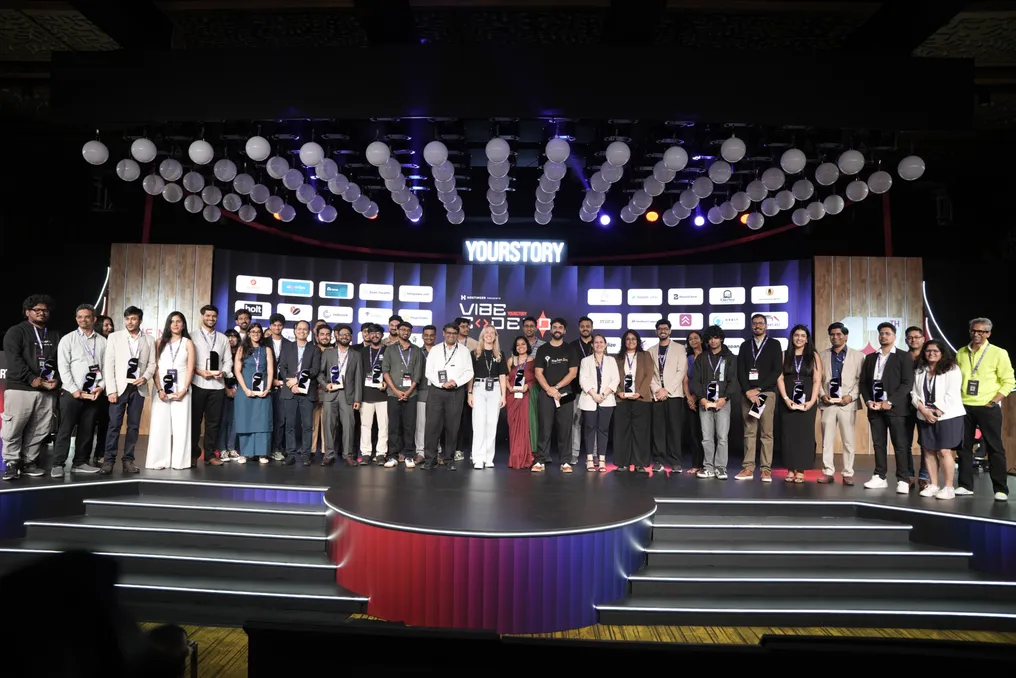
Recognizing this shift, YourStory, in collaboration with Hostinger, launched the VibeCode30 initiative at the 17th TechSparks 2026 event held in Bengaluru. The first cohort includes 30 products developed using AI to solve real-world problems—ranging from simplifying housing searches and improving financial literacy to supporting healthcare workers and optimizing daily business operations.

Unlike typical startup showcases, Vibecode30 focuses on the products themselves and their creators, regardless of whether they work independently or in small teams, and regardless of having formal programming experience.

The initial participation in this cohort comprised 207 applications from across the country, including smaller centers such as Ajmer, Silvassa, Suguli, and Tuticorin. The final 30 products cover 19 industries and 11 cities, demonstrating the wide range of problems being solved by AI-using developers. It is important to note that every selected product has moved beyond the prototype stage and is available to real users.

This cohort shows that while AI can accelerate software development, understanding the problem, validating results, and improving the product remain critical elements. It also illustrates how small, niche tasks can now become viable opportunities for innovation.

AjmerAstro

Himanshu Dadhich from Ajmer created AjmerAstro, a platform that uses AI to provide personalized astrological consultations based on Vedic and KP astrology in English and Hindi, including a system that remembers previous conversations.

AlgoTrips

Tushar Garg from Delhi developed AlgoTrips—an AI-powered travel planner that generates daily itineraries with current prices for flights, hotels, events, and transfers, allowing users to plan and book trips.

Arena

Prathik Arunkumar and Arun Kumar from Bengaluru created Arena, a tool that helps schools manage inter-house competitions through digital scorekeeping, live leaderboards, and real-time updates.

Beet.Health

Vatsl Goswami and Shivanshi Shukla developed Beet.Health, which assists nutritional clinics in managing appointments, payments, and meal plans, and allows clients to track their progress via a mobile app and WhatsApp assistant.

Bengaluru.rent

Harshit Anand from Bengaluru created Bengaluru.rent, a free platform where renters anonymously share rental prices and connect directly with landlords and potential neighbors without intermediaries.

Benki.tech

Sonam Rao, Avinash Narsimah, and Kumaraswamy BV from Bengaluru developed Benki.tech, which uses a simulated customer group to test business ideas, marketing messages, and product offerings for companies.

BloomUPSC

Guru Sasidhar Pattem, a former banker from Bengaluru, created Bloom UPSC, providing civil service aspirants with study materials, practice questions, answer evaluation, and video lessons in English and Telugu.

Boolean Beyond

Boolean Beyond from Coimbatore developed BeyondSave—a WhatsApp-based platform that allows local jewelry businesses to manage customer savings schemes, payments, and balances.

ElderNest

Shubham Jain from Bengaluru created ElderNest, a service that helps families find and compare elderly care homes across India, providing information on services, pricing, and application support.

Gold Investment Monitor

Surendhran Sivalingam from Coimbatore created Gold Investment Monitor, which analyzes 24 market signals and consolidates them into a single verdict, helping Indian households decide whether to buy gold or wait.

Holt

Debashis Nayak from Bhubaneswar developed Holt—an open-source tool for AI coding assistants that runs locally on the developer's machine, helping maintain project context between sessions.

IndianCoffeeBeans.com

Abhishek Thrilok from Hyderabad created IndianCoffeeBeans.com—a searchable directory tracking over 90 premium Indian coffee roasters and more than 1200 types of coffee.

Indiccore

Sahil Gulati and his team from Gurugram developed Indiccore, which helps civil service aspirants analyze mock test results, identify weaknesses, and refine exam strategies.

Madhav.live

Ashish Singh Shekhawat from Bengaluru created Madhav.live, allowing users to discuss daily issues with Krishna and receive guidance based on the Bhagavad Gita in their preferred language.

MagicSlides

Sanskar Tiwari from Bengaluru created MagicSlides, which instantly transforms topics, documents, web links, and YouTube videos into presentations, supporting over 100 languages.

Mira

Shagun Verma and Abhaya Trivedi from Mumbai developed Mira—an AI-powered voice assistant that helps short-term rental owners handle guest inquiries and check property availability, offering small hosts a level of service usually only available at hotels.

NextDoor.Company

Sankalp Sinha from Bengaluru created NextDoor.Company, a platform that helps job seekers find nearby startups hiring through a map featuring company information and vacancies.

Nomira

Prernaa Agarwal from Bengaluru created Nomira—a platform for women combining safety information, offline maps, traveler communities, and group trips.

Orbit Research

Aditya Singh from Silvassa developed Orbit Research, which unifies academic research tools into a single platform for article searching, citation checking, manuscript preparation, and presentation creation.

Penfight

Amarjeet Sarma and his team from Bengaluru recreated the popular game of tapping a pen on a desk in an online multiplayer format.

Pretend AI

Kareena Rogers from Pune developed the Pretend AI iPhone app, which allows users to rehearse conversations with customizable AI personas through realistic text dialogues.

RayAI

Reshma Budhia and Swetha Sree Kannan from the agency Toss The Coin in Chennai created RayAI, which helps marketing teams create campaigns, content, and design materials using shared brand knowledge and workflows.

Soma

Saurav Singhal from Gurugram created Soma, which integrates health status reports, wearable device data, nutrition, and fitness information to provide personalized health advice.

TofuBofu

Arnav Neil from Hyderabad developed TofuBofu, a tool that helps B2B companies measure and improve the frequency of AI recommendations, as buyers increasingly turn to AI for product research and decision-making.

Vitfinity

Pranay Reddy and his team from Bengaluru created Vitfinity, which teaches school-aged children financial literacy through interactive simulations and an 180-lesson curriculum.

Voqalize

Sripathi Krishnan and his team from Bengaluru created Voqalize, enabling businesses to integrate multilingual conversational AI into software applications.

Whitefield Womania

Rakshita Dwivedi and Abhishek Dwivedi from Bengaluru developed Whitefield Womania—a digital directory connecting residents with local businesses run by women.

Youdemy

Rohit Ranjan Singh from Bengaluru created Youdemy, which organizes free YouTube lectures into structured courses with point systems, learning series, and leaderboards.

Zespan

Abhishek N from Udupi created Zespan, which tracks AI agents operating in corporate environments, identifies incorrect decisions, and helps prevent repeated errors.

Zoku

Priyanshu Dangi from Bengaluru created Zoku—a development voice application that allows software developers to manage multiple AI coding agents simultaneously.
Similar stories

India launches three proprietary artificial intelligence models capable of operating offline
Read more
www.aajtak.in

India launches three proprietary artificial intelligence models capable of operating offline

The Indian government has announced a significant step in the technology sector by introducing three new domestic artificial intelligence models. These models are named EKA-1, Dhir 2B, and Dhir 5B. The Ministry of Information Technology presented these tools as part of the IndiaAI mission, developing them with an emphasis on Indian languages and business processes to reduce dependence on foreign AI models.

These three models were demonstrated during an event held in New Delhi. According to S. Krishna's Secretary of the Ministry of Information Technology and other government officials, these tools can be used in government institutions, research centers, and schools.

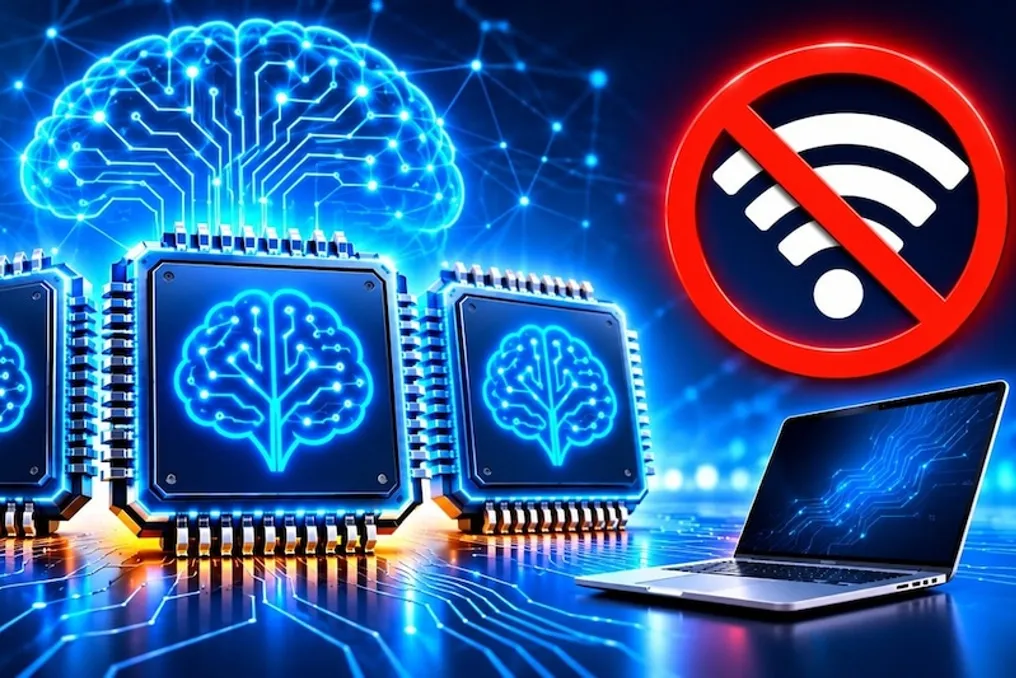
A key advantage of two of the three models is their ability to function without an internet connection, allowing them to be used directly on devices.

EKA-1 is the largest of the presented AI tools and was created by the Bangalore-based startup Soket Labs. It is a powerful, open, and hybrid language model designed to solve complex problems. The model is capable of answering difficult questions related to advanced mathematics, software, and logical reasoning, and it can also function as an AI agent to perform multiple operations.

EKA-1 is based on 26.3 billion parameters and was trained on a massive dataset of 7.5 trillion text tokens. This model understands all official Indian languages in addition to English. Thanks to its capabilities, Soket Labs specifically prepared EKA-1 for sectors such as banking financial services and cybersecurity.

The Dhir 2B and Dhir 5B models differ from EKA-1 and were developed to meet various needs. They were created by the company ZenteiQ AiTech Innovation.

The main feature of Dhir 2B and Dhir 5B is that they can operate without internet access. This does not require a large cloud server; they can be downloaded and run directly on a phone or laptop.

How Artificial Intelligence Can Make India a Global Content Exporter
Read more
yourstory.com

How Artificial Intelligence Can Make India a Global Content Exporter

India established itself in the 1990s and 2000s as a global back office for software development. At TechSparks 2026, a flagship event by YourStory, one of the founders asked whether the country could achieve similar success in storytelling. He confidently answered yes, as artificial intelligence makes video production more economical and efficient.

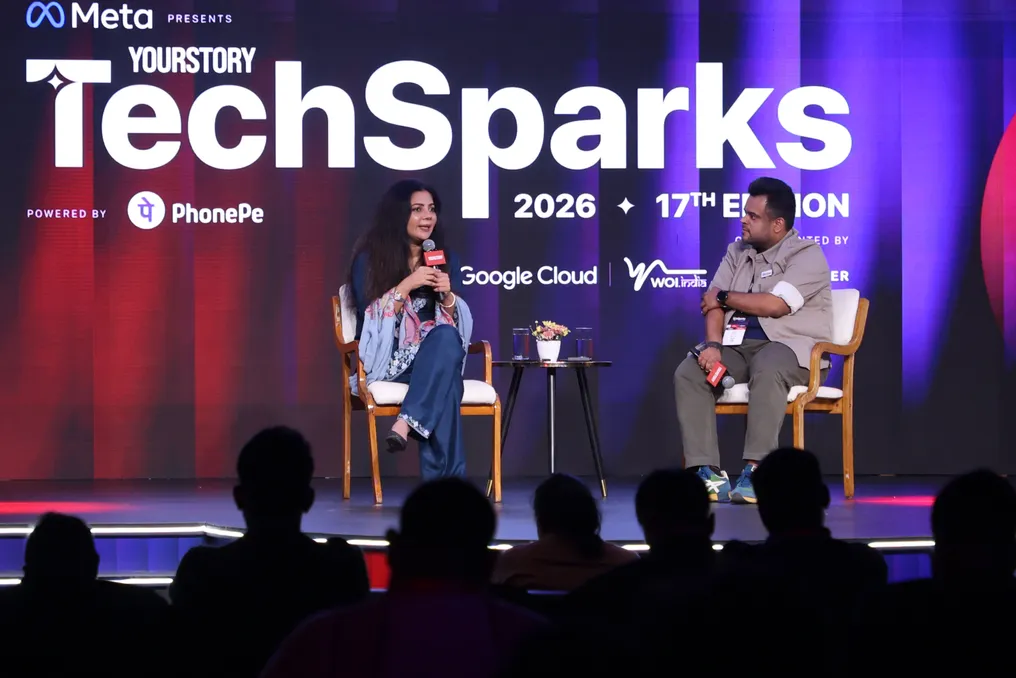
A session titled 'Can AI turn India into a global content export hub?' began with a demonstration of Dolphin AI by Saurabh Pandey, founder and CEO of Eloelo Group. This was followed by a discussion in a conversational format with Shraddha Sharma, founder and CEO of YourStory and The Bharat Project.

Pandey noted that India has long produced outstanding intellectual properties such as Baahubali, Kantara, and RRR, but rarely acted as an exporter. He compared this to Japan succeeding with anime, South Korea with dramas, China with microdramas, and the US with Hollywood, emphasizing that each of these countries used content to strengthen its soft power.

In Pandey's view, AI is changing this situation because tools previously available only to a limited number of markets are now open to everyone. Opportunities extend not only to the film industry but also to localized advertising, commercial videos, and social media content intended for international clients.

To illustrate his points, Pandey presented Dolphin AI, Eloelo's newest product. The company initially worked in live entertainment, then moved to microdramas through the Story TV app, and recently added a micro-learning application called Master.

Dolphin AI solves a common problem for content creators: creating a single video often requires stitching clips and edits from about twenty different tools. Dolphin AI replaces this process with an agent chat and a set of templates. A simple prompt allows for the creation of a complete video, while the system independently manages context and narrative continuity. Furthermore, it integrates with Claude and ChatGPT via MCP, helping authors create longer AI-based videos. The presentation concluded with a short demo reel.

When Sharma joined Pandey on stage, she reacted with pride to the demonstration, stating: 'This is amazing. It's real, and it's happening in India.'

The discussion then moved to implementation issues. Pandey reported that during the early access period, Dolphin AI generated approximately 15,000 videos in just eight days solely through organic search.

He then explained why this is important for storytellers. High-quality visual effects previously required huge budgets, which served as a filter determining who could create ambitious stories. Pandey stated: 'With AI, with tools like Dolphin AI, we aim for you to be able to release content without any gatekeepers.' He clarified that AI does not replace actors but replaces expensive locations; for instance, a historical drama no longer needs a real palace. Since distribution has become largely algorithmic, a storyteller from India can reach an audience in the US or Europe.

When asked about the reasons for India's lag, Pandey did not blame creativity. He compared South Korea, with 52 million inhabitants and a content export economy worth about $15 billion, to India's population of 1.4 billion. He countered: 'I would refuse to believe that we lack creativity.' In his opinion, success requires the combination of technology, aspiration, distribution, and capital, and Indian developers too often viewed the domestic market as the only significant one.

Regarding whether microdramas can become a viable business in India, Pandey cited the example of China, where this category brought in about $8 billion in revenue last year and is now growing to $10–11 billion, with one platform earning more than China's entire box office. In India, he said, the aggregate growth rate of the top four or five players exceeds 5,000 crore rupees, achieved in about 18 months.

Historically, high production costs were a barrier, consuming 50–60% of revenue. AI, according to Pandey, finally solves the supply problem. He compared this to the moment of rapid commercialization in the entertainment sector. Pandey expects platforms to consolidate around two or three players, similar to what happened in food delivery and e-commerce, but the supply will remain open. Eloelo released 200 new microdramas last month for its Story TV platform and collaborates with about 90 production companies, a number he predicts will double.

He advised new entrants to focus on the supply side. Small, agile AI studios, consisting of several editors, promo producers, and line producers, can supply microdramas and OTT content to platforms. He urged writers and producers to view AI as a brainstorming partner and proposed the idea of creating an AI-made 'Mahabharata.' Pandey concluded: 'The next Disney or the next major intellectual property can be created right now if the right supply engine appears, because the demand is very obvious.'

Pandey added that Eloelo, which grew from one platform to five, is currently not planning an immediate IPO and is focused on sustainable growth while building the foundation for India's global ambitions.

Sharma noted that Pandey's journey from a Flipkart employee to a globally operating founder serves as a reminder of what Indian ambition can achieve. She urged the audience to tell their teams and networks that the window of opportunity for development in this area is open. The session suggested that if India managed to turn code into global exports, stories could be next.

Murf AI Co-founder Claims Indian Voice AI Challenges Could Influence Global Technology
Read more
yourstory.com

Murf AI Co-founder Claims Indian Voice AI Challenges Could Influence Global Technology

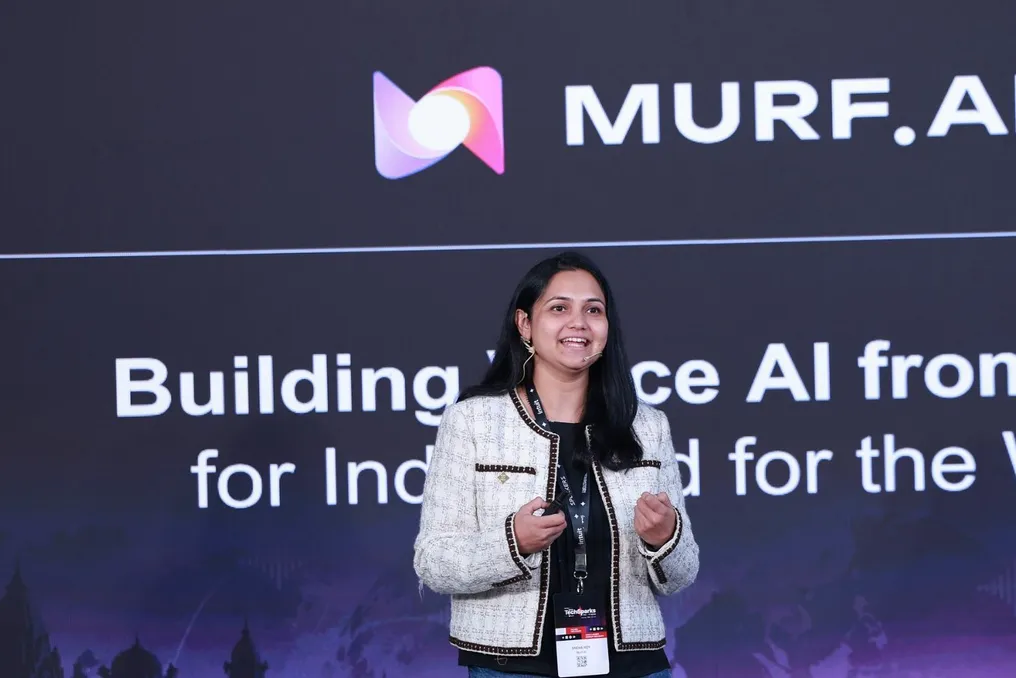
The co-founder of Murf AI believes that the complexities associated with voice artificial intelligence in India have the potential to shape global technological trends. What Indian users consider ordinary conversation could become the most difficult test for voice AI, and solving this challenge will open up new possibilities worldwide.

Voice AI is capable of answering questions, confirming orders, or assisting with bookings. However, the question arises: can it correctly pronounce an Indian name, understand an address spoken in a mix of Hindi and English, and respond quickly enough to sound natural?

For Sneha Roy, co-founder and COO of Murf AI, such scenarios are not exceptional; they represent the baseline for creating voice AI that will function in India, and ultimately, globally.

During a masterclass at the TechSparks 2026 event titled 'Building Voice AI from India, for India and for the World,' Roy explained how India's linguistic complexity, infrastructure limitations, and economic considerations affect speech technology development.

She cited examples of products that were first adapted for Indian users before finding broader application. Google Maps implemented offline functionality for areas with limited internet access, and Netflix introduced a mobile-only plan that has since been adopted in 78 countries. Uber tested cash payments in Hyderabad before expanding this option to other markets.

Roy posits that voice AI can follow a similar path. For instance, when calling to check a delivery status in Bengaluru, a customer might mix English with a regional language, use a local pronunciation of an address, and expect the postal code to be spoken numerically.

A model built on standardized English may struggle with such nuances. Roy emphasized: 'If a customer has to change their manner of speaking so that the agent can cope, or constantly repeat their address or name, then we have not finished developing it.'

In her view, the task is to create systems that accommodate people's natural way of speaking, rather than requiring customers to adapt to the technology.

Natural speech is only one part of the problem. Voice agents must also react quickly and operate efficiently at scale when companies process millions of calls monthly. Roy reported that a complete voice agent pipeline, including speech recognition, language modeling, and speech generation, typically has a response budget of 500 to 800 milliseconds. She added that Murf has managed to reduce the latency of its text-to-speech model below 100 milliseconds, including network delays.

To achieve this, the company developed Falcon 2—a smaller speech model designed to run on a wider range of GPUs instead of depending on specific, high-performance hardware. Roy noted that this approach helped maintain low latency across different geographical regions while improving cost-effectiveness.

Similar engineering solutions could be beneficial for markets outside India, especially where computational infrastructure is limited or deploying voice agents at scale remains expensive.

Roy also highlighted the importance of a responsible approach to voice data. She mentioned that Murf collaborates with over 400 voice actors globally through long-term, royalty-based partnerships and does not clone voices without consent.

For clients with strict privacy requirements, the company offers APIs that can process data without storing it, as well as on-premise deployments for sensitive applications. Roy's central thesis is that India's linguistic diversity and infrastructural constraints should not be viewed as secondary requirements; they can help define what voice AI must do before it is ready for widespread adoption. As she put it: 'India is the capital of world specifications.'

Popular