
Last olive oil harvest from Gaza used in UAE campaign to plant 714 trees
Read more
Khaleej Times
www.khaleejtimes.com

Last olive oil harvest from Gaza used in UAE campaign to plant 714 trees

The last batch of olive oil collected by a Palestinian family in Gaza before the destruction of their trees has become a central element of a fundraising campaign in the UAE. Proceeds from this campaign will be directed towards restoring olive tree plantings in the area.

The initiative, titled 'The Last Harvest,' is organized by the Palestinian olive oil brand Jenin in collaboration with The Big Heart Foundation (TBHF). Bidding starts at Dh25,000 and runs until noon on November 11th. Residents of the UAE aged 18 and over can participate.

The collected funds will allow for the planting of approximately 714 olive trees in Gaza, helping families restore a source of income lost during the war. The olive oil itself was transported to the UAE from Deir al-Balah in Gaza after a difficult journey and represents the final yield for many families in the city whose olive trees were destroyed by military action.

To preserve the significance of this oil, Palestinian artist Lamees Abu Aker designed a glass container for its storage. This container was handcrafted by artisans in Jabalia, West Bank. Its shape resembles oil dispensers commonly found on Palestinian tables. Inside, in the form of a seed, the oil is stored above a base made of burnt olive wood. Tala Hammash, co-founder of Jenin, noted: 'The oil inside this work of art will never be consumed, but it can help new trees grow and make future harvests possible.'

The Arab Nature Protection (APN) reports that about 90 percent of olive trees in Gaza have been destroyed. According to APN estimates, production dropped from 55,000 tons in 2022 to only 1,000 tons in 2025. Furthermore, a UN assessment from August 2026 showed that only 3 percent of Gaza's agricultural land remained simultaneously accessible and undamaged in June. Until October 2023, agriculture provided employment for over 560,000 people in Gaza.

For families, the loss goes beyond mere income. Mariam Al Hammadi, a member of the TBHF advisory board, emphasized: 'When an olive tree is destroyed, a Palestinian farming family loses much more than just a source of income. We want Palestinian children to inherit olive groves, not just memories of trees that once stood here.'

Even those who cannot participate in the auction of the last olive oil harvest can contribute to the campaign in small amounts. Various ways to help exist: donations starting from Dh35, which is enough to plant one tree; purchasing limited edition Fallaheen Reserve olive oil from Jenin, with profits going to charity; and fundraising through the YallaGive appeal, which aims for Dh350,000 to plant 10,000 trees.

All collected funds pass through TBHF and are transferred to APN, which uses them for replanting olives, including its 'Revive Gaza's Farmland' program. TBHF is a charitable organization based in Sharjah, founded by Sheikha Jawahar bint Mohammed Al Qasimi, who is also a prominent advocate for refugee children at UNICEF.

Similar stories

Generation Z: Prioritizing Mental Peace or Apathy Towards Relationships?
Read more
www.aajtak.in

Generation Z: Prioritizing Mental Peace or Apathy Towards Relationships?

There is often talk about Generation Z, asserting that they are not serious about relationships, quickly distance themselves from people, and end communication over trivial matters. These habits—not replying to someone repeatedly, ending a relationship due to bad behavior, or easily failing to express feelings—are often linked to emotional unavailability.

However, does Generation Z truly not want to be emotionally connected, or are they simply prioritizing their mental peace?

Modern youth are much more aware of their needs and boundaries in relationships compared to previous generations. For Gen Z representatives, merely being in a relationship is not enough; it must include respect, trust, and mutual understanding. If someone constantly ignores their feelings or causes them mental discomfort, they consider it wiser to leave that relationship.

Personal boundaries and self-respect are very important to Gen Z. They do not feel the need to be constantly available, respond to every message immediately, or meet the expectations of others. Nevertheless, sometimes the line between setting personal limits and avoiding difficult conversations blurs. In such cases, people prefer to suddenly withdraw rather than voice their feelings.

Social media has changed the approach to understanding and maintaining relationships. Terms like ghosting, benching, and emotional unavailability have become part of everyday language. Furthermore, constant online presence and comparing oneself to the lives of others changes expectations regarding relationships. Many young people preemptively distance themselves to avoid unhealthy relationships or emotional trauma.

It is incorrect to claim that all of Generation Z is emotionally unavailable. Many young people still strive for deep and lasting relationships, but they are unwilling to maintain relationships at the cost of their self-identity and mental peace. Although avoiding difficult conversations to preserve one's calm is also not the right approach.

Ultimately, prioritizing mental peace is not a mistake. However, it is equally important to honestly state one's position in a relationship and respect the partner's feelings. Perhaps Gen Z is not running away from love, but rather seeking relationships where they will not have to lose themselves.

How to apply for a food ration card if you don't have one, and for which programs it is required
Read more
www.aajtak.in

How to apply for a food ration card if you don't have one, and for which programs it is required

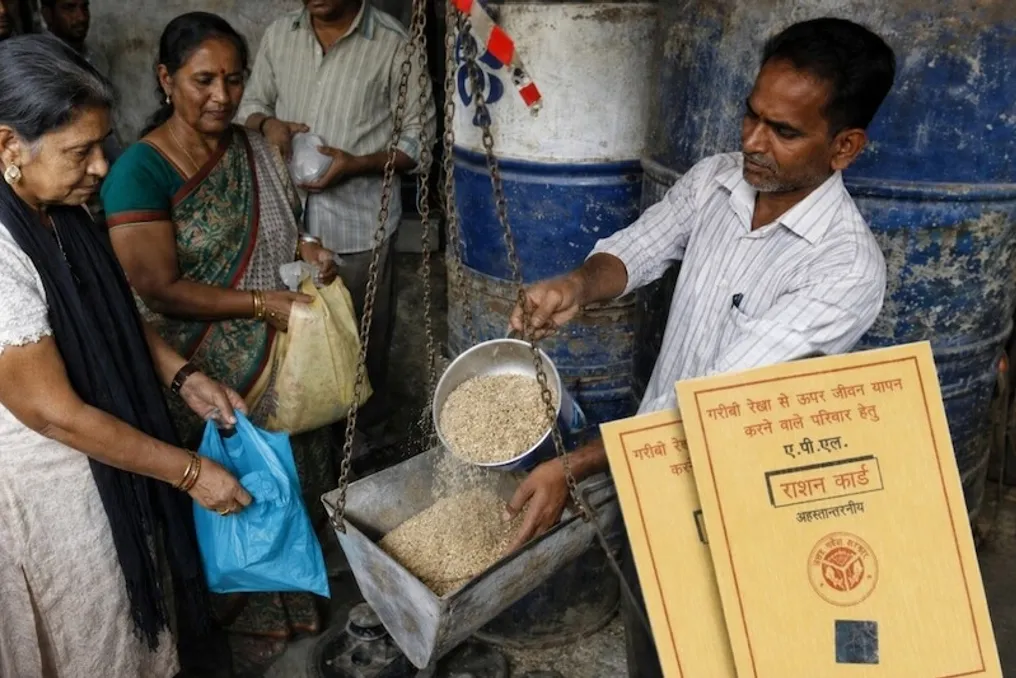
A Ration Card serves not only as a document for obtaining subsidized or free grain but also for identifying a family and providing information about its members in several government programs. For example, the 'Pratishka Shri Mahatma Undergroundji' (PMUY) program requires the presence of a card or another government document confirming the family composition. Similarly, in the 'Ayushman Bharat Pradhan Mantri Jan Arogya Yojana' (AB PM-JAY) program, the card is used for family identification, although this is not a mandatory requirement for every beneficiary.

Why is a food ration card important?

Thanks to this card, needy families receive grain at a reduced price or for free in government stores. Furthermore, it is an important document related to family members and their identities, which is used in various government initiatives to confirm family data. However, it is important to understand that the food ration card is not mandatory in all government programs; some programs accept other government documents. Therefore, before applying for any program, you must check the eligibility criteria and required documents.

Necessity of a card in the Pratishka Shri Mahatma Undergroundji program

Under the PMUY program, designed for poor families, adult women are provided with gas connection (LPG) without a deposit. To meet the program requirements, the woman must be at least 18 years old, and there should not already be an existing connection in the name of anyone in the family. In this program, the food ration card is used to confirm the composition and number of family members. If the card is unavailable, another valid document confirming the family composition issued by the state or central government may be provided.

Documents required for the PMUY program

If the current address is correctly mentioned in the Aadhaar identity card, it can be used as proof of address. If the address differs, valid proof of address must be provided. Under this program, beneficiaries eligible for a deposit-free connection are also provided with the first gas supply in a cylinder and a stove free of charge.

Is a card required in the Ayushman Bharat program?

Under the PM-JAY program, eligible families can receive treatment without payment up to ₹500,000 annually. First and foremost, it is necessary to ensure that your name is included in the government list of beneficiaries. It should be noted here that for Ayushman card application, it is not required for every person to have a food ration card. According to the National Health Authority (NHA), Aadhaar or another valid government document can be used for beneficiary identification, and for family identification—a food ration card or another valid family document.

What to prepare for the Ayushman card application

Eligibility criteria and document requirements may vary depending on the beneficiary category and the state. The Ayushman Vay Vandana Card program has been launched for all citizens over 70 years of age under AB-PMJAY, which provides them with cashless treatment up to ₹500,000. Electronic verification based on Aadhaar is required for registration in this category, and Aadhaar itself is the primary document.

How to apply for a card if you don't have one?

If you do not have a food ration card, you can apply through your state's Department of Food and Civil Supplies. Online services are available in most states. The method of application may vary slightly depending on the state.

How to check the status after an online application?

After submitting the application form for a food ration card, it is crucial to save the application reference number. With it, you can check the application status on the website of your state's Department of Food and Civil Supplies. If any deficiencies are found in the application, the department may request additional information or documents.

Who can apply for a food ration card?

In India, the right to apply for a food ration card primarily belongs to families that meet the established conditions of the respective state government or union territory. Poverty alone is not the sole criterion. Eligibility is determined based on family income, employment, financial status, and social circumstances. States determine eligible families according to the National Food Security Act (NFSA), 2013. Generally, families from these categories may be given priority...

However, belonging to any of these categories does not guarantee receiving a food ration card. You must also check the rules and eligibility conditions of the state. Before applying for a food ration card, be sure to familiarize yourself with the official eligibility conditions of your state.

Popular