Usman Khawaja claims the entire Australian team was involved in the ball-tampering scandal eight years ago
Read more
Aaj Tak
www.aajtak.in

Usman Khawaja claims the entire Australian team was involved in the ball-tampering scandal eight years ago

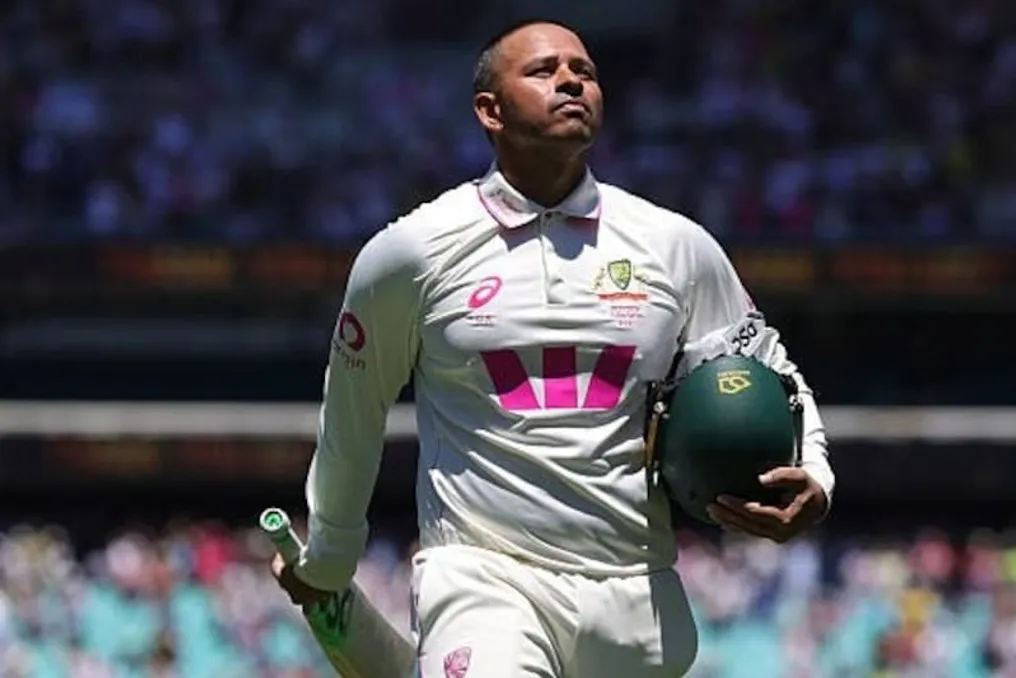
Former Australian player Usman Khawaja made a shocking statement regarding the 'Sandpapergate' incident of 2018. He asserts that information about the ball manipulation was known not only to Steve Smith, David Warner, and Cameron Bancroft, but to the entire Australian team.

According to Khawaja, similar use of sandpaper occurred previously in the match between Gekebrah and South Africa. These statements were made by him in an interview with the Sydney Morning Herald, and are also mentioned in his forthcoming autobiography, 'Sabr'. Khawaja emphasized: 'It was all of us. Neither players, nor bowlers, nor staff were different. We all knew about it.'

He noted that after the incident, he appealed to the team players to take collective responsibility for what happened. However, his opinion was ignored, and Steve Smith, David Warner, and Cameron Bancroft received punishments.

In March 2018, during a match in Cape Town against South Africa, Cameron Bancroft was filmed sanding the surface of the ball with sandpaper. Following this, then-captain Steve Smith admitted that a group of team leaders had planned the ball manipulation.

After the investigation, Cricket Australia imposed sanctions: Steve Smith and David Warner received a 12-month ban each, and Cameron Bancroft was suspended for nine months. Additionally, Smith was banned from captaining for another 12 months. David Warner's lifetime captaincy ban was lifted in 2024.

Usman Khawaja also questioned the investigation process itself. He stated that he was present with Cameron Bancroft throughout the match, but Cricket Australia did not interview him. He expected contact from officials but was not reached. Khawaja believes that management knew he would speak about the team's collective responsibility, which is why his testimony may not have been accepted.

He expressed surprise that the investigation concluded and the players were punished, yet he was never asked about it. Khawaja mentioned that before the recent tour to South Africa, he told Pat Cummins about his intention to openly write about the dispute in his book. He feels that Steve Smith, David Warner, and Cameron Bancroft carried the burden of this incident alone for too long, and now he wants to reveal the truth to put this dispute behind them.

Similar stories

India and New Zealand Squads Ahead of First ODI in Auckland: Changes in India's Lineup
Read more
www.aajtak.in

India and New Zealand Squads Ahead of First ODI in Auckland: Changes in India's Lineup

The first ODI match between India and New Zealand will take place in Auckland. Indian captain Shubman Gill decided to win the toss and start the game with a toss. For this match, the Indian team selected four fast bowlers.

Gill explained his choice by noting that there are clouds overhead and mentioned that if the number of overs is limited due to weather conditions, having a target on the board would be advantageous. The team expressed enthusiasm and readiness for the series. Gill also suggested that the conditions in New Zealand would be very similar to those found in South Africa.

Four fast bowlers were included in the Indian squad: Anshul Kamboj, Akib Nabi, Guruveer Barar, and Arshdeep Singh. Additionally, Axar Patel and Naman Dir were part of the starting lineup. The team also includes captain Shubman Gill, Rohit Sharma, Virat Kohli, Shreyas Iyer, and KL Rahul.

It should be noted that the squad was different in the last match against West India, which took place on October 3rd in New Chandigarh: Shubman Gill (captain), Rohit Sharma, Virat Kohli, Rituraj Gaikwad, KL Rahul (wicketkeeper), Nitish Kumar Reddy, Naman Dir, Anshul Kamboj, Kuldeep Yadav, Mohammed Siraj, Guruveer Barar. In that match, Mohammed Siraj, Rituraj Gaikwad, Kuldeep Yadav, and Nitish Reddy did not get a chance.

In that match on October 3rd, the Indian team scored 351/7 runs, but thanks to Sai Hope's unbeaten knock of 162 runs, West India won by 5 wickets with 10 balls remaining. Nevertheless, the Indian team won the series 2-1.

New Zealand captain Mitchell Santner announced that Devon Conway sustained a head injury the day before and will rest, thus not participating in this match. He will be replaced by Tim Seifert. Santner discussed the top order of the New Zealand team, specifying that Tim Seifert, Will Young, and Henry Nicholls will start the game. He also touched upon player opportunities and squad depth. According to Santner, due to the tight schedule of both teams, players are rotated, giving new players a chance to prove themselves. He also noted that the New Zealand team, like India, will take the field with four bowlers.

India Squad: Shubman Gill (captain), Rohit Sharma, Virat Kohli, Shreyas Iyer, Axar Patel, KL Rahul (wicketkeeper), Naman Dir, Anshul Kamboj, Akib Nabi, Guruveer Barar, and Arshdeep Singh. New Zealand Squad: Tim Seifert, Will Young, Henry Nicholls, Daryl Mitchell, Tom Latham (wicketkeeper), Glenn Phillips, Mitchell Santner (captain), Nathan Smith, Kyle Jamieson, Jacob Duffy, and Blair Tickner.

Team management's decision to exclude Vaibha called into question Gautam Gambhir's aggressive strategy
Read more
www.aajtak.in

Team management's decision to exclude Vaibha called into question Gautam Gambhir's aggressive strategy

The Indian team under the leadership of Gautam Gambhir is supposed to play aggressively, dominate opponents, and leave no chance for the rival. However, the team management's decision in the fourth T20 match in Auckland called this philosophy into question. Former player Vaibha Suryawanshi, who created history with Abhishek Sharma by scoring 118 runs in the powerplay in the previous match, was excluded from the starting lineup.

Captain Shreyas Iyer stated the need to remain 'ruthless,' but facing a mountain of 260 runs, the Indian team's game turned chaotic: two wickets fell in the very first over, undermining hopes of victory. The question arises: what kind of aggressive strategy excludes the most explosive player?

When the fielding team New Zealand set a target of 260 runs, the Indian batsmen found themselves in a difficult position. The hosts secured a convincing victory by 87 runs, and India could not get close to the target score. The team, which hoped for a 4-0 win, was forced to accept a bitter defeat.

Gautam Gambhir prefers aggressive cricket, and his team is not afraid to pursue big goals. Batsmen are given the freedom to play openly, and players are expected to take wickets from bowlers. Nevertheless, there is a fine line between aggression and blind experimentation, which the team management may have forgotten to observe in Auckland.

India already had an undisputed advantage of 3-0 in the series. The fourth match provided an opportunity to solidify the success and take the lead at 4-0. However, Gambhir and his colleagues made a decision that caused the most surprise.

In the previous match, Abhishek Sharma and Vaibha Suryawanshi demonstrated excellent performance against the New Zealand bowlers, scoring 118 runs in 6 overs during the powerplay. This was the highest score in the powerplay for any team in T20 international matches. This figure was not just a record; it testified to the strength of the batsman combination that took the opponent out of the game in the first overs. Vaibha and Abhishek understood each other's game and attacked the bowlers.

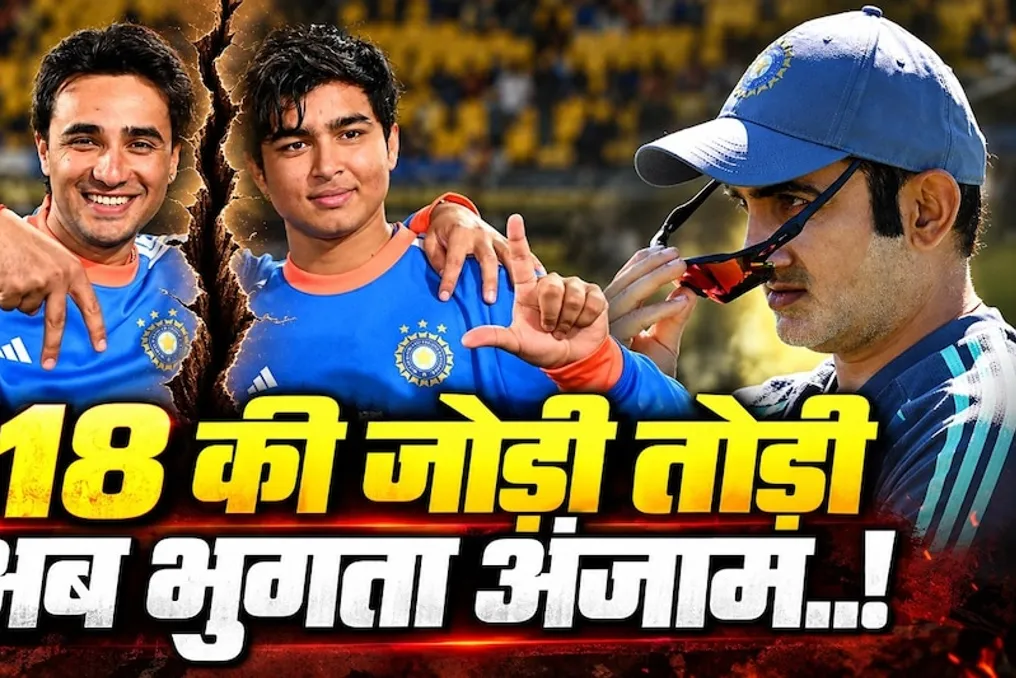
However, in the next match, this pair was separated: Vaibha was excluded, and Ishan Kishan came in his place. The question is not about Ishan's ability, as he is also capable of winning a match. The question is why Vaibha had to be excluded? Does the record of the previous match hold so little value for the team management? Should a player have to prove their worth in every match, yet historical performance is insufficient to maintain a spot in the team?

Gambhir should ask himself: what was the basis for breaking up the batting pair that set the record?

During the toss, captain Shreyas Iyer stated: 'We don't want to leave any chances. We have already won the series, but I think our half of the job is done. It is important to remain ruthless.' The captain's words sounded impressive, but ruthless play is not achieved through statements alone; it requires clarity in decisions. If the team's goal is not to give the opponent any chances, then why was the opening pair that destroyed the opponent in the previous match broken up?

Iyer is the captain, and the responsibility for team selection decisions lies jointly with the coach and the captain. Therefore, the captain cannot avoid questions about this change. Did he support the decision to exclude Vaibha? Did he not feel that the pair that scored 118 runs should have been retained?

The captain's task is not only to choose between bowling or batting after the toss. He is also responsible for the team's on-field strategy and for trusting the players. When you talk about ruthless play, you must show the same clarity regarding your successful players.

New Zealand, batting first, scored 259 runs in 20 overs, losing 7 wickets. Glenn Phillips scored 107 runs off 49 balls, and Michael Bresshaw complicated matters for the Indian bowlers, scoring 65 runs off 25 balls.

India faced a target of 260 runs. It was a serious challenge, but not insurmountable. Based on how the Indian batsmen behaved when chasing big targets in previous matches, it was expected that the team would start aggressively again. However, Sanju Samson was dismissed after scoring 4 runs in the second ball. Ishan Kishan also returned to the dressing room without scoring a single run on the fifth ball. Abhishek Sharma (27) was dismissed in the fifth over.

The team that habitually scored 118 runs in the powerplay lost three major wickets already in the fifth over. Here arises the biggest question regarding Gambhir's strategy: if the team relied on aggressive play, why was the batsman who best executed this strategy excluded?

India's defeat was not only caused by the decision to exclude Vaibha. The Indian bowlers also failed to cope...

_
Expert discusses the rush with player Vaibhav Suryavanshi and his new position in the third T20 match against New Zealand
Read more
www.aajtak.in

Expert discusses the rush with player Vaibhav Suryavanshi and his new position in the third T20 match against New Zealand

The Indian team is preparing to play the third T20 match against New Zealand, scheduled for Tuesday, October 27, and both teams could present a high-scoring encounter.

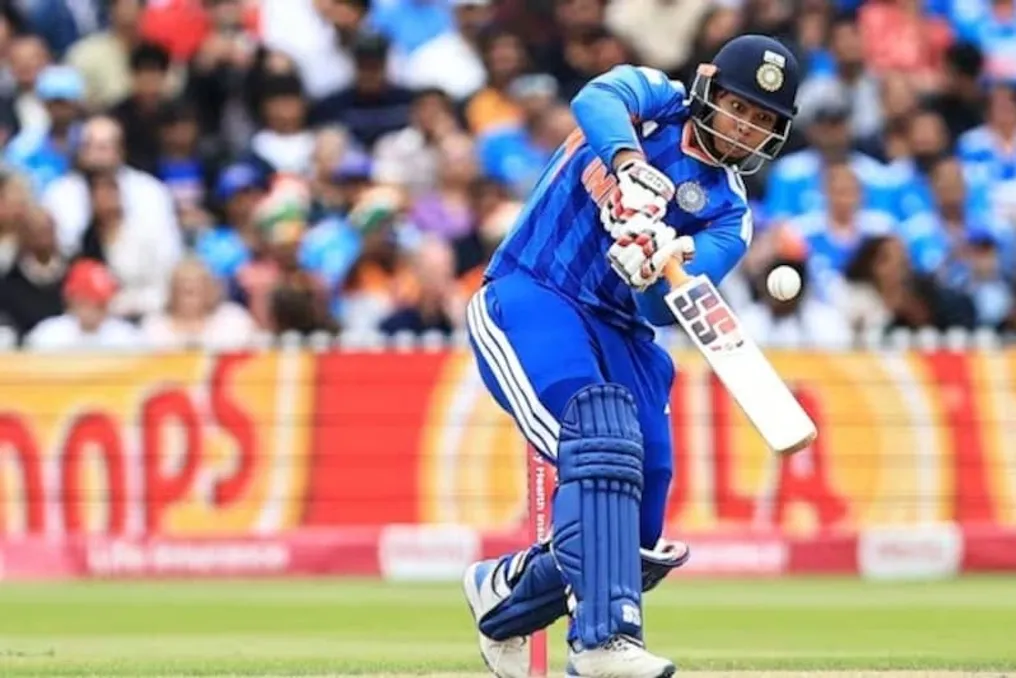
Vaibhav Suryavanshi, who has attracted attention due to his powerful playing style, has once again become a subject of discussion ahead of this match.

Former Indian cricketer and commentator Akash Chopra shared his opinion regarding Vaibhav Suryavanshi's game and his position in the squad. Analyzing the game on his YouTube channel, Chopra noted that young players like Vaibhav Suryavanshi are not lacking in talent, but they need the right environment and proper batting order to establish themselves at an international or higher level.

He emphasized that sudden excessive pressure or placing a player in a position where he feels uncomfortable does not contribute to his development. According to Chopra, the national team management and staff should ensure the proper utilization of young talent so that he can freely demonstrate his natural playing style without unnecessary psychological stress.

Akash Chopra continued, noting that this young athlete has successfully demonstrated his productivity in the IPL. Nevertheless, he reminded that maintaining the same form for a long time is very difficult. Chopra advised the Indian team management to avoid any haste regarding Vaibhav.

Continuing his thought, Akash Chopra stated that Vaibhav should be given the opportunity to bat at the top order in upcoming matches, as the team will not get a better chance. He also added that since being included in the team, Vaibhav has only been training on the field, so his form cannot yet be established.

Popular