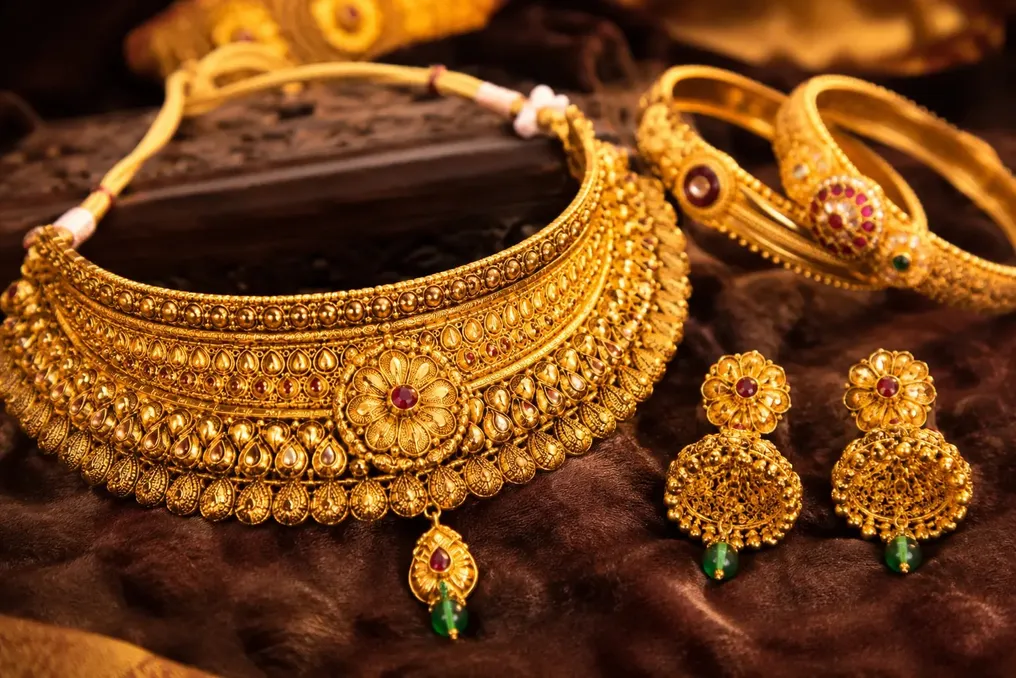
GST Rules for Gold Jewelry: Single Rate on Full Product Value
Read more
Aaj Tak
www.aajtak.in

GST Rules for Gold Jewelry: Single Rate on Full Product Value

Many buyers assume that different tax rates apply to the cost of gold and the making charge when purchasing gold items, under the Goods and Services Tax (GST). However, current government regulations stipulate otherwise. When purchasing finished items made of gold, silver, or diamonds in a store, the GST is applied at a single rate on the total value. Even if the making charge is listed separately on the bill, the tax rate does not change.

Let's examine how the tax is calculated when buying jewelry. For instance, if a gold chain costing ₹1,40,000 was purchased, including gold worth ₹1,28,000 and a making charge of ₹12,000, then according to the rules, 3% GST will be levied on the entire amount. Thus, the tax amount will be ₹4,200. The tax is not calculated using separate rates for the gold value and the making charge.

Some customers mistakenly believe that a 3% rate should apply to the gold value, and a 5% rate to the making charge. Nevertheless, the GST rules clearly state that 3% GST is charged on the total value of the jewelry transaction. Regardless of whether the making charge is included in the total price or listed separately on the bill, the GST rate remains unchanged.

If the tax were calculated using different rates for the same chain costing ₹1,40,000, a different amount would result. Applying 3% GST to the gold value (₹1,28,000) yields ₹3,840, while applying 5% GST to the making charge (₹12,000) results in ₹600. The sum of these two taxes would be ₹4,440. However, the correct tax, calculated on the full product value including gold and making charge at a 3% rate, is ₹4,200. Consequently, if a jeweler levies taxes using separate rates for gold and making charge, the buyer will have to pay ₹240 more. Therefore, attention should be paid to this when purchasing jewelry and details should be clarified with the seller if there are any doubts.

The 5% GST rule applies to job work. This occurs when a jewelry dealer entrusts their gold to a craftsman for manufacturing, and the craftsman returns the item. In this case, 5% GST may be levied on the craftsman's labor (job charge). This is a transaction between the dealer and the craftsman and should not be considered when calculating GST for the end consumer purchasing a finished item in a store.

If the craftsman who manufactures the items is registered under the GST system, they charge 5% GST for their work. The jewelry dealer can claim this tax as an input tax credit. At the same time, if the craftsman is exempt from GST registration, the dealer may have to pay the tax themselves under the reverse charge mechanism in certain circumstances. This is regulated by the relationship between the dealer and the craftsman and is not grounds for adding 5% GST to the bill for the client's finished item.

Even after the GST 2.0 changes, the tax rate for the gemstone and jewelry sector (James & Jewellery) remains at 3%. This was confirmed at the 56th meeting of the GST Council held on September 3, 2025. The clarification regarding the application of 3% GST to the total value of the jewelry item also remains valid, as stated in Invest India's frequently asked questions for this sector.

According to government FAQs, 3% GST on gold and silver has been in effect since July 1, 2017. This rate was established for gold and silver stocks held by banks and authorized agencies during the transition from the VAT system to the GST system. Furthermore, 3% IGST is levied on the import of precious metals in addition to the basic customs duty, which banks can claim as an input tax credit.

When purchasing jewelry, always check the bill. If you are buying a finished item made of gold, silver, or diamonds, the bill must show a 3% GST rate on the full value. For example, for an item worth ₹2 lakh, the GST will be ₹6,000. The fact that the making charge is listed separately does not change the tax rate. However, if you are sending your gold for manufacturing or repair, the tax calculation may differ. In such cases, you need to request information from the jeweler regarding the GST calculation basis on the bill.
Similar stories

Experts offer advice on buying gold or silver before holidays
Read more
www.aajtak.in

Experts offer advice on buying gold or silver before holidays

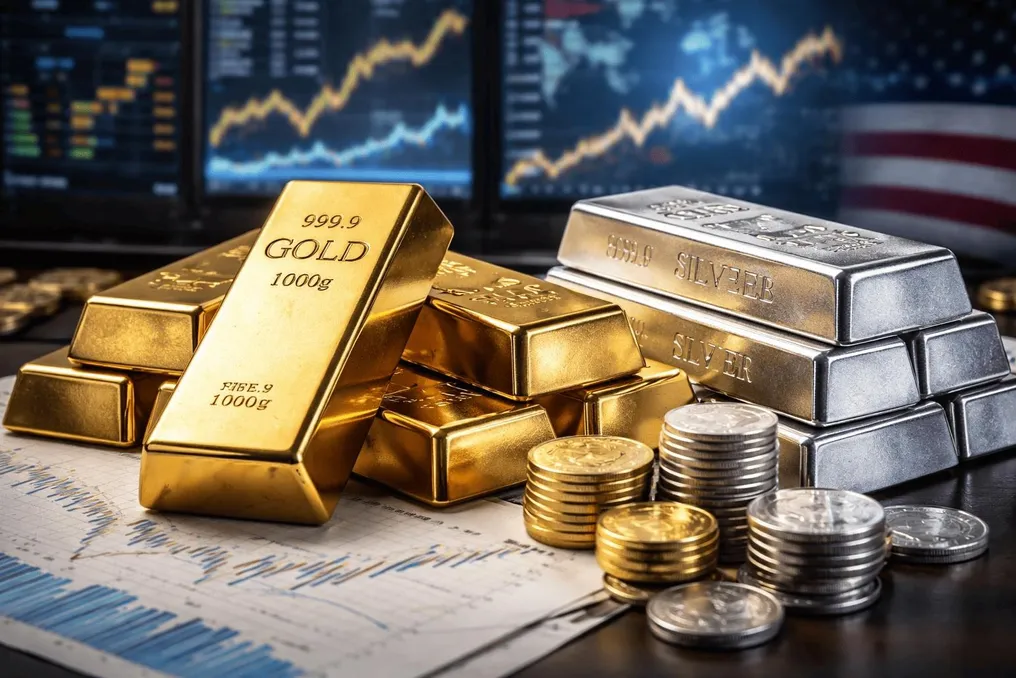
Buying gold and silver is a long-standing tradition for Indian families during festivals such as Dhanteras and Diwali. Some purchase jewelry, while others bring home gold and silver coins or bars. However, significant fluctuations in the prices of these metals recently have put buyers in a difficult position. Therefore, before purchasing gold or silver during this festive season, it is important to understand why their prices are changing, what factors might cause future increases, and what to consider when investing in these metals.

Gold and Silver Price Dynamics This Year

In January 2026, the price of gold on the international market reached approximately $5600 per ounce, and silver exceeded $100 per ounce. Following this, there was a sharp drop in the prices of both metals. When the price of gold fell below $4000, silver also experienced a significant decline, after which both prices recovered. The rupee exchange rate against the dollar has also influenced the cost of these metals in the Indian market.

Risks and Returns of Gold and Silver

The main difference between gold and silver lies in their volatility. Gold is generally considered a safe and stable asset. At the same time, the price of silver can rise faster than gold during growth periods, but it can also lead to more significant losses when falling. According to a report by Motilal Oswal Financial Services, gold represents a relatively stable option, whereas silver is a riskier investment instrument. Therefore, it is crucial to assess one's risk tolerance before investing.

Factors Affecting Gold and Silver Price Changes

The prices of both metals are influenced by the US dollar exchange rate, monetary policy, and interest rates set by the American central bank, crude oil prices, inflation, and global tensions. A strengthening dollar and rising interest rates in the US can put pressure on gold and silver prices. On the other hand, wars, economic uncertainty, and rising inflation prompt investors to turn to precious metals. Furthermore, the demand for silver depends on its industrial use. The need for silver in electronics, solar panels, and other industries affects its value.

Is it more profitable to buy gold before Diwali?

According to trends over the last 10 years, gold typically performed better in the 30 days leading up to Diwali than in the subsequent 30 days. For instance, in 2025, gold increased by approximately 20% in the month before Diwali. Nevertheless, in 2016 and 2021, gold prices also declined before Diwali. Consequently, this trend does not guarantee future price increases. One should also not make a decision to buy silver based solely on the festival date.

Why are global central banks buying gold?

Central banks worldwide are increasing gold purchases to diversify their currency reserves. According to the World Gold Council, between July and September 2026, central banks acquired a net of 321 tonnes of gold. During the same period, 211 tonnes were bought through gold ETFs. This demand may provide long-term support to gold prices. Although a significant portion of silver demand is also driven by industrial use.

Important Points When Investing in Silver

Silver investors should be prepared for sharp price changes, as its value is influenced by both investment demand and industrial needs. Increased demand for silver in sectors such as solar panels and electronics can raise its price. However, a weakening of industrial demand can also create downward pressure on prices. Therefore, when investing in silver, it is necessary to consider not only the potential for growth but also the risk of decline.

What is better to buy: jewelry, coins, or gold-silver ETFs?

If the purchase is for family or wedding jewelry, jewelry might be the best option. But if the goal is purely investment, options like coins, bars, and ETFs, where the metal is not stored at home, can be considered. Jewelry includes manufacturing costs that cannot be recovered upon resale. Meanwhile, investing through an ETF allows for capital deployment without owning physical metal. Each option carries its own costs and risks.

What to look out for when buying gold and silver?

Experts believe that the potential for long-term investment in gold and silver remains, but price fluctuations may continue in the near future. Navneet Damani and Manav Modi from Motilal Oswal advised considering a purchase during price dips rather than rushing to buy at high prices. Thus, when acquiring these precious metals, one should consider their needs, budget, and investment horizon, rather than relying on the hope of inevitable price increases in the coming days.

22-karat gold price today is 1.30 lakh rupees; find out the cost of 10 grams of jewelry
Read more
www.aajtak.in

22-karat gold price today is 1.30 lakh rupees; find out the cost of 10 grams of jewelry

Residents of the country traditionally wait for the festivals of Diwali and Dhanteras to purchase gold and silver, as buying these metals on Dhanteras is considered auspicious. This time, a large-scale purchase of gold jewelry is expected, especially by women, who view it as an investment and a connection to the arrival of Lakshmi.

If you plan to buy jewelry on Dhanteras, you should pay attention to certain points to buy pure items at a fair price and avoid being misled by jewelers. Online purchases are less likely to have such problems, but caution should be exercised when visiting physical stores.

When buying gold from jewelers, you must carefully examine the bill to ensure which charges have been included. Jewelers often add various payments to the bill to mislead customers, and buyers lacking sufficient information cannot object.

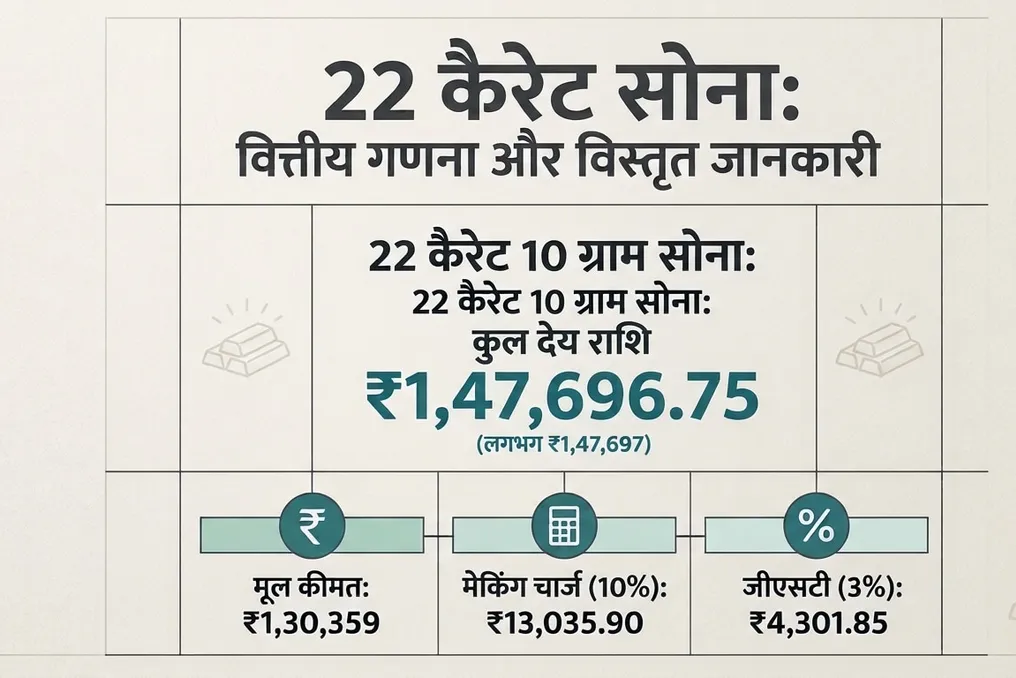
According to central government data, when purchasing jewelry, customers should only pay three components: the item's value depending on its weight, the making charge, and VAT (3%). Regardless of whether the payment is made online or offline, the VAT is only 3%.

According to IBJA, 22-karat gold cost about ₹1,30,359 for 10 grams on November 6. It is worth noting that any additional fees charged by jewelers can be disputed, as some sellers illegally take money under the pretext of weight control or labor charges. Such payments should not be made, and a complaint can be filed against the jeweler.

It is important to understand that jewelry is not made from 24-karat gold. Most items available on the market are 22, 18, or 14 karats in purity. Therefore, when purchasing, you need to know the current price of gold in the precious metals market to buy the item at the correct cost.

Furthermore, you should always negotiate the making charge, as many jewelers reduce this amount after negotiations. The making charge can reach up to 30% of the value, and this is where jewelers make the largest profit.

Also, always demand an original receipt so that there are no problems in the future regarding the purity and weight when trying to sell the jewelry. Regarding purity, only purchase items with a hallmark. The hallmark indicates five digits, and the mark differs for each carat: for example, 916 is indicated for 22 karats, 875 for 21 karats, and 750 for 18 karats, which eliminates doubts about purity.

Popular