On Naraka Chaturdashi 2026, five actions are recommended to avoid to prevent family problems
Read more
Aaj Tak
www.aajtak.in

On Naraka Chaturdashi 2026, five actions are recommended to avoid to prevent family problems

Naraka Chaturdashi, which is celebrated one day before Diwali, holds special significance in Hinduism. This festival is also known as Choti Diwali and Roop Chaudas. In 2026, it is celebrated today, November 7th, on a Saturday. According to traditions, on this day it is customary to worship Lord Krishna, perform an ablution (Abhyanga Snana), and light lamps. According to religious beliefs, certain mistakes should be avoided as they can negatively affect the peace and well-being of the home. Below are five things to avoid on Naraka Chaturdashi.

Five actions to avoid on Naraka Chaturdashi

Firstly, one should not sleep for long. There is a tradition of waking up early in the morning and taking a bath known as Abhyanga Snana. It is considered auspicious to bathe before sunrise, so late sleeping should be avoided. After bathing, one must wear clean clothes and focus on prayers.

Secondly, cleanliness must be maintained in the house. Cleanliness is very important during the Diwali festival, and this applies to Naraka Chaturdashi as well. It is believed that Mother Lakshmi resides in a clean house. Therefore, corners, the place of worship, and the main entrance should be thoroughly cleaned, and unnecessary items and garbage should not be piled up.

Thirdly, one should not insult anyone. On the day of Choti Diwali, it is important to monitor one's behavior. It is undesirable to quarrel, use harsh words, or humiliate others. One should try to maintain friendly relations with family and surroundings, and also avoid negative thoughts about anyone.

Fourthly, do not forget to light a lamp in the evening. The tradition includes the offering of a lamp (Deepdan). On this evening, a lamp is lit in honor of Yamaraj, which is called Yam Deepdan. Religious belief states that this helps ward off the fear of sudden death, so a lamp must be lit near the house in the evening.

Fifthly, do not allow darkness in the house. Choti Diwali is a festival of light and joy. There is a tradition of decorating the house with lamps and lighting. It is necessary to ensure that there is no darkness around the main entrance and the place of worship, and to illuminate the house by lighting lamps in the evening.

Why is Naraka Chaturdashi celebrated?

According to mythological accounts, it was on this day that Lord Krishna defeated the demon named Narakasura. Narakasura held thousands of girls captive. By destroying him, Krishna freed them. Naraka Chaturdashi is celebrated in honor of this event, which carries the message of the victory of good over evil.
Similar stories

Wave of piety floods the Flying Hanuman temple in Prayagraj on Hanuman Jayanti
Read more
www.aajtak.in

Wave of piety floods the Flying Hanuman temple in Prayagraj on Hanuman Jayanti

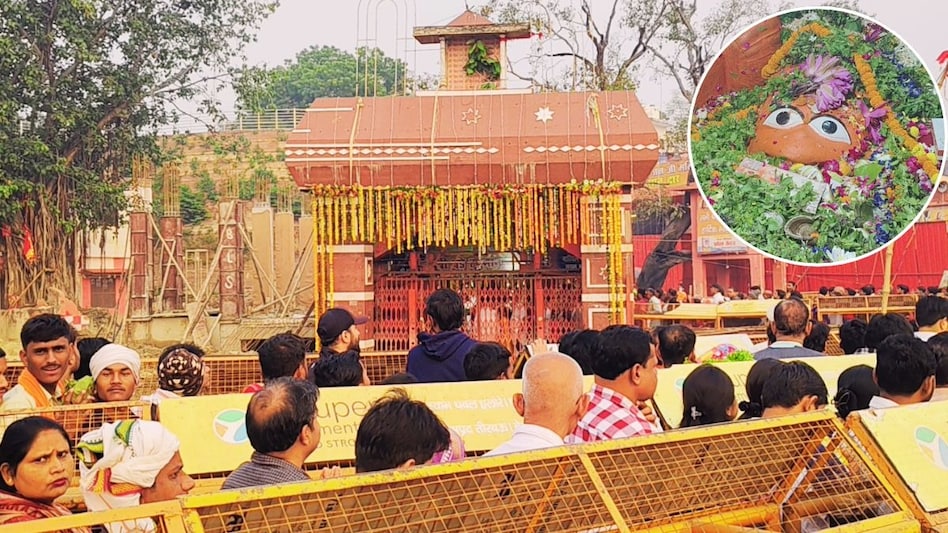
On Hanuman Jayanti, a huge number of devotees gathered at the Flying Hanuman temple, located on the banks of the Sangam in Prayagraj. From early morning, there was special activity along the bank: some arrived with flowers in their hands, others with prasad. Some visited the temple with family, while others came from afar solely for darshan of Bajangbali. A long queue of pilgrims formed in front of the temple, and shouts of 'Jai Shri Ram' and 'Jai Bajangbali' echoed from inside.

The event is dedicated to celebrating Hanuman Jayanti at the famous Flying Hanuman temple in Prayagraj. This temple is renowned because Bajangbali rests in a reclining posture, receiving pilgrims. Bright flowers were brought to the temple, and Bajangbali was adorned in a special attire. Devotees streamed here from the early morning.

Some bowed down, some prayed for prosperity for their families, and others silently closed their eyes, meditating on Bajangbali. Every visitor to the temple has their own request, but the cry of all is the same—'Jai Bajangbali.'

The Flying Hanuman temple, situated on the banks of the Sangam in Prayagraj, is among the unique shrines where Bajangbali is depicted in a reclining position. Usually, temples dedicated to Hanuman feature his standing or sitting statue, but his form here is different. This is what makes the temple a special attraction for pilgrims coming to Prayagraj.

On Hanuman Jayanti, the splendor of this temple increases. Pilgrims begin arriving early in the morning. Decorations of flowers and the adornment of Bajangbali make this day even more special.

Special events were organized at the temple to celebrate Hanuman Jayanti. The temple is decorated with colorful flowers, and the statue of Bajangbali is richly adorned. Arriving pilgrims offer worship and pray for peace, tranquility, and the prosperity of their families. The atmosphere around the temple is also filled with spirituality: some shout loudly, while others engage in bhajan-kirtan.

The enthusiasm is clearly visible on the faces of people coming to the temple. The festive mood spreads not only along the banks of the Sangam; fairs (bhandaras) are being held in all parts of Prayagraj. Processions are also organized in different parts of the city, involving a large number of people. City residents celebrate Bajangbali's birthday in various ways: some distribute prasad, while others treat people to food at bhandaras.

Given the huge number of pilgrims at the temple, the police and administration have taken appropriate measures. Police personnel were stationed within the temple premises. Barriers were set up to regulate the flow of people, and surveillance is conducted using CCTV cameras. The administration strives to ensure that pilgrims can visit the temple without difficulty and to manage the crowd effectively. On Hanuman Jayanti, the banks of the Sangam in Prayagraj are immersed in an atmosphere of devotion. The flower-decorated Flying Hanuman temple, the adornments of Bajangbali, and the shouts of the pilgrims make this day unforgettable. Some came with hope, others simply for the darshan of their patron. This chain of acts of faith continues from the early morning.

Spiritual leaders state that Ayodhya has gained global recognition after overcoming restrictions and curfews
Read more
www.aajtak.in

Spiritual leaders state that Ayodhya has gained global recognition after overcoming restrictions and curfews

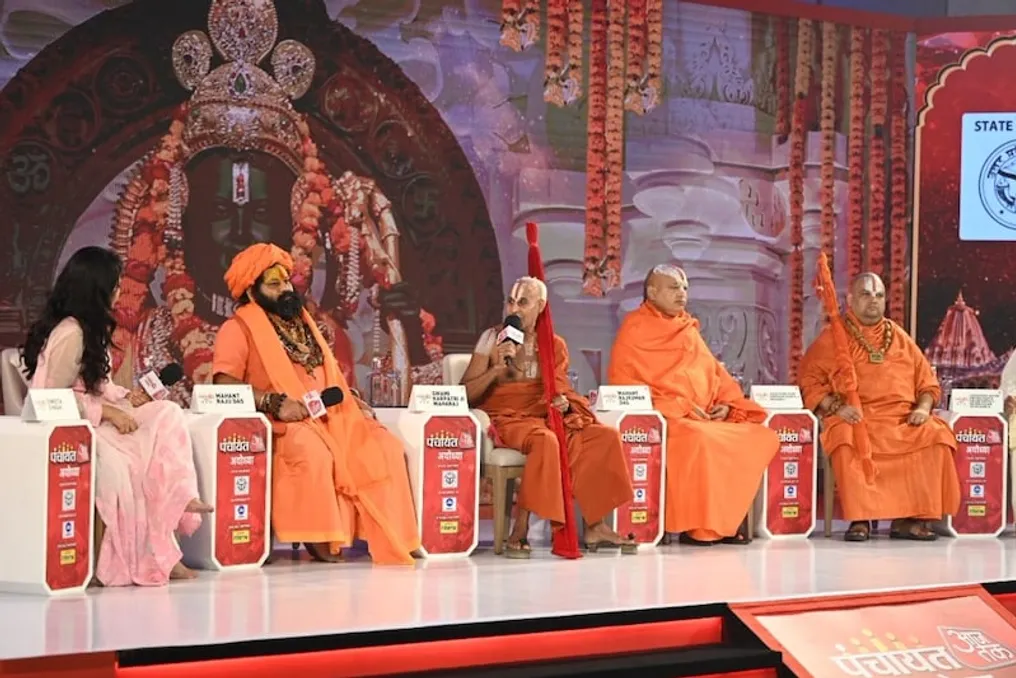
During a special session titled 'How has Ayodhya changed?' on the 'Panchayat Aajtak Ayodhya' platform, leading spiritual figures of the Sanatan society discussed issues related to Sanatana culture, the development of Ram Mandir, security measures, and donations.

The event was attended by respected spiritual leaders such as Mahant Raju Das from Hanuman Garhi, Swami Karpati Tri Maharaj, and Jagadguru Ramdinesacharya, along with other dhermacharis. The clergy openly spoke about the transformation of Sanatana culture, the movement for Ram Mandir, and the changing face of Ayodhya.

Mahant Raju Das and other dhermacharis noted that significant changes have occurred in Uttar Pradesh since 2017, both in development and in the administrative system. Regarding an alleged theft at Ram Mandir, the clergy asserted that no theft took place, but rather there were issues related to banking operations. Speaking about the changes in Ayodhya, they emphasized that previously followers of Rama faced numerous restrictions and difficulties, but the situation has now changed.

The clergy highly praised the governance model of Mukhyamantri Yogi Adityanath, noting that he has done important work in promoting peace, security, and cultural values in Uttar Pradesh. In their view, Yogi Adityanath has become an influential leader at national and global levels.

In the 'Panchayat Aajtak' program, the spiritual leaders recalled the struggle and dedication of the Sanatan society, the National Volunteer Corps (RSS), the Vishva Hindu Parishad (VHP), and the followers of Rama who stood behind the construction of the magnificent Shri Ram Mandir. Mahant Raju Das and other dhermacharis pointed out that the journey from the 1980s to the construction of Ram Mandir was a testament to long efforts, sacrifices, and self-sacrifice. Recalling the past, they said that at one time, it was difficult even for Rama's followers to utter Rama's name or participate in religious events.

Raju Das stated that the vow, 'We will accept the bullets and the hail, but we will build the temple right here,' has been realized in the magnificent and divine Shri Ram Mandir. He mentioned the events of October 30 and November 2, 1990, paying tribute to the followers of Rama who sacrificed their lives during the Ram Mandir movement. He also recalled the events on Digambar Akhada street and urged everyone to always remember the sacrifices of the unarmed followers of Rama, calling for this memory to be spread worldwide.

On the 'Panchayat Aajtak' stage, Jagadguru Ramdinesacharya and other saints discussed the mythological and religious significance of Ayodhya. They emphasized that Ayodhya is not just a city or a piece of land, but a central hub of Indian civilization and Sanatana culture, which transmits a message of humanity and religion to the world. The clergy mentioned religious beliefs, stating that in ancient times, Maharaja Vikramaditya contributed to the revival of ancient religious sites and shrines in Ayodhya. According to him, 196 sacred places in Ayodhya were identified at that time.

The clergy noted that similar to the revival in antiquity, modern Ayodhya has received a new impetus for development and renaissance since 2017. They mentioned the religious beliefs of Namisharani and Makhabhumi (Mahaudham in Basti), pointing to the special connection of these sacred places with the advent of Lord Rama and the tradition of Ramayana. In the opinion of the saints, Ayodhya is once again moving towards its ancient and spiritual form today.

Regarding employment, trade, and tourism in Ayodhya, the clergy stated that the construction of Shri Ram Mandir and events like Dipotsav have given a new boost to the local economy. Jagadguru Ramdinesacharya noted that millions of pilgrims arrive in Ayodhya from various countries. They come not only to see the infrastructure and modern amenities but also to witness the birthplace of Lord Rama and express their faith in this holy land.

According to the saints, the growing number of pilgrims has led to an increase in local business, hospitality, transport, and other employment opportunities, bringing positive changes to the lives and economic activities of the residents of Ayodhya. They added that the development of Ayodhya is not limited only to physical amenities; its spiritual significance is also growing globally.

During the event, the Sanatan society highlighted the religious and cultural significance of Awadh, recalling verses by Goswami Tulsidas. Jagadguru Kripalu Ram Bhushan Devacharya said that thanks to the blessings of mothers and saints, the construction of Shri Ram Mandir became possible in Awadh. He emphasized that today's movement of Ayodhya towards realizing the concept of Rajya Rama is the result of the collective resolve of the mothers and the society of saints of Awadh. The clergy concluded that those who detach themselves from material attachments and dedicate themselves to the nation and religion are guiding society in the right direction. Today's changing face of Ayodhya shows the youth of the country and future generations.

Popular