
Generation Z: Prioritizing Mental Peace or Apathy Towards Relationships?
Read more
Aaj Tak
www.aajtak.in

Generation Z: Prioritizing Mental Peace or Apathy Towards Relationships?

There is often talk about Generation Z, asserting that they are not serious about relationships, quickly distance themselves from people, and end communication over trivial matters. These habits—not replying to someone repeatedly, ending a relationship due to bad behavior, or easily failing to express feelings—are often linked to emotional unavailability.

However, does Generation Z truly not want to be emotionally connected, or are they simply prioritizing their mental peace?

Modern youth are much more aware of their needs and boundaries in relationships compared to previous generations. For Gen Z representatives, merely being in a relationship is not enough; it must include respect, trust, and mutual understanding. If someone constantly ignores their feelings or causes them mental discomfort, they consider it wiser to leave that relationship.

Personal boundaries and self-respect are very important to Gen Z. They do not feel the need to be constantly available, respond to every message immediately, or meet the expectations of others. Nevertheless, sometimes the line between setting personal limits and avoiding difficult conversations blurs. In such cases, people prefer to suddenly withdraw rather than voice their feelings.

Social media has changed the approach to understanding and maintaining relationships. Terms like ghosting, benching, and emotional unavailability have become part of everyday language. Furthermore, constant online presence and comparing oneself to the lives of others changes expectations regarding relationships. Many young people preemptively distance themselves to avoid unhealthy relationships or emotional trauma.

It is incorrect to claim that all of Generation Z is emotionally unavailable. Many young people still strive for deep and lasting relationships, but they are unwilling to maintain relationships at the cost of their self-identity and mental peace. Although avoiding difficult conversations to preserve one's calm is also not the right approach.

Ultimately, prioritizing mental peace is not a mistake. However, it is equally important to honestly state one's position in a relationship and respect the partner's feelings. Perhaps Gen Z is not running away from love, but rather seeking relationships where they will not have to lose themselves.
Similar stories

Generation Z uses social media and Reels for self-analysis and understanding their emotional state
Read more
www.aajtak.in

Generation Z uses social media and Reels for self-analysis and understanding their emotional state

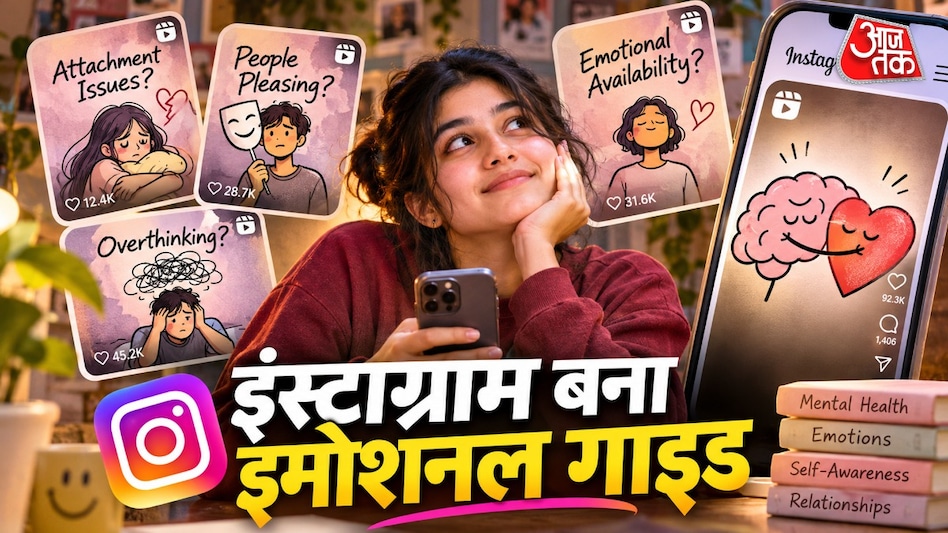
For Generation Z, the process of understanding their own emotions is increasingly integrating into the sphere of social media. Previously, young people found answers to questions about their mood, preferences, and feelings by spending time alone or discussing them with close friends. However, many young people now turn to resources such as Instagram Reels, memes, and online posts to make sense of their experiences.

Sometimes watching a specific video evokes a feeling that it reflects a story from their own lives, and sometimes a post helps them understand the motives behind their behavior.

Recently, new terms related to relationships and feelings have been actively spreading on social media. These include concepts such as 'emotional availability,' 'people pleasing,' 'attachment issues,' 'overthinking,' and 'emotional baggage' or 'burnout.' Through these words, Generation Z attempts to interpret their behavior. They often feel that they are becoming too attached to someone or are prone to overanalyzing small details. In such situations, a video or post can offer a new perspective on their behavior.

On the Instagram platform, there are numerous videos describing states of inner sadness, the reason for preferring distance from people, or patterns of behavior in relationships. Generation Z finds reflections of themselves in these videos. Sometimes they send similar posts to friends to share what they are feeling. Thus, what is difficult to express in words becomes easier to explain through social media content.

Nevertheless, not all information obtained from social media is reliable. One cannot conclude a person's belonging to a certain emotional category based solely on a few seconds of a video. For example, feeling sad does not automatically mean a person suffers from depression. Similarly, the desire to keep distance from someone does not always indicate any specific attachment issue.

Although social media can provide new concepts and viewpoints, there is no quick way to understand one's feelings. It is extremely important to spend time alone, write down thoughts, and engage in dialogue with trusted people. If necessary, professional mental health help should be sought. Social media can help raise awareness of one's experiences, but the answer to every feeling will not be contained in some video. For self-knowledge, it is sometimes necessary to put the phone aside and listen to oneself.

Reasons for loneliness among Generation Z: Despite online connections, young people experience isolation
Read more
www.aajtak.in

Reasons for loneliness among Generation Z: Despite online connections, young people experience isolation

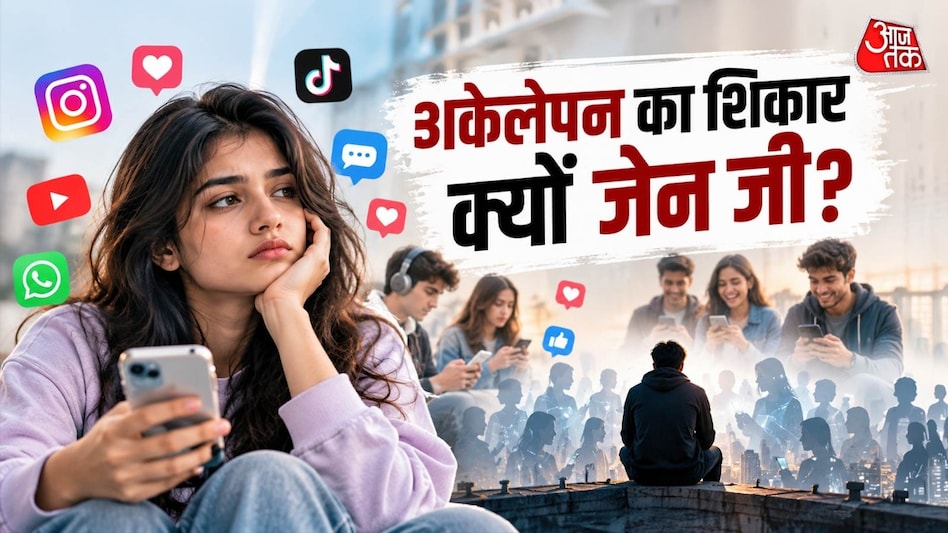
Modern Generation Z has numerous ways to stay connected with friends using platforms such as Instagram and WhatsApp, as well as other social networks. Although they receive likes and comments on their posts, many members of this generation still feel lonely. This raises the question of why young people feel isolated despite extensive online contacts.

According to the article Feel Fuzzy, 80% of Generation Z members experienced loneliness over the past year, compared to 45% among baby boomers. Furthermore, a 2025 study by Human 8 Research showed that 62% of young people worldwide are finding it difficult to form deep and meaningful relationships. This means that even with a long list of friends, many young people cannot find someone with whom they can talk openly.

A significant reason for the loneliness of Generation Z is the excessive use of social media. According to the report, young people spend about 7.2 hours daily viewing online content. Watching friends' stories, scrolling through reels, and liking posts have become their daily habit. However, liking someone's photo and sharing one's true feelings are completely different things; online connections do not always translate into real friendship.

Modern communication primarily takes place through messages and chats. While this facilitates conversation, the experience of meeting in person is different. When meeting someone, you can better understand their emotions and facial expressions. At the same time, the meaning of what is said in text messages can often be misinterpreted.

The social lives of Generation Z were most affected by the closure of schools and colleges during the coronavirus pandemic. Communication with friends decreased and was limited to calls or video calls. The report mentions the book 'Modern Friendship' by Anna Goldfarb, which indicates that the pandemic influenced how friendships are formed and maintained.

To reduce feelings of loneliness, it is not necessary to completely give up social media. One can start with small changes. For example, instead of just chatting, one should meet friends, reduce the time spent scrolling through feeds, and participate in activities that the person enjoys. It is important to understand that maintaining contact with thousands of people on social media and having deep relationships with someone are two different things. For Generation Z, it is crucial to dedicate time to both online connections and real friendship and interaction.

Popular