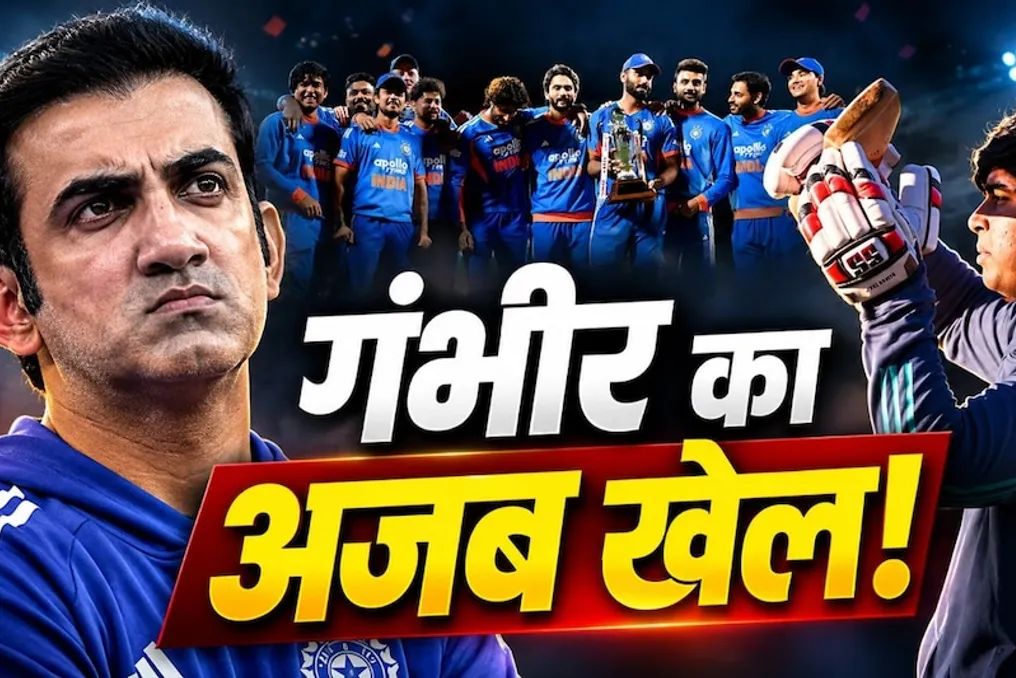
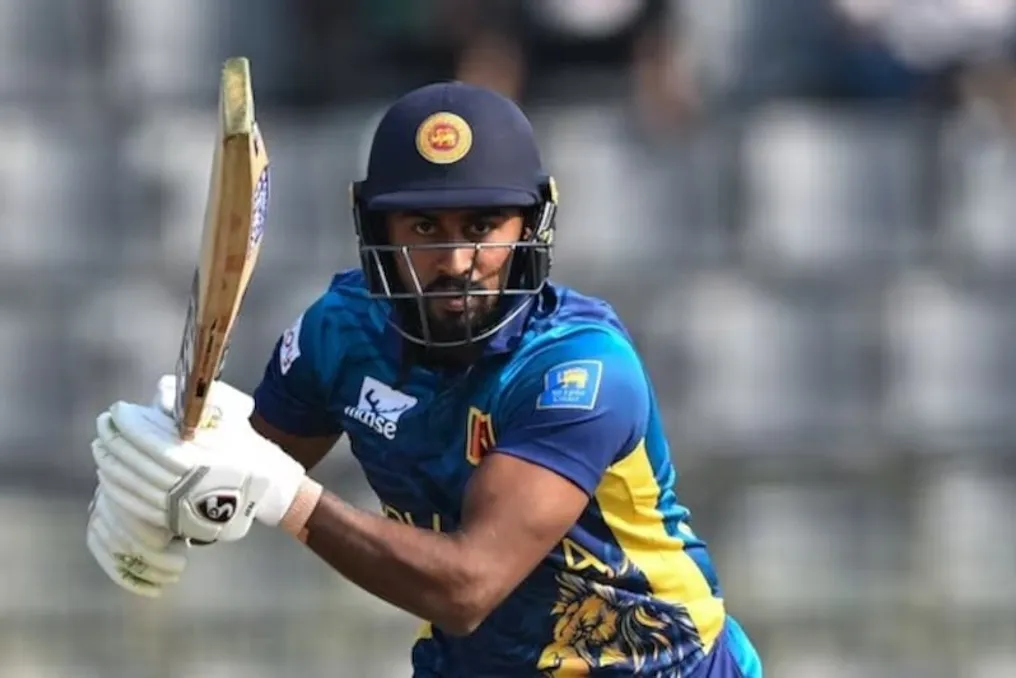
Yashwe Jaiswal scores second consecutive century against New Zealand bowlers in IND A vs NZ A match
Read more
Aaj Tak
www.aajtak.in

Yashwe Jaiswal scores second consecutive century against New Zealand bowlers in IND A vs NZ A match

In the final match of the three-match unofficial test series between India A and New Zealand A, held at the Bert Sachliff Oval in Lincoln, Yashwe Jaiswal batted. On the first day, November 7 (Saturday), Jaiswal demonstrated outstanding batting performance, scoring 102 runs off 138 balls, including 16 fours and 2 sixes. His wicket was taken by Daner Ferns.

This century was Jaiswal's nineteenth and his second consecutive century in his first-class career. Previously, in the second match of the series, played at Hagley Oval in Christchurch, he also showed brilliant form for India A, scoring 155 runs without being dismissed in his second innings.

In the current match, Yashwe Jaiswal received excellent support from Sai Sudarshan. Their partnership for the first wicket brought the team 175 runs, putting the New Zealand bowlers in a difficult position. India did not lose a single wicket in the first session. The first achievement for New Zealand A was recorded in the session where Jaiswal was playing.

The India A squad includes stars such as Jasprit Bumrah, Ravindra Jadeja, and Prasidh Krishna. These three players have had a great opportunity to regain physical fitness before the upcoming Test series against New Zealand, which starts on November 19. The first two matches of this series between India A and New Zealand A ended in a draw, making this match crucial for the entire series.

The India A squad included Yashwe Jaiswal, Sai Sudarshan, Devdutt Padikkal, Dhruva Jurel (captain/wicketkeeper), Tilak Varma, Ravindra Jadeja, Washington Sundar, Prasidh Krishna, Jasprit Bumrah, Mukesh Kumar, and Mukesh Choudhary. The New Zealand A squad consisted of Rhys Marius (captain), Curtis Hiffin, Dean Foxcroft, Matthew Boyle, Tim Robinson, Max Chu (wicketkeeper), Cameron Paul, Brett Randall, Daner Ferns, Jack Gibson, and Jerrod Mayke.

Similar stories

Anshul Kamboj demonstrated outstanding bowling performance in New Zealand
Read more
www.aajtak.in

Anshul Kamboj demonstrated outstanding bowling performance in New Zealand

Amidst the rapid development of T20 cricket, where batsmen often score heavily, Anshul Kamboj made a strong impression with his bowling performance in New Zealand. During the first ODI match at Eden Park in Auckland, Kamboj took 2 wickets, conceding only 22 runs in 10 overs, resulting in an economy rate of 2.20.

The entire New Zealand team was eventually brought to a score of 185 runs after 40.2 overs. This match marked Kamboj's best performance in international competition at the age of 25, as he prevented the New Zealand batsmen from playing freely. His strength lay in his ability to move the ball in both directions: sometimes it went in, and sometimes it went out. He consistently bowled with good length, slightly shorter, and surprised the batsmen by varying his length, sometimes bowling full and sometimes short, which caused difficulties for the New Zealand players in scoring runs.

Kamboj secured the first wicket against Santner, dismissing the captain. This happened on the first ball of the 27th over when Kamboj's delivery touched the inside edge of Santner's bat and went into the wicket. Santner tried to stop the ball, but it came in and led to the loss of a wicket. After this, Kamboj celebrated very energetically.

The impact of Kamboj's play was also evident in the 28.3 over, when Nathan Smith fell victim to him. Kamboj bowled a good-length ball outside off-stump, which became straight after hitting the pitch. Smith tried to defend by moving forward, but the ball touched the outside edge of the bat and flew towards the second slip. Virat Kohli executed a magnificent one-handed catch there, diving to the right. The third umpire confirmed the catch, showing in replay that the ball was in Virat's hands before it hit the ground. After this, Virat celebrated the moment in his signature style, pointing towards the dressing room.

Indian captain Shubman Gill decided to start the game with bowling after the toss. In this match, India fielded four specialized fast bowlers: Anshul Kamboj, Akib Nabi, Guruon Barar, and Arshad Singh. These four combined had experience in 29 ODI matches. Mohammad Siraj was not included in the starting XI, and instead of all-rounder Nitish Kumar Reddy, spin all-rounder Naman Diar was selected. Facing this young attacking bowling attack, the task was to prove their worth in New Zealand conditions. However, the Indian bowlers did not allow the hosts to play freely.

The entire New Zealand team was brought to a score of 185 runs in 40.2 overs. The most outstanding performance, however, was demonstrated by Kamboj through his restrained bowling. He showed that even in modern aggressive cricket, control of the ball, correct length, and movement in both directions can create serious problems for batsmen. In New Zealand, Kamboj strengthened the trust in the Indian team.

Guruon Barar took 3 wickets, conceding 44 runs in 9.2 overs. Arshad Singh took 4 wickets, conceding 70 runs in 10 overs, while Akshar Patel conceded only 12 runs in 5 overs. Akib Nabi failed to take any wickets, conceding 33 runs in 6 overs.

Although Arshad Singh conceded 70 runs in 10 overs, his performance was not bad throughout the day. His last over proved quite expensive, which affected his statistics, despite him taking 4 wickets. After New Zealand reached a score of 185 runs, a good opportunity opened up for the Indian batsmen to chase the target at Eden Park. Considering how the bowlers restricted the home team's score, achieving this target looks relatively easy for India.

Questions about the team's bowling weakness arise after India's T20 series victory against New Zealand
Read more
www.aajtak.in

Questions about the team's bowling weakness arise after India's T20 series victory against New Zealand

Despite India's 3-2 victory in the T20 series against New Zealand, many questions remain that cannot be ignored. Although India dominated at the start of the series, winning the first three matches, two subsequent defeats exposed the team's weaknesses.

In the fifth T20 match, held in Hamilton on Sunday, New Zealand defeated India by seven wickets. The Indian batsmen scored 191 runs, but the bowlers failed to defend this total. The question arises whether India can remain world champions solely on the strength of its batsmen, especially when the team's tactical decisions, including the constant exclusion of Vaibhav Suryavanshi, are being questioned.

The attacking power of the Indian team was its main advantage in this series. Abhishek Sharma's aggressive play, in particular, put pressure on the opponents. However, in the last two matches, another side of the game emerged: when Abhishek couldn't score runs, the team struggled.

Nevertheless, in the fifth match, Ishan Kishan and captain Shreyas Iyer showed brilliant half-centuries. Ishan scored 61 runs off 32 balls, and Shreyas scored 50 runs off just 23 balls. Together they added 93 runs off 43 balls for the third wicket, taking India to a comfortable score of 112/2 in 10.1 overs.

It seemed from there that the Indian team was heading towards a large score, but the New Zealand bowlers managed to turn the game around. Edam Milne took four wickets for only 19 runs. Nathan Smith and Blair Tickner also succeeded at critical moments. In the end, the Indian team managed to reach 191/8.

India's main problem is its bowling. After scoring 191 runs in Hamilton, the Indian team created a difficult total to defend in T20 cricket, but New Zealand achieved it in only 18 overs. The hosts won the match by seven wickets, and the Indian bowlers looked as if they were craving wickets.

Tim Seifert was the main hero of New Zealand's victory, showing explosive play by scoring 93 runs off 50 balls. Glenn Phillips also helped create problems for the Indian bowling attack by scoring a half-century. Together they made the achievement very easy.

Another issue for the Indian team is fielding. Naman Dir dropped an easy catch by Seifert in the fourth over when he was scoring 13 runs. If this chance had been utilized, the picture of the New Zealand innings could have been different. Interestingly, New Zealand's fielding was not perfect either, and they missed several catches, but India's error proved decisive.

India's ability to score big in T20 cricket is undoubtedly a strength. However, to remain world champions, offense alone will not be enough. India needs bowlers capable of defending large totals and taking wickets at crucial moments.

The last two matches of this series showed that when opponents attack openly, the Indian bowling comes under pressure. Bowlers must have a clear plan not only to contain the run-scorers but also to take wickets. Furthermore, it is crucial to utilize the opportunities provided in fielding.

In the fifth match against New Zealand, the Indian team lacked ideal bowling resources, and the pitch became more favorable to batsmen at night. Nevertheless, one cannot ignore how easily New Zealand reached its target despite these conditions.

One reason for the questions regarding the Indian team's strategy is the constant exclusion of Vaibhav Suryavanshi from the starting lineup. The question of why a young explosive batsman like Vaibhav is not given a chance remains a subject of discussion.

The team management has several options in the upper order: Abhishek Sharma, Sanju Samson, Ishan Kishan, and other batsmen. The question arises as to who will give way to Vaibhav. However, naturally, questions arise about the strategy of constant experimentation and player exclusion.

It is not necessary for the decision to be to play Vaibhav at all costs, but if he is considered part of future plans, he should also be given opportunities to demonstrate his talent. Simply being in the squad does not allow a young player to prepare at the international level. The team management needs to clarify its plans regarding Vaibhav.

The T20 series against New Zealand is over, and now both teams will meet in ODI format matches. In this regard, the Indian team management has the opportunity to review its strategy and squad.

Gautam Gambhir and the team management must find a balance between attack and bowling. In addition to the ability to score big runs, they need to develop the ability to defend them. Player selection should also be based on the team's needs and current form.
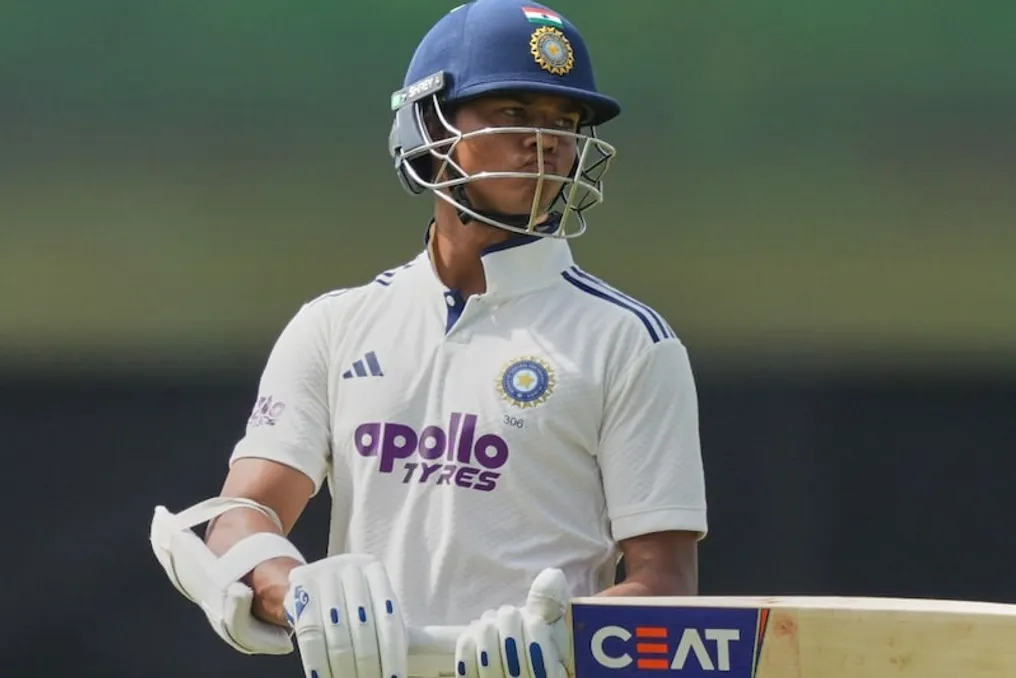

Kamindu Mendis scores century against Pakistan in Lahore ODI Tri-series final
Read more
www.aajtak.in

Kamindu Mendis scores century against Pakistan in Lahore ODI Tri-series final

In the intense final match of the ODI Tri-series, held at Gaddafi Stadium in Lahore, the Sri Lankan team demonstrated its potential. Sri Lanka's left-handed batsman, Kamindu Mendis, managed to break through the Pakistani players' defense.

Pakistan decided to start the game with bowling after winning the toss, but this move proved unsuccessful. Before a dangerous fast attack represented by Shaheen Shah Afridi, Haris Rauf, and Naseem Shah, Kamindu Mendis played boldly and scored his first century in his ODI career.

In the final match, Kamindu Mendis played very powerfully, scoring 131 runs off 128 balls. His impressive innings included 12 bright fours and 2 powerful sixes. Pakistan captain Shaheen Afridi tried to create pressure early in the game, but Kamindu continued to display an attacking style, hitting boundaries and rendering the Pakistani attack helpless.

Ultimately, Shaheen Afridi managed to dismiss him via LBW, but by then, Kamindu had already achieved his goal. Sri Lanka's start to the game was quite balanced. Opener Avishka Fernando helped the team with a good start, scoring 38 runs off 49 balls.

Although captain Kusal Mendis was dismissed, having scored only 8 runs off Salman Aga's ball, Kamindu Mendis received strong support from young player Pawan Ratnayake. Pawan also adopted an aggressive stance and made a significant contribution to increasing the team's score.

The players in the teams for this match were as follows:

  • Pakistan: Fahad Zaman, Maj Sadakat, Babur Azam, Saad Beg, Salman Aga, Hasan Nawaz, Arafat Minhaj, Fahim Ashraf, Shaheen Shah Afridi (captain), Haris Rauf, and Naseem Shah.
  • Sri Lanka: Avishka Fernando, Kamindu Mendis, Kusal Mendis (captain and wicketkeeper), Pawan Ratnayake, Dasun Shanaka, Janith Liange, Sakhan Arachige, Mahish Tikshna, Dunith Wellalage, Asitha Fernando, and Dilshan Madushanka.

Popular