UNHCR warns: nearly 90 million displaced people face serious climate risks
Read more
CGTN
cgtn.com

UNHCR warns: nearly 90 million displaced people face serious climate risks

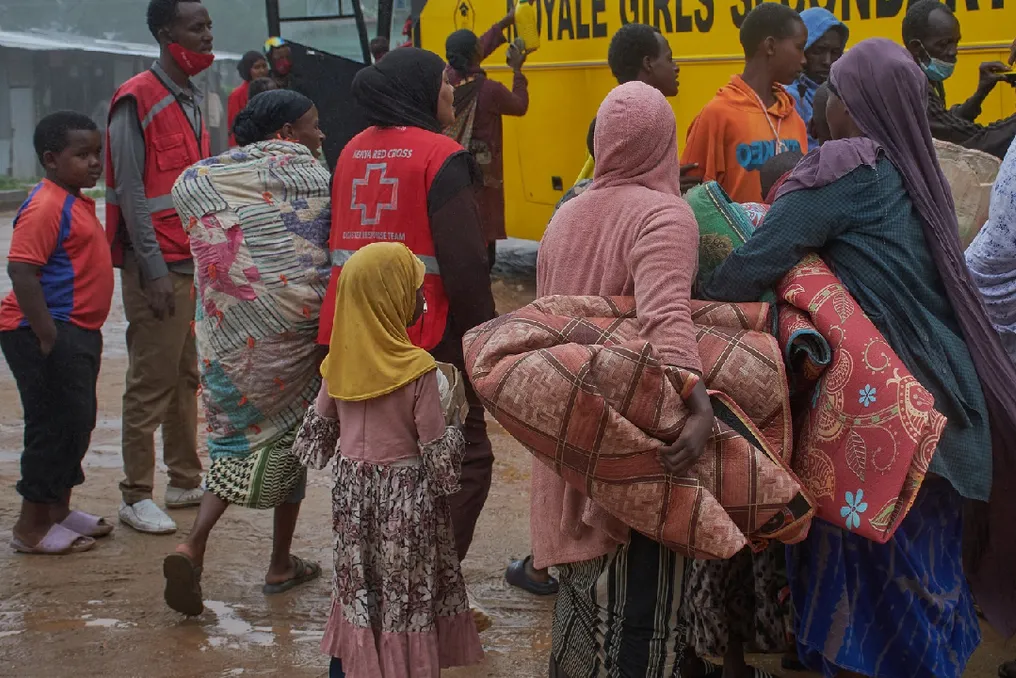
The UN Refugee Agency (UNHCR) has called for urgent action to protect millions of refugees and people forcibly displaced by climate change. The agency warns that climate financing is not reaching many communities that are in the highest risk zones.

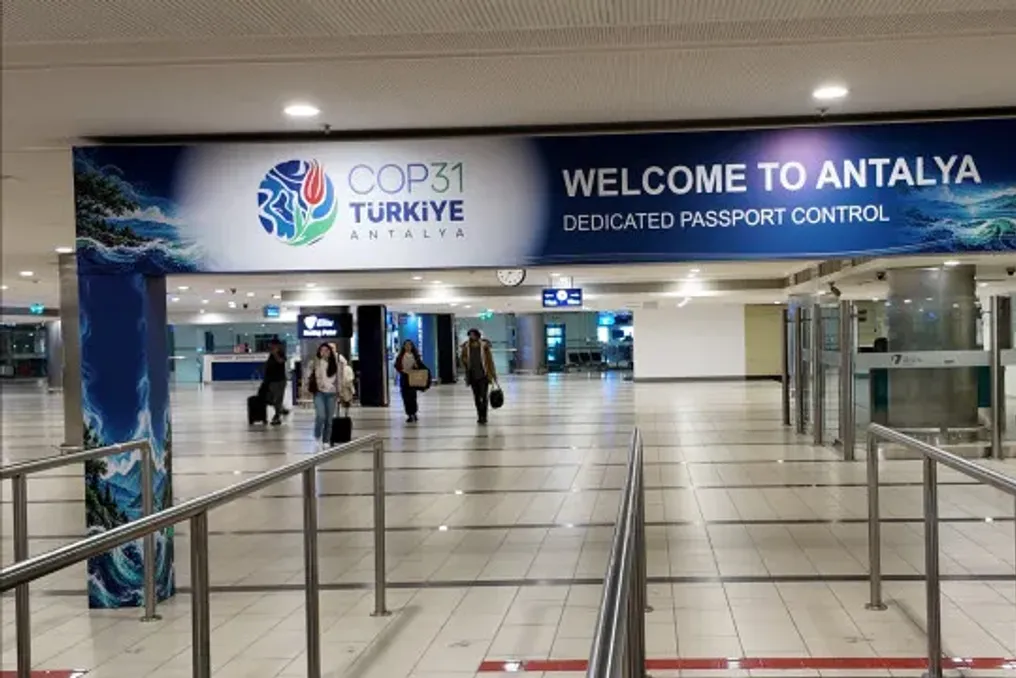
A report published ahead of the 31st UN Climate Change Conference (COP31) in Antalya, Turkey, indicates that about 90 million forcibly displaced people, which constitutes three-quarters of the global total, live in countries exposed to high or extreme climate hazards. These hazards include severe droughts, deadly floods, and abnormal heat.

UNHCR emphasizes that many displaced persons face additional threats in host countries where opportunities and resources for climate change adaptation are extremely limited. The report, titled 'No Escape III: Displaced Voices from the Frontlines of the Climate Crisis,' contains moving testimonies from eight representatives of displaced communities. These personal stories demonstrate not only the difficulties associated with climate change but also the resilience and innovative local solutions these communities use to overcome the circumstances.

The report notes an alarming trend: more than two-thirds of refugees who returned home in the first half of 2026 went back to countries that are highly vulnerable to climate threats. This calls into question the sustainability of their returns, especially in places like Syria, where returning refugees face declining groundwater levels and serious disruptions due to climate change.

Extreme heat is also a critical problem, particularly in Sub-Saharan Africa. UNHCR predicts that by 2050, one of the three refugee settlements in this region may experience at least 100 days of dangerous heat annually. For example, in Ethiopian settlements such as Helawayn, dangerous temperatures could exceed 200 days a year, posing significant health risks and threatening livelihoods.

Furthermore, the report highlights the enormous scale of climate displacement: over 255 million internally displaced persons caused by natural disasters have been registered globally over the last decade, averaging about 70,000 displacements daily. East Africa is particularly vulnerable; forecasts suggest that El Niño-related severe flooding could lead to the displacement of up to three million people in Somalia, Kenya, South Sudan, and Uganda by the end of 2026.

Despite these pressing issues, fragile and conflict-affected states receive only about 10% of global climate finance, even while hosting large numbers of vulnerable displaced populations. To address this, UNHCR advocates for increased investment in climate adaptation and highlights community-led initiatives in regions such as the Sahel, Uganda, and Colombia, showcasing solutions including solar-powered water supply and climate-resilient agriculture.

At COP31, UNHCR intends to stress the need to include refugees in national climate action plans and calls for a shift from short-term humanitarian aid to sustainable, locally managed solutions.

Similar stories

UNRWA reports €71.7 million deficit due to economic pressure
Read more
noticiasaominuto.com

UNRWA reports €71.7 million deficit due to economic pressure

The United Nations Relief and Works Agency for Palestine Refugees (UNRWA) disclosed a financial deficit of 71.7 million euros, attributing this situation to 'unprecedented economic pressure,' although it assured that it will continue to fulfill its mandate.

The financial difficulties faced by the agency result from the continuous lack of resources and uncertainty regarding funding, factors that have impacted the quality of certain services and put the organization's long-term sustainability at risk.

To cope with these circumstances, UNRWA is reviewing its operations, focusing on the needs of Palestinian refugees and local conditions, prioritizing especially the most vulnerable groups, such as women, children, and youth.

In an official statement, the organization guaranteed that it is not being dismantled and clarified that it has not yet made decisions about possible changes in staffing or its presence in areas of operation.

UNRWA warned that any possible staff reduction would only be considered if there are no other viable solutions given the operational and financial difficulties.

The agency employs approximately 28,000 staff members and emphasized the effect that cuts could have on the employees themselves, their families, and the communities served.

On Monday, dozens of UNRWA workers held a protest in the Nuseirat camp, located in the Gaza Strip, expressing concern over potential layoffs.

Since January 2026, the organization has implemented a 20% reduction in weekly service hours, a measure adopted to preserve jobs and maintain basic support.

Although the United Nations General Assembly extended the agency's mandate in December 2025, the organization points out that available resources remain insufficient and unpredictable.

UNRWA reiterated that it is exclusively up to the General Assembly to decide on any modifications or the termination of its mandate.

The agency appealed to member states, host countries, and partners to maintain dialogue, requesting stable and lasting funding from donors to prevent a further decrease in services.

Additionally, the organization stressed that no other entity currently possesses the capacity to provide humanitarian assistance and essential services on a comparable scale, particularly in the Gaza Strip.

According to UNRWA, a decrease in international support would intensify pressure on the most vulnerable populations and could exacerbate regional instability.

Founded in 1949, UNRWA provides assistance to about 5.9 million Palestinian refugees, covering the Palestinian territories, as well as Syria, Lebanon, and Jordan.

Specifically in the Gaza Strip, UNRWA shelters 1.5 million people out of a total of 2.1 million inhabitants of the Palestinian enclave.

As a fundamental pillar in the health, education, and humanitarian aid sectors, the agency employs 10,500 staff members in this territory, which has been severely affected by three years of war in Israel, which began on October 7, 2023, following an unprecedented attack by Hamas on Israeli territory.

The war in the Palestinian enclave has resulted in a humanitarian catastrophe, including the near-total destruction of local infrastructure and the forced displacement of hundreds of thousands of individuals.

Three years after the start of the conflict, 1.9 million residents of Gaza remain displaced, with entire cities, neighborhoods, and streets destroyed, and it is estimated that there are still about 10,000 victims buried under the rubble.

Israel has repeatedly accused the UN agency of employing Hamas members, alleging that some of these members participated in the October 2023 attack that triggered the war.

Several international investigations identified 'issues related to neutrality' within the organization but highlighted that Israel did not present evidence to corroborate its allegations.

Legislation that terminates any link between the State of Israel and the agency, prohibiting its operation in Israeli territory, came into force in January 2025.

Analysis of changes in climate summits since 1992, according to UNHCR alert
Read more
noticiasaominuto.com

Analysis of changes in climate summits since 1992, according to UNHCR alert

The UN Refugee Agency (UNHCR) released a report warning about the risks faced by 90 million displaced people in nations vulnerable to climate change, a document published before COP31.

Although the UN established the body responsible for climate summits 33 years ago, the 30 meetings held were not enough to prevent global warming from exceeding the 1.5ºC limit above pre-industrial levels, the central goal of the Paris Agreement.

The international assemblies also failed to curb the record annual increase in greenhouse gas emissions, the continuous registration of high temperatures, and the growing frequency and intensity of extreme weather events, such as the heat recorded in Europe this year.

Starting next Monday, the UN, through the United Nations Framework Convention on Climate Change (UNFCCC), will again gather thousands of participants, including technicians and politicians, in Antalya, Turkey, for the 31st Conference of the Parties (COP31), aiming to debate and make decisions on the climate.

The UNFCCC oversees multilateralism in combating global warming and established the Conference of the Parties with the objective of reducing greenhouse gas (GHG) emissions generated by human activity, which is altering the climate and warming the planet.

One of the central topics of COP31 is the Turkish suggestion to set the goal that electricity accounts for 35% of total world energy consumption by 2035.

However, recent history shows difficulties for COPs in meeting goals; a few weeks ago, a UN report indicated that the 1.5ºC limit, established in the Paris Agreement in 2015, had already been exceeded, with 1.8ºC seen as the most optimistic projection.

Historical Milestones of Climate Summits

In 1992, in Rio de Janeiro, the first major UN meeting focused on scientific evidence of global warming and rapid climate change took place, resulting in the creation of the UNFCCC and the decision to hold COPs to update GHG control efforts. Although the Convention did not define emission limits, it provided for the creation of 'protocols' for this purpose.

In 1995, Berlin hosted COP1, where countries made commitments to reduce GHG emissions higher than those from the Rio Summit.

COP3, in Kyoto, in 1997, is considered a fundamental milestone due to the Kyoto Protocol, an international treaty that imposed GHG emission limits on a group of highly polluting nations and created a carbon market.

In 2001, Marrakech, at COP7, the Kyoto Protocol was agreed upon, albeit with attenuated objectives compared to the originals. The conference also produced a declaration emphasizing the link between sustainable development and climate change.

In 2010, Mexico, at COP16, there was the first attempt to create an annual fund of $100 billion to support a 'Green Climate Fund,' which was only approved in 2015, in Paris.

In 2014, the European Union approved the binding goal of reducing GHG emissions by 40% by 2030, compared to 1990 levels.

In 2015, France, during COP21, signed the Paris Agreement on December 12, a historic event for setting goals to prevent global warming from exceeding two degrees Celsius (2ºC) above pre-industrial average, or preferably, not exceeding 1.5ºC.

Unlike Kyoto, the Paris Agreement does not set emission targets but rather holds countries accountable for submitting and meeting their Nationally Determined Contributions (NDCs).

In 2017, Bona, at COP23, the Talanoa Dialogue began, whose purpose is to assess national efforts towards carbon neutrality (stopping the emission of more GHGs than can be absorbed, mainly via forests).

In 2018, scientists from the Intergovernmental Panel on Climate Change (IPCC) warned in a report that the world needs a profound and unprecedented transformation to mitigate the worst climate impacts, stating that the goals of the Paris Agreement were insufficient.

In 2019, the IPCC published two more reports, both underlining the urgency of unprecedented decisions to prevent a climate catastrophe, one focused on land-use GHG emissions and another on oceans and cryosphere. The UN also warned that human action was putting one million animal and plant species at risk of extinction. During this period, the European Commission presented the European Green Deal to regulate actions aimed at carbon neutrality by 2050.

In 2020, the United States, one of the largest GHG emitters, officially withdrew from the Paris Agreement under President Donald Trump's administration, returning with Joe Biden, but leaving again in the same year.

In 2021, the European Union ratified the European Climate Law, setting a goal to reduce GHG emissions by 55% by 2030. The IPCC released a new report indicating that global temperature will exceed 1.5ºC by the end of this decade, having crossed this threshold several times since then.

COP26, in Glasgow, maintained the goal of limiting temperature increase to 1.5ºC and committed to the gradual decarbonization of coal use.

In 2022, the 15th Conference of the Parties to the Convention on Biological Diversity, held in Canada, reached a historic agreement, including the commitment to protect 30% of the planet by 2030.

At COP27, in Sharm el-Sheikh, Egypt, a future fund for loss and damage was created, and the promise to assist poorer countries in combating climate change with $100 billion annually was reaffirmed—promises that have never been fulfilled.

On February 24, Russia invaded Ukraine, a persistent conflict that generated an economic and energy crisis with direct and indirect environmental consequences. Extreme weather events continue to occur, such as the death of 1,700 people in Pakistan due to the largest floods ever recorded.

In 2023, Dubai, at COP28, countries agreed on a transition away from fossil fuels in energy systems and on tripling renewable energy capacity by 2030, despite fossil fuels remaining dominant.

COP29, hosted in Baku, Azerbaijan, in 2024, set a climate finance goal of $300 billion annually by 2035 for developing nations, a goal that has yet to be realized.

In 2025, Brazil hosted COP30 in the Amazon, and despite being the location where the initiative was conceived by the UN, no agreement was reached on the implementation of commitments.
WHO warns of the urgent need to conclude global treaty against pandemics
Read more
noticiasaominuto.com

WHO warns of the urgent need to conclude global treaty against pandemics

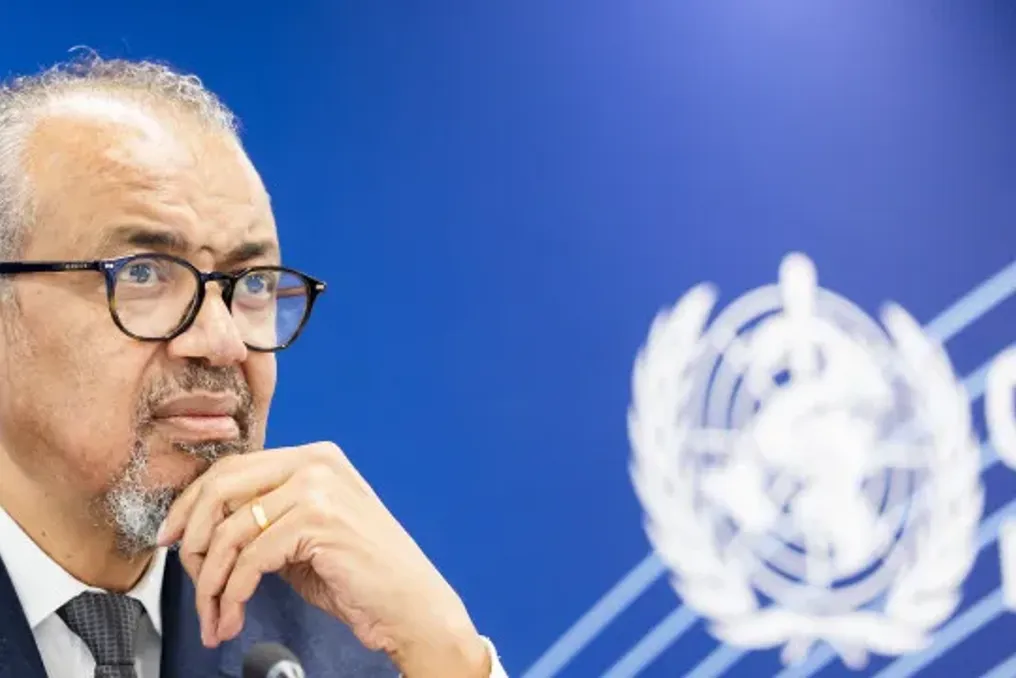
The Director-General of the World Health Organization (WHO), Tedros Adhanom Ghebreyesus, emphasized the urgency of finalizing an international pact dedicated to combating pandemics. He cited lethal epidemics, such as the Ebola outbreak affecting the Democratic Republic of Congo (DRCongo), as proof of this necessity.

Currently, divergences persist between rich nations and developing countries regarding how to implement the historic agreement established last year, which serves as the basis for managing future health crises similar to COVID-19.

During the opening of the ninth session of the Intergovernmental Working Group (IWG), running until November 13 in Geneva, Tedros Adhanom Ghebreyesus urged delegates to continue the work. He stressed that the primary purpose of concluding this treaty is the protection of populations.

The Director-General warned that any pathogenic threat, regardless of its origin, can become a danger to all inhabitants of any nation. He recalled the hantavirus epidemic that affected three people on a cruise ship in April, and the Ebola epidemic declared in May, which resulted in nearly 5,000 deaths among over 10,000 infected, concentrated mainly in the Democratic Republic of Congo.

When WHO member states formalized the agreement in May 2025, they postponed the discussion of a crucial point: a fundamental mechanism that has yet to be resolved, even after eight IWG meetings held since July 2025.

The appendix concerning the Pathogen Access and Benefit Sharing System (PABS) is considered the final piece needed for the global pandemic agreement to enter into force. This system must establish the rules for obtaining pathogenic agents with pandemic potential, as well as defining how derived benefits, such as vaccines, tests, and treatments, will be shared.

Tedros stated that PABS constitutes 'the last piece missing from our puzzle,' reinforcing that it is vital for the world to learn from the experience of the COVID-19 pandemic: 'no country can protect itself from pandemics by acting alone.' Recalling the pandemic period, he observed that although the world developed vaccines rapidly, many countries faced delays, while others received surpluses.

He concluded that this disparity caused deaths, prolonged the crisis, and increased the risk of new variants emerging, underlining that finalizing this section of the treaty is 'the key that will open the doors to a safer future.'

Popular