Galactic Energy's Ceres-2 Rocket Successfully Launches Four Satellites After Flawed First Flight
Read more
Pandaily
pandaily.com

Galactic Energy's Ceres-2 Rocket Successfully Launches Four Satellites After Flawed First Flight

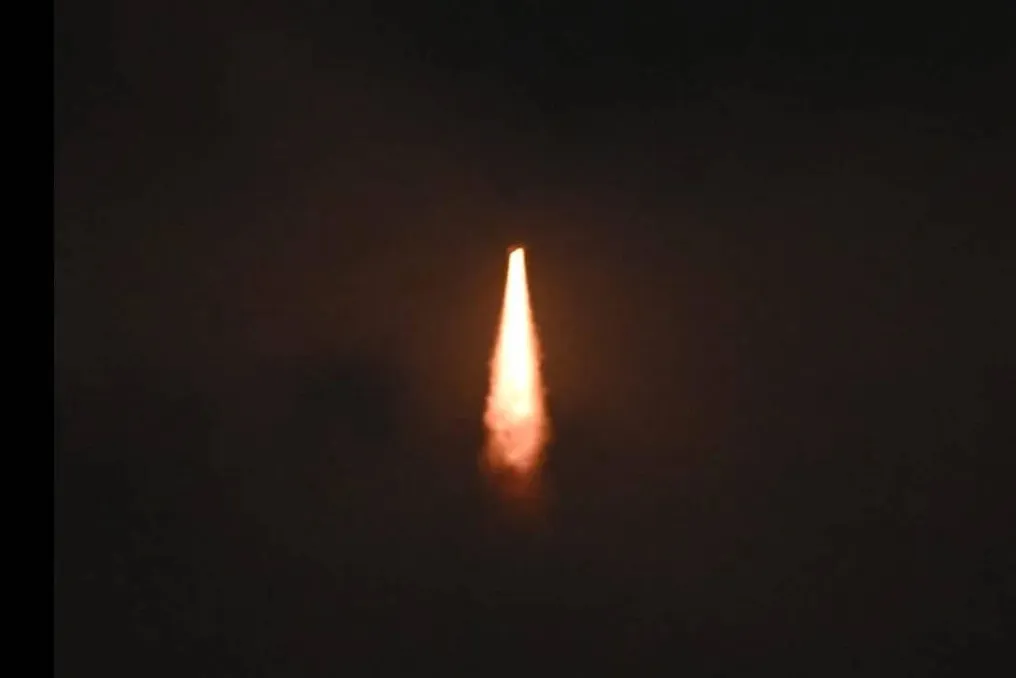
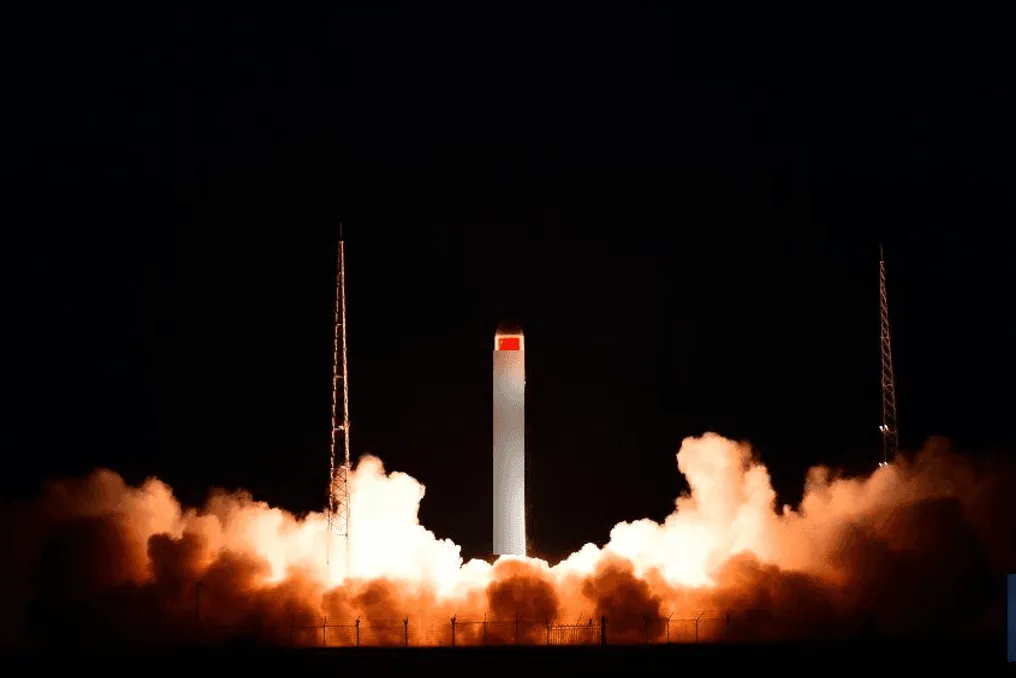
Galactic Energy successfully launched the Ceres-2 rocket on November 7, sending four satellites into orbit. This flight marked the carrier's return to service following an unsuccessful initial mission earlier this year.

The launch took place from the Jiuquan Satellite Launch Center at 7:37 AM Beijing time. According to Xinhua agency, all payloads reached their planned orbits. This flight was designated as Y3, and IT Home identified it as the return of Ceres-2 to flight after the unsuccessful mission Y1, which occurred on January 17. Nearly ten months passed between these events.

A report published in November confirms the results of this flight but does not contain detailed information about the corrective work performed after the initial failure. The four spacecraft launched included an experimental unit and a university satellite, as well as two other satellites mentioned in the Chinese mission announcement. Xinhua confirmed the successful placement of all four units in their intended orbits but did not disclose orbital parameters, individual payload masses, or the schedule for satellite commissioning.

Ceres-2 is an enlarged replacement for Galactic Energy's Ceres-1 rocket. This carrier combines three solid-fuel stages with a liquid-fuel upper stage. According to available data, the rocket stands approximately 30 meters high, has a maximum body width of 2.35 meters, and a starting mass of about 100 metric tons. The fairing variants have diameters of 2.9 and 3.35 meters.

Ceres-2's stated payload capacity reaches 1.3 metric tons in a 500-kilometer sun-synchronous orbit, which is significantly more than the 300 kilograms that Ceres-1 could deliver under the same mission profile. This allows the company to use a larger carrier to replace launches within small and medium satellite constellations. It is important to note that this figure reflects the rocket's design capability, not the actual total mass delivered in this flight.

The successful mission represents an important recovery milestone for this solid-fuel rocket complex. It should not be confused with Galactic Energy's separate liquid-fueled rocket program. Although the launch reports confirm delivery to orbit on November 7, they have not yet established a permanent flight schedule for Ceres-2.
Similar stories

Two NASA Probes Will Fly Over Earth Before Heading to Mars
Read more
olhardigital.com.br

Two NASA Probes Will Fly Over Earth Before Heading to Mars

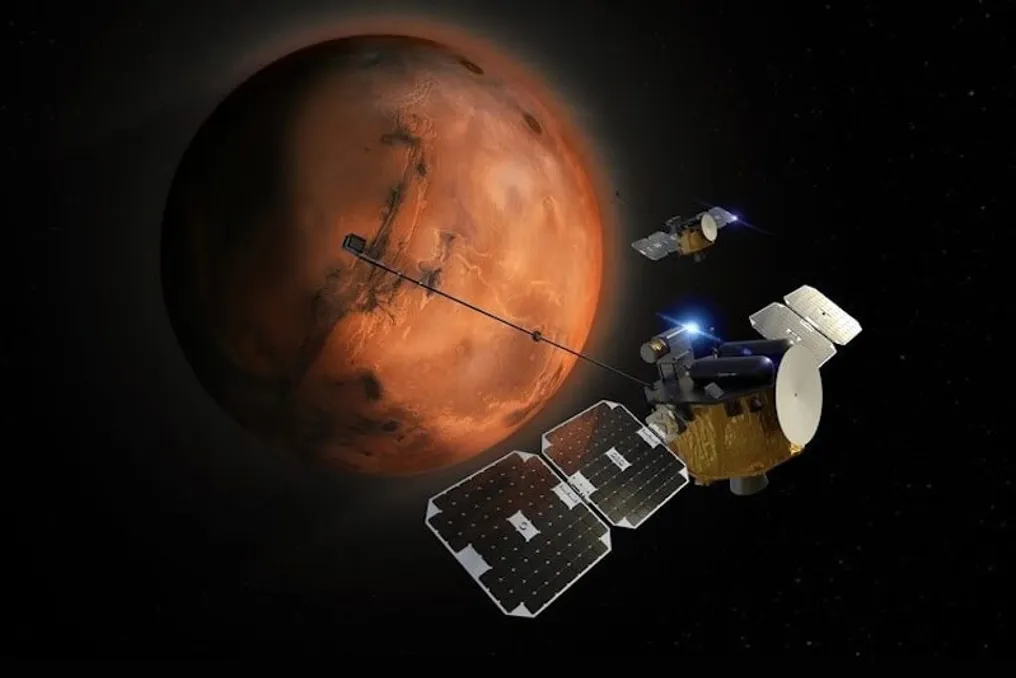
The ESCAPADE mission, launched almost a year ago, is preparing to execute an important maneuver before beginning its journey to Mars. Two probes of this mission, named Blue and Gold, will pass near Earth on Saturday (the 7th) and Monday (the 9th), respectively.

The encounter with our planet is part of a strategy aimed at correcting the trajectory of the spacecraft and increasing their speed before the long transit to the Red Planet.

The probe Blue will fly over Earth first on Saturday. Gold will follow two days later. During maximum proximity, both probes will also activate their engines to perform a maneuver known as trans-Mars injection (trans-Mars injection burn).

According to NASA information, the combination of flying over Earth and engine activation will increase the spacecraft's speed by more than 1600 km/h. Blue is expected to reach Mars on September 7, 2027, and Gold two days after that.

ESCAPADE was launched on November 13, 2025, on a New Glenn rocket from Blue Origin, which took off directly from Cape Canaveral in Florida (USA). This launch marked NASA's first mission to Mars in over five years. The previous mission brought the Perseverance rover and Ingenuity helicopter to the planet in July 2020.

ESCAPADE consists of two spacecraft built by Rocket Lab and coordinated by the University of California, Berkeley. Their names, Blue and Gold, refer to the colors of this university. Unlike other missions following more direct routes to Mars, ESCAPADE uses an alternative path. After launch, the probes were in an area close to the Lagrange point L2 between the Earth and the Sun before starting their return journey to our planet.

By conducting simultaneous observations from different positions, Blue and Gold will be able to provide a more complete picture of these phenomena. The results obtained may contribute to understanding the evolution of Mars and the conditions that made this planet so different from Earth.

NASA postpones crewed Moon landing to 2028 and alters test mission plans
Read more
olhardigital.com.br

NASA postpones crewed Moon landing to 2028 and alters test mission plans

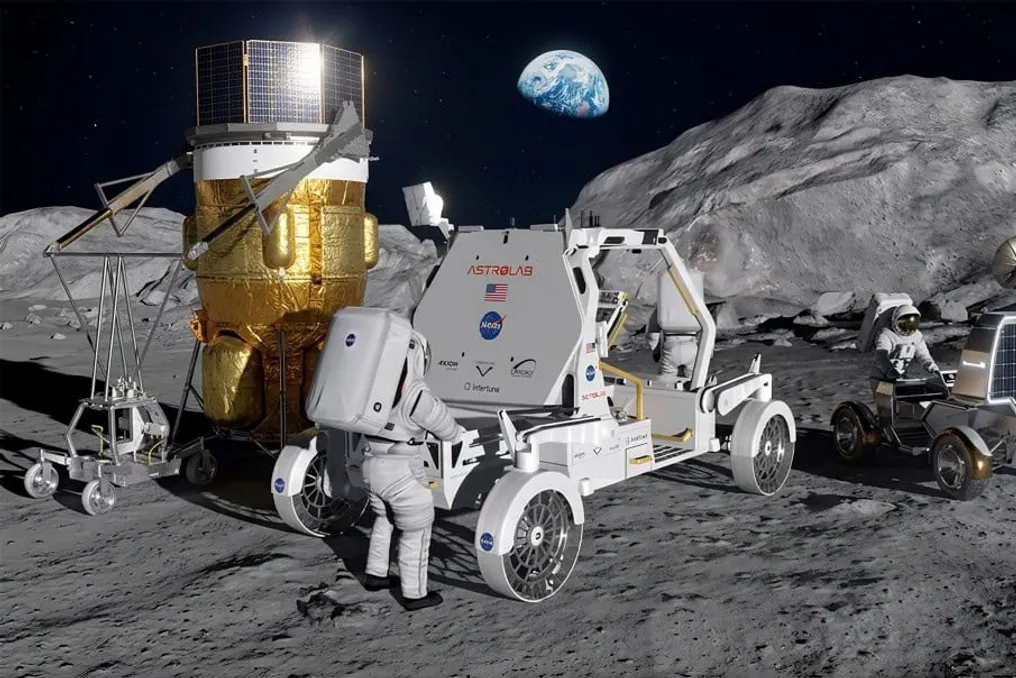
NASA has released new guidelines to accelerate the return of astronauts to the lunar surface, altering the initial schedule. The agency plans to execute a test mission in Earth orbit in 2027, concentrating the next crewed landing attempt on the Artemis 4 mission, scheduled for 2028.

These updates were communicated on October 23 by NASA Administrator Jared Isaacman, along with other agency leaders. The overall goal of this strategic adjustment is to reduce technical risks, expedite the development of necessary equipment, and pave the way for a continuous human presence on the natural satellite.

The main modification concerns the Artemis 3 mission. Unlike previous planning, which anticipated a lunar landing, this mission will focus on testing crucial components for future activities on the Moon's surface.

Four astronauts will board the Orion capsule, which will be launched by the SLS (Space Launch System) rocket. This journey is expected to last 14 days and will take place in low Earth orbit. During this period, NASA will verify the rendezvous, approach, and docking procedures between Orion and prototypes of lunar modules created by SpaceX and Blue Origin.

The crewed landing is now set for Artemis 4 in 2028. This mission will also utilize the Orion capsule and the SLS rocket, with the launch scheduled from the Kennedy Space Center in Florida, USA.

To reach the lunar surface, NASA is evaluating two transport options provided by private companies. SpaceX proposes refueling the Starship in Earth orbit, at which point the spacecraft will meet Orion to head toward the Moon. On the other hand, Blue Origin plans to use orbital transfer stages in Earth orbit to propel its Blue Moon Mark 2 module to the Moon; this vehicle will rendezvous with Orion in a lunar orbit closer to the satellite before beginning the descent.

Both companies are committed to making their systems available for the 2028 crewed landing. Furthermore, NASA is studying two possible configurations for the upper stage of the SLS rocket on Artemis 4: maintaining the existing cryogenic propulsion stage or adopting an extended version of the Centaur V, manufactured by United Launch Alliance, which has greater propellant carrying capacity. This analysis aims to keep options open and prevent the program from depending on only one configuration.

Another reported advancement relates to the equipment astronauts will use on the lunar surface. The agency has partnered with Axiom Space to develop a second type of space suit, lighter, called the Sortie suit. This new equipment will weigh about half as much as the main suit developed by Axiom and will be used during the first lunar walks. It is important to note that it will not replace the primary Axiom model, which will remain reserved for more extensive and challenging tasks in future missions.

With the progress of the Artemis program, NASA aims to conduct progressively more complex expeditions in the lunar south pole region, expanding scientific knowledge about the satellite and establishing a lasting human presence beyond Earth. The agency also views these operations as part of the technological and operational preparation for future crewed missions to Mars.

Isro GSLV-F18/NVS-03 Mission Successful: Next-Generation Navigation Satellite Launched into Orbit, Strengthening NavIC Constellation
Read more
timesofindia.indiatimes.com

Isro GSLV-F18/NVS-03 Mission Successful: Next-Generation Navigation Satellite Launched into Orbit, Strengthening NavIC Constellation

India's regional satellite navigation system, NavIC, has received a significant boost following the successful launch of the NVS-03 satellite. This launch was conducted by the Indian Space Research Organisation (Isro) on the night from Friday to Saturday.

The GSLV-F18 rocket, which carried the 2250 kg NVS-03 satellite, took off from the second launch pad of the Satish Dhawan Space Centre (SDSC-SHAR) in Sriharikota at 23:51 on Friday as scheduled. This marked the twentieth flight of the Geosynchronous Satellite Launch Vehicle (GSLV). Approximately 18 minutes after liftoff, the NVS-03 satellite was placed into a Geostationary Transfer Orbit (GTO) with an apogee of 37,023 km and a perigee of 170 km.

NVS-03 is the third satellite in Isro's next-generation navigation system, designed to ensure continuous services within the Indian Regional Navigation Satellite System (IRNSS), known as NavIC. The satellite is equipped with both domestic and acquired atomic clocks. Furthermore, it transmits an L1 frequency signal in addition to the existing L5 and S-band signals.

NavIC is India's independent regional satellite navigation system, intended to provide Positioning, Navigation, and Timing (PNT) services across the country and in a zone extending approximately 1500 km beyond the Indian subcontinent. The addition of the L1 signal, alongside existing signals, is expected to enhance compatibility with other satellite navigation systems and expand NavIC's civil applications.

The NVS-03 mission aligns with Isro's plan to deploy five second-generation navigation satellites—NVS-01 through NVS-05—to augment the existing NavIC constellation and improve the reliability and continuity of navigation services. The launch is crucial because NavIC previously could not provide autonomous positioning services due to a shortage of operational satellites.

Previously, on July 29, Minister of State for Space Affairs Jitendra Singh stated in a written reply to the Lok Sabha that the constellation had only three satellites providing PNT services, whereas a minimum of four is required for basic services. Although the timing service remained operational, the commissioning of NVS-03 could help restore autonomous positioning capability. The Minister noted at the time: 'Since NavIC is used in an environment with multiple constellations for most use cases, users are not vulnerable. The next NavIC satellite, NVS-03, is ready for launch, and two more satellites, NVS-04 and NVS-05, are in advanced stages of development.'

The constellation issue arose after the failure of NVS-02, which was launched on January 29, 2025, but failed to execute orbital insertion maneuvers. The Isro committee found that the electrical signal did not reach the pyrotechnic valve in the satellite's oxidizer line, preventing the ignition of the propulsion system and the achievement of the planned orbit. This failure prompted Isro to implement corrective measures for subsequent missions.

The first satellite of the second generation series, NVS-01, was launched aboard GSLV-F12 on May 29, 2023, and was the first in this series to be equipped with domestic atomic clocks.

Popular