
The Santa Casa de Lisboa announced the creation of 80 new spots intended for children and young people who are in a vulnerable situation.
Similar stories
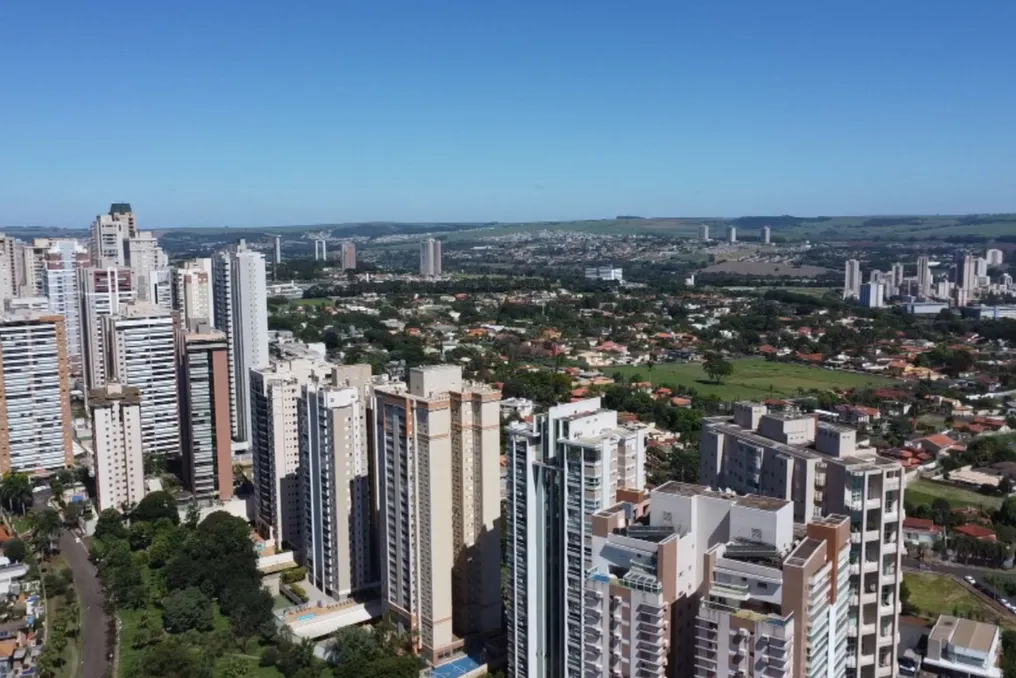
Ribeirão Preto City Hall seeks to recover R$ 1.15 billion in municipal debts with Refis program
The municipal administration of Ribeirão Preto (SP) launched the Refis program, aiming to recover an accumulated amount of R$ 1.15 billion related to unpaid taxes, contributions, and fines by the city's residents by the end of this year.
This total amount does not include interest or monetary correction. Of this total, more than R$ 533 million, which represents almost half, is owed under the category of Tax on Services of Any Nature (ISSQN), which is the second main source of local budget revenue and will play a crucial role due to the changes brought by the Tax Reform.
ISSQN is applied to all transactions involving the provision of services in the city, ranging from medical consultations to civil construction projects, ranking only behind the allocation of ICMS.
With the implementation of the new national tax system starting next year, ISSQN will no longer be directed directly to the municipality, but will integrate into the Tax on Goods and Services (IBS). This new tax will be managed by an autonomous committee based in Brasília (DF), responsible for determining the share that each municipality will receive from the states. IBS will also replace the Tax on Circulation of Goods and Services (ICMS).
A determining factor in defining the rate of this new tax for cities, especially during the transition phase, will be the average real collection of ISSQN calculated between 2019 and December 2026.
The City Hall expects Refis to help raise the values currently frozen in active debt related to this tax. The municipal Finance Secretary, Raquel Scheffer, explained that there will be a coefficient that will define the IBS rate for municipalities, and that the amount collected until December 31, 2026, is fundamental for the municipalities.
Ribeirão Preto's Active Debt
According to data updated by the City Hall as of October 23, of the R$ 1.15 billion registered in active debt, R$ 814.5 million corresponds to tax debts, including IPTU, Urban Property and Territorial Tax, and ITBI, Real Estate Transfer Tax.
The detailed amounts are: R$ 244,615,601.25 for IPTU; R$ 533,232,712.65 for ISSQN; and R$ 4,345,787.93 for ITBI. Additionally, there are other R$ 330.9 million from non-tax debts, such as pending water bills, permit fees, and fines for lack of cleaning.
Raquel Scheffer observed that citizens show greater concern about keeping IPTU up to date, due to the fear of losing their assets in execution and seizure processes of family property. In contrast, ISSQN, which is mainly linked to companies and MEIs, tends to accumulate more cases of default.
ISS and Tax Reform
The consumption-focused Tax Reform will replace five existing taxes (federal PIS, Cofins, and IPI, state ICMS, and municipal ISS) with two new taxes based on the non-cumulative Value Added Tax (VAT) model: the Contribution on Goods and Services (CBS), under federal jurisdiction, and the Tax on Goods and Services (IBS), which will be shared between states and municipalities.
With the start of collection in 2027, the new scheme establishes taxation at the destination, meaning where goods and services are consumed, requiring clear display of amounts on invoices. The federal CBS will begin full collection in the first year.
The transition of municipal ISS to IBS will occur gradually to allow for the adaptation of fiscal systems, city halls, and companies. In 2027 and 2028, IBS will have a marginal rate of only 0.1%. Subsequently, from 2029 to 2032, municipalities and states will gradually increase the collection of IBS while decreasing the rates of ISS and ICMS, culminating in the definitive extinction of municipal ISS in 2033.
According to the municipal Finance Secretary, recovering a considerable portion of the unpaid ISSQN amounts in Ribeirão Preto may influence the calculation of the share the municipality will receive from IBS. She emphasized that it is necessary for the money to enter public coffers, as mere registration in active debt is not sufficient for this purpose.