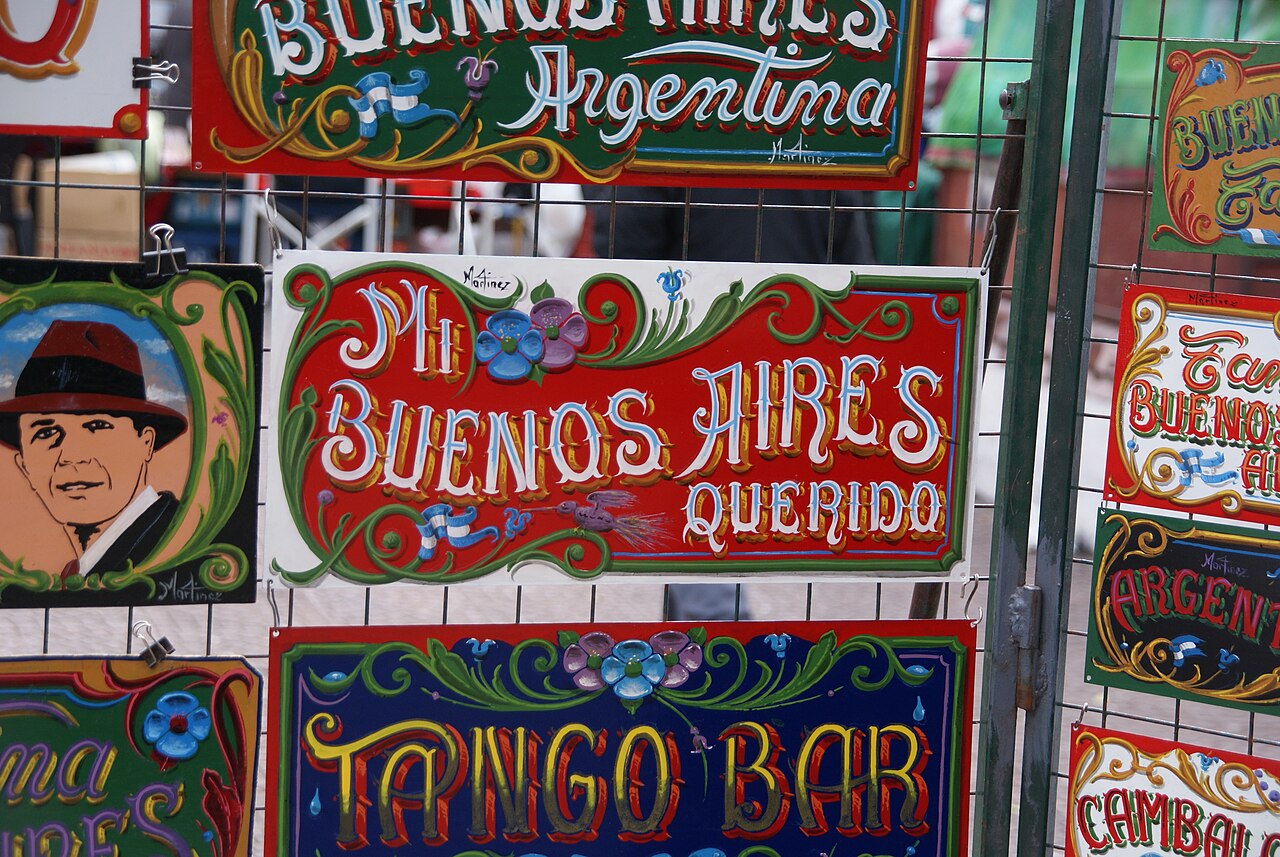
The filigree tradition, present in Buenos Aires, uses cursive letters and Gothic-inspired typography. The brushes employed in this painting are specific, possessing fine and elongated bristles, which allows for the creation of the characteristic strokes of this style.
Visitors to the Argentine capital can see filigree in multiple locations, ranging from vehicles such as buses and trucks to signage and facades of commercial establishments and residences. In 2015, this technique was recognized by Unesco as Intangible Cultural Heritage of Humanity.
Porteño filigree originated in Buenos Aires during the transition to the 20th century. Initially, its function was to decorate animal-drawn carriages used for transporting food and goods. Over time, the technique was integrated into the city's culture, becoming particularly associated with signs, shop windows, and trucks.
Artistic representations generally address social, religious, and cultural themes of the country, presenting icons that depict saints, political figures, renowned musicians, and football idols. Furthermore, popular phrases and proverbs in Castilian Spanish are quite common, often serving as a record of national collective memory.
Notable places to appreciate filigree
Although filigree is spread throughout the city of Buenos Aires, there are specific points worth noting. San Telmo, a neighborhood known for its bohemian atmosphere, serves as a notable example, considered an open-air museum dedicated to filigree, filled with murals and decorative signs.
One such location is Bar El Federal, located at Carlos Calvo Street, 599. This historic spot features a magnificent filigree mural and is often chosen as a starting point for cultural tours of the Argentine capital.
The San Telmo Market, located at Defensa Street, 1098, offers visitors fairs, antique stalls, and stands that help preserve signs and posters in this traditional artistic style. The Church of San Pedro González Telmo also displays various filigree works created by the influential master Martiniano Arce, one of the main exponents of Porteño filigree who remains active today.
The Abasto neighborhood area is strongly linked to tango culture, especially the memory of the singer Carlos Gardel, a celebrity figure for popularizing the musical genre. Both Jean Jaurès Street and adjacent streets are famous for forming a busy route to observe colorful facades and murals painted in filigree.
Additionally, the famous La Boca neighborhood, which houses the team Boca Juniors and the tourist attraction Caminito, is on the list of interesting places, displaying colorful facades adorned with the filigree style, linked to Argentine football iconography and the region's port history. The Boedo neighborhood, known for its bohemian atmosphere, with streets full of charming cafes and bookstores, also incorporates this decorative style on facades, usually in commercial establishment and bar signs.