Carnataka Minister reports ethanol content in E20 fuel exceeds 30%
Read more
The times of India
timesofindia.indiatimes.com

Carnataka Minister reports ethanol content in E20 fuel exceeds 30%

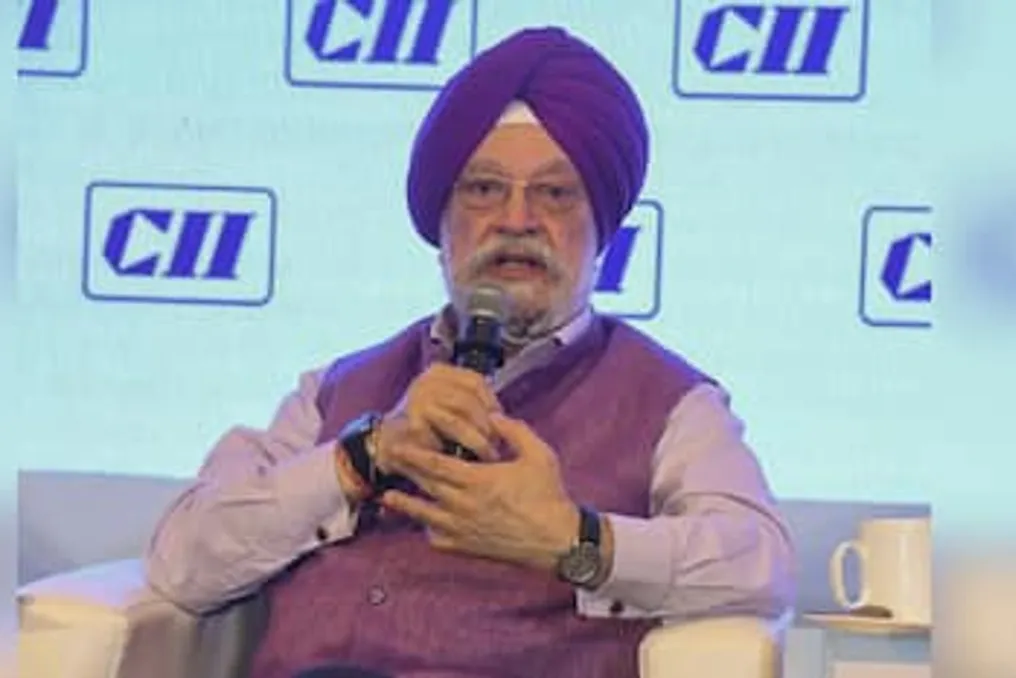
Carnataka Minister Ridwan Arshad stated on Friday that tests conducted in state-accredited laboratories revealed 'excessive' mixing of ethanol in E20 fuel. In some cases, the ethanol content reached 31.2%.

According to him, samples were taken from 63 petrol pumps across the state, and ethanol content above the established limit was found in 14 of them. State Public Undertakings (PSUs) refuted these claims, noting that they are not supported by the results of tests conducted in accordance with legislative and technical procedures.

Furthermore, representatives of the fuel retail trade reported that during a nationwide inspection, 56 samples from Carnataka showed ethanol content within the established range—19–21%.

Similar stories

India approves flex cars with pure ethanol (E100) and E85, following Brazil's example
Read more
autopapo.com.br

India approves flex cars with pure ethanol (E100) and E85, following Brazil's example

The Indian government has implemented a significant update to its vehicle homologation standards, formally including pure ethanol (E100) and the E85 blend for flex-fuel automobiles. This regulatory change, which took effect immediately after official notification, defines the technical and legal path for manufacturers to certify and commercially launch these models in the local market.

With this new directive, emission regulatory tables now consider E20 alongside E10 in the gasoline category. Furthermore, there was an expansion of biodiesel specifications to cover the B100 standard. Another relevant technical adjustment was the increase in the maximum permitted gross weight for these vehicles, which rose from 3,000 kg to 3,500 kg, correcting inconsistencies discussed since a preliminary draft presented for public consultation in the first half of the year.

The responsible government department emphasized that flex engines are equipped with automated systems capable of instantly adapting to the proportion of ethanol present in the tank. This technology already has a proven track record in major markets, such as the United States and Brazil. Economically and ecologically, the Indian administration argues that increasing the use of biofuels contributes to reducing dependence on crude oil imports, lowers exhaust pollutant emissions, and supports the national goal of achieving carbon neutrality by 2070.

Despite the legal release for this new energy matrix in transport, local experts and authorities warn that E100 and E85 supply must be used exclusively in vehicles factory-designed for this purpose. Conventional cars, adjusted for smaller blends, are not compatible with pure proportions. Therefore, the standard guidance for drivers is always to consult the owner's manual and check the official fuel compatibility seal before refueling.

Minister Hardeep Puri states there are no plans to increase ethanol share in fuel above 20%
Read more
business-standard.com

Minister Hardeep Puri states there are no plans to increase ethanol share in fuel above 20%

Oil and Natural Gas Minister Hardeep Singh Puri announced on Tuesday that the government does not plan to increase the content of ethanol in gasoline beyond the current 20 percent.

During an event marking the opening of the 29th meeting on energy technologies and innovations in South Goa, Puri also addressed the spread of disinformation regarding biofuels. He described myths about E20 gasoline (with 20% ethanol) as a 'fabricated narrative.'

He clarified that the goal concerning biofuels was to reach a 20 percent level, and there is currently no intention to increase this share. The government promotes ethanol-blended gasoline as part of a strategy to reduce dependence on imported crude oil, which is one of the main factors contributing to the country's current account deficit. E20 gasoline, containing 20% ethanol and 80% gasoline, has already been implemented.

The three-day meeting, focused on 'Accelerating Energy Innovations from Research to Commercialization,' was held in the village of Betul in South Goa. The event was organized by the Ministry of Petroleum and Natural Gas.

Puri mentioned social media posts claiming that vehicles had stopped and broken down, implying that the government had ceased selling blended fuel. The Minister noted that the relevant vehicles are designed to run on E20 fuel. He pointed out issues with older models manufactured before 2003.

The Oil Minister stated that the introduction of E20 gasoline helped the government save 160,000 crore rupees, of which 140,000 crore rupees was returned to farmers. He commented on this by saying that farmers have become 'Urjadata' (energy givers) instead of 'Annadata' (food givers).

Responding to questions about problems reported by E20 fuel users, Puri suggested that the issue might be related to the transportation of the blended fuel, as the tankers were used for other purposes. Regarding stories of engine damage, he reported that someone made such claims, and the corresponding car manufacturer sued them. The Minister reiterated that the information about E20 fuel is a 'fabricated narrative.' He added that sixty million vehicles visit gas stations daily, and if engine damage were occurring, it would be obvious.

Meanwhile, the Ministry of Transport notified last week of changes to the Central Motor Vehicles Rules of 1989, allowing the use of flexible fuel vehicles capable of running on fuel up to E100 (nearly pure ethanol). E100 fuel allows vehicles to run on nearly pure ethanol. Flexible fuel vehicles are designed to operate on higher ethanol concentrations, such as E85 (85% ethanol, 15% gasoline) and E100, unlike standard gasoline cars approved for lower ethanol concentrations. Major automakers, including Toyota Motor Corporation, Tata Motors, and Hyundai Motor Company, are also developing flexible fuel vehicles for the Indian market as part of policymakers' efforts to reduce the country's fossil fuel imports.
Beer shipments valued at over R$1 million seized in São Geraldo do Araguaia due to tax irregularities
Read more
g1.globo.com

Beer shipments valued at over R$1 million seized in São Geraldo do Araguaia due to tax irregularities

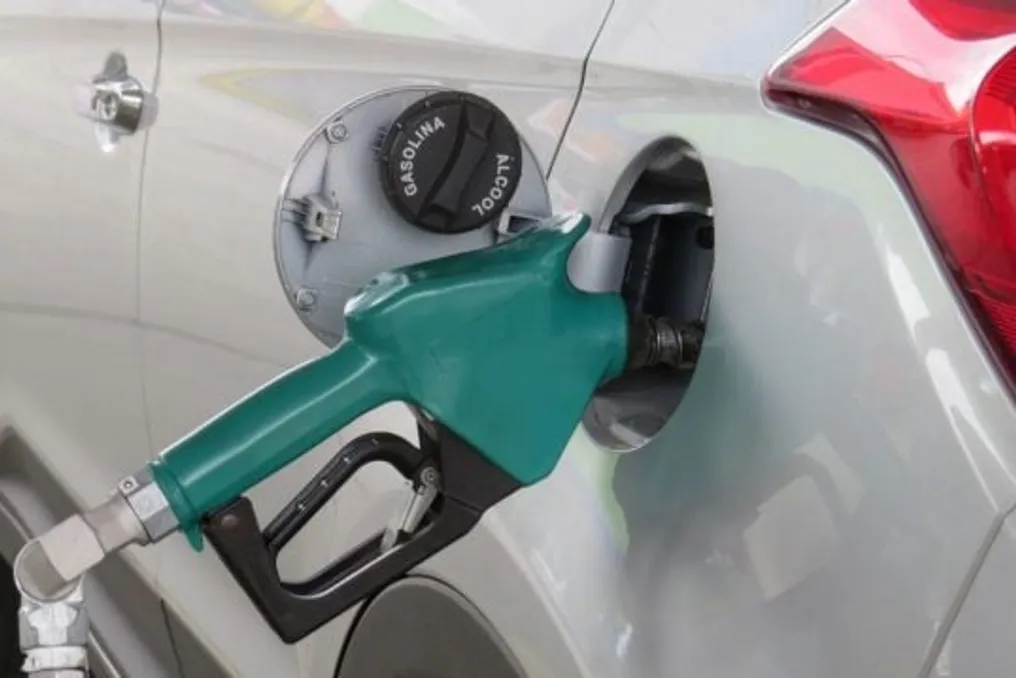
Shipments of beer worth over R$1 million were seized in the municipality of São Geraldo do Araguaia due to identified irregularities in the payment of the Tax on Circulation of Goods and Services (ICMS).

The generated infraction notices total R$439,812.58, covering both the tax and the applied fines.

The goods were being transported in three vehicles and consisted of 269 ml beer cans, originating from the state of Alagoas. One of the planned destinations was the municipality of Altamira, while the other two vehicles were headed to Marabá.

The shipment destined for Altamira contained 122,304 cans and was valued at R$387,703.68. The other two loads transported 137,280 and 120,120 cans, respectively.

According to the State Treasury Secretariat (Sefa), the monitoring of the shipments began during the merchandise's transit. This monitoring was carried out by the Traffic Monitoring Center (Cemotran), which relies on data from electronic invoices and images obtained from traffic systems.

During the inspection, inspectors verified that the ICMS via substitute taxation had been collected in an amount lower than what was owed in the three transactions.

In the case of the two loads destined for Marabá, the invoices showed values considerably below market prices, approaching R$0.41 per can.

The coordinator of the tax unit, Cicinato Oliveira, informed that the inspection used the weighted average price as a parameter for calculating these goods. Thus, the values of the two loads destined for Marabá were calculated at R$384,384 and R$336,336.

At the end of the operation, three Terms of Seizure and Deposit (TADs) were issued, totaling R$439,812.58 referring to taxes and fines.

Popular