Reflections on films that profoundly influence the viewer's life
Read more
Olhar Digital
olhardigital.com.br

Reflections on films that profoundly influence the viewer's life

This Cinema and Streaming newsletter from Olhar Digital, intended for subscribers of the Olhar Digital Club, explores the phenomenon of films that provoke significant transformations in the perception of reality or create emotional bonds with fictional characters.

Unlike editions focused on seasonal lists or reviews of new releases, this edition dedicates itself to a deeper reflection, while still tracking titles recently released in cinemas and streaming platforms.

Fernando de Barros e Silva, journalist and presenter, mentioned in the Piauí magazine's Foro de Teresina podcast the importance of reflecting on one's own routine and state of mind.

The text focuses on the film Perfect Days (Dias Perfeitos) (2024), directed by Wim Wenders and co-written by Takayuki Takuma. The film follows the two-week routine of Mr. Hirayama, played by Koji Yakusho, who leads an extremely simple life.

Hirayama's routine includes waking up early, caring for plants, driving to work as a janitor in Tokyo, having lunch, returning to work, and after work, cycling home, visiting a public restroom before going to a restaurant for dinner during the week. On weekends, he cleans the house, runs errands, looks at old photos, and buys books at second-hand bookshops.

During these two weeks depicted, events occur that deviate from Hirayama's peaceful routine, but these are not seen as problems; some are amusing, and others are just part of the flow of life, where people come and go.

Behind the apparent simplicity of Perfect Days, there are complex themes about happiness, peace of mind, and the importance of being present in the current moment, without unnecessary distractions.

The author states that since watching the film in December 2024, he thinks about it daily, recognizing that the work altered his life trajectory and brain chemistry, helping him cultivate peace and control addictions.

Regarding other releases, the text mentions the Godzilla sequel, set in 1949, where Japan rebuilds under the threat of King Ghidorah, directed by Takashi Yamazaki. Additionally, other films are cited: one about Gugu, a boy in Ceará, dealing with grandmother Dilma's Alzheimer's, directed by Allan Deberton; a Taika Waititi film based on Kazuo Ishiguro, about a robot named Klara seeking a cure for Josie; a comedy film about CIA agents on Easter Island after the coup in Chile; a film about a feline in a joy organization; a film about a family trip to the Caribbean; and a film about a wedding at a resort.

Similar stories

Ten Iconic Films of French Cinema That Influenced World Culture
Read more
www.aajtak.in

Ten Iconic Films of French Cinema That Influenced World Culture

Massive protests are currently taking place in France: streets are filled with crowds, people are displaying placards with protest slogans, and clashes with the police are accompanied by loud shouts against the government. The country, which gave the world the ideas of liberty, equality, and fraternity, is today an arena of civil unrest.

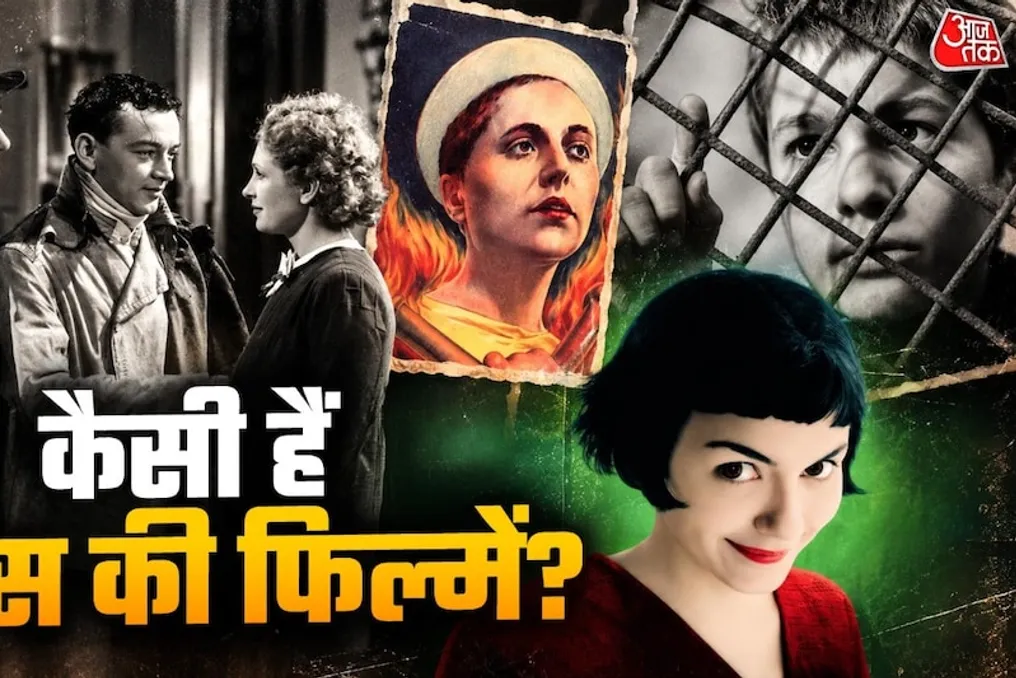
Although France is traditionally associated with the Eiffel Tower, fashion, wine, and beauty, its contribution to the development of world cinema is enormous. French cinema played a key role in changing the ways films are created and perceived, from early stages of development to the formation of a new cinematic language school—the French New Wave—and modern narratives. French cinema has repeatedly proven that cinema is not just entertainment, but a form of free self-expression.

In this regard, we present an overview of ten French films that have had a profound impact on world cinema and served as a textbook for Hollywood directors.

When discussing classic French films from the 1930s and 1940s that laid the foundations of cinema, or the works of directors such as Jean-Luc Godard and François Truffaut who broke established narrative rules, it is impossible to ignore some iconic pictures. Among them stands the 1939 film 'The Rules of the Game,' directed by Jean Renoir.

This film is considered one of the greatest works of French cinema. By depicting the lives of wealthy people at luxurious parties, their romantic relationships, and the daily life of the service staff, Renoir exposed class inequality, hypocrisy, and the moral emptiness of French society. The strength of the picture lies in the fact that it questions the entire social structure rather than blaming any single villain. Although the film faced bans and protests upon release, it later entered the pantheon of the greatest world films.

Another famous French film is 'The Passion of Joan of Arc' (1928), directed by Carl Theodor Dreyer. The film, dedicated to the trial and death of the French national heroine, shows what emotional effect cinema can create, even without lavish sets, dynamic scenes, or an abundance of dialogue. Extreme close-ups of actress Renee Falconetti's face, conveying the fear, determination, and tension of the interrogation, make this work outstanding. The film's focus is not so much on a detailed account of historical events as on human faith, helplessness before power, and psychological torment. This film retains its place among the masterpieces of silent cinema.

The next film on the list is 'La Grande Illusion' (The Great Illusion) from 1937, also directed by Jean Renoir. War films often emphasize heroism, victory over the enemy, and national greatness, but 'The Great Illusion' questions the artificial boundaries created by war, telling the story of French soldiers captured by the Germans during the First World War. In this picture, the social background, personal relationships, and the general human experience of the soldiers are more important than their nationality. Renoir's perspective does not reduce war to a simple dichotomy of 'good one nation versus bad another.' This is why the film transcended its time, and its humanitarian orientation and anti-war ideas secured its place among the most important war films in world cinema.

The fourth most significant film on the list is 'Children of Paradise' (Les Enfants du Paradis) from 1945, directed by Marcel Carné. This film is considered one of the major achievements of French cinema during a period when the country was under German occupation and severe wartime conditions. The romantic story unfolds against the backdrop of 19th-century Parisian theatrical life and explores the relationship between a woman and various men striving to win her.

However, the world of the film is not limited to love and separation; it also contains the tension between acting skill, fame, desire, social status, and the artist's private life.

Next on the list is 'The 400 Blows' (Les Quatre Cents Coups) from 1959, directed by François Truffaut. This film attempts to understand the emotional abandonment and loneliness of a child hidden behind his antics, taking the narrative far beyond a typical children's story. A teenager named Antoine Doinel experiences misunderstanding both at home and at school. In an attempt to correct his behavior, adults fail to consider the reasons for such behavior. Truffaut, inspired by his own life experience, depicted the child's mind on screen without excessive sentimentality. The use of real locations, natural acting, and free camera helped the French New Wave gain international recognition. The final scene of this film is still considered one of the most memorable in film history.

The sixth most significant film is 'La Haine' (Hate) from 1995. The story begins in a poor residential area on the outskirts of Paris. Sixteen-year-old Abdel is severely injured after being beaten by the police; his condition is critical. Tension grows in the neighborhood afterward, and anger against the police intensifies. The plot centers around three friends: Vinz, Hubert, and Saïd. Vinz has Jewish roots, Hubert is of African descent, and Saïd is Arab. Despite differences in their identity, they belong to a marginalized community.

Clayface Review: A Monster Born from the Fire of Revenge, One of DC's Scariest Films After 'Joker'
Read more
www.aajtak.in

Clayface Review: A Monster Born from the Fire of Revenge, One of DC's Scariest Films After 'Joker'

DC Studios is known for its superhero films that entertain audiences with numerous projects, including franchises like Superman and Batman, as well as movies about The Punisher and Penguin. Now, the film 'Clayface' has been added to this list, demonstrating that elements of horror can be incorporated into the world of superheroes.

Director James Watkins presents a dark version of Gotham City, where hope for justice seems almost unattainable. In this story, Tom Rhys Harris plays the character Matt Hagan, whose life falls apart due to a certain event, gradually transforming him into a dangerous anti-hero. The film stands out for how it depicts the combination of horror, violence, and personality transformation.

The central plot of 'Clayface' revolves around Matt Hagan, an actor who achieved success in Hollywood. He is given the opportunity to star in a major project, allowing his career to soar, and he receives recognition for his acting skills, even a nomination for an 'Oscar.'

However, Matt's success proves short-lived. While returning to Gotham, he encounters a gangster, leading to a brutal attack that irreversibly damages his face. This incident radically changes his life.

Parallel to the physical changes, a negative atmosphere forms around him, negatively affecting his acting career and leading to decline. Matt does not want to lose his former identity and strives to restore his appearance to return to his previous life.

In despair, Matt seeks help from Dr. Katherine Cor (Nomi Eck), a scientist who attempts to fix his face using experimental treatment. Matt hopes the procedure will put his life back on track, but the opposite happens. The treatment becomes a new problem for him, and the anger and darkness within him begin to take over. The man who tried to save his identity and career now desires revenge against those he holds responsible for his downfall. This is where the plot takes a sinister turn.

The atmosphere of horror is present in the film from the beginning. It contains scenes that may be difficult to watch, accompanied by violence and blood, as well as moments that cause viewer anxiety. Nevertheless, between these tense moments are lighter scenes that slightly soften the serious tone of the picture.

James Watkins immediately immerses the audience in this frightening world. When the gangster Marcos Sjabo attacks Matt Hagan, the film demonstrates a level of violence reminiscent of slasher horror. Afterward, Matt's changed face is shown in detail.

Matt, previously known for his beauty and blue eyes, begins to suffer from his appearance. This change affects not only his looks but also his self-perception, confidence, and his entire life. Gradually, he begins to lose himself. The film convincingly shows how a person's mental balance can be disrupted when their identity is taken away.

Another feature of the film is the setting of Gotham City, where chaos reigns. The streets are neglected, and government institutions are permeated with corruption. This gives the film an atmosphere reminiscent of 'Joker.' Both films highlight social distress, injustice, and a corrupt system, but 'Clayface' presents these problems through the prism of horror and dangerous human transformation.

Hints are present in the film's plot from the very beginning, which later prove to be important. However, the problem is that some of these signs are so obvious that viewers easily guess the upcoming events. For example, at the beginning, Matt Hagan expresses a certain opinion on revenge in a talk show, immediately hinting at a possible later mention of this theme at a key point in the narrative. The creators seem to want to preemptively explain some important details to the audience.

Significant attention is also paid to the habit of mutual submission between Matt and Katherine. Although predicting further developments is simple in some places, the pace of the film is quite fast. The story constantly moves forward, not allowing viewers too much time to dwell on these shortcomings.

Tom Rhys Harris breathes life into the role through his acting skills. He very well embodies the character of Matt Hagan.

Review of the film 'Udta Teer': Audience opinions on the comedy starring Ayushmann and Sara
Read more
www.aajtak.in

Review of the film 'Udta Teer': Audience opinions on the comedy starring Ayushmann and Sara

The film 'Udta Teer,' which combines elements of a spy thriller, patriotism, and comedy, has sparked active discussions on social media since its release in cinemas on October 23. Audiences have given mixed reviews: some consider it a magnificent family entertainment, while others believe it is only worth watching once.

The plot revolves around a Pakistani spy who loses his memory and begins to believe he is an employee of the Indian intelligence agency. This gives rise to a game of self-identification, where patriotism, misunderstandings, and amusing situations are mixed, which viewers consider to be the film's unique concept.

One viewer highly praised the comedic and patriotic aspects demonstrated by Ayushmann. He noted that director Akash E. Kaushik successfully handled both directions. This same viewer also found the roles of Rahul Bose and Mukul Dew excellent and recommended watching the film with the whole family.

Another viewer gave 'Udta Teer' four stars, particularly highlighting the climax. In his opinion, the first half of the film is funny, while the narrative takes an intriguing turn in the second half. He compared the final twenty minutes to films like 'Drishyam' and 'Dhurandhar 2,' although he stressed that this was just a personal opinion. Many users on social media praised the comedy and the actors' performances, particularly Rahul Bose and the late Mukul Dew. They also positively commented on Suhail Naiyer's role, and one viewer noted the worthy performance of Sara Ali Khan and Smitha Tambe, as well as the entertaining role of Ram Kapoor, Bridgendy Kaly, and Gulshan Grover.

Despite high praise from some members of the public, some viewers did not find the film appealing. One user gave it only 2.5 stars, calling it a comedy suitable only for temporary entertainment. This indicates that the humor and plot of the film do not receive unanimous approval. Based on early feedback on social media, it is premature to speak of universal love for the film.

The film, created with the participation of Karan Johar, Adar Punawala, Apoorva Mehta, Gunit Monga Kapoor, and Achina Jain, features a star cast including Raghubir Yadav, Rahul Bose, Mukul Dew, Ram Kapoor, Suhail Naiyer, Supriya Pilgaonkar, and Gulshan Grover. The story and direction belong to Akash E. Kaushik. Now it remains to see how high 'Udta Teer' will soar at the box office against these contradictory initial reviews. The publication Aajtak rated the film 'Udta Teer' 3 stars, considering it a family entertainment that fully justifies the money spent, noting the absence of vulgar jokes and good acting with excellent timing.

Popular