Two NASA Probes Will Fly Over Earth Before Heading to Mars
Read more
Olhar Digital
olhardigital.com.br

Two NASA Probes Will Fly Over Earth Before Heading to Mars

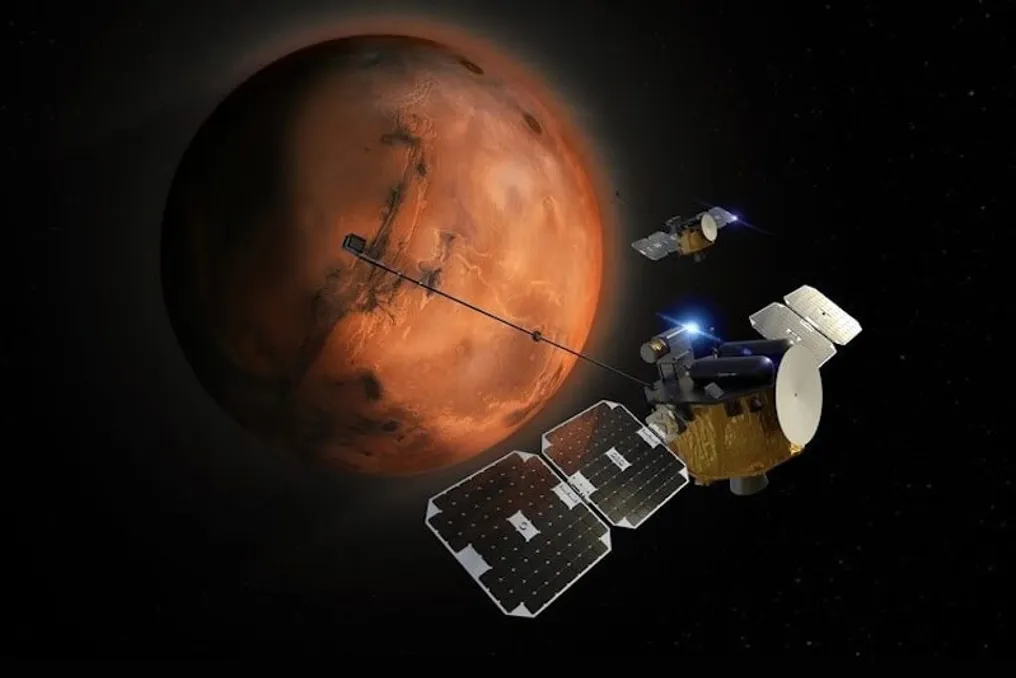
The ESCAPADE mission, launched almost a year ago, is preparing to execute an important maneuver before beginning its journey to Mars. Two probes of this mission, named Blue and Gold, will pass near Earth on Saturday (the 7th) and Monday (the 9th), respectively.

The encounter with our planet is part of a strategy aimed at correcting the trajectory of the spacecraft and increasing their speed before the long transit to the Red Planet.

The probe Blue will fly over Earth first on Saturday. Gold will follow two days later. During maximum proximity, both probes will also activate their engines to perform a maneuver known as trans-Mars injection (trans-Mars injection burn).

According to NASA information, the combination of flying over Earth and engine activation will increase the spacecraft's speed by more than 1600 km/h. Blue is expected to reach Mars on September 7, 2027, and Gold two days after that.

ESCAPADE was launched on November 13, 2025, on a New Glenn rocket from Blue Origin, which took off directly from Cape Canaveral in Florida (USA). This launch marked NASA's first mission to Mars in over five years. The previous mission brought the Perseverance rover and Ingenuity helicopter to the planet in July 2020.

ESCAPADE consists of two spacecraft built by Rocket Lab and coordinated by the University of California, Berkeley. Their names, Blue and Gold, refer to the colors of this university. Unlike other missions following more direct routes to Mars, ESCAPADE uses an alternative path. After launch, the probes were in an area close to the Lagrange point L2 between the Earth and the Sun before starting their return journey to our planet.

By conducting simultaneous observations from different positions, Blue and Gold will be able to provide a more complete picture of these phenomena. The results obtained may contribute to understanding the evolution of Mars and the conditions that made this planet so different from Earth.
Similar stories

NASA postpones crewed Moon landing to 2028 and alters test mission plans
Read more
olhardigital.com.br

NASA postpones crewed Moon landing to 2028 and alters test mission plans

NASA has released new guidelines to accelerate the return of astronauts to the lunar surface, altering the initial schedule. The agency plans to execute a test mission in Earth orbit in 2027, concentrating the next crewed landing attempt on the Artemis 4 mission, scheduled for 2028.

These updates were communicated on October 23 by NASA Administrator Jared Isaacman, along with other agency leaders. The overall goal of this strategic adjustment is to reduce technical risks, expedite the development of necessary equipment, and pave the way for a continuous human presence on the natural satellite.

The main modification concerns the Artemis 3 mission. Unlike previous planning, which anticipated a lunar landing, this mission will focus on testing crucial components for future activities on the Moon's surface.

Four astronauts will board the Orion capsule, which will be launched by the SLS (Space Launch System) rocket. This journey is expected to last 14 days and will take place in low Earth orbit. During this period, NASA will verify the rendezvous, approach, and docking procedures between Orion and prototypes of lunar modules created by SpaceX and Blue Origin.

The crewed landing is now set for Artemis 4 in 2028. This mission will also utilize the Orion capsule and the SLS rocket, with the launch scheduled from the Kennedy Space Center in Florida, USA.

To reach the lunar surface, NASA is evaluating two transport options provided by private companies. SpaceX proposes refueling the Starship in Earth orbit, at which point the spacecraft will meet Orion to head toward the Moon. On the other hand, Blue Origin plans to use orbital transfer stages in Earth orbit to propel its Blue Moon Mark 2 module to the Moon; this vehicle will rendezvous with Orion in a lunar orbit closer to the satellite before beginning the descent.

Both companies are committed to making their systems available for the 2028 crewed landing. Furthermore, NASA is studying two possible configurations for the upper stage of the SLS rocket on Artemis 4: maintaining the existing cryogenic propulsion stage or adopting an extended version of the Centaur V, manufactured by United Launch Alliance, which has greater propellant carrying capacity. This analysis aims to keep options open and prevent the program from depending on only one configuration.

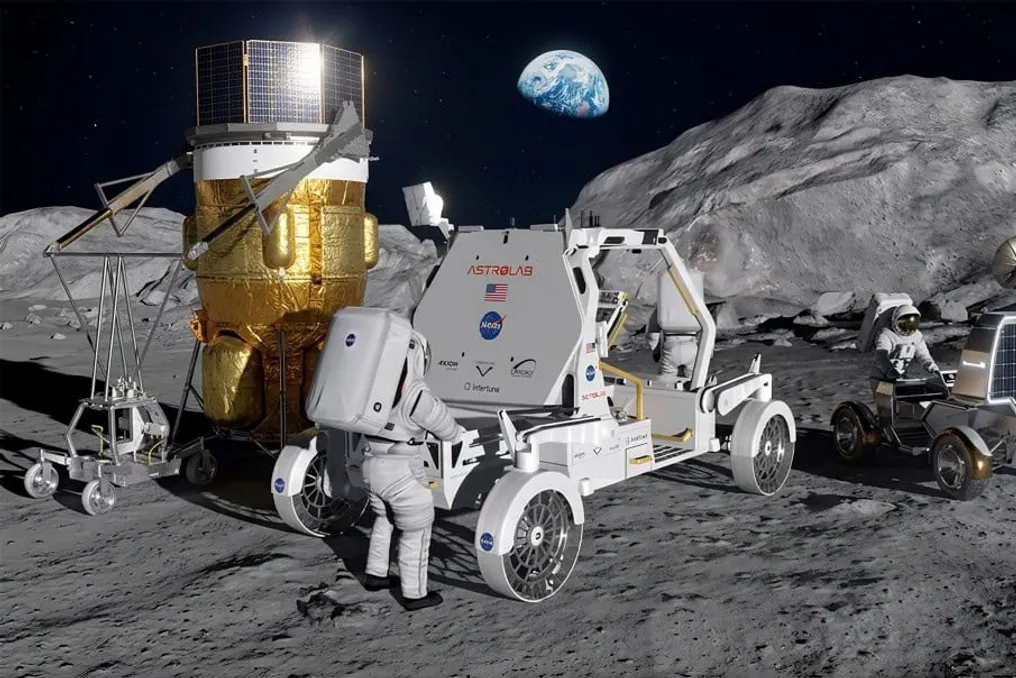
Another reported advancement relates to the equipment astronauts will use on the lunar surface. The agency has partnered with Axiom Space to develop a second type of space suit, lighter, called the Sortie suit. This new equipment will weigh about half as much as the main suit developed by Axiom and will be used during the first lunar walks. It is important to note that it will not replace the primary Axiom model, which will remain reserved for more extensive and challenging tasks in future missions.

With the progress of the Artemis program, NASA aims to conduct progressively more complex expeditions in the lunar south pole region, expanding scientific knowledge about the satellite and establishing a lasting human presence beyond Earth. The agency also views these operations as part of the technological and operational preparation for future crewed missions to Mars.

Robots and Artificial Intelligence are transforming the future of space exploration
Read more
olhardigital.com.br

Robots and Artificial Intelligence are transforming the future of space exploration

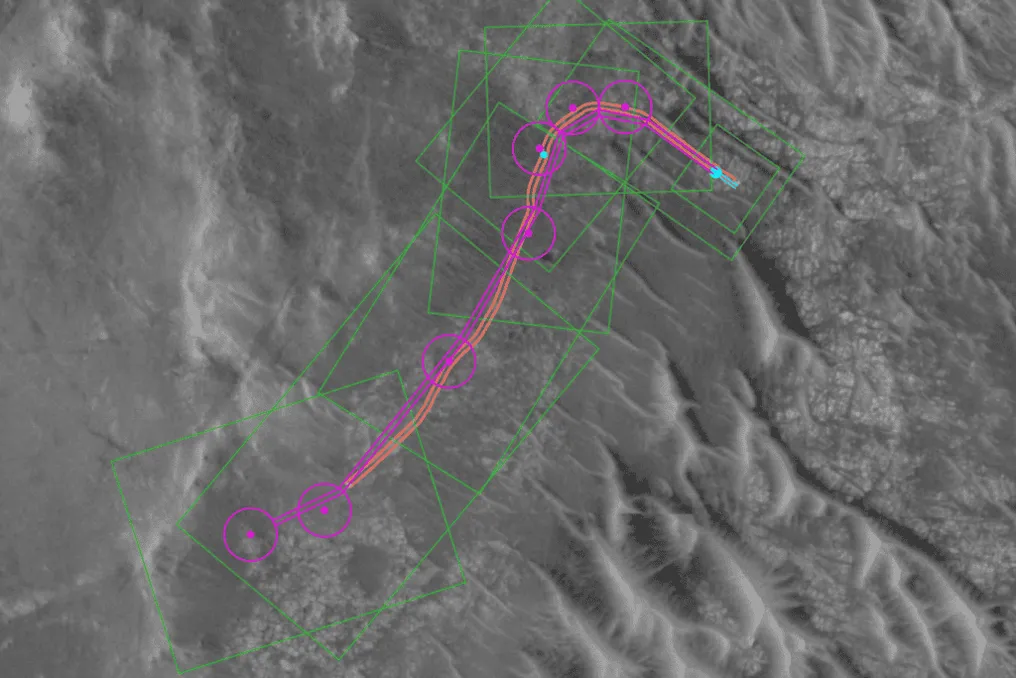
Robots and Artificial Intelligence (AI) are beginning a transformation in the future of space exploration. Last December, a NASA rover named Perseverance demonstrated the ability to traverse part of the Martian surface following routes determined by AI.

This event signals a future where machines can investigate other planets with a greater degree of independence. Previously, the determination of the vehicle's paths depended exclusively on the work of specialists located on Earth. With the implementation of the new technology, AI began analyzing terrain data and images to identify potential obstacles and suggest safe routes.

This technological evolution arises as a response to a central challenge of space missions: great distance. Due to the time it takes for signals to travel between Earth and Mars, real-time control of vehicles becomes unfeasible. Thus, the greater the autonomy of the robots, the less dependence there is on waiting for new orders.

Another relevant initiative in this context is the Distributed, Autonomous, and Cooperative Robotic Exploration (CADRE) project, also from NASA. This project envisions the use of small robots that operate in a coordinated manner on the Moon, exchanging information and exploring the environment jointly. This raises questions about how distinct machines can collaborate in a scenario as unstable as space.

The advances also prompt debates about the limits of this autonomy. It is essential to know how to ensure that a system can make safe decisions in the face of unforeseen events, what the role of human specialists should be when robots take over the choice of their own paths, and to what extent AI can change the way we explore the Solar System.

These topics will be discussed on the Olhar Espacial program this Friday (23). The program will feature Roberto 'Pena' Spinelli, a physicist from the University of São Paulo (USP) and specialized in Machine Learning from Stanford University, USA. He is an AI researcher and columnist for Olhar Digital News, and he will participate in a discussion about the impact of artificial intelligence and robotics on space exploration.

The program is presented by Marcelo Zurita, who is president of the Paraíba Astronomy Association – APA, a member of the SAB – Brazilian Astronomical Society, technical director of the Brazilian Meteor Observation Network (Bramon), and national coordinator of Asteroid Day Brazil. It is broadcast live every Friday at 9 PM (Brasília time) through the official channels of the outlet on YouTube, Facebook, Instagram, X (formerly Twitter), LinkedIn, and TikTok. However, exceptionally on this occasion, the start will be moved up to 8:20 PM.

Popular