Uzbekistan and Azerbaijan Discuss Expansion of Cooperation in Information Technology
Read more
UzDaily
uzdaily.uz

Uzbekistan and Azerbaijan Discuss Expansion of Cooperation in Information Technology

Uzbekistan and Azerbaijan held discussions on the prospects of deepening interaction in the fields of digital transformation, IT industry development, and cybersecurity.

The discussion took place in Baku at an international summit

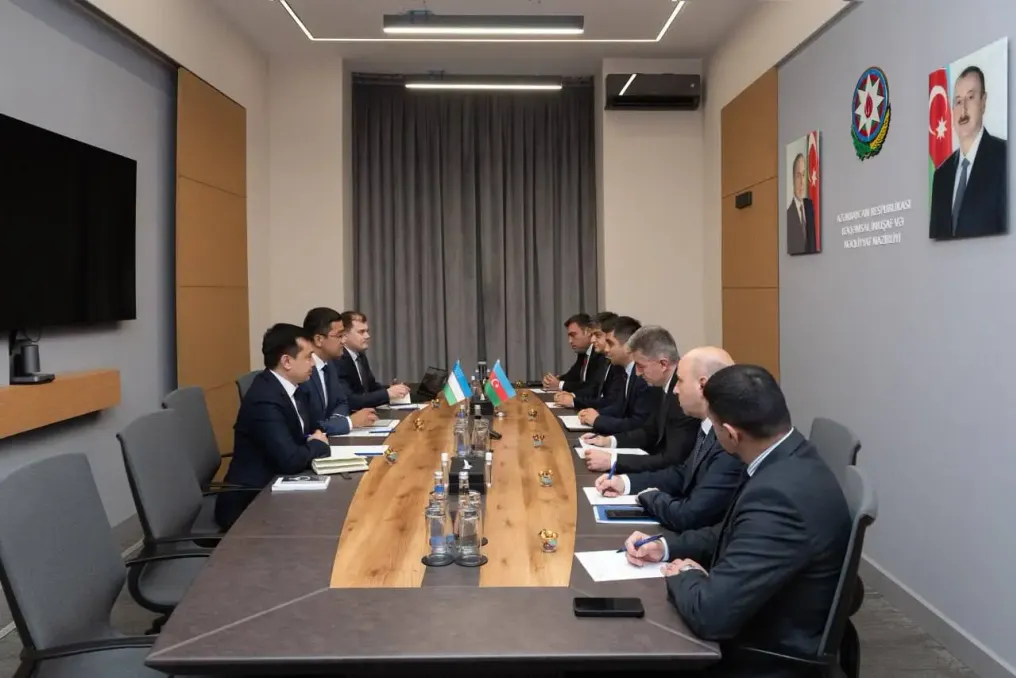
According to the Ministry of Digital Technologies of Uzbekistan, the negotiations were held in Baku as part of the UN International Summit on Innovation Governance. The delegation of Uzbekistan was headed by Ayubkhon Sultanov, First Deputy Minister of Digital Technologies. Representatives from the Ministry of Digital Development and Transport of Azerbaijan, led by Deputy Minister Rashad Hasanov, participated for Azerbaijan.

The parties examined opportunities for joint work in the areas of digitizing public administration, expanding electronic public services, and supporting the startup ecosystem. Particular attention was paid to increasing the export potential of IT companies from both countries.

Participants also considered the development of the information and communication technology market, the creation of highly qualified jobs for IT specialists, and the impact of artificial intelligence on the transformation of the industry. Furthermore, the issue of protecting critical information infrastructure was discussed.

Representatives of the two states exchanged views on cybersecurity and the implementation of modern technologies to ensure the protection of information systems. At the end of the meeting, both sides confirmed their interest in further developing practical cooperation, exchanging experience, and implementing joint projects in the field of digital development.

Similar stories

ED launches investigation into two foreign entities over suspicious $1 million transfer
Read more
timesofindia.indiatimes.com

ED launches investigation into two foreign entities over suspicious $1 million transfer

The Enforcement Directorate (ED) has initiated an inquiry into two foreign organizations. The investigation is linked to the alleged involvement of these structures in Indian internal affairs and a suspicious transfer of $1 million to a UK-based firm with ties to India.

The ED established that TCC Digital Markets Ltd, a company registered in the tax haven of St. Kitts and Nevis, is the source of the funds. These funds reached individuals and organizations in India through multi-layered transactions that passed through various jurisdictions, including Germany, Dubai, Lithuania, Canada, St. Kitts, and the UK.

The actual source of the $1 million was identified as the Dr Matthias Karl Vogt Trust fund from Germany. This fund transferred the money to the British organization via a complex transaction scheme before it reached India.

According to an official familiar with the investigation, the German trust initially transferred the funds to XBase Digital UAB (Lithuania) to circumvent German legislation. The initial review led the agency to an unsolicited letter from Dr Matthias Vogt stating that the payment was made in digital currency.

Intelligence gathered indicated that the digital assets were allegedly sourced from 'hawala' (illegal money transfers) in Dubai and to the Lithuanian organization, after which they were moved to the UK.

The UK recipient firm from Vogt received $1 million into its Airwallex (UK) account between February and March 2026. The money passed through numerous channels and structures, including one registered in Lithuania.

According to sources familiar with the investigation, the funds eventually took the form of a 'grant' from a firm registered in the islands of St. Kitts and Nevis. This firm transferred the funds to the British company in two parts: GB,67,006 and GB,71,746, before they reached the end users in India.

The Caribbean islands are known as a tax haven convenient for laundering criminal proceeds globally. Furthermore, the law enforcement agency discovered another transaction from the Canadian company ZBase Digital Inc, which transferred $500,000 to the same Airwallex account of the British firm in February. Indian authorities are currently examining these details with Airwallex. The total amount of the two alleged transactions is $1.5 million.

US intelligence indicates Chinese company recruited executive to monitor Nvidia CEO
Read more
olhardigital.com.br

US intelligence indicates Chinese company recruited executive to monitor Nvidia CEO

United States intelligence indicated that a Chinese businesswoman, identified as Alice Huang, was hired by China's Ministry of State Security (MSS), the country's primary intelligence agency, with the goal of gathering information on Jensen Huang, CEO of Nvidia. Furthermore, she was reportedly tasked with trying to persuade the executive to support the release of the company's most sophisticated processors to the Chinese market.

These findings were reported by The New York Times, based on sources informed about American surveillance operations. Previously, there had been no news that Alice was working directly for the Chinese intelligence service.

This case is part of a broader investigation into Beijing's interest in American artificial intelligence (AI) technology and Jensen Huang's influence on semiconductor export decisions. Nvidia's chips are items of major global contention and constitute crucial components in AI development infrastructure.

The businesswoman, who has no family ties to the executive, allegedly established closeness with him and maintained contact with other prominent figures in the semiconductor sector, including directors from Gigabyte, one of the largest supercomputer assemblers that use Nvidia components. Alice, fluent in English, participated in industry events and private dinners with executives. Although the date of the meeting with Jensen Huang is unclear, both were seen together at a bar in Taipei (Taiwan) in 2024.

Around the same time, Alice's company, Megaspeed, began operating the purchase of advanced AI chips, moving billions of dollars. The Chinese Ministry of State Security has expanded considerably since Xi Jinping assumed leadership of the country in 2012. Although the agency had a less visible role for many years compared to the People's Liberation Army's espionage and cyber operations sectors, the MSS took on a larger share of Chinese espionage activities after an agreement between Beijing and Washington in 2015 to restrict cyber operations.

In subsequent years, the U.S. Department of Justice accused hackers linked to the agency of attempting to steal American technologies and infiltrate national networks. American researchers and authorities cited by the newspaper pointed out that in 2023, the intelligence service had already established itself as a rival to the CIA. The agency also began using AI to identify and map profiles of potential targets. Currently, the MSS operates a network of an estimated hundreds of thousands of agents, encompassing espionage, counterintelligence, cyber attacks, and information operations.

Peter Mattis, a former CIA counterintelligence analyst and current president of the Jamestown Foundation, told the newspaper that technology has become a priority for the Chinese service. According to him, the agency considers the technology sector vital to the global economic leadership competition. Mattis also emphasized that Jensen Huang is a target of interest due to his influence on decisions that could shape the future of the industry.

Nvidia denied sharing confidential information with its customers and stated that buyers of its products do not ask the company to pressure the American government to change chip sales restrictions to China. John Rizzo, a company spokesperson, added that the Chinese government encourages domestic alternatives, such as Huawei products, and restricts the import of Nvidia equipment for data centers. Regarding the relationship between Jensen Huang and Alice, Rizzo commented that the meetings were common and followed the pattern of the executive's interaction with thousands of businessmen who negotiate with the company.

The Chinese government refuted the allegations. Liu Chang, spokesperson for the country's embassy in the United States, classified The New York Times' information as unfounded and described it as attacks on China. Alice Huang did not respond to the newspaper's attempts to make contact. The White House and the CIA declined to comment on the matter.

Jensen Huang's connection to the Chinese market also involves his interaction with the American government. In recent years, Jensen Huang has publicly advocated for the possibility of American manufacturers selling AI technology to Asia. He argues that the presence of American companies in the Chinese market could intensify competition with local producers, such as Huawei, and limit the autonomous development of the Chinese AI industry.

In 2025, Huang convinced Donald Trump to suspend the ban on chip sales to China, allowing Nvidia to commercialize a less powerful version of its products in the country. Subsequently, the American president and the company reached an agreement to authorize the sale of Nvidia's second most powerful chip to the Chinese market, with the U.S. government receiving 25% of these sales. Trump also considered releasing Blackwell, the company's most advanced chip, but abandoned the idea. In May, during a conference with investors, Huang declared that China should not have access to Nvidia's most advanced technologies, such as Blackwell and the future Rubin. On that occasion, he argued that the United States should maintain technological leadership, but that American companies should continue to compete globally.

Meanwhile, the Chinese intelligence interest in this executive remains under review in Washington. On Thursday (5th), Republican leaders from three important House committees requested that Huang appear at a private meeting later this month to provide clarification on his interactions with Alice Huang.
Pix System Presents Instability on Friday Night (6)
Read more
olhardigital.com.br

Pix System Presents Instability on Friday Night (6)

Users from various banks in Brazil faced difficulties when trying to make transfers using Pix during Friday night, the 6th, according to reports shared on social media.

Monitoring conducted by Downdetector, a platform dedicated to tracking the status of online services and systems, registered a significant increase in complaints directed at banks, including Bradesco, Itaú, and Nubank, as well as peaks of dissatisfaction with Pix itself. This incident began around 7 PM Brasília time.

Many customers from different financial institutions expressed their dissatisfaction on social media. Olhar Digital contacted the Central Bank (BC) to obtain more information about what happened and awaits an official response.

Among the affected banks, Itaú was one that publicly commented, informing that it is aware of the issue and that its teams are mobilized to resolve the instability.

Popular