Film 'Burning Plain' becomes the main winner of the 19th International Film Festival of Resistance
Read more
Tehran Times
www.tehrantimes.com

Film 'Burning Plain' becomes the main winner of the 19th International Film Festival of Resistance

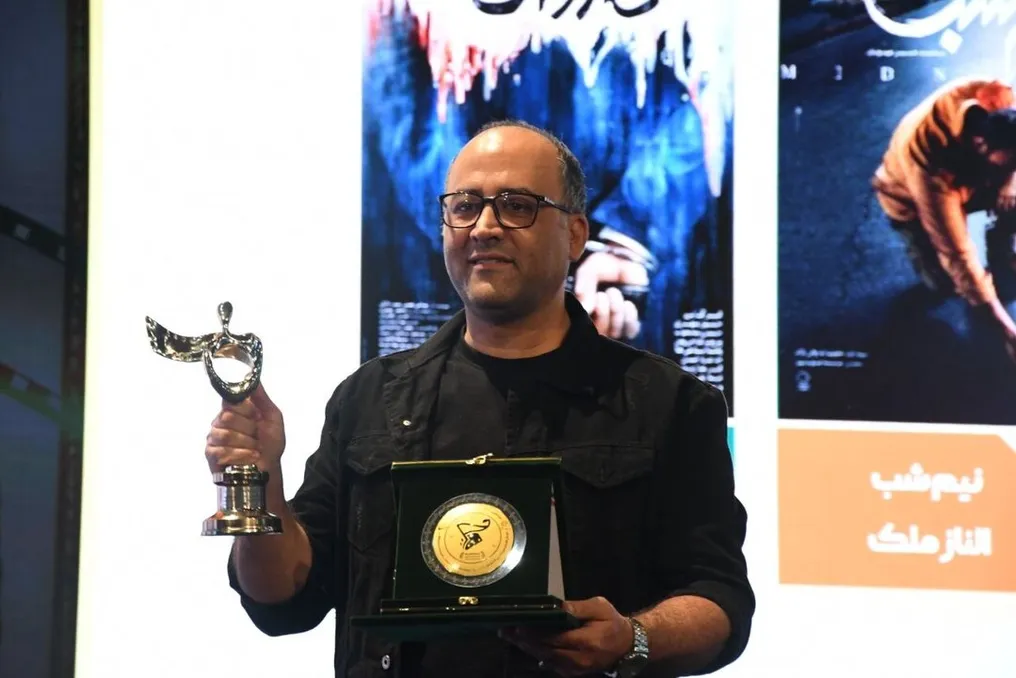
The Iranian feature film 'Burning Plain' won the most awards at the 19th International Film Festival of Resistance, receiving six prizes, including awards for best film and best director. The closing ceremony took place at the Milad Tower Convention Center in Tehran on Thursday.

Majid Esmaeili, the film's director, received the award for best director. Additionally, the film was recognized for best cinematography, best makeup, and best screenplay, which was shared with the film 'The Gambler'. Masoud Sahavatdoost was honored for creating the musical score for the films 'Burning Plain' and 'Kooch'. The film's producer, Kamran Majidi, accepted the festival's main prize for best feature film in the national category.

In the national feature film competition, Sara Hatami received an award for best actress for her work in 'The Bridge', and Arman Darvish was awarded for best actor for his role in 'The Successor'. Kourosh Tahami was named best supporting actor for his participation in 'The Gambler', and Zahra Moradi was recognized as best supporting actress for her performance in 'Kooch'. Mohsen Bahari received the award for best debut director for the film 'The Gambler'. Other awards in the national feature film section went to Mohammad Baradaran for visual effects in 'The Successor', Reza Torkaman for special effects in the film, and Esmail Alizadeh for the editing of 'Land of Angels'. The best costume award was also given to 'Land of Angels'.

The jury's special award was presented to Manouchehr Mohammadi, the producer of 'Land of Angels', while Mehdi Motahar received the Special Award in Honor of Martyr Soleimani for 'Kooch'. The festival secretary's special award went to Ruhollah Sohrabi for 'The Successor'.

In the documentary section, Mostafa Musavitabar's film 'Standing Beside the Thames', produced by Zohreh Najafzadeh, won the prize for best feature documentary. Mortezah Payesh-Shenas received the award for best documentary director for 'A Small Waterway of Happiness', and Masoud Zareian was recognized as best short documentary director for 'Among the Fig Trees'. The best short documentary award went to Motahare Edalatkha for 'A 25-Year Wait'. Ali Akbari was noted for his study 'I Am Jalal Al-e Ahmad', and Seyed Hassan Seyedi Parishan and Vahid Kazemi received an award for technical achievement in cinematography for 'The Golden Corridor'.

In the short film section, the film 'Bitura', produced by Mehdi Abazari, won the best film award. Ehsan Abednia won the best director award for 'The Messenger', and Hossein Jamshidi received the best screenplay award for 'Captain Torres'. Seyed Mohammadreza Sajadian was awarded for cinematography on 'Salamoon'. The jury also presented a special award to the film 'Under God's Eyes', directed by Abbalfazl Saii.

In the animation competition, the film 'Safineh-ye Nejat' (Rescue Ship), produced by Mohammad Amin Hamadani, won the award for best feature animated film, and Hadi Mohammadiani received the best director award for this work. Rasoul Azargoun became the laureate of the best short animation director award for 'Rocket City'. A special award was given to the film 'The Battle of Kites', produced by Elham Ebrahimi, and the studios Mahva Animation Studio and Mehdi Jafari Jozani were recognized for their contribution to resistance-themed animation.

The international competition also honored filmmakers from various countries. Russian director Andrey Simonov received the award for best feature film for his 'Baby Boy', and Jordanian filmmaker Nadji Salameh received the award for best short narrative film for 'Hind Under Siege'. The best feature documentary was awarded to 'A State of Passion', directed by Carol Mansour and Mouna Khalidi, while 'Vibrations from Gaza', directed by Rehab Nazzal, received the award for best short documentary film.
Similar stories

Iranian Director Mohammad Reza Ardalan Wins Best Director Award at the 14th Asian Film Festival in Barcelona
Read more
www.tehrantimes.com

Iranian Director Mohammad Reza Ardalan Wins Best Director Award at the 14th Asian Film Festival in Barcelona

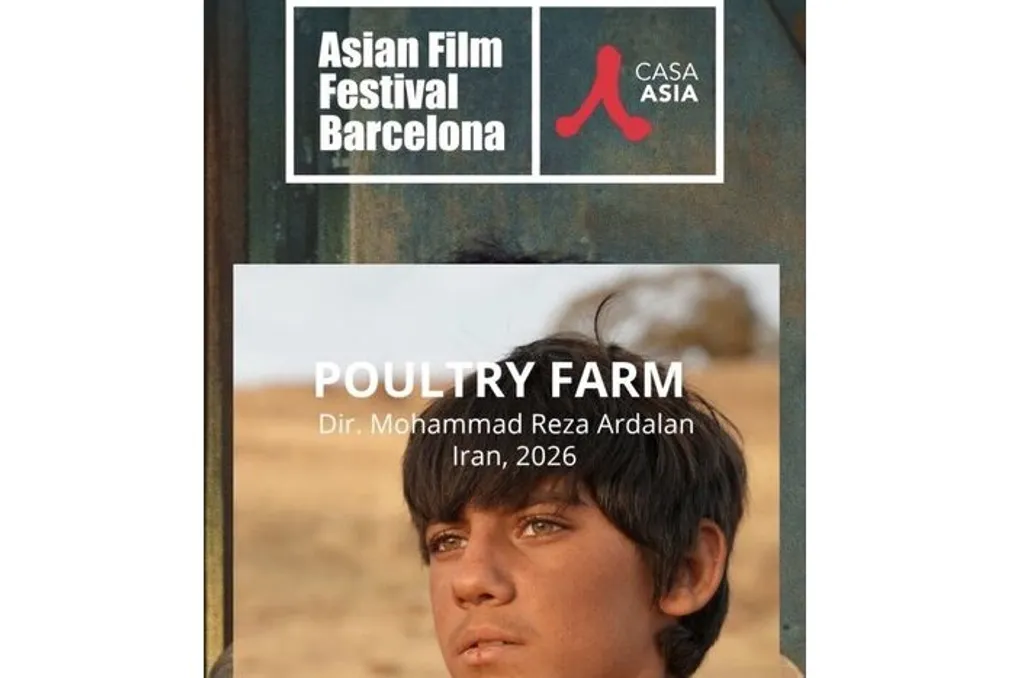
The Iranian film 'Poultry Farm,' written and directed by Mohammad Reza Ardalan, won the award for Best Directing in the 'Other Narratives' section at the 14th Asian Film Festival in Barcelona. The festival took place in Barcelona, Spain, from October 22 to November 1.

The jury awarded the film for its ability to create an atmosphere of tension and maintain suspense until the end. According to IRNA, the jury noted that the film particularly stands out for the evolution of the young protagonist and how the director uses the farm's isolation and the relationships between characters to demonstrate the consequences of war, the vulnerability of refugees and undocumented people, as well as exploitation, discrimination, and abuse of power.

This 97-minute film, which is a 2026 production, tells the story of Havar—a homeless, undocumented Kurdish youth. He illegally crosses the border between Iraq and Iran in search of work. He eventually finds a job on a remote poultry farm on the outskirts of Tehran. When the only worker he befriended disappears without a trace, Havar begins an investigation that leads him into a world marked by fear, violence, and exploitation.

Combining elements of a mystical thriller and a social drama, 'Poultry Farm' uses the isolated and oppressive setting to depict the fragility of invisible migrants and the cruelty of power structures. The film is described as tense and humanitarian, where horror lies in the brutality of the real world.

Mohammad Reza Ardalan is a Kurdish-Iranian filmmaker and screenwriter. He studied cinema and screenwriting at the University of Arts of Tehran and Soor University, and also worked as a director's assistant on several short films. Among his directorial works is the short film 'Quarantine' (2020), which won the Best Directing award at the International Film Festival in Kobani.

The Asian Film Festival in Barcelona is organized by Casa Asia. In line with its goal of promoting contemporary Asian cinema, the festival presents over one hundred films reflecting the latest independent, experimental, and auteur works from across the continent.

At this stage, the festival has paid special attention to developing film industries in countries such as Kazakhstan, Kyrgyzstan, Tajikistan, Uzbekistan, Mongolia, Nepal, Sri Lanka, Bangladesh, Bhutan, Pakistan, Afghanistan, and Cambodia. Furthermore, industries with long histories were represented at the festival, including Iran, India, South Korea, China, Japan, and the Philippines. The program also included films from Hong Kong, Indonesia, Singapore, Malaysia, Thailand, and Vietnam, as well as works from Australia and New Zealand.

The 19th International Film Festival of Resistance Opens in Isfahan
Read more
www.tehrantimes.com

The 19th International Film Festival of Resistance Opens in Isfahan

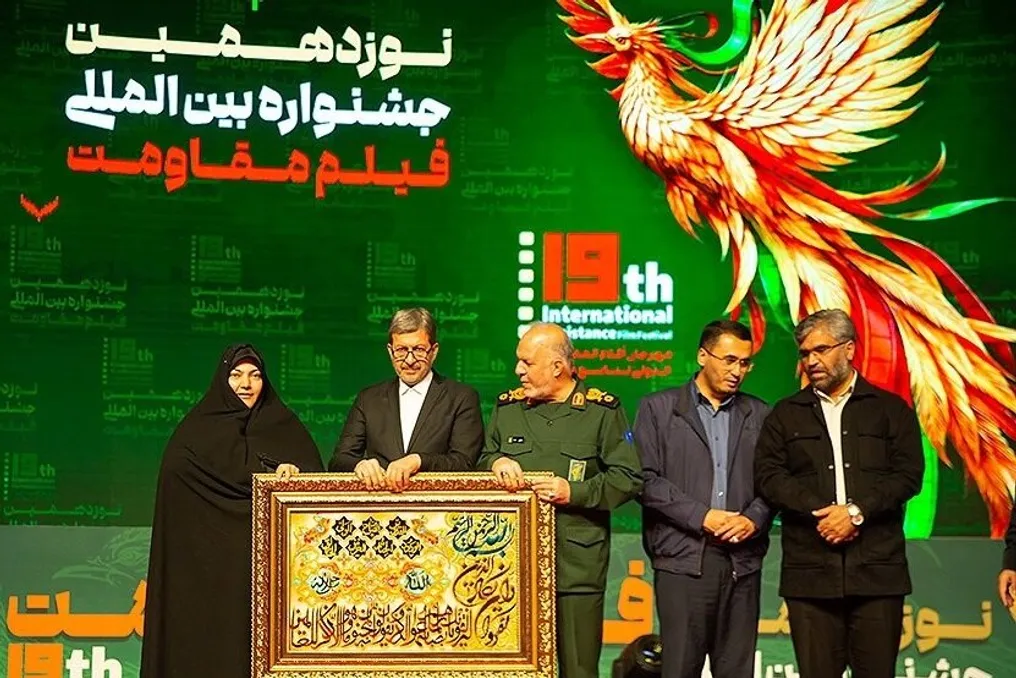
The opening ceremony of the 19th International Film Festival of Resistance took place in Isfahan on Thursday. Jalal Ghaffari Ghader, the festival secretary, noted that for the first eleven editions, the festival was called the Festival of Sacred Defense. Two changes occurred starting from the twelfth edition: an international focus was added, and the concept of 'Film of Sacred Defense' underwent semantic development and renewal to 'Film of Resistance.'

Ghaffari emphasized that the festival originated from the heart of war and sacred defense. He also noted that holding the current edition against the backdrop of ongoing conflict gives it special significance, considering the events of two recent wars. According to him, understanding film of resistance begins with realizing the very concept of resistance, as any nation decides not to be defeated even before combat begins.

The festival secretary added that the task of film of resistance is not just to record memories, but to form a conviction that must be accepted and trusted in the face of bullets and rifles. He also stated that a heroic nation loves to see its resistance reflected in the mirror of film of resistance, and if cinema only speaks of defeat, it will lead to failure, even with elite military forces. At the same time, film of resistance must distance itself from sloganistic approaches, telling about joy and hope alongside depicting the suffering of war.

Several special events were highlighted during the 19th edition. The first indicator was broad international representation: over 109 countries presented their works, and the presence of more than 1900 international productions demonstrates the global potential of film of resistance. The festival secretary particularly highlighted this unique semantic identity.

During the opening ceremony, the best works in various sections were awarded. The 19th International Film Festival of Resistance is held under the auspices of the Society of Revolutionary and Sacred Defense Cinema. Film of resistance strives to preserve human dignity, representing the sacrifices of peoples, defending the truth, and opposing oppression and domination, as well as presenting to the world stories that were previously little known or unnoticed.

With a history of nearly forty years, the International Film Festival of Resistance is an artistic and cinematic platform dedicated to promoting the spirit of resistance, awareness, and solidarity among the free peoples of the world. The festival's goals include discovering new talents, strengthening the movement of film of resistance, and establishing connections between filmmakers and artists from around the world.

The current 19th edition, with its international scope, focuses on concepts such as freedom, justice, human dignity, peace, hope, and progress, in addition to resistance. It aims to present a modern, diverse, and vibrant view of film of resistance and the human stories associated with it. In this edition, resistance is interpreted more broadly than just fighting on the battlefield or during war; it is viewed as an all-encompassing human struggle against oppression, occupation, discrimination, violence, domination, and oblivion, as well as a striving to preserve truth, identity, freedom, human dignity, and hope for the future.

Beyond the function of a film festival, the event represents a cultural initiative aimed at fostering dialogue between nations and filmmakers worldwide and promoting the achievement of justice, freedom, peace, and human dignity. Screenings of the festival films began on Friday at the Mellat Cinema Complex in Tehran and will continue until November 4.

Uzbekistan Receives Recognition at Regional "Golden Globe" Project in Tashkent
Read more
nuz.uz

Uzbekistan Receives Recognition at Regional "Golden Globe" Project in Tashkent

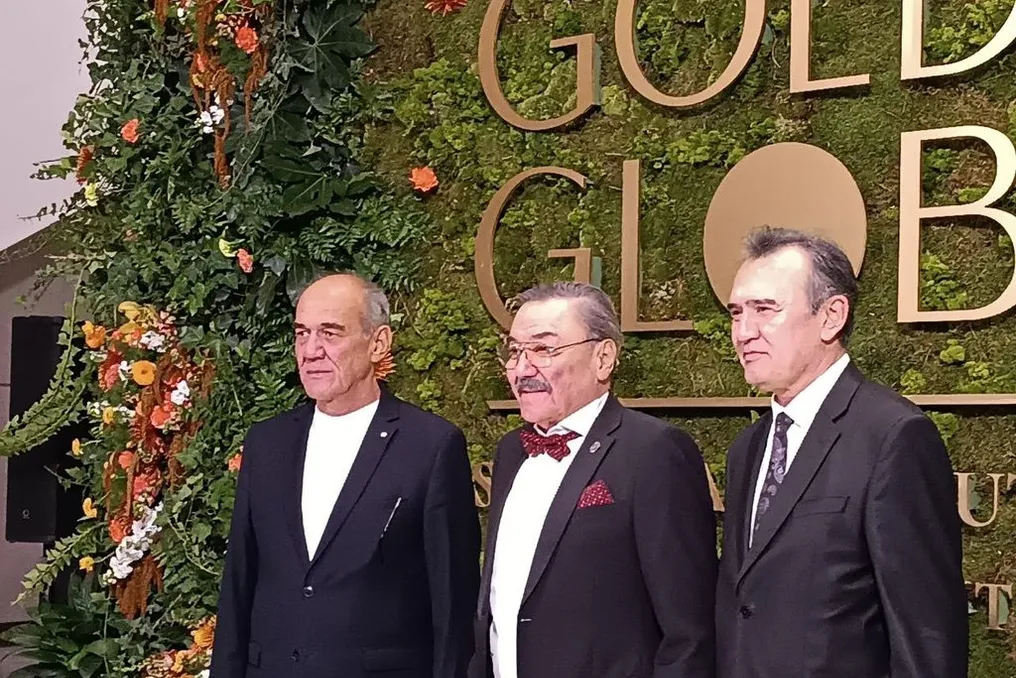
A special regional project, Silk Road Tribute Gala, under the auspices of the Golden Globes, took place in Tashkent on October 23-24. The event was dedicated to showcasing achievements in cinema and television from Central Asian and Caucasian countries.

The project organizers aimed to support new, unique cinematic voices that are not yet widely known but possess mastery worthy of international recognition. Another goal was to open up new opportunities for local actors and directors, considering the region's rich creative heritage, which has connected different cultures through the Silk Road for centuries.

Honored Artist of Uzbekistan Rustam Sagdullaev emphasized the immense and resonant significance of the event, noting that hosting such a prestigious award in the region is unprecedented. He stated that the choice fell specifically on Uzbekistan, which proves the country's merits and its cinema, and that this will serve as a strong stimulus for filmmakers to create high-quality films capable of competing for world awards at the level of the "Golden Globe."

The red carpet was attended not only by local celebrities but also by international guests, including Adriana Brody, Kira Chaplin, Olga Kurilenko, Svetlana Bondarchuk, Laysan Utyasheva, and Alexey Vorobyov.

Alexey Vorobyov shared his opinion on cinema as an art and a dialogue with the audience, calling the opportunity to get acquainted with Uzbek culture a huge gift. He noted that in Tashkent one can see a combination of modern skyscrapers and national character, which he appreciates.

During the ceremony, outstanding achievements of film and television figures from Central Asia and the Caucasus were recognized, and the rich cultural heritage of these regions was highlighted. Three awards—"Meridian," "Pioneer," and "Beacon"—were presented to representatives from Uzbekistan, Kazakhstan, Azerbaijan, Georgia, and Armenia.

The "Meridian" awards were received by Ali Khamraev, director, cinematographer, and screenwriter, as well as Gulchehra Jamilova, actress of theater and cinema and People's Artist of Uzbekistan, for their significant contribution to the history of cinema and television.

For the title of "Pioneers," the Azerbaijani actress, screenwriter, and producer Takhmina Rafaella, and the Georgian film director, screenwriter, and producer Levan Koguasvili, whose innovative works contributed to the development of the region's film industry, were honored.

The "Beacon" award went to Kazakh actress Shugyle Eshen and Armenian actor, theater director Samvel Tadevosyan, whose works reflect a new generation of talents in cinema and television.

The selection of Uzbekistan as the host country is due to the fact that the country is increasingly positioning itself as a major regional center for international events. Guests are attracted not only by large-scale transformations in all spheres of life but also by the unique culture, unique architecture, and hospitality of the residents.

Maryam Bukhar Hassan, a global UN peace advocate, expressed her joy at participating in the gala evening in Tashkent. She noted the warm reception, the thoughtfulness of the event, and the love of the residents for their culture, mentioning that Uzbekistan is a country with a rich historical heritage that has given the world scholars such as Imam al-Bukhari, At-Tirmizi, and Ibn Sina.

The Golden Globes held in Tashkent created a unique platform for cultural interaction between East and West, uniting creative communities of different cultures through a common passion for cinema and television art. The organization of the art festival was supported by the Dubai production company Leto Production with the support of the Ministry of Culture of the Republic of Uzbekistan.

Popular