The United Nations Relief and Works Agency for Palestine Refugees (UNRWA) disclosed a financial deficit of 71.7 million euros, attributing this situation to 'unprecedented economic pressure,' although it assured that it will continue to fulfill its mandate.
The financial difficulties faced by the agency result from the continuous lack of resources and uncertainty regarding funding, factors that have impacted the quality of certain services and put the organization's long-term sustainability at risk.
To cope with these circumstances, UNRWA is reviewing its operations, focusing on the needs of Palestinian refugees and local conditions, prioritizing especially the most vulnerable groups, such as women, children, and youth.
In an official statement, the organization guaranteed that it is not being dismantled and clarified that it has not yet made decisions about possible changes in staffing or its presence in areas of operation.
UNRWA warned that any possible staff reduction would only be considered if there are no other viable solutions given the operational and financial difficulties.
The agency employs approximately 28,000 staff members and emphasized the effect that cuts could have on the employees themselves, their families, and the communities served.
On Monday, dozens of UNRWA workers held a protest in the Nuseirat camp, located in the Gaza Strip, expressing concern over potential layoffs.
Since January 2026, the organization has implemented a 20% reduction in weekly service hours, a measure adopted to preserve jobs and maintain basic support.
Although the United Nations General Assembly extended the agency's mandate in December 2025, the organization points out that available resources remain insufficient and unpredictable.
UNRWA reiterated that it is exclusively up to the General Assembly to decide on any modifications or the termination of its mandate.
The agency appealed to member states, host countries, and partners to maintain dialogue, requesting stable and lasting funding from donors to prevent a further decrease in services.
Additionally, the organization stressed that no other entity currently possesses the capacity to provide humanitarian assistance and essential services on a comparable scale, particularly in the Gaza Strip.
According to UNRWA, a decrease in international support would intensify pressure on the most vulnerable populations and could exacerbate regional instability.
Founded in 1949, UNRWA provides assistance to about 5.9 million Palestinian refugees, covering the Palestinian territories, as well as Syria, Lebanon, and Jordan.
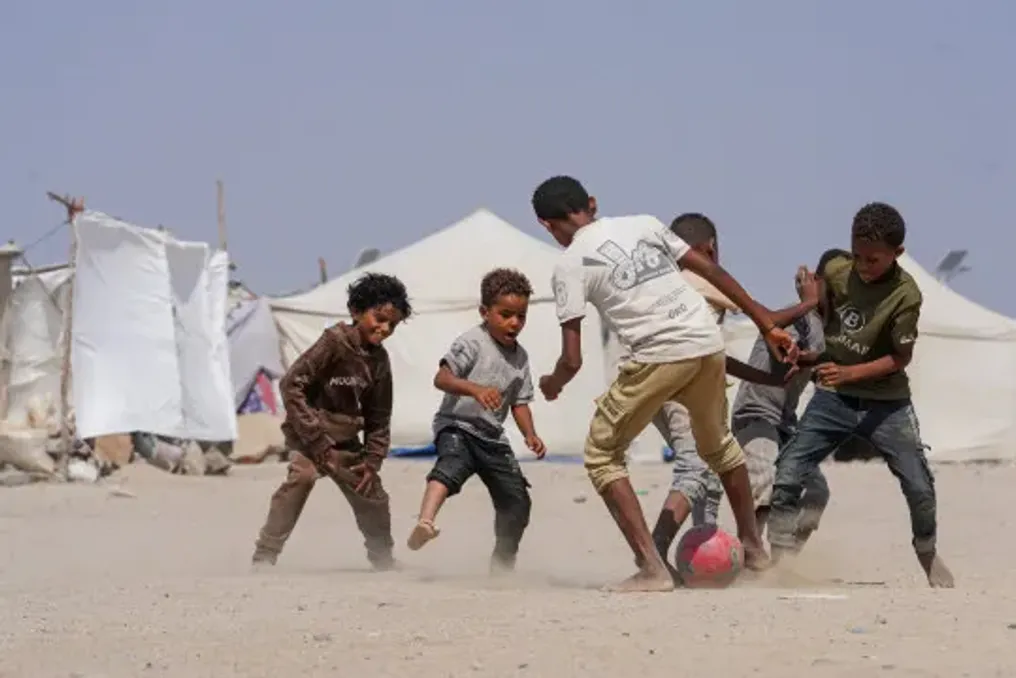
Specifically in the Gaza Strip, UNRWA shelters 1.5 million people out of a total of 2.1 million inhabitants of the Palestinian enclave.
As a fundamental pillar in the health, education, and humanitarian aid sectors, the agency employs 10,500 staff members in this territory, which has been severely affected by three years of war in Israel, which began on October 7, 2023, following an unprecedented attack by Hamas on Israeli territory.
The war in the Palestinian enclave has resulted in a humanitarian catastrophe, including the near-total destruction of local infrastructure and the forced displacement of hundreds of thousands of individuals.
Three years after the start of the conflict, 1.9 million residents of Gaza remain displaced, with entire cities, neighborhoods, and streets destroyed, and it is estimated that there are still about 10,000 victims buried under the rubble.
Israel has repeatedly accused the UN agency of employing Hamas members, alleging that some of these members participated in the October 2023 attack that triggered the war.
Several international investigations identified 'issues related to neutrality' within the organization but highlighted that Israel did not present evidence to corroborate its allegations.
Legislation that terminates any link between the State of Israel and the agency, prohibiting its operation in Israeli territory, came into force in January 2025.