The vast world presented in Nitish Tiwari's film 'Ramayana: The Legend Rises' is the result not only of visual effects but also of the meticulous work of the cast and technical specialists who spent months bringing this epic to life.
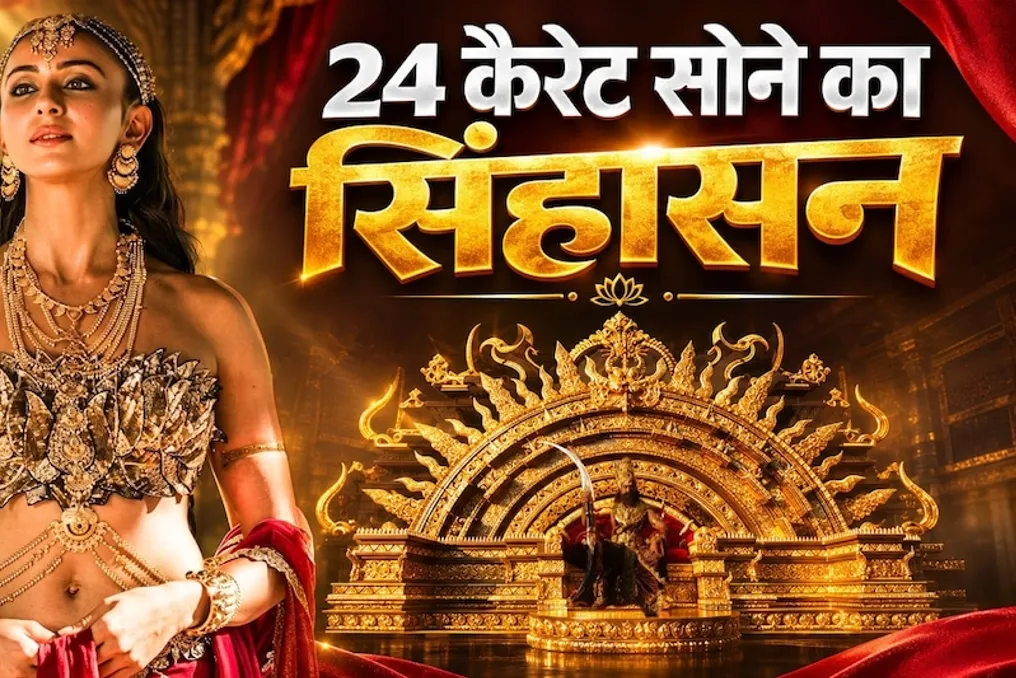
One striking example of this craftsmanship is Ravana's throne, the creation of which required about one million rupees and took four months. In an interview with 'Prabhat Khabar,' the film's art director, Ramesh, discussed the grand scale of the production, noting that over 150 sets were prepared for the film. He also provided detailed information about some of the most complex constructions and props.
Work on creating the sets for 'Ramayana' began in April 2024 at Prime Focus Studio in Mumbai Film City. According to Ramesh, each structure underwent 10-15 iterations of design changes before final approval. Instead of relying solely on green screen, the team created detailed physical sets, including floor texture, wall design, and gold finishing.
Among the most expensive elements is Ravana's throne, which was made over four months at a cost of approximately one million rupees. Its base was formed from clay and cast from fiber, then covered with a sheet of 24-karat gold. Shurpanakha's chariot was also a major project, taking three months to create and costing around 1.5 million rupees.
The team also created numerous large props to assist the actors during their performance. For instance, a 24-foot skeleton of Jatayu was fabricated, serving as support for actors when conveying expressions and delivering lines. Additionally, a massive 50-foot 'Pushpaka Vimana' was created. Since it was too large to fit in the studio, it was constructed over 40-50 days in four separate modules. The concept for this flying vehicle was developed by Nitish Tiwari over six years.
Implementing this project required a large number of people. Reports indicate that around 500-600 workers were simultaneously on the Lanka set, and up to 1000 dancers and junior actors participated in large crowd scenes.
Ramesh added that Nitish Tiwari personally inspected every set the day before filming began. Furthermore, to ensure the complete readiness of all materials, the director reviewed detailed storyboards and concept art four days before shooting commenced.
The costume designer for 'Ramayana,' Ajay Kumar, shared an image of the armor on his Instagram post. He wrote that this armor is not just a design but the result of his thoughts, diligence, and hard work. To create this composition, he personally traveled to Assam, where he brought this idea to life with his team. The armor, crafted from Sarpat branches, is decorated with jute and wooden pieces, and its creation was an extremely complex process requiring time, precision, patience, and boundless dedication.
He also emphasized that he knows the effort and journey required to create these armor pieces, noting that some creations should be remembered not only for their appearance but also for the story behind them and the people who made them.