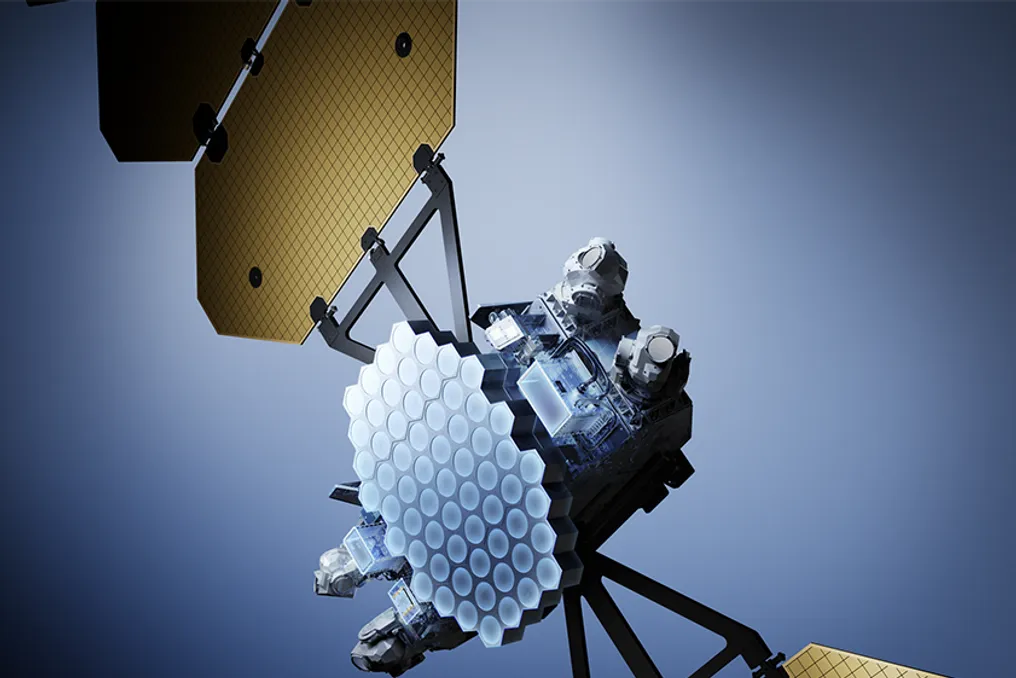
CesiumAstro raises $730 million to launch AI-supported constellation of 737 satellites
Read more
Ventureburn
ventureburn.com

CesiumAstro raises $730 million to launch AI-supported constellation of 737 satellites

CesiumAstro completed a Series D funding round, raising $730 million, which valued the Austin-based company at over $4.5 billion. The deal was led by Janus Henderson, with participation from Insight Partners, Sands Capital, Sumitomo Corporation of America, Toyota's Woven Capital, Magnetar, and other investors. Additionally, the U.S. Export-Import Bank and JPMorgan added $100 million in debt financing.

For a long time, CesiumAstro focused on manufacturing satellite equipment, with a particular emphasis on phased array antennas that direct radio beams to cover large areas. In 2024, the company expanded its portfolio by adding Element—a satellite it designs and operates for clients. Following the success of Element, CesiumAstro decided to take over the entire process.

The capital raised is intended to support the Synchronicity project—a planned constellation of 737 AI-equipped satellites. This system will serve commercial, sovereign, and defense customers, and CesiumAstro itself will manage its operation. The network will utilize Ku, Ka, and V-band frequency ranges. Data processing will occur directly on board the satellites, with AI managing traffic and bandwidth. According to Bloomberg, the satellites will be positioned at two altitudes in low Earth orbit.

Although there is no exact launch date yet, preparatory work is actively underway. The Element-1 satellite was launched in October as part of a rideshare mission on a SpaceX Falcon 9 rocket and is already operational. Launches for seven more spacecraft are scheduled.

Against the backdrop of Starlink already having over 11,000 satellites and Amazon Leo completing construction of its 1,000th unit with plans for over 3,000 more, the question arises regarding the need for a new network. The answer lies in the concept of sovereignty. Governments, from Canada to Europe, are funding their own systems, partly due to concerns about Elon Musk's influence. The European project IRIS² is one such example. CEO Shey Sabripour asserts that this is what buyers want.

According to him, clients seek 'sovereignty over their own constellation.' He also believes that CesiumAstro is not entering into direct confrontation with Starlink, as many clients do not wish to use closed, proprietary systems. An additional advantage for the company is the potential ability to use radio frequencies outside those approved for SpaceX and Amazon, if confirmed.

A significant portion of the funds will be directed toward production facilities. CesiumAstro plans to spend $500 million over five years on its Austin headquarters, which includes approximately 270,000 square feet of advanced manufacturing space. The company also intends to hire 550 new employees, which will increase its Austin staff to over 1,000 by 2030. In addition to Austin, the company conducts operations in the UK, Germany, Switzerland, Taiwan, Singapore, and Japan.

Vertical integration is a key aspect. Over the past year, CesiumAstro acquired three firms: Jariet Technologies, which manufactures millimeter-wave radio chips; 1Aardvark, specializing in software for defense missions; and Vidrovr, providing AI for real-time signal analysis. These acquisitions allow CesiumAstro to control the process from chip to software.

Earlier this year, CesiumAstro had raised $470 million in a Series C round. Considering the current round, the company has announced securing over $1.2 billion in new capital in 2026 alone. It is not alone in this trend: last month, Xona Space raised $250 million to create a competitor to GPS in low Earth orbit. This demonstrates that investors no longer view space as the domain of a single company; they are betting on networks owned by governments and large corporations. For founders, this confirms that high-tech hardware can still attract serious investment, and for everyone else, it signals that the sky is about to become much busier.

Similar stories

Kalepa raises $75 million to expand AI-based insurance software
Read more
ventureburn.com

Kalepa raises $75 million to expand AI-based insurance software

Kalepa has raised $75 million to develop its artificial intelligence platform designed for insurance companies. The New York-based startup secured the investment at a valuation of $470 million. The Series B round was led by Updata Partners, with participation from existing investors IA Ventures and Inspired Capital.

The new funding increases the total amount Kalepa has raised since its founding in 2018. The company develops software for insurers and other participants in the insurance market. The Kalepa platform assists with portfolio management, pricing, and underwriting.

Kalepa plans to use the funds to expand its AI-powered products. Currently, the company serves insurers who manage general agents, reinsurers, and program administrators. Its operations span more than ten countries. Co-founder and CEO Paul Monasterio noted that the platform combines AI capabilities with professional expertise in the insurance sector.

Furthermore, the company intends to enter new markets and double its workforce by 2027. According to the company's report, it has maintained positive cash flow for over two years. Revenue and customer numbers have tripled over the last year.

Kalepa's software coordinates all stages of the underwriting process. AI agents support tasks ranging from application analysis to pricing and portfolio decision-making. When a broker submits an application, the platform gathers necessary documentation and data, identifies discrepancies and missing information. It then directs underwriters to analyze risks and make decisions according to established rules. The system is also capable of generating supporting information required for risk assessment and pricing.

Kalepa regulates the degree of autonomy of its AI depending on the specific task. Nevertheless, human oversight remains for expert judgment and approval when necessary, which distinguishes the company from platforms aiming for fully autonomous underwriting. The company insists that insurance decisions must be made with a traceable process and responsible supervision.

The company claims to possess Professional AI. Its platform integrates AI agents with control software and insurer-specific guidelines. According to Kalepa, insurers using the platform report an increase in premium by over 58% per underwriter. Additionally, they provide calculations 30% to 60% faster and demonstrate an improvement in the combined ratio by 960 basis points, corresponding to a 9.6 percentage point reduction in the share of premiums spent on losses and expenses.

Kalepa's latest funding comes amid growing interest in AI-based insurance technologies. Insurers are seeking ways to improve the efficiency of underwriting and managing complex workflows. Competitors have also secured significant funding. For instance, Federato raised $100 million in a Series D round in November 2025, developing AI-native underwriting software. Six received $30 million in a Series B round in January 2026, utilizing autonomous agents to support underwriting.

These companies demonstrate different approaches to insurance automation. Kalepa emphasizes task-specific autonomy with human control at critical decision points. The broader potential extends beyond simply accelerating document processing.

Kalepa is using the Series B funding to strengthen its technological and commercial operations. The company expects to double its staff by 2027, with hiring focused on engineering, AI, and commercial teams. Expansion will also help Kalepa serve additional markets and insurance functions.

Existing investors continue to support the company's development. Updata Partners brings experience in supporting growth-stage software businesses. Kalepa's funding history is also characterized by long intervals between rounds; previously, the company raised $14 million in a Series A round in 2021.

SpaceX raises $40 billion to acquire Nvidia AI chips
Read more
olhardigital.com.br

SpaceX raises $40 billion to acquire Nvidia AI chips

SpaceX, the aerospace company led by Elon Musk, has raised $40 billion, equivalent to approximately R$ 216 billion, through debt financing. This amount will be used to acquire graphics processing units (GPUs), which are essential for the development and operation of artificial intelligence (AI) systems.

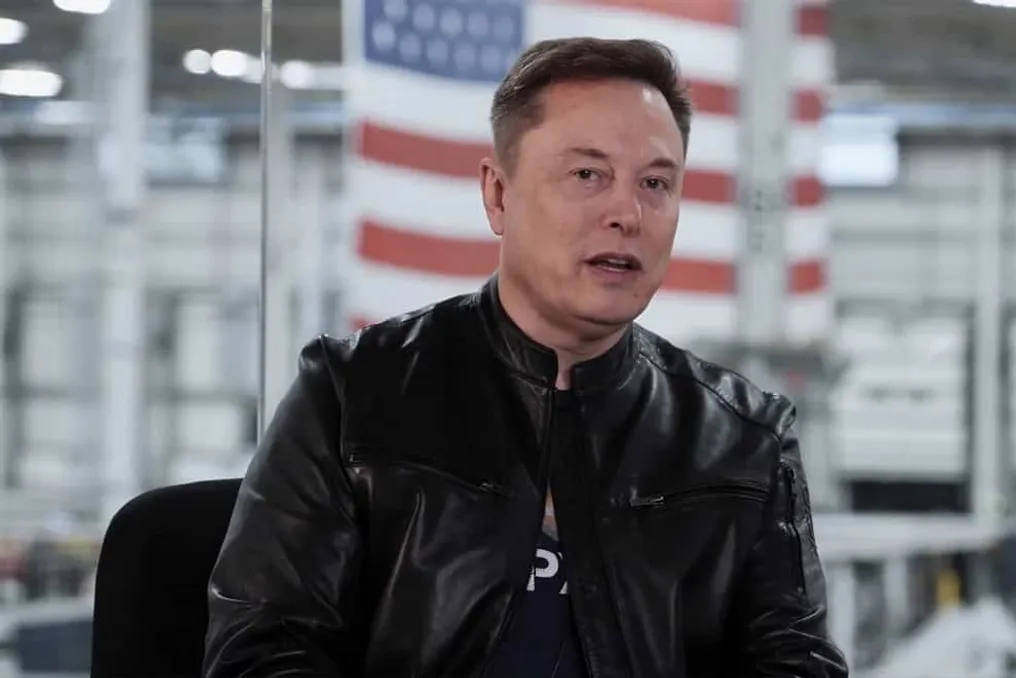
Elon Musk announced this fundraising on Sunday, the 25th, via a post on the X platform. According to him, access to this credit was facilitated both by SpaceX's investment-grade risk rating and by the revenues generated by its satellite internet businesses, such as Starlink, and space launches.

This move occurs amid intense competition among technology companies to secure the supply of advanced chips and expand the computational infrastructure necessary for the advancement of artificial intelligence. Nvidia is the main supplier of the processors that SpaceX plans to purchase.

In his communication, Musk specified that the financing primarily refers to an actionable debt intended for the purchase of GPUs, with deliveries scheduled for the first and second quarters of 2027. He emphasized that this operation will not significantly impact the current quarter's results.

The financing also demonstrates the importance of having access to the debt market for corporations seeking to build large computing structures. The combination of SpaceX's investment-grade rating with consolidated revenues, such as those from Starlink and rockets, strengthens its ability to attract financial resources.

Reuters had anticipated this news in early October, reporting that the company was negotiating with asset managers and banks to raise $40 billion (about R$ 216 billion) to obtain Nvidia AI chips.

This financing closure takes place while technology companies compete for access to cutting-edge processors and invest in creating data centers to meet the growing demand for AI services.

Additionally, Musk has been focusing investments on Terafab, a chip manufacturing initiative uniting SpaceX and Tesla in Austin, Texas (USA). According to Reuters, this project aims to deliver the first test chip around May or June 2027, with the goal of achieving mass production in the third quarter of 2028.

Even before its Initial Public Offering (IPO), SpaceX had included the manufacturing of its own GPUs in those capital raising documents as one of the considerable capital investments planned. The company warned investors about the inherent costs of developing AI and other technologies, indicating that the plan to produce its own processors aims to increase control over the components used in its operations, although large-scale production remains a future goal.

Autonomous Delivery Vehicle Manufacturer Neolix Raises Nearly $400 Million in Series E Funding Round
Read more
technode.com

Autonomous Delivery Vehicle Manufacturer Neolix Raises Nearly $400 Million in Series E Funding Round

Neolix, a Chinese company that manufactures autonomous delivery vehicles, announced on October 20th the completion of a Series E funding round worth nearly $400 million.

This round was co-led by Boyu Capital and a national-level fund. The publication Jiemian, citing sources close to the investment, identified the second fund as China's National AI Industry Investment Fund.

Other participants in the investment included Alibaba’s AEF NextGen Hong Kong fund, Vertex Growth, and GAC Capital.

Neolix stated that the raised funds will be used to expand its global customer service and operational network, as well as to invest in data collection and training models for fully autonomous driving. The company aims to increase vehicle safety and performance while simultaneously reducing operating costs throughout their lifespan.

This capital raise followed a Series D round last year, which exceeded $600 million, bringing the company's total funding to over 10 billion yuan.

Popular