About ten years ago, Professor Chandrashekhar Kundu witnessed a scene where a young girl was eating discarded biryani while her brother defended himself against stray dogs.
This incident occurred after the birthday of Chandrashekhar's son, when he threw away leftover food. This image haunted him, leading him to question: why is food being wasted while children lack proper nutrition?
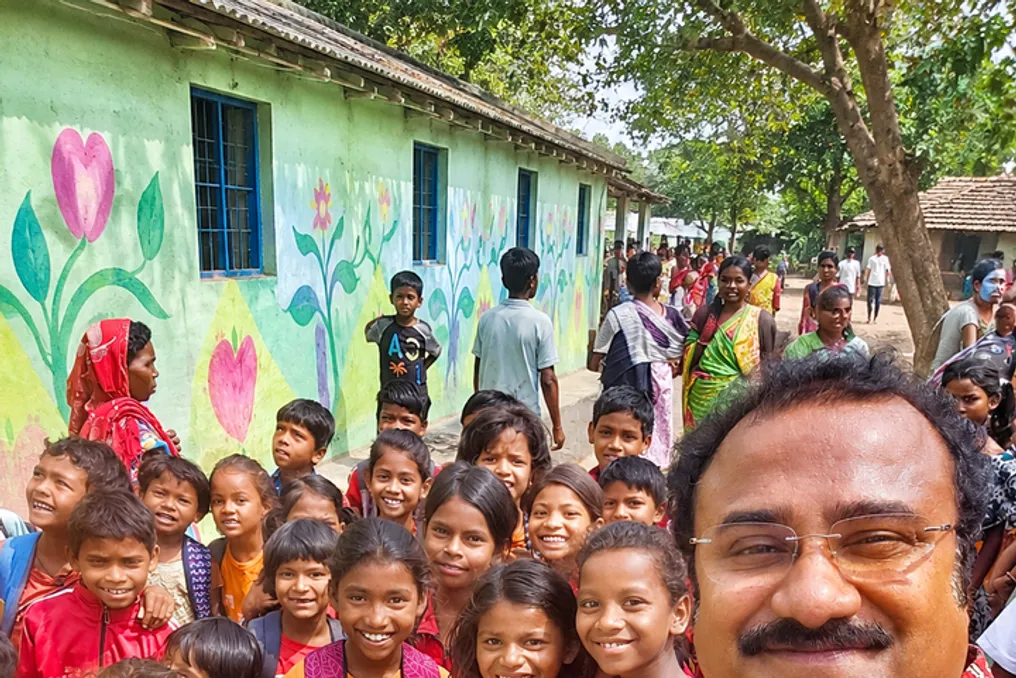
Deciding to act, Chandrashekhar, a college lecturer from West Bengal, began studying the issue of food waste. He soon earned the nickname 'Foodman' and started providing meals to about 180 children across three villages.
As he interacted with the children, he realized that access to food was only one of the problems. Many came from families engaged in stone quarrying or as hired laborers, and they lacked academic support at home. Even children who attended school struggled with their performance due to the absence of a mentor.
Chandrashekhar understood that simply providing food was insufficient; education needed to become part of the solution. With the support of others, he organized dinners for the children and began helping them understand how education could open new opportunities.
The initiative, named 'Boi Toi Hoi Chai', gradually expanded to other communities in West Bengal. Local teachers and volunteers joined the efforts, helping children receive regular academic support closer to home.
Today, according to the official FEED website, there are over 20 free learning centers. In addition to educational programs, the organization continues to provide meals, supporting both the children's nutrition and their chances of learning. Chandrashekhar Kundu's work, from providing food to assisting in the continuation of children's education, has evolved into a broader social movement.