Treatable Disease Mistaken for Dementia in the Elderly: Information on Normal Pressure Hydrocephalus
Read more
Super Abril
super.abril.com.br

Treatable Disease Mistaken for Dementia in the Elderly: Information on Normal Pressure Hydrocephalus

In early October, American singer Billy Joel, 77, announced that he underwent brain surgery to treat an unusual and reversible form of dementia. The diagnosed condition was Normal Pressure Hydrocephalus (NPH), whose signs are often confused with other cognitive losses, such as Alzheimer's, but which has the characteristic of being curable if identified and treated at the appropriate time.

NPH is more prevalent in individuals over 60 years old, affecting, on average, one in every hundred people in this age group. It arises due to the abnormal accumulation of cerebrospinal fluid, the fluid that protects and nourishes the brain, specifically in the areas that produce this fluid. Symptoms manifest gradually, only when this fluid begins to exert pressure on the neurons. Prolonging the condition without treatment worsens brain damage, resulting in more frequent symptoms and decreasing the chance of full recovery.

Symptoms and Diagnosis

According to neurologist Iron Dangoni Filho, from Einstein Israelite Hospital in Goiânia, primary signs include changes in gait, characterized by a more robotic walk, occurrence of urinary incontinence or urgent need to urinate, in addition to slower mental processing. It is important to note that not all patients exhibit all these symptoms simultaneously.

The ambiguous nature of NPH signs contributes significantly to delayed diagnosis. Dangoni warns that family members often associate the symptoms with the natural aging process. Additionally, when there is an intention to seek medical help, patients tend to consult other specialists, such as urologists and orthopedists, wasting valuable time that could optimize the response to treatment.

The diagnosis of NPH is established by observing clinical indicators and confirmed through an MRI scan, which helps detect changes in the ventricles filled with cerebrospinal fluid. If the diagnosis is early, surgery is performed that can reverse the disease and achieve a complete cure. This procedure involves implanting a valve that diverts excess fluid into the abdominal cavity, where it will be reabsorbed by the body.

Surgical Evaluation and Tap Test

However, the surgical procedure presents complexities, especially in elderly patients, and is not indicated for everyone. International guidelines suggest that only about six to eight out of ten people with the disease will benefit from symptom reversal through surgery. This occurs because prolonged coexistence with NPH causes deterioration in the neural structures themselves, and this recovery is not possible even with pressure reduction.

To assess potential benefits, there is an examination called the Tap test. This technique allows for temporary relief of pressure by draining cerebrospinal fluid via lumbar puncture, making it a much less invasive method than surgery. After collection, it is checked whether there has been an improvement in gait and urinary control. The test can be repeated up to 48 hours after the first puncture to assess the effectiveness of proceeding to definitive treatment.

Although the Tap test is available in private centers in Brazil, it is not part of the mandatory list of exams covered by health insurance plans or the Unified Health System (SUS). However, some public health services perform a subjective analysis, where punctures are made, but evaluations depend on the patient's report.

The doctor at Einstein in Goiânia commented that a positive result on the Tap test offers greater security for performing surgery, as it proves the benefits. For healthcare professionals, receiving a positive test and conducting a successful surgery is a source of satisfaction. In Goiânia, the exam is available completely, using a set of sensors called baiobit, which makes the evaluation more precise and objective, standardizing measurement and allowing for the observation of subtle improvements.

Iron Dangoni added that in neurological practice, they deal with various progressive dementias, which are at best controllable. He finds it extremely gratifying to see a patient who had mobility difficulties moving freely and recovering their own memories.

In Billy Joel's specific case, the surgery was performed, allowing for the reversal of symptoms. In his weekly radio show, he reported noticing improvements in memory and balance shortly after the procedure, without returning to NPH symptoms. The neurologist concluded that knowing cases of famous personalities helps raise awareness about the disease, which can save lives, reinforcing that the earlier the diagnosis is made, the higher the chances of post-surgical therapeutic success.


Similar stories

Actor Patrick Stewart dies at 86; he lived with Alzheimer's and Lewy body dementia
Read more
super.abril.com.br

Actor Patrick Stewart dies at 86; he lived with Alzheimer's and Lewy body dementia

Actor Patrick Stewart, known for playing Professor Xavier in the X-Men franchise, passed away on Wednesday, October 28th, at the age of 86. Although family members have not disclosed the exact cause of death, it was revealed that the actor was simultaneously dealing with two neurodegenerative pathologies: Alzheimer's disease and Lewy body dementia.

Both are classified as some of the most prevalent neurodegenerative diseases and are characterized by cognitive deterioration, behavioral problems, and memory loss. However, despite the similarities, each condition has its distinct mechanisms and clinical manifestations.

Alzheimer's disease results from a defect in protein processing in the central nervous system. Abnormal and toxic proteins, notably beta-amyloids and tau, accumulate irregularly in the brain, both inside and outside neurons. This leads to the progressive death of neurons in areas crucial for memory and processing, such as the hippocampus and cortex, compromising cognition and causing changes in behavior. A common initial sign is forgetting recent events, and its origin is multifactorial, involving genetic and hereditary aspects.

Lewy body dementia, on the other hand, also involves protein accumulation, but in a different manner. In this condition, the alpha-synuclein protein deposits inside the neurons and in the cerebral cortex, forming aggregates called Lewy bodies. These deposits also serve as indicators of other illnesses, such as Parkinson's, and are named after the physician Frederic Lewy, who discovered the phenomenon. These deposits can affect various parts of the brain, interfering with communication and neuronal function, potentially leading to cell death in the long term, similar to what occurs in Alzheimer's.

Primary signs of Lewy body dementia include motor changes, such as tremors, muscle rigidity, and slowness, which often lead to confusion with Parkinson's, as happened with Robin Williams. The correct diagnosis was only established after his passing. Other recurring symptoms include sleep disorders, mental confusion, difficulty reasoning, and paranoia. The condition can also cause autonomic dysfunction, affecting involuntary bodily processes such as blood pressure regulation, digestion, and bladder control.

A distinctive symptom is the occurrence of visual hallucinations, which can affect up to 80% of patients. Although memory is affected over time, it is generally not the first symptom presented. While Alzheimer's tends to be more common in women, Lewy body dementia shows a higher incidence in men. Both diseases have no definitive cure, but treatments are available to manage symptoms and improve quality of life, including medications aimed at inhibiting neurotransmitter degradation or increasing cerebral dopamine.

Scientists discover correlation between low levels of HAEE substance in blood and Alzheimer's disease
Read more
podrobno.uz

Scientists discover correlation between low levels of HAEE substance in blood and Alzheimer's disease

Researchers found that the concentration of the HAEE substance in the blood of individuals suffering from Alzheimer's disease is almost half that of people who show no impairment in memory and thinking. This conclusion was reached after studying blood samples from 350 people, and scientists believe that this compound could form the basis for creating a new diagnostic test.

The research was conducted in four Russian cities: Moscow, St. Petersburg, Tomsk, and Nizhny Novgorod. The experiment involved 200 patients with Alzheimer's disease and 150 people from the control group. Specialists measured the content of the HAEE peptide, which is a small compound consisting of four amino acids.

The average concentration of the HAEE peptide in the control group was 360.5 picograms per milliliter of blood, whereas in patients with Alzheimer's disease it was at the level of 175 picograms. It is important to note that the level of this substance did not show a direct dependence on the severity of the disease; researchers did not notice significant differences between patients at different stages of the disease.

Initially, the HAEE peptide was studied as a potential agent to counteract beta-amyloid—a protein that can accumulate in the brain in this disease. Laboratory tests showed that the peptide prevents the formation of these protein aggregates, and checks were also conducted on its effect on similar deposits in previous animal studies.

The discovery of HAEE in human blood was an unexpected result. Scientists now hypothesize about the possibility of using its concentration to detect signs of Alzheimer's disease through blood analysis.

Reliability of the New Diagnostic Method

To assess the potential of this analysis, specialists determined how effectively it differentiates between patients with Alzheimer's disease and people without the diagnosis. With the established threshold value, the test was able to correctly identify about 84% of patients, but its ability to rule out the disease in healthy people proved significantly weaker.

This suggests that this analysis may have future practical value, but at the current moment, it cannot independently confirm or deny the presence of Alzheimer's disease. The study also has several limitations: diagnoses were made based on clinical symptoms, without mandatory confirmation using specialized brain imaging or biological markers, which could have led to the inclusion of people with other forms of dementia in the participant group. Furthermore, there were some discrepancies in the age profiles of the two groups studied.

Scientists also suggest that the reduced level of HAEE may be related to internal changes in the body as the disease progresses. Nevertheless, it remains an open question whether the deficiency of this substance is the cause of the disease's development or merely a consequence of the pathological processes occurring. The authors of the study suggest that synthetic HAEE may be used in the future to develop treatment methods aimed at replenishing its deficit.

Study shows psilocybin reduces inflammation and mitochondrial stress markers in Parkinson's disease patients
Read more
nplus1.ru

Study shows psilocybin reduces inflammation and mitochondrial stress markers in Parkinson's disease patients

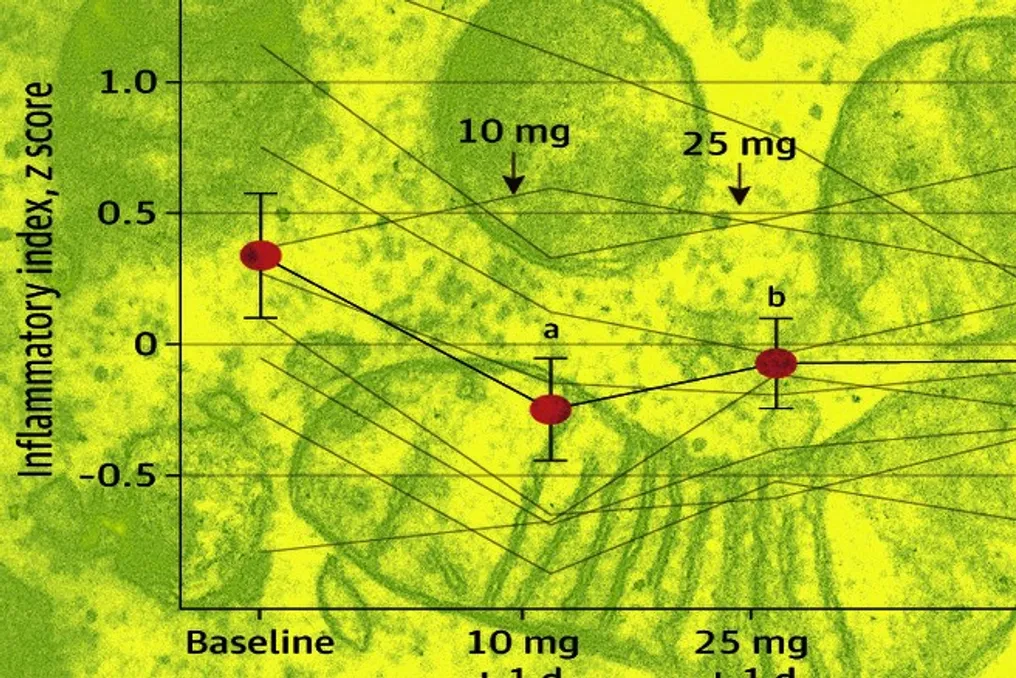
American scientists have completed clinical trials and found that the use of psilocybin leads to a noticeable reduction in inflammation and mitochondrial stress indicators in people suffering from Parkinson's disease. The results of these studies were officially published in the scientific journal JAMA Psychiatry.

Popular