NSE Exchange Urges Purchase of Gold Electronic Receipts on Dhanteras, Seeing Potential for Import Reduction
Read more
Khaleej Times
www.khaleejtimes.com

NSE Exchange Urges Purchase of Gold Electronic Receipts on Dhanteras, Seeing Potential for Import Reduction

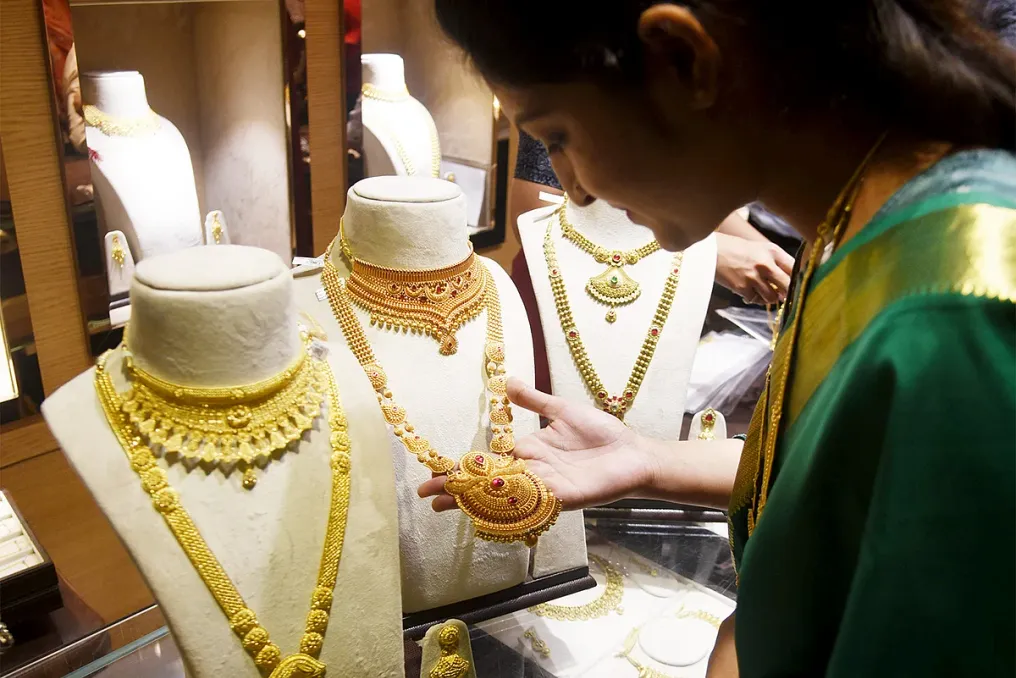
The National Stock Exchange (NSE) strongly recommends that investors purchase Electronic Gold Receipts (EGRs) instead of physical gold during the Dhanteras period. The exchange notes that India could avoid an annual gold import of $5–6 billion if gold funds held the exchange's EGRs and provided half of their total reserves in 116 tons of gold.

The exchange emphasized that every EGR traded on its platform is fully backed by physical gold that has been processed and refined in India, with a purity level of 995 or 999, and is stored in vaults approved by the Securities and Exchange Board of India (SEBI).

NSE stated: 'Every NSE EGR is backed by 100 percent physical gold that has been processed and refined in India and is stored in SEBI-approved vaults.' It added that 'every NSE EGR you buy is backed by gold processed in India. Not a single gram is imported.'

The exchange's EGRs are supported by domestically sourced gold and can be held in dematerialized accounts. They can be traded in volumes from 10 milligrams to one kilogram, and subsequently converted into physical gold.

According to NSE data, in the financial year 26, India imported 721 tons of gold worth $72 billion, which is a 24 percent increase over the previous fiscal year.

The exchange noted that 'every 100 tons of domestic gold received in NSE EGRs is equivalent to savings of about $10 billion in import expenditures.'

NSE calculated that Indian households own between 25,000 and 35,000 tons of gold, most of which is outside the official financial system. To mobilize these reserves, the exchange is developing an application that will allow households to exchange their existing gold for EGRs through home collection or authorized collection points.

The gold will be weighed, tested for purity, and credited to investors' demat accounts based on its net content. The EGR segment was launched by NSE on May 4, 2026, and the exchange has created an ecosystem that includes refiners, vaults, depositories, clearing infrastructure, and market makers.

In the current financial year, the segment recorded 2,781 transactions involving 6,197 units, with a total trading volume of ₹97.5 crore. Trading is available from 9 am to 11:30 pm, and settlements are done on a T+1 basis. The exchange concluded that this Dhanteras it urges investors to buy NSE EGRs instead of physical gold, as this initiative can help conserve foreign currency and strengthen India's domestic gold ecosystem.
Similar stories

Tips for Buying Gold on Dhanteras: How to Avoid Losses and Gain Double Benefit
Read more
www.aajtak.in

Tips for Buying Gold on Dhanteras: How to Avoid Losses and Gain Double Benefit

In recent days, gold prices have significantly decreased. On the MCX exchange, the price for 10 grams of 24-carat gold is about 1.41 lakh rupees. Today is the festival of Dhanteras, and those planning to purchase gold should pay attention to the advantageous aspects of this purchase.

Most people still prefer to buy physical jewelry, avoiding digital gold. In our country, gold is considered an investment tool. However, many make a mistake when buying gold jewelry for investment, which can subsequently result in a loss.

Although women most often insist on buying jewelry, they are often unaware of potential losses, and jewelers do not always provide them with this information. Jewelers, striving for their own profit, usually advise clients to purchase jewelry specifically.

When purchasing jewelry, buyers must pay three components: the cost of the item itself (depending on weight), the making charge, and VAT (3%). Regardless of whether the payment is made online or offline, the VAT is only 3%.

However, if you are considering buying gold from an investment perspective, it is worth changing your decision. A more profitable option would be to purchase gold coins or gold bars. Coins are available even at a weight of 1 gram, and coins will bring greater returns in the future compared to jewelry.

When you buy jewelry, you have to pay for the making charge, which jewelers usually add at a rate of 15 to 20 percent. For designer jewelry, this fee can reach 25–30 percent. Imagine if you purchase an item worth one lakh rupees, and the making charge alone amounts to 15 to 20 thousand rupees.

Furthermore, if the jewelry has stones set in it, their weight is included in the total weight along with the gold. This means that when selling such jewelry, you will not get back the value of the stones. Only the value of the gold will be considered upon sale or exchange, and the money spent on the making charge will be lost. Thus, by purchasing jewelry, the client is guaranteed to lose 15 to 20 percent.

So what is the solution? If you want to keep gold at home, it is better to buy gold coins, as no making charge is levied when purchasing them; you only need to pay 3% VAT. When selling gold coins or bars, you will receive the full value, unlike jewelry. Why incur losses by buying jewelry then?

If you still decide to buy jewelry, be sure to consider the following points. Jewelers often mislead customers by adding various fees to the bill, and due to lack of information, customers cannot object. They may charge additional amounts under the pretext of polishing or labor costs, which is a violation of the rules. You have every right to refuse such payment and file a complaint against the jeweler.

It is important to know that jewelry is not made from 24-carat gold. Most items available on the market have a purity of 22 or 18 carats. Therefore, when purchasing, you must clarify the current price of gold on the foreign exchange market to acquire the item at a fair price.

The most important thing is to always negotiate the making charge. Many jewelers are willing to reduce this fee after bargaining, as the main profit for jewelers comes precisely from the making charge, which can reach 30 percent.

Always demand an original receipt (Original Price) so that there are no problems in the future regarding the purity and weight of the item upon sale. Regarding purity, you should only buy items with a hallmark.

Inflation or Disappointment: Sharp Decline in Gold Demand Observed in India Post-Pandemic
Read more
www.aajtak.in

Inflation or Disappointment: Sharp Decline in Gold Demand Observed in India Post-Pandemic

In recent years, gold prices have risen significantly, beginning to affect consumer demand. Forecasts suggest that overall gold demand in India this year could drop to levels not seen in six years. Due to the high cost of jewelry, people have refrained from purchases, and investment activity has also weakened.

According to data from the World Gold Council (WGC), gold consumption in India may decrease to approximately 650 metric tons by 2026. Weak monsoon season and reduced rural incomes are also negatively impacting gold demand.

The World Gold Council, in a report published on Tuesday, forecasts that gold demand in India will be around 650 metric tons by 2026. If this forecast holds true, it will be the lowest demand level since 2020. In 2020, gold purchases were severely affected by lockdowns caused by the COVID-19 pandemic and the closure of jewelry stores.

Sachin Jain, CEO of WGC for Indian business, told Reuters that there was a decline in jewelry demand during the first nine months of the year, which may reflect on the overall demand for the entire year.

The fall in gold demand was evident in the third-quarter data. From July to September, gold demand in India fell by 29% compared to the previous year, reaching 162.5 metric tons. During this period, jewelry sales dropped by 20%, and investment demand for gold decreased by 40%. Thus, not only jewelry buyers but also investors considering gold retreated.

According to the World Gold Council, the main reason for the decline in demand is the high price of gold. The increase in the cost of living following the war in Iran has increased expenses, putting pressure on the budgets of ordinary families who cannot spend as much on gold as before. High prices particularly affect jewelry purchases; many customers postpone purchases or opt for smaller weight jewelry.

More than half of India's total gold demand comes from rural areas. In villages, people buy jewelry not only for wearing but also as a means of saving and accumulating assets. However, the weak monsoon season this year created a problem for rural demand. The World Gold Council notes that monsoon rains in 2026 were at their lowest level in over a decade. This affected agricultural production and farmers' incomes. When farmers' income decreases, spending on items like gold and jewelry can also decline.

Despite the weak demand, there are some expectations in the fourth quarter. According to Sachin Jain, gold sales may increase during the Diwali and wedding seasons. In India, it is considered auspicious to buy gold during Diwali and Dhanteras. Furthermore, demand for jewelry increases during weddings. Nevertheless, high gold prices and the weakness of the rural economy may limit this growth. That is, the festive and wedding season may support demand, but it will be difficult to compensate for the overall decline for the entire year.

Gold imports into India also decreased in the third quarter. Sachin Jain explained this by saying that after the government raised the import duty on gold this year, the inflow of gold through unofficial channels increased. The drop in import figures does not mean that the total amount of available gold has decreased proportionally; some gold may enter the market through other channels, bypassing official imports.

VinFast sales in India increased by 392.8% in September thanks to the success of new models
Read more
www.aajtak.in

VinFast sales in India increased by 392.8% in September thanks to the success of new models

September 2026 proved to be a very successful month for VinFast. Compared to September of last year, the company sold significantly more vehicles in the Indian market. If only 376 units were sold in September 2025, the company delivered 1,853 units this September.

This growth amounted to 392.8% year-on-year. Regarding specific figures, 1,477 more cars were sold in September this year than in September of last year. The most popular model in the company's portfolio is the Limo Green, although this vehicle is not sold to the general public.

Instead, Limo Green is acquired by SM Green, which acts as a taxi provider for VinFast. According to the Auto पंडित्ज report, the company sold 850 Limo Green vehicles in September. The next best-selling model was the VinFast VF 7, which was sold in quantity of 625 units in September. Last year, only 158 such cars were sold, demonstrating a sales increase of 295.6% year-on-year. These two models accounted for 79.6% of the company's total sales volume.

The VF-6 model also showed growth. In September of last year, 218 units were delivered, whereas this September the company delivered 323 units, corresponding to an increase of 48.2% year-on-year. The MPV 7 model sold only 55 units in September and is the newest product in the company's portfolio. This car starts from 20.39 lakh rupees with an ex-showroom price and is equipped with a battery capacity of 60.13 kWh. The MPV's claimed range is 517 kilometers, and the company claims that charging from 10 to 70 percent takes only 30 minutes.

As for the second best-selling model, it is the VinFast VF 7. This five-seater SUV has an ex-showroom price of 22.99 lakh rupees and is equipped with a 70 kWh battery, providing a claimed range of 532 kilometers. VinFast's sales growth is also driven by the inclusion of two new models—Limo Green and MPV 7. Even excluding these two models, the company sold 948 units of VF 6 and VF 7 in September this year, representing a growth of 152.1% compared to the 376 units sold last year.

Popular