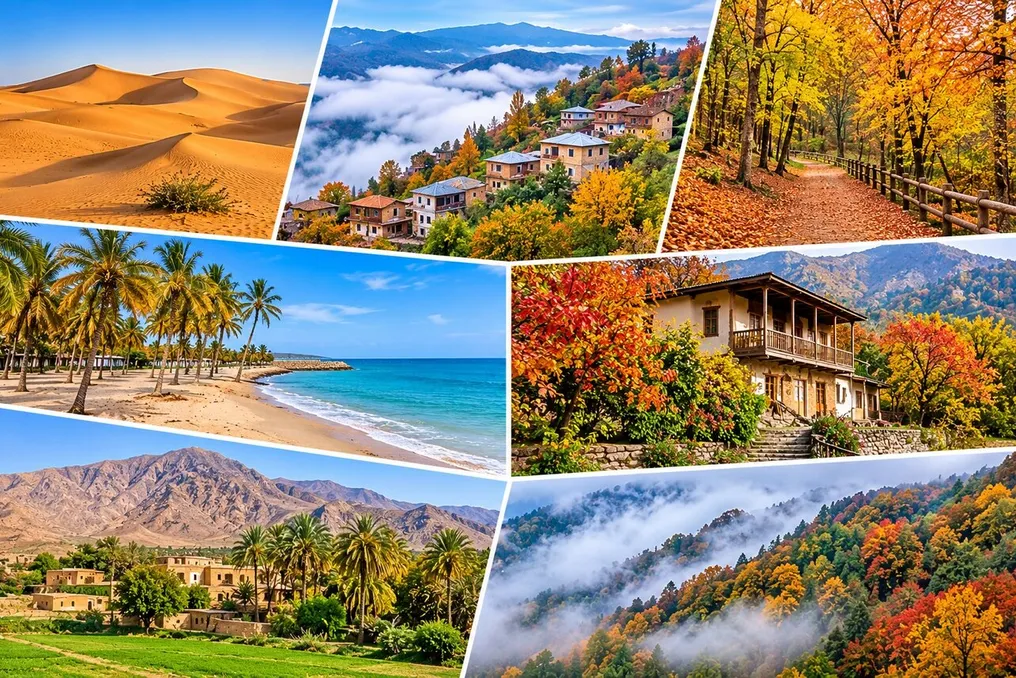
Seven Scenic Places in Iran to Visit in Autumn
Read more
Tehran Times
www.tehrantimes.com

Seven Scenic Places in Iran to Visit in Autumn

Autumn is considered one of the most attractive times for traveling through Iran. As summer heat gives way to cooler days, the country's landscapes transform: from the forests of the Caspian region to the deserts of the central plateau and the warm shores of the Persian Gulf.

This season also offers a more relaxed travel format. After the end of summer holidays, many destinations become less crowded with domestic tourists, although popular spots may remain lively on weekends. Autumn is a suitable time for leisurely exploring Iran's natural attractions, whether it's a walk in the forest, a desert adventure, or a trip to rural communities.

Below is a list of seven destinations showcasing the diverse autumn landscapes of the country.

Mesjar Desert: Golden Sands and Quiet Horizons

Mesjar, located in Isfahan province, is one of Iran's most famous desert locations. Its vast dunes, open expanses, and the striking contrast between sand and salt flats make this place captivating for experiencing the country's arid landscapes.

Near Mesjar are attractions such as Taht-e Arus, Bayazeh village, and Namak-Khor lake. The salt flats, marked by polygonal patterns, represent a different type of landscape compared to the rolling sand dunes. Mesjar also attracts adventure lovers, especially those interested in off-road trips, although routes require caution and appropriate transport.

Summer temperatures can make exploring the desert uncomfortable. Autumn brings more favorable conditions, allowing visitors to walk on the dunes, photograph the scenery, and spend time outdoors. The cooler weather is also suitable for overnight stays, although desert nights can be significantly colder than daytime.

Mesjar is approximately 600 kilometers from Tehran and about 200 kilometers from Isfahan. Travelers from the capital can reach this area via Semnan and Jandak. For those seeking escape from urban hustle, Mesjar offers an opportunity to experience the quiet and vast beauty of the Iranian desert.

Olsabelangah: Mountain Village Above the Clouds

Olsabelangah, a mountain village in Gilan province, is known for its green meadows, wooden houses, and panoramic views of the surrounding hills. Located about 25 kilometers south of Masaleh and 50 kilometers west of Rasht, it sits at an altitude of approximately 1,489 meters.

The village is particularly appealing when clouds drift through the valleys, creating the impression of a sea of clouds beneath the surrounding heights. In autumn, the changing vegetation and rare fog give the landscape a different character compared to the lush summer view.

Olsabelangah possesses a unique rural atmosphere. Construction is restricted under the control of natural resource authorities, which helps preserve the local landscape. The village is not connected to the national power grid and uses generators and solar panels. Water comes from local sources.

After midnight, the village becomes especially quiet. Guests staying overnight might find a flashlight useful for walks after dark. Local honey and dairy products are among the goods tourists can purchase. The road from Masaleh is a mountain road about 25 kilometers long. This journey with views of hills and valleys is part of the experience. Olsabelangah is a worthy choice for travelers wishing to spend time in the highlands of northern Iran.

Alandarre Forest: Autumn Palette Near Gorgan

Five kilometers southwest of Gorgan, the capital of Golestan province, Alandarre Forest Park is one of the most attractive natural attractions in northern Iran. Its extensive tree cover, winding trails, and recreational areas are popular with families, hikers, and cyclists year-round.

However, autumn gives the forest a particularly vibrant appearance. The green foliage gradually gives way to yellow, orange, and brown colors, creating a colorful canopy over the walking paths. Fallen leaves are collected along the trails, and the cool air and rare rains enhance the atmosphere.

The park offers several ways to enjoy the scenery. Visitors can hike, cycle, have picnics, or simply stroll leisurely under the trees. Infrastructure includes a health trail, bike stations, playgrounds, and sports areas.

Alandarre's proximity to Gorgan makes it convenient for those who want to see the autumn colors without making a long trip into the hinterlands. It is also a useful starting point for exploring other attractions in Golestan province. For travelers from Tehran, the route to Gorgan can be taken along the scenic roads of northern Iran. The Kharaz route is one option that passes through several cities and settlements.

Visiting Alandarre provides a simple yet pleasant autumn experience: a walk in the forest, fresh air, and the changing colors of northern Iran.

Kish Island: Autumn Sun in the Persian Gulf

While the forests of northern Iran become cooler and more colorful in autumn, Kish Island offers a warmer alternative. Located in Hormozgan province in the Persian Gulf, this island is among Iran's most popular tourist destinations, known for its beaches, shopping centers, recreational facilities, and historical sites.

Autumn is an attractive time to visit as the intense summer heat on the island begins to subside. The coastal environment becomes more comfortable for active recreation, and visitors can enjoy beach walks, sightseeing, and shopping without the scorching summer heat.

Water activities are another reason to visit the island. Marine clubs on Kish offer various activities, including water sports and marine entertainment. In early autumn, conditions may still be suitable for swimming, although the weather can change, and rare rainfall might disrupt outdoor plans.

The island also boasts historical and natural sites, prompting visitors to explore areas beyond the beaches and commercial zones. A trip can combine relaxation with sightseeing, making Kish an attractive destination for couples, families, and travelers looking for a change of scenery.

Autumn in Kish differs significantly from the season in northern and central Iran. Overall, the island remains warm, offering a pleasant escape for those who prefer mild weather and coastal scenery. Travelers planning to drive to Kish from Tehran face a long journey through central and southern Iran. The final leg involves taking a ferry in Bandar Lengeh or Bandar Charak. Those traveling by private vehicle should check ferry schedules and transportation arrangements in advance.

Kish offers a different interpretation of an autumn trip to Iran, where instead of forest walks and mountain views, sun, beaches, and recreational activities prevail.

Yush: Rural Corner in the Alborz Mountains

Located on the slopes of the Alborz mountains in Mazandaran province, Yush is known as the birthplace of Nima Youshij, a poet widely regarded as the father of modern Persian poetry. His ancestral estate is the main historical attraction of the village and attracts visitors interested in Persian literature.

Nevertheless, Yush offers more than just literary heritage. Surrounded by mountains, gardens, and a river, the village creates a tranquil rural setting that becomes especially appealing in autumn. As the season progresses, the trees change color, adding shades of yellow and orange to the landscape. The gardens and river create a softer contrast with the mountainous surroundings, and the village's quiet atmosphere makes it an attractive escape from the hustle of Tehran.

Visiting Yush can easily combine touring Nima Youshij's house with walking through the village and its surroundings. For those interested in rural tourism, this experience provides insight into life in a highland settlement of northern Iran. Yush is about a three-hour drive from Tehran, depending on traffic and road conditions. The Chalus road is a scenic option, although the journey may take longer. Its winding mountain roads and changing views are attractions in themselves. For travelers interested in literature, nature, and rural landscapes, Yush is a place where cultural heritage meets autumn scenery.

Naiband Village: Green Oasis in the Desert

In the arid landscapes of South Khorasan province, Naiband village stands out for its greenery. Located approximately 225 kilometers south of Tabas on the Tabas-Kerman road, this settlement is surrounded by desert terrain but is sustained by springs and traditional irrigation canals.

Unlike many desert villages, Naiband has extensive gardens and cultivated lands. Citrus trees, palms, wheat, barley, legumes, and vegetables are grown around the settlement, creating a striking contrast with the dry land outside the village. The presence of water has played a vital role in the village's development. Springs in the Rostam and Zardgah areas, along with traditional water supply systems, have helped sustain agriculture and life in the village.

The unique landscape of the village reflects the relationship between its residents and the environment. Gardens and crops occupy available land, while desert mountains form a dramatic backdrop. Autumn is a favorable time to visit Naiband, as the temperature becomes more comfortable for exploring the settlement and its surroundings. The season also offers an opportunity to appreciate the agricultural landscape of the village and the contrast between cultivated greenery and arid land.

Naiband is an attractive destination for travelers wishing to discover lesser-known parts of Iran. Its location along the Tabas-Kerman route suits those exploring central and southeastern Iran. To reach the village, visitors can travel south from Tabas along the Tabas-Kerman road, passing through Horit, Dehukh, and Zenovgan, before turning onto the road to Naiband. For those seeking a different type of autumn destination, Naiband offers an experience shaped by desert geography, traditional agriculture, and rural life.

Jangal-e Abr: Misty Autumn Landscape

Not far from Shahroud in Semnan province, the forest massif known locally as Jangal-e Abr is one of Iran's unique natural attractions. Its mountainous relief, dense vegetation, and frequent cloud formations create a landscape distinct from the surrounding arid areas.

The forest is particularly known for the clouds that move over its hills and valleys, sometimes enveloping the forest in mist. The combination of forest cover, mountainous scenery, and changeable weather makes this place attractive to nature lovers and photographers. Autumn adds another dimension to the landscape. Changing foliage brings seasonal colors to the trees, and lower temperatures make walks and explorations more comfortable than in summer.

Visitors can enjoy hiking and admire the views of the surrounding hills and valleys. The misty atmosphere of the forest also provides opportunities for photography, especially when clouds move through the trees. However, conditions in the mountainous area can change rapidly. Rain, fog, and dropping temperatures are possible, so visitors should prepare accordingly and exercise caution when exploring the trails. Jangal-e Abr is a worthwhile destination for travelers exploring Shahroud and Semnan province. Its forest landscape presents a stark contrast to the deserts and dry plains of the region.
Similar stories

Iran is a vital wintering ground for millions of migratory birds
Read more
www.tehrantimes.com

Iran is a vital wintering ground for millions of migratory birds

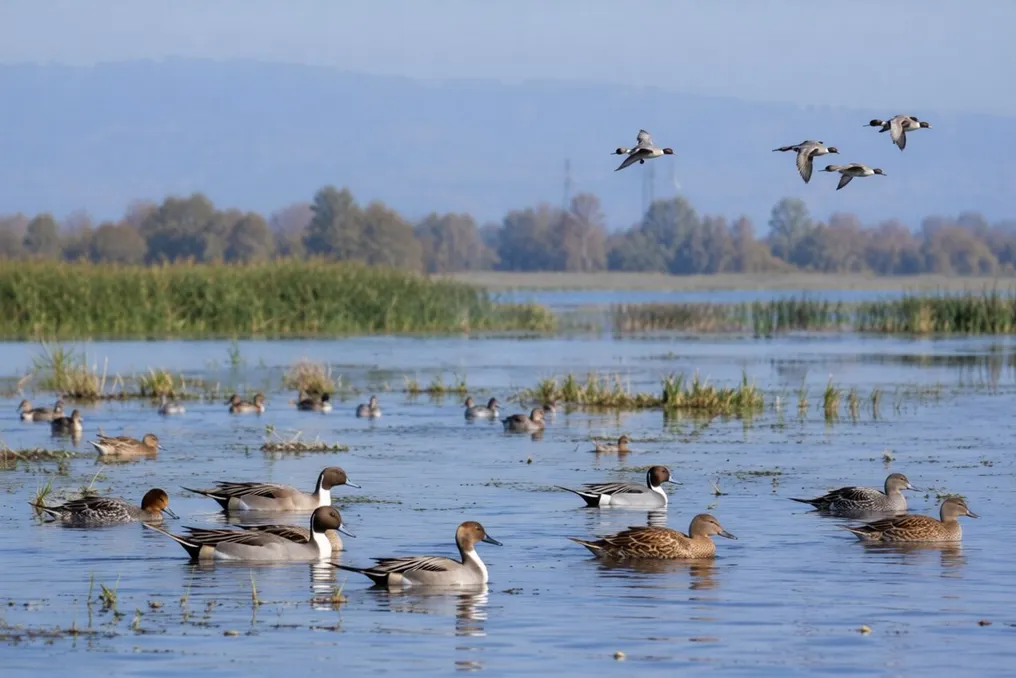
Every year, as temperatures begin to drop in northern Eurasia, millions of migratory birds embark on long journeys in search of warmer regions where they can find food, shelter, and suitable wintering grounds. As part of this remarkable natural route, Iran stands out as one of the most important destinations in West Asia, providing a network of wetlands, lakes, coastal habitats, and lagoons for birds traveling from Siberia and other northern areas.

According to statistics, approximately two million migratory birds arrive in Iran annually to spend the winter in the country's wetlands, making it the most significant wintering site in West Asia. Furthermore, the country serves as a major stopover point on the migration route connecting Siberia with the Nile; about 16 percent of birds following this route choose Iran as their wintering location.

More than 160 species of aquatic and coastal birds have been identified in the country, highlighting Iran's importance for the conservation of regional and international biodiversity. These birds are distributed across approximately 450 wintering sites, particularly along the coasts of the Caspian Sea and the Persian Gulf.

The Country on Major Migration Routes

Iran's geographical position, linking Central Asia, the Caucasus, and the Indian subcontinent, has made it a crucial link in international bird migration routes. The country's diverse climate and geographical features provide various habitats for migratory species throughout the year. From wetlands and lagoons on the Caspian coast in the north to the marshes of Khuzestan and the coastal ecosystems of the Persian Gulf in the south—these natural areas offer necessary feeding and resting spots for birds undertaking long flights.

The Caspian Sea coast holds particular significance in autumn and winter, when large flocks of waterfowl arrive in the northern provinces of Gilan, Mazandaran, and Golestan. Among the most well-known destinations for migratory birds in the country are the wetlands of Anzali, the Miankaleh Peninsula, Ghomishan, as well as the areas around Fereydunkenar and Sorkhroud.

These habitats attract a wide range of species, including flamingos, pelicans, ducks, geese, swans, and storks. Their shallow waters, reed beds, and surrounding vegetation create suitable conditions for feeding, resting, and, in some cases, breeding. Estimates suggest that the population along the southern Caspian coast can exceed one million birds mid-winter, underscoring the ecological importance of this region.

Wetlands: Vital Habitats for Migratory Species

Among Iran's internationally recognized wetlands, Miankaleh holds particular importance. Located in Mazandaran province along the southeastern part of the Caspian Sea, the Miankaleh Peninsula is a major wintering site for numerous species of waterfowl. Its diverse habitats support flamingos, pelicans, geese, ducks, and other migratory birds.

This area was designated a Ramsar Convention site in 1975 and subsequently received UNESCO Biosphere Reserve status in 1976, reflecting its international ecological significance. Further west, the Anzali wetlands in Gilan province serve as another vital refuge for migratory waterfowl. Their extensive reed beds, freshwater bodies, and rich food resources make this location an important destination for birds arriving from northern regions.

In central Iran, the Mikan wetlands near Arak also represent an important seasonal habitat. According to information published in May 2026, this wetland receives approximately 12,000 migratory birds annually, including species arriving from Siberia. Southern wetlands are no less important. The Hur al-Azim wetlands in Khuzestan, and the Shadegan and Hamun wetlands in southeastern Iran provide habitat for numerous migratory species, especially those following routes toward the Persian Gulf and the Indian subcontinent.

Counting Every Bird, Protecting Every Habitat

Monitoring migratory bird populations is an integral part of conservation efforts. Reliable data on species diversity, population size, and migration routes allows conservation authorities to identify ecosystem changes and develop more effective protection strategies.

In January 2026, a survey of winter waterfowl was conducted in Mazandaran province, registering 54,889 birds belonging to 112 species across 36 sites. This study was part of the International Waterbird Census and involved environmental experts, conservation organizations, volunteers, and local communities.

The results also highlighted the importance of habitat security and the impact of anthropogenic influence on determining bird congregation and wintering sites. During Migratory Bird Day, under the slogan 'Every Bird Matters—Your Observations Count!', it was noted how observations by citizens, bird enthusiasts, researchers, and local communities can contribute to monitoring migration routes and population trends. Such participation is particularly valuable in countries like Iran, where migratory birds utilize hundreds of different locations during their seasonal journey.

Protecting these natural visitors requires coordinated actions, including the restoration of degraded wetlands, ensuring ecological water resources, preventing illegal hunting, reducing habitat disturbance, and strengthening scientific monitoring. Local communities can also play a significant role through public awareness initiatives, responsible ecotourism, and participation in conservation programs. Ultimately, the annual arrival of millions of migratory birds is more than just a seasonal natural phenomenon; it is an indicator of the ecological significance of Iran's wetlands and their connection to ecosystems far beyond the country's borders. Ensuring that these birds continue to find safe places to rest, feed, and winter depends on protecting the wetlands that sustain them. Their future is closely linked to the health of these ecosystems and the commitment to their preservation for future generations.

Iranian Rural Settlements Worth Visiting Beyond Famous Cities
Read more
www.tehrantimes.com

Iranian Rural Settlements Worth Visiting Beyond Famous Cities

Iran's historic cities are renowned for their magnificent mosques, Persian gardens, traditional bazaars, and Silk Road heritage. However, beyond well-known locations such as Isfahan, Shiraz, and Yazd, lies another side of the country—a landscape of mountain villages, ancient mud-brick settlements, and rural communities whose traditions offer a different perspective on life in Iran.

These places, scattered across the country's mountains, valleys, and desert outskirts, demonstrate the diversity of Iran's geography, architecture, and cultural heritage. Some can be visited as a day trip from a nearby city, while others require more time and effort to explore. Together, they give travelers an opportunity to look beyond the most famous attractions and get acquainted with the character of rural regions.

Kandovan: Life Inside Volcanic Rock

In northwestern Iran, Kandovan stands out for its unusual architecture. Located near Tabriz, this village is known for its conical rock formations into which generations of residents carved living quarters and other spaces. Kandovan is often compared to Cappadocia in central Turkey and belongs to a small group of settlements where people continue to live in rock-cut dwellings in modern times. Its unique landscape, shaped by volcanic activity and centuries of human adaptation, gives the village a look distinct from most Iranian settlements.

Unlike archaeological cave sites, which are mostly preserved as historical monuments, Kandovan remains a living community. Its houses illustrate how residents adapted traditional building methods to the surrounding geology and climate. Furthermore, this village is one of the most accessible rural destinations for tourists visiting Tabriz, making it a convenient introduction to rural Iran.

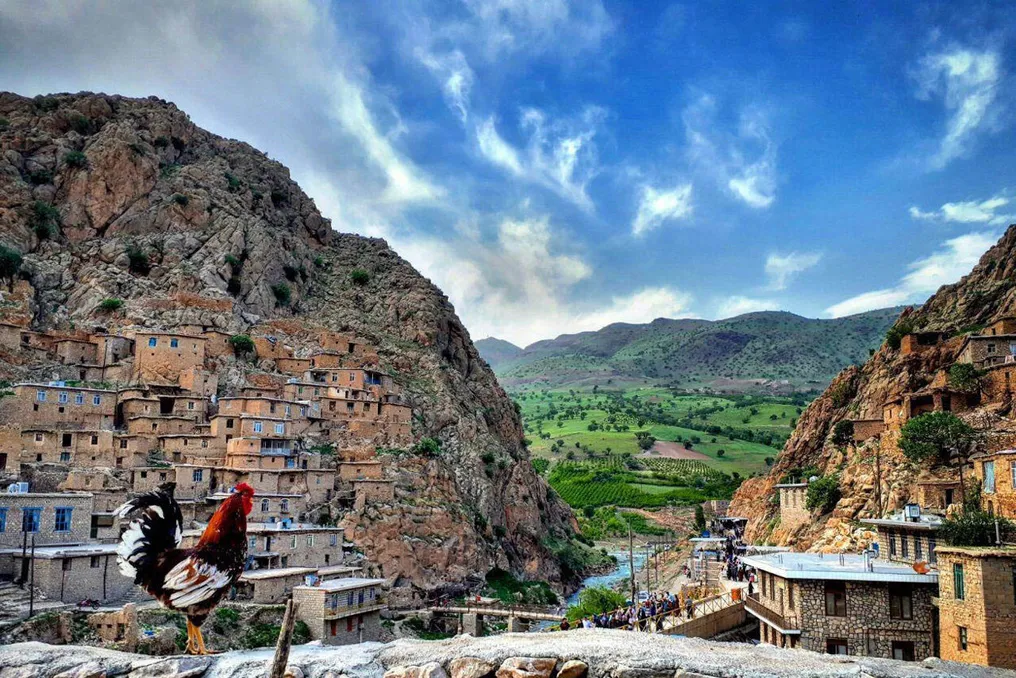
Palangan, a Village Climbing the Mountains of Kurdistan

In Kurdistan province, western Iran, Palangan is famous for its terraced architecture and dramatic mountainous setting. Traditional houses rise above one another along the slopes, forming a compact settlement that seems to grow out of the surrounding landscape. This village offers insight into Kurdish rural life, including local culinary traditions and the close connection between communities and their natural environment. Its river, mountain scenery, and stone houses make it a popular spot for visitors from surrounding areas.

Local restaurants serving river fish provide an opportunity to taste regional cuisine, while the surrounding hills serve as a place for walks and exploration. Palangan is among several terraced villages located in the Kurdish mountainous regions of western Iran. Although some rural settlements in this area remain relatively inaccessible, Palangan can be reached from nearby urban centers, including Sanandaj, with possibilities for further travel.

Masuleh: Where Rooftops Become Streets

Further north, in Gilan province, Masuleh presents another striking example of architecture adapted to mountainous terrain. Its traditional houses are built along a steep slope, where the roof of one building often serves as a passage or courtyard for the house situated above it. This arrangement gives the village its characteristic stepped appearance and makes pedestrian movement an integral part of its architectural identity.

Located amidst the misty mountains of northern Iran, Masuleh is known for its humid climate, lush vegetation, and frequent clouds hanging over the settlement. Its popularity among domestic tourists means that the streets can become crowded, especially during peak travel periods. Nevertheless, walking trails leading into the surrounding mountains offer a chance to escape the busiest spots and enjoy the scenery. Within the village, rooftops and narrow paths remain important places for daily encounters, reflecting a strong sense of community. Thus, Masuleh is both a picturesque place and an example of how traditional settlements have evolved in response to steep topography and local living conditions.

Ghazor Khan: Gateway to the Alamut Valley

For travelers interested in history and mountain landscapes, Ghazor Khan in Qazvin province offers a combination of both aspects. This village is best known as the entrance to the UNESCO World Heritage site of Alamut Castle, a fortress associated with the Nizari Ismailis, members of whom were known as Assassins in medieval sources. Perched high above the Alamut Valley, the fortress held a strategic position and became an important center of the Nizari Ismaili state. Its history is closely linked to Hassan-i Sabbah, who established his base there in the late 11th century. The Mongol campaign led by Hulagu Khan resulted in the capture and destruction of the fortress in the 13th century. Although much of the original structure has disappeared, the remaining ruins and the surrounding mountain landscape continue to attract visitors. Besides the historical site, Ghazor Khan is a quiet mountain village surrounded by orchards, including apple, apricot, and cherry trees. In spring, the blooming trees add color to the landscape, and hiking trails offer opportunities to explore the valley. The trip requires more planning than visiting villages near major cities, but the combination of history, scenery, and rural life makes it a worthwhile destination.

Abyaneh: A Living Link to Iran's Past

Located near Kashan, at the foot of Mount Karkas, Abyaneh is among Iran's most famous historical villages. Its red earthen buildings, wooden balconies, narrow alleys, and traditional clothing give it a distinctive look. The settlement is often associated with pre-Islamic Iran, although its long history spans many periods. The architecture reflects the use of local materials, particularly red soil, which gives the buildings their characteristic color. Abyaneh is also notable for preserving elements of the local language and cultural traditions. Some elderly residents speak a distinct local dialect, and traditional dress remains an important part of the village's cultural identity. Men traditionally wore dark coats and loose trousers, while women's clothing is known for its colorful patterns and white headscarves. These customs provide a visible link to regional traditions that have survived amid broader changes in Iranian society. However, Abyaneh's popularity has created challenges. Visitors can fill its narrow streets, especially during peak tourist seasons, and the village can sometimes feel more like an open historical exhibit than a typical rural community.

Nain: Desert Heritage Off the Main Tourist Routes

Between Yazd and Tehran, Nain offers a quieter glimpse into Iran's desert heritage. Although technically a small town rather than a village, it merits attention due to its historic architecture and relatively modest place on many tourist itineraries. The town is known for its historic Jameh Mosque, old bazaar, traditional cisterns, and the ruins of Narenj Castle. These structures together reflect the architectural and engineering traditions that helped communities survive in Iran's arid central regions. Traditional cisterns, known as ab-anbar, were designed to store water for use during dry periods. Along with other water management structures, they demonstrate the importance of adapting settlement models and architecture to scarce water resources. Parts of Nain's historic fabric have deteriorated, and some old buildings are in poor condition. Nevertheless, the town's less commercialized atmosphere can offer a different experience compared to more visited heritage sites. The contrast between historic quarters and newer districts also shows how traditional settlements have evolved as residents adapt to modern life.

Haranak: Traces of an Ancient Silk Road Settlement

Northeast of Yazd, Haranak is known for its abandoned mud-brick settlement and atmospheric ruins. The village developed along historical travel routes and is connected to a network of settlements supporting movement through central Iran. Its old buildings, narrow alleys, and earthen walls form a dense architectural landscape. Some structures are believed to date back many centuries, although the history of individual buildings varies. Walking through the abandoned quarter provides insight into how communities once organized their homes and passages in a desert environment. From elevated points, visitors can see the settlement against the backdrop of surrounding mountains and open land. The ruins are also vulnerable. Weathering, erosion, and uncontrolled visitor access can accelerate the decay of fragile earthen structures. Responsible exploration of this area means avoiding unstable buildings, staying on designated paths where possible, and respecting any closed zones. Haranak can be combined with visits to Meybod and the Zoroastrian pilgrimage site Chak-Chak, making it a possible addition to a broader route from Yazd.

Meybod: Desert Architecture and Ingenious Design

Meybod, another historic settlement near Yazd, offers a broader view of the architectural traditions of Iran's central desert. Although it is a town, not a village, its historic buildings make it a worthwhile stop for travelers interested in the region's cultural heritage. One of the main attractions is Narenj Castle, a large earthen fortress whose origins date back to antiquity. The town also preserves traditional cisterns and a historic pigeon tower. Pigeon towers were built to shelter birds and collect their droppings, which were used as agricultural fertilizer. Their construction reflects the ingenuity of communities that relied on local materials and devised practical solutions to meet daily needs. The pigeon tower in Meybod is one of the notable surviving examples of this building tradition in Iran. Together, the castle, cisterns, and pigeon tower illustrate how desert architecture served practical purposes while becoming part of the region's distinctive cultural landscape.

Why Iran’s Rural Destinations Matter

Exploring Iran's villages and small historic settlements offers more than just a change of scenery. These places reveal how people have adapted to various environmental conditions—from volcanic formations in the northwest to the steep mountains of Kurdistan and the arid landscapes of the central plateau. Their architecture reflects local responses to climate, geology, and available resources. Their languages, clothing, food, and customs also demonstrate the country's regional and ethnic diversity. For travelers whose itineraries focus on Iran's famous cities, adding even one or two rural destinations can broaden their understanding of the country.

Popular