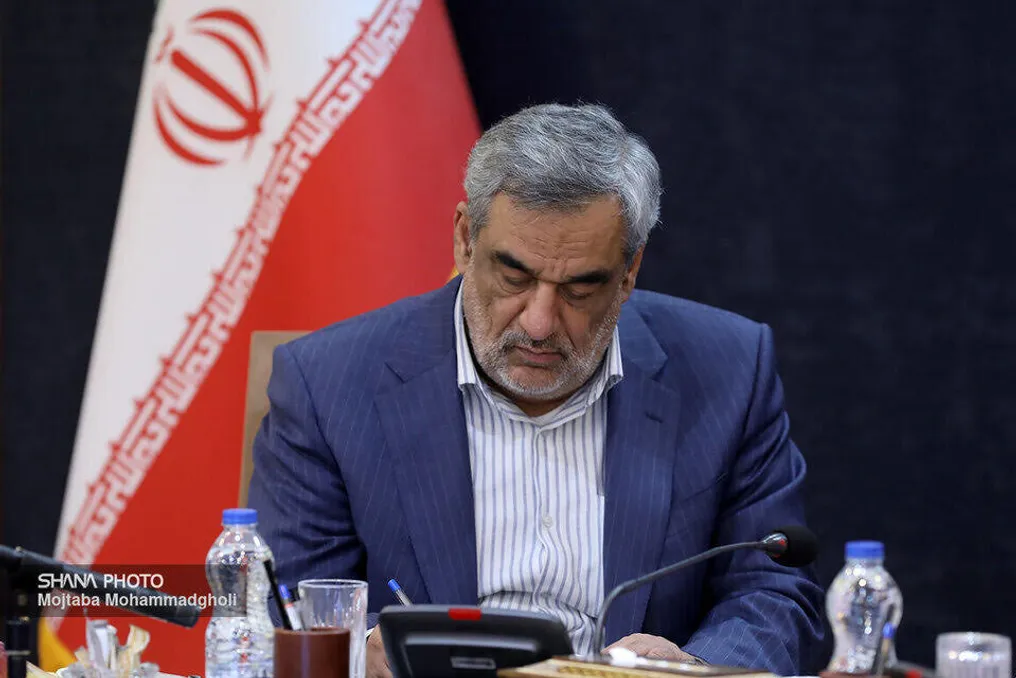
The acting Minister of Oil of Iran announced the approval and presentation of the document and roadmap for Iran's regional energy diplomacy to the Strategic Headquarters for Regional Energy Trade. He noted that this document outlines the country's action plan in the fields of oil, petroleum products, gas, and petrochemicals, specifying concrete indicators.
Announcement of Iran's Regional Energy Diplomacy Roadmap
In an interview with SHANA, Hamid Bavard, referencing the approval of the document and the roadmap for the regional energy diplomacy of the Islamic Republic of Iran by the Strategic Headquarters for Regional Energy Trade, headed by First Vice President Mohammad Reza Aref, stated that this document was prepared under the guidance of the Ministry of Oil and in accordance with clause (T) of Article 44 of the Seventh Development Law, and was subsequently announced after approval by this headquarters.
Speaking about the executive approach provided for in the document, he added that based on the roadmap for regional energy diplomacy, a detailed action plan for Iran in the areas of oil, gas, refining, and petrochemicals has been developed, along with a set of indicators. This allows actions related to regional energy trade to be implemented in a coordinated manner and in line with market changes.
The acting Minister of Oil explained the indicators embedded in the document. Among the important metrics considered during the development of the action plan are the activities of the private sector in regional energy trade, attention to technical development in the regional and global energy markets, the link between energy trade and domestic issues of the country, technopolitics, as well as diplomatic and strategic marketing and market creation.
Bavard emphasized the significance of private sector participation in the development of regional energy trade. He specified that this system takes into account the capabilities of non-state entities alongside state sectors, and changes in regional and global energy markets will be taken into consideration when drafting and revising action plans.
He recalled that among the directions for implementing this roadmap is also consideration of the interconnection between energy trade and domestic issues, the study of technopolitics aspects, and the utilization of the potential of diplomatic and strategic marketing and market creation.
The acting Minister of Oil described the mechanism for implementation and supervision of the document. It was determined that the Deputy for Planning of the Ministry of Oil is assigned to the specialized secretariat of the Strategic Headquarters for Regional Energy Trade, and the Institute of International Energy Studies of the Ministry of Oil is responsible for the permanent center of working groups for monitoring actions and developing flexible energy diplomacy programs.
He continued that this mechanism is designed for continuous monitoring of actions, receiving feedback, and developing programs that correspond to the development of the energy sector every 3 and 6 months. This will ensure the updating of the country's executive programs in accordance with the conditions and trends of regional energy markets.
Bavard, stressing the importance of the continuity of this process, noted that for the first time in the country, constant regulation and implementation of actions across various energy sectors involving state and non-state entities in the field of energy trade will take place. Furthermore, within this mechanism, processes of feedback, reporting, and problem-solving will be conducted.