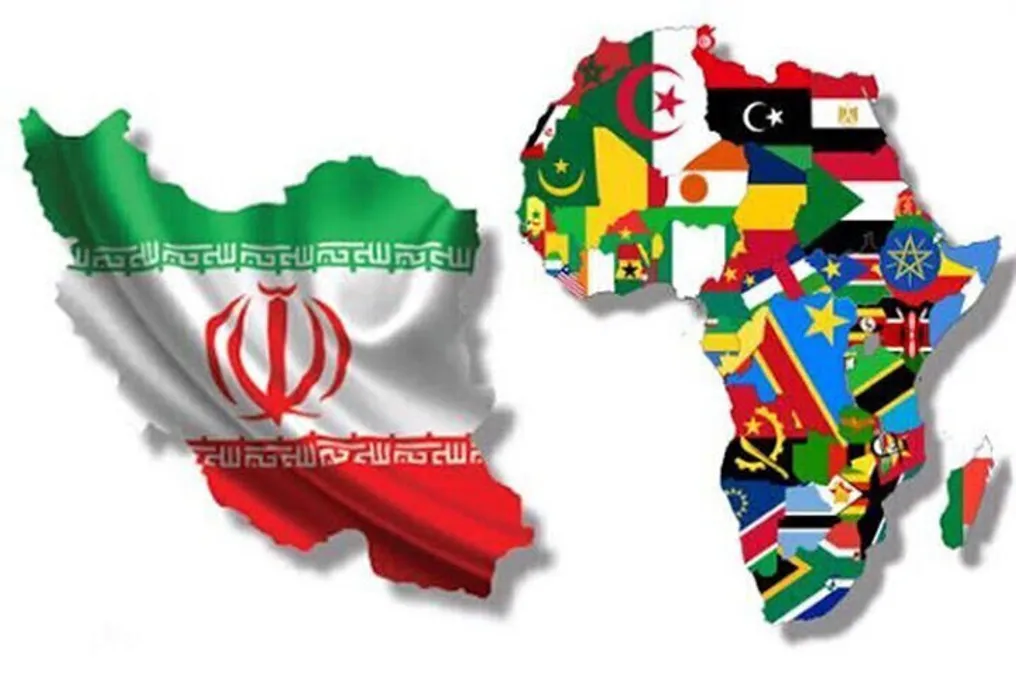
Coordination meeting held within the framework of the 4th Permanent Iran-Africa Economic Summit
Read more
Tehran Times
www.tehrantimes.com

Coordination meeting held within the framework of the 4th Permanent Iran-Africa Economic Summit

A coordination meeting was held in Tehran dedicated to the fourth permanent Iran-Africa Economic Summit. The head of the Iranian Trade Promotion Organization defined the key requirements for utilizing the potential of the Iran-Africa Summit to develop Iran's exports to African markets.

According to an IRNA report from the Iranian Trade Promotion Organization, Hamid Padash, Deputy First Vice President for Coordination and Supervision in Economy and Infrastructure, Mohammad Ali Dehghan Dehnavi, head of the Iranian Trade Promotion Organization, Mohammad Sadegh Kannazadeh, Deputy for Commercial Services of the Iranian Trade Promotion Organization, as well as representatives from various state institutions and the private sector, attended the meeting.

Mohammad Ali Dehghan Dehnavi characterized the holding of this summit as a national program and a strategic choice. He noted that an African headquarters has been formed, and this issue is among the priority tasks of the First Vice President. Therefore, it is expected that the planned events will be conducted with the dignity of the country, and the groundwork will be laid for a strong Iranian presence and the utilization of Africa's trade opportunities.

Dehghan Dehnavi emphasized that companies must have a clear plan for participation in the event that aligns with their capabilities and mission. He added that before holding the summit, organizations must deliberate and plan their participation and methods of utilizing this opportunity. Furthermore, he stressed the need to involve experts who possess sufficient technical information and skills in conducting negotiations and concluding trade contracts during the event.

In Dehghan Dehnavi's opinion, participation in such an event must be accompanied by a clear economic and trade mission, as the ultimate goal is to achieve economic benefits for the entire country, not merely sending a large number of companies to the summit. Consequently, if an organization does not have a clear plan for utilizing the upcoming opportunity, it should reconsider its approach to participation.

The Deputy Minister of Industry, Mining, and Trade, speaking about the role of development organizations in supporting private sector firms, stated that large companies and development organizations are expected to play a supportive role rather than focusing exclusively on their own direct participation. In other words, they should accompany smaller and capable private companies. These organizations must also consider their social responsibility and the mission of industrial development to promote the emergence of companies that lack real export potential and activity in the African market.

The head of the Iranian Trade Promotion Organization particularly highlighted the necessity of effective work by the National Development Fund and banking system in developing trade with Africa. He noted that the presence of the National Development Fund and Bank at the summit would be effective if it leads to facilitating financing and creating conditions for the presence and activity of companies in African markets.

In conclusion, the head of the Iranian Trade Promotion Organization emphasized the special responsibility of each participating organization. He stated that every department, institution, organization, and economic firm must have a clear plan and strategy for utilizing the opportunities of this event in accordance with its mission. It was expressed hope that through the participation and support of all organizations, the event could be held with the dignity of the country and the potential of the summit maximally utilized for developing Iran's trade and economic ties with the African continent.
Similar stories

Iran and China Define Strategic Directions for Cooperation: Competitive Exports and Strengthening Trade Corridors
Read more
www.tehrantimes.com

Iran and China Define Strategic Directions for Cooperation: Competitive Exports and Strengthening Trade Corridors

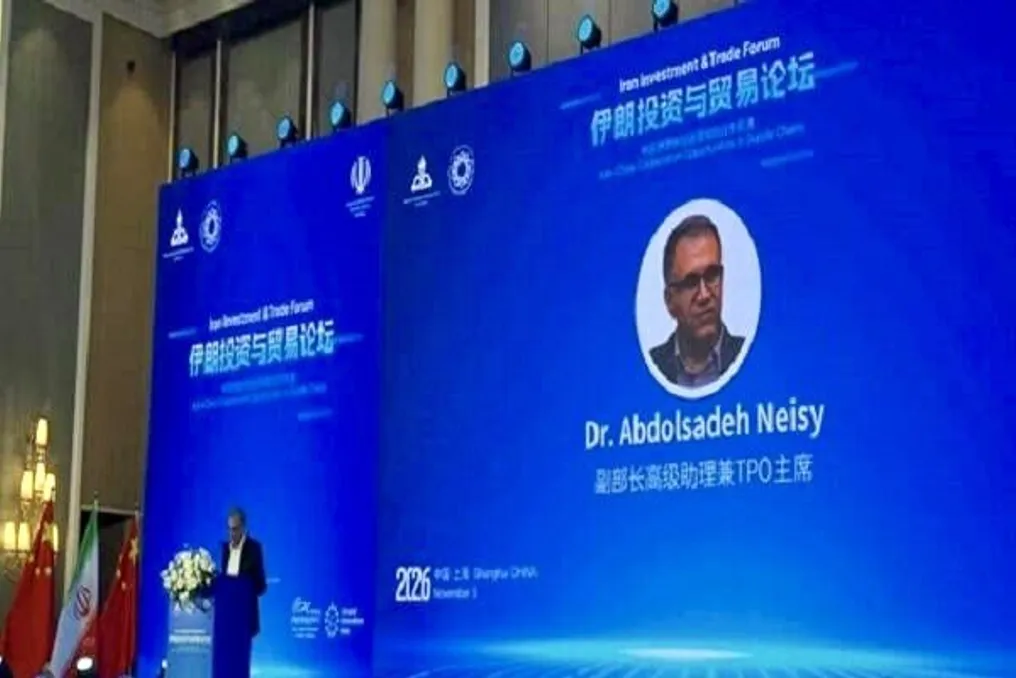
The Director of the General Directorate of Iran's East Asia, Subcontinent, and Oceania Trade Promotion Organization presented at the Iran-China Trade and Investment Conference that developing high value-added exports and strengthening trade corridors are two crucial and strategic vectors for expanding economic and trade interaction between the two countries.

According to an IRNA report from the Iranian Trade Promotion Organization, this conference took place concurrently with the 9th China Import and Export Fair (CIIE). The event was organized by the Iranian Trade Promotion Organization in collaboration with commercial attachés of the Islamic Republic of Iran based in Shanghai and Beijing.

The conference gathered representatives from both countries, including officials, senior managers, investors, traders, entrepreneurs, and businessmen. It served as a platform for exchanging views, dialogue, and seeking new opportunities for economic, trade, and investment partnership.

Strategic Directions for Economic Cooperation

Abdolsade Nisi emphasized the vast potential for cooperation between Iran and China, stressing the need to build a sustainable and balanced partnership based on mutual interests. He noted that Iran's view on cooperation with China goes beyond simply increasing trade volumes; it is about creating a partnership that fosters trade development, attracts investment, and ensures the effective presence of both countries' enterprises in regional and global markets.

Referring to Iran's rich resources, diverse production capabilities, large domestic market, access to neighboring markets, and privileged transport position, Nisi considered these factors a suitable foundation for increasing trade and joint investments.

Nisi highlighted the development of higher value-added exports as the first strategic vector of economic cooperation between Iran and China. He stated that one of Iran's main goals is to transition from exporting raw materials and semi-finished products to producing goods that contribute more significantly to added value, export revenue, and employment.

He specifically pointed out the opportunities for developing sectors such as food industry, processed agricultural products, petrochemicals, mining, construction materials, industrial goods, and other products manufactured in Iran with the participation of Chinese partners.

According to the Director of the General Directorate of Iran's East Asia and Subcontinent Trade Promotion Organization, interaction among traders, producers, and investors from the two countries will help complete supply chains, stimulate export-oriented production, and enhance the presence of Iranian products in Chinese and other regional markets. Thus, in addition to export growth, this contributes to improving product quality, developing domestic production, and strengthening economic competitiveness.

Strengthening Trade Corridors Between Iran and China

In another part of his speech, Nisi described the strengthening of trade corridors between Iran and China as the second important and strategic aspect of cooperation. He stressed the role of international transport routes in shaping world trade, noting that Iran's geographical location allows the country to play an effective role as a link between East and West, as well as North and South.

He clarified that the concept of corridors is not limited only to transit routes for goods, adding that these routes serve as a platform for expanding trade, developing logistics services, establishing regional distribution centers, and forming long-term economic cooperation.

The Director of the General Directorate of Iran's East Asia and Oceania Trade Promotion Organization continued that cooperation between Iran and China in this area can not only reduce exchange costs and facilitate market access but also pave the way for increased trade volume and the formation of long-term mutual interests for the countries in the region.

He also viewed existing opportunities along regional communication routes, including trade links between Iran, China, and third countries, as an effective factor in developing regional trade and strengthening global supply chains.

Development of Provincial Cooperation and Utilization of E-commerce Opportunities

Nisi mentioned the Trade Promotion Organization's plans to enhance the standing of the Iranian national brand in the Chinese market. Among other areas pursued by the organization, he listed increasing the efficiency of Iranian trade centers, developing economic interaction between the provinces of the two countries, and utilizing the potential of e-commerce platforms to present and offer Iranian goods.

The representative of the Iranian Trade Promotion Organization expressed hope that holding this conference would lead to new cooperation, the development of trade relations, the conclusion of economic agreements, and the creation of joint investment opportunities between economic entities of Iran and China.

Emphasizing the organization's readiness to support the expansion of economic interaction between the two countries, he stated that the Iranian Trade Promotion Organization supports the development of this cooperation within its duties and creates conditions to facilitate communications and trade contacts between the two states.

Uzbekistan and Poland aim to deepen economic cooperation and increase trade turnover
Read more
nuz.uz

Uzbekistan and Poland aim to deepen economic cooperation and increase trade turnover

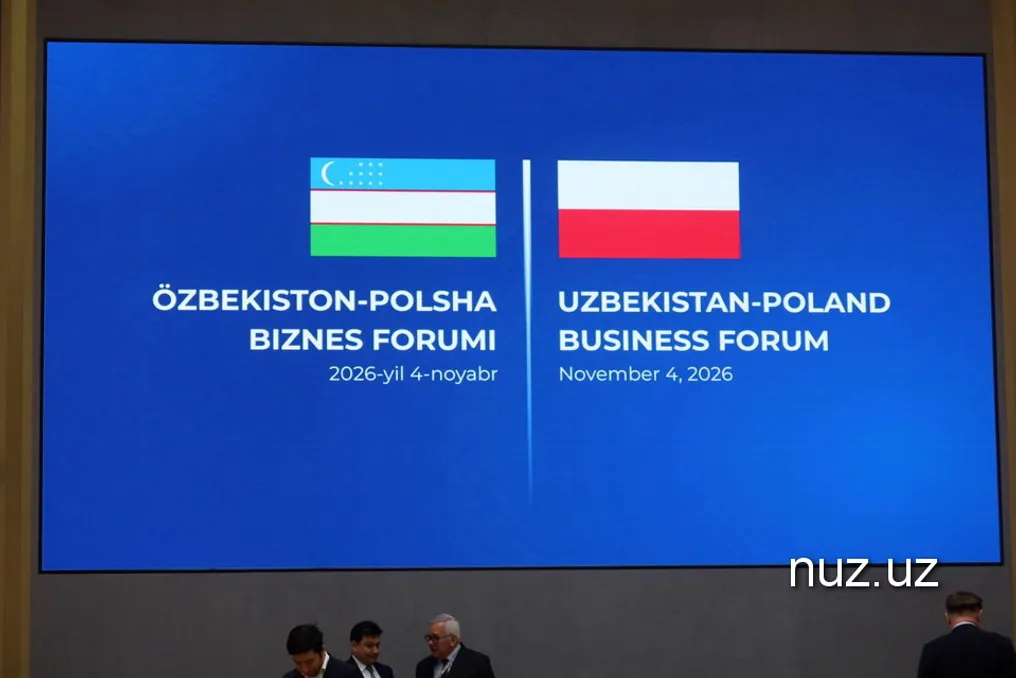
From November 4 to 6, a delegation from Poland, led by Andrzej Arendarski, President of the Polish Chamber of Commerce, visited Uzbekistan as part of an official and business trip. During this visit, an Uzbek-Polish business forum was held, bringing together representatives from business circles, diplomatic corps, and state structures of both countries.

Participants in the event included Akmaljon Mamajonov, Acting Deputy Chairman of the Chamber of Commerce of Uzbekistan; Marian Pszedzicki, Polish Ambassador to Uzbekistan; and Amirsaid Azamkhodjaev, Ambassador of Uzbekistan to Poland. The forum featured 12 Polish companies specializing in areas such as mechanical engineering, logistics, pharmaceuticals, agriculture, construction material production, electrical engineering, food industry, and 'green' technologies.

The events included presentations, direct negotiations, and B2B meetings aimed at assisting entrepreneurs in finding partners, discussing investment opportunities, and planning joint projects. This business activity takes place against the backdrop of growing economic ties between Uzbekistan and Poland, as both nations are interested not only in increasing trade but also in expanding investment presence, developing industrial cooperation, and strengthening ties with neighboring markets.

Marian Pszedzicki, the Polish Ambassador to Uzbekistan, commented on the current dynamics of bilateral relations, noting high levels of cooperation activity. He referred to regular exchanges of delegations, mentioning that four Polish ministers, including Vice Prime Minister and Minister of Digitalization Krzysztof Gawkowski, visited Uzbekistan since the beginning of the year. Furthermore, contacts at the parliamentary level have intensified, laying the foundation for further development of economic ties.

The diplomat emphasized mutual benefit: 'For Uzbekistan, Poland is a gateway to the European Union markets. Poland also currently views Uzbekistan as a gateway to Central Asia.' According to Pszedzicki, Uzbekistan is attractive to Polish businesses due to its economic potential and geographical location. The parties set a goal of achieving a bilateral trade turnover of one billion dollars in the near future, although the ambassador clarified that this is not the limit of possibilities.

Amirsaid Azamkhodjaev, the Ambassador of Uzbekistan to Poland, positively assessed the prospects for partnership, noting the constant growth in interest among entrepreneurs from both countries and the increase in business visits to dozens. He reported that Polish firms are studying the possibility of opening branches and representative offices in Uzbekistan, seeing particular potential in the energy and food sectors. Looking ahead, the ambassador predicts that relations will transition to a qualitatively different level within the next five years.

Nevertheless, Marian Pszedzicki pointed out several practical problems slowing down the development of economic interaction. He cited geographical distance and logistical difficulties as main barriers. Military actions complicate transportation along traditional rail and road routes, and using alternative corridors increases delivery costs. There are also language barriers and differences in business culture.

In the ambassador's opinion, improving business contacts can be achieved by developing direct air connections between the countries. He expressed confidence in a significant increase in the number of flights in the coming years, which will make entrepreneur interaction more convenient.

Popular