Otherside Tapes: Favela Game Review — Brazilian Atmosphere Scares More Than Monsters
Read more
Olhar Digital
olhardigital.com.br

Otherside Tapes: Favela Game Review — Brazilian Atmosphere Scares More Than Monsters

Pulsatrix Studios, the developer of Fobia: St. Dinfna Hotel and A.I.L.A., released the first episode of the Otherside Tapes anthology on PC on October 22, 2026. This episode transports horror to an environment rarely explored by the genre: a Carioca favela dated 2006. After playing Otherside Tapes: Favela for five hours in standard mode, the author of the text emphasizes that the setting is scarier than any creature.

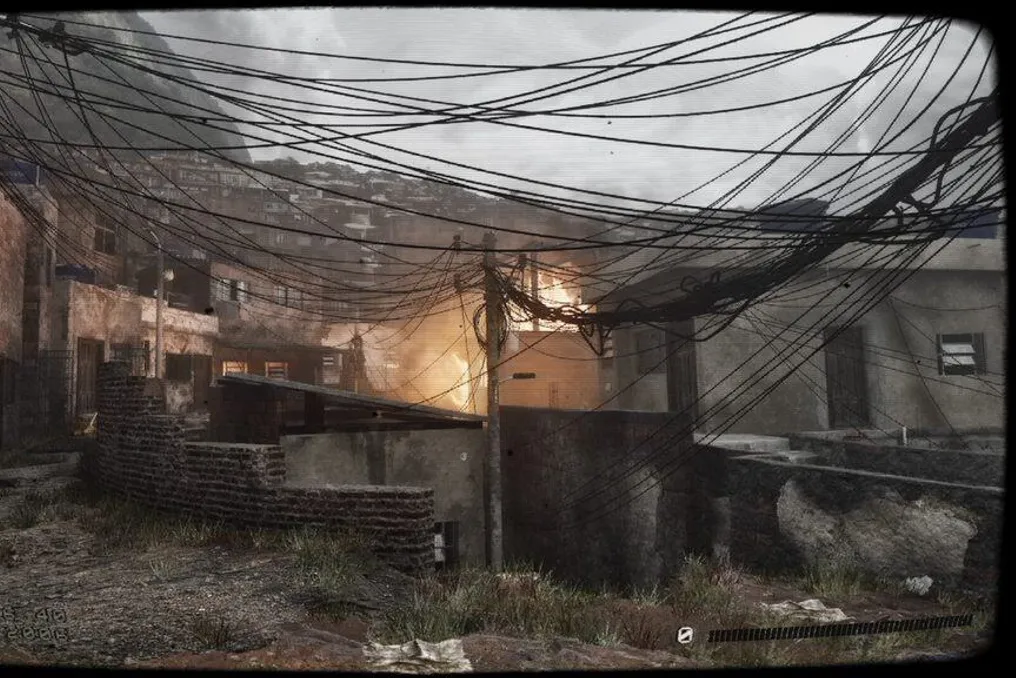
The player takes on the role of Cláudio da Silva, a content creator focused on urban legends. He enters the Favela das Almas, located behind Rua 7, a place marked by reports of disappearances and associated with a previous fire that devastated the community. The entire narrative is presented through the protagonist's camera, using found footage aesthetics, characterized by grainy VHS images. The investigation quickly evolves into a cycle of distorted realities, offering rituals, and supernatural appearances.

The aesthetic construction of the favela was praised, highlighting narrow alleys, exposed wiring, artisanal commercial signs, and clay filters, suggesting a deep knowledge of the local reality. Although the map is small, it conveys the perfect atmosphere. The graphics are considered good, with well-detailed environments, characters, and objects, and performance was satisfactory even with all settings on maximum.

The Portuguese voice acting received praise, as did the performance, making Cláudio sound like a Brazilian YouTuber from the 2000s. Furthermore, while walking through the houses, one can hear groans of people trapped inside. The only negative point mentioned was the jumpscare sound, described as loud, repetitive, and needing more variation.

The game integrates multiple layers of the same favela, and the transition between them occurs via pendulum clocks. Actions performed in one layer persist in the others; for example, a door left open in one reality remains open in the others. This interconnection enriches the level design, allowing players to revisit locations without getting lost. The puzzles are rated as medium difficulty in standard mode, being well-guided, although the author felt a lack of more enigmas.

The title offers more than one ending. Although the author tried to solve puzzles leading to ending A, he ended up following a path that culminated in ending B. An absent aspect was a functional computer, despite there being power in the location, which could have been used to deepen the puzzles or the story.

The most impactful element is the location itself. The corridors are narrow and dark, and in some residences, motionless people can be seen through the windows while the television is on. The antagonists are human figures with waxy appearances, empty eyes, and crooked smiles. They remain standing and watching, and in the darker layers, they begin to chase the player when he is not looking directly at them. The camera offers night vision and flash features, both dependent on battery.

In the first hour, especially after changing layers, the game establishes tense and effective horror with jumpscares. However, this effect diminishes over time, as the monsters tend to remain in predictable positions. The combat mechanic also becomes tiring. The camera flash, which stuns enemies, has a considerable recharge time, and the battery is scarce. There was an incident where a monster appeared very close to the player, and the game showed flaws in handling such situations in confined spaces, such as in the house with a water leak, where the attack was almost inevitable.

The narrative could be more robust and well-developed. The context of the pole (the main enemy) was unclear, as was the origin of this universe. The author expected more realistic critiques about life in the favela, such as violence, abandonment, and inequality, even within the supernatural context; however, the story does not address these themes. Furthermore, the way the story is told lacks creativity, as much of the content is conveyed through documents, which became tedious.

With a listed price of R$ 33.99 on Steam, the game is considered short, given that the author took five hours to complete it by exploring minutely, while Pulsatrix estimates about two hours. For those who wish to experience the Brazilian culture and daily life portrayed in a horror game, support national production, and enjoy puzzles, the experience is worthwhile, especially due to the alternative ending that encourages new playthroughs. However, players seeking a deep plot or constant scares may feel frustrated, as the Favela das Almas itself is the strongest element of the game.

Similar stories

Biologist records jaguar attack on crocodile in Brazil
Read more
noticiasaominuto.com

Biologist records jaguar attack on crocodile in Brazil

A biologist and photographer captured an impressive moment when a jaguar attacks a crocodile in Brazil. What was supposed to be a simple observation of a jaguar turned into an 'epic' hunting scene in less than three minutes, leaving the biologist and tourists nearby in shock.

Thiago Silva Soares shared this moment in an Instagram post, writing: 'I panicked, but I am okay.' He noted that in over 20 years of working as a biologist and nature photographer, always in the jungle, this is undoubtedly one of the wildest scenes of his life.

He recounted how it happened: 'Our boat spotted this female jaguar, Kiara. And in less than three minutes, she sensed the crocodile and jumped. I froze in silence, unable to do anything, just thinking about filming and photographing. That's what it means to be in the right place at the right time.'

The video footage was taken in the Pantanal, the planet's largest tropical wetland area and one of the most biodiverse regions. A significant part of this vast river delta is located in Brazil, between the states of Mato Grosso and Mato Grosso do Sul.

The footage shows the jaguar leaping from the thickets onto the riverbank. It is then depicted gripping the crocodile by the neck and dragging the reptile out of the water. At this moment, thanks to the predator's bite force, the sound of the prey's bones breaking can be heard, as the biologist shows in the video. On land, the predator holds the reptile with its paws and continues the fight.

Fast and Furious' 25th Anniversary: Details and Facts Behind the Movie Scenes
Read more
autopapo.com.br

Fast and Furious' 25th Anniversary: Details and Facts Behind the Movie Scenes

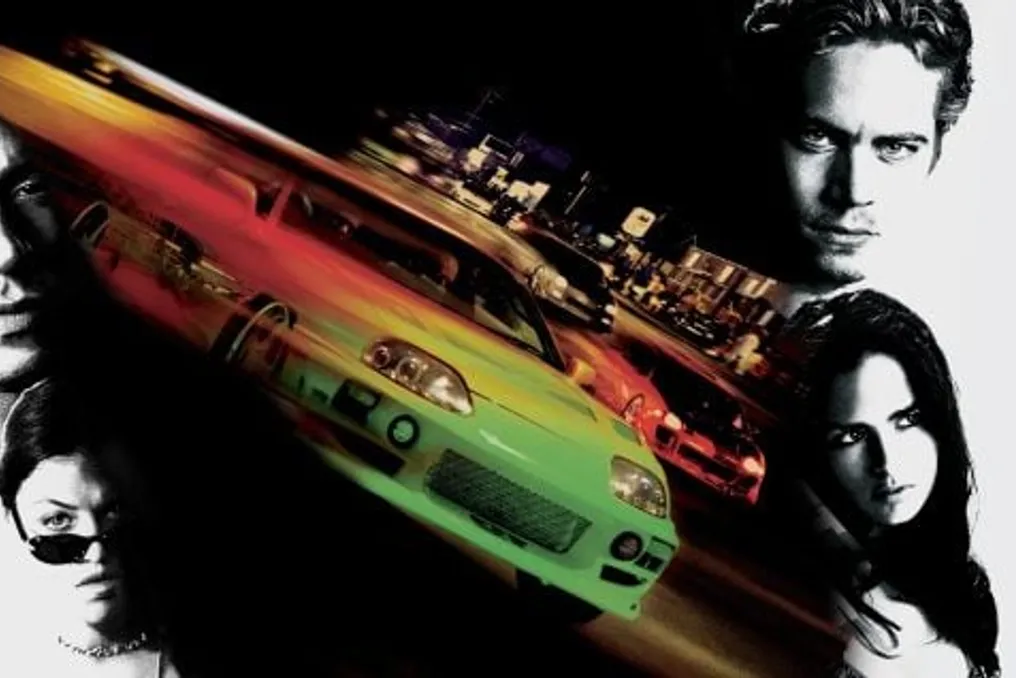
The Fast and Furious movie celebrated 25 years since its release and will be shown again in Brazilian cinemas starting November 12th. Initially conceived as just another action film, it became a cultural phenomenon thanks to the customized cars featured in the scenes.

Although tuning culture existed since the 90s, Fast and Furious significantly contributed to popularizing this type of modification. This cultural impact led many young people to shift their focus from Italian supercars to appreciating Japanese sports vehicles.

Currently, many tuning enthusiasts tend to ignore this phase, considering the colorful and accessory-laden cars as outdated. However, the influence of Fast and Furious during that time was undeniable. Five curiosities about the first film deserve highlighting.

Technical details of the iconic cars

The notorious green Mitsubishi Eclipse driven by character Brian O’Conner attracted great attention due to its paint job and the film's dialogue, suggesting it was a prestigious vehicle. However, the car depicted does not match the description; the version used in Fast and Furious was the entry-level model, the RS.

This specific model did not have a Japanese turbo engine; instead, it was equipped with a 2.0 naturally aspirated Chrysler engine, identical to the one used in the Neon, generating 142 hp. The visible modifications on the hood were mainly aesthetic, including colored hoses and spark plug wires, as well as a chrome valve cover and other ornaments. The nitro system was merely cosmetic.

Even if functional, the Eclipse would not have stood a chance against the Mazda RX-7 driven by Dominic Toretto. Although nitro increases power, it does not extend the vehicle's gears, maintaining the same top speed.

Another car that had no potential to win a race was Jesse's Volkswagen Jetta. The vehicle used in the film had a 2.0 naturally aspirated engine with 116 hp and an automatic transmission.

In the late 90s, tuning was characterized by vibrant paints, neon lighting, modified bodies, and stickers of parts brands. The vinyls with exaggerated designs from Fast and Furious were developed by the film's production team.

Artworks such as the futuristic knight on the Toyota Supra, the mechanical shark on the Nissan Maxima, and the rocket on the Mazda RX-7 were created by artists at Universal Studio, with no connection to the automotive industry. Craig Lieberman, who served as a consultant in the early films, reported that these stickers were the subject of jokes among the car suppliers.

The cars featured in the racing scenes faithfully represent the modifications of that era, but after Fast and Furious, these stickers with exaggerated art became a trend.

The case of the Nissan Skyline GT-R R33

The Nissan Skyline GT-R R33, considered the most impressive Japanese car in the franchise, belonged to Leon. It appeared in certain scenes but never participated in competitions; currently, this model is no longer available.

The Nissan Skyline GT-R was sold exclusively in Japan and could not have been in the United States in 2001, given that local legislation imposes import restrictions on vehicles less than 25 years old. The company MotoRex imported the car for research and development purposes.

MotoRex carried out the necessary procedures to legalize the Skyline GT-R in the US, which included impact and emissions testing. During the film's production, there was only one unit of this car, which is why it only served as a background extra. Although MotoRex managed to legalize some units of the Skyline GT-R, the yellow example from Fast and Furious was not part of that batch. In 2012, it was seized by the state of Wisconsin and destroyed because it lacked a valid chassis number in the US.

Science behind Nitro

Nitrous oxide (N2O), known as nitro, is a gas that can be injected into the engine to increase its power. This process increases the mass of oxygen injected, reducing heat in the combustion chamber and allowing for the burning of a greater proportion of the air-fuel mixture.

In the context of Fast and Furious, the Mitsubishi Eclipse is hit and explodes in green flames due to the use of nitro. Outside the fictional universe of the series, such an event would be impossible, as nitrous oxide is non-flammable.

Cast and Production

Actor Paul Walker participated in less successful films before Fast and Furious. He had previously collaborated with director Rob Cohen and accepted the role of Brian O’Conner when invited, although he almost lost that opportunity.

The studio even invited rapper Eminem to play the protagonist, but he declined the offer to focus on his own film, 8 Mile. Furthermore, actors Mark Wahlberg and Christian Bale were considered for the role, and Timothy Olyphant was considered for Dominic Toretto, refusing because he considered the film stupid.

Popular