Giant Tortoise Named Diego Played a Key Role in Saving the Species in the Galapagos
Read more
Getaway
getaway.co.za

Giant Tortoise Named Diego Played a Key Role in Saving the Species in the Galapagos

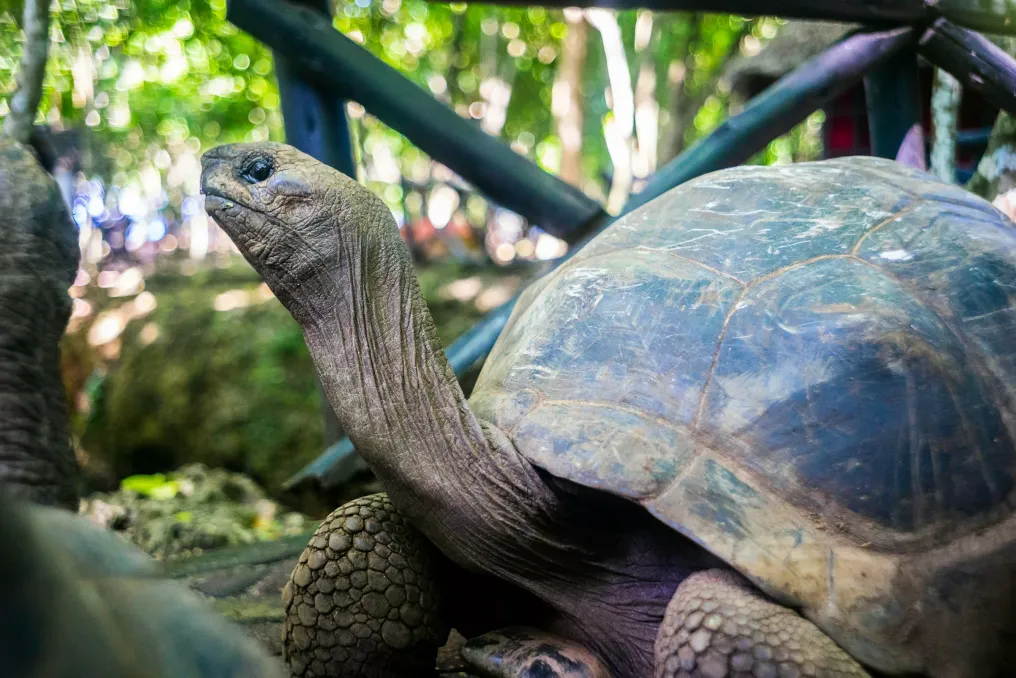
The giant tortoise named Diego left a significant legacy in nature conservation. Spending decades away from its native island, this elder helped produce hundreds of offspring, which was a decisive factor in preventing the extinction of its species.

According to AZ Animals, Diego fathered between 800 and 900 offspring while participating in the captive breeding program. His contribution helped save the Española giant tortoise, also known as the Hood Island giant tortoise, from complete disappearance.

This story is an outstanding example of survival that began long before Diego became a symbol of the success of conservation efforts. In the 1930s, Diego was taken from Española Island to the Galapagos Archipelago of Ecuador, when giant tortoise populations were already under pressure from hunting and exploitation.

He was transported to the San Diego Zoo in California, where he lived for over four decades. At the time, few could imagine how important this particular tortoise would become for the survival of its species.

By the 1960s, the Española giant tortoise population reached a critical point. Researchers surveying the island found only 14 surviving individuals—12 females and two males. Since no natural population recovery was observed, conservation specialists recognized the need for urgent intervention.

A captive breeding program was established on Santa Cruz Island to restore the population and subsequently return the tortoises to their natural habitat. However, a problem arose: the program required more males for reproduction.

In 1976, genetic testing at the San Diego Zoo determined that Diego was an Española giant tortoise. His identification made him an important addition to conservation efforts, and in 1977, he was transported to the Galapagos to participate in the breeding program.

Diego undoubtedly made his contribution. Working with two other males and 12 females, he became one of the most successful breeding individuals within the program. His offspring eventually accounted for a significant portion of the tortoises raised in captivity and returned to Española Island.

According to conservation studies, Diego fathered nearly 60% of all captive-bred hatchlings, while AZ Animals estimates his contribution at between 800 and 900 offspring. Nevertheless, he was not the only male responsible for the species' recovery; other males also played a vital role in increasing the population size.

In subsequent decades, young tortoises were raised in captivity before being released onto Española Island. By the 1990s, researchers detected signs that the animals were successfully reproducing in the wild, which was a major milestone for a species that had been so close to extinction.

After more than 80 years away from home, Diego finally returned home in June 2020. The captive breeding program, which had been running for over five decades, was officially concluded after conservation specialists confirmed that the population had recovered sufficiently for self-sustainability through natural reproduction.

Diego became one of the 15 initial breeding tortoises released back onto Española Island, where he could spend his remaining years in the wild. According to Galápagos Conservancy, the program led to the reintroduction of nearly 1900 tortoises to their native island. By the time the original adult individuals returned home, there were over 2300 giant tortoises living on Española.

This was a significant achievement for conservation specialists, and for Diego, a particularly moving homecoming, as he had spent most of his life away from his birthplace.

Despite Diego's exceptional contribution, his story also serves as a reminder that successful conservation requires the efforts of many animals. The recovery of the Española giant tortoise depended on several crucial measures. Hunting and egg collection were banned, and conservation specialists worked to restore the island's natural habitat.

One of the most serious problems was the presence of invasive goats, which were introduced to the island centuries ago. They destroyed the vegetation upon which local tortoises depended and altered the habitat. Removing these goats allowed the local vegetation to recover, creating more suitable conditions for tortoise survival and reproduction.

The combined work of the breeding program, habitat restoration, and wildlife protection allowed the species a second chance. Today, the Española giant tortoise population numbers in the thousands, and there is evidence of natural reproduction in the wild. Although the recovery is a conservation success, the species is still classified as critically endangered, requiring ongoing protection.

Diego's story serves as a fine example of what sustainable conservation efforts can achieve. The tortoise taken from its island at a young age played a vital role in saving its kind, eventually returning home to where its descendants could roam freely.
Similar stories

Searching for the African Finchfoot in the Forested Rivers of Mpumalanga
Read more
getaway.co.za

Searching for the African Finchfoot in the Forested Rivers of Mpumalanga

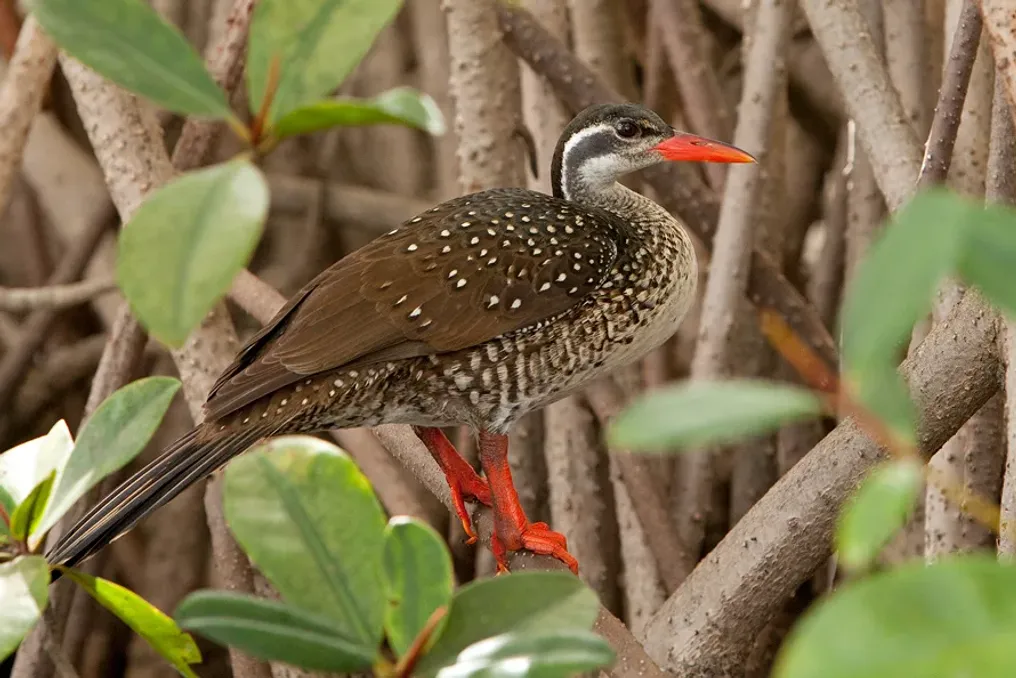
Some of the most interesting wildlife species in Lowveld can be found away from standard game viewing routes. The African Finchfoot (Podica senegalensis) inhabits the shaded banks of the Sabie River, under dense vegetation and overhanging trees.

This unusual, shy, and rarely seen waterbird spends most of its time near cover, making it a valuable find for ornithology enthusiasts. Good places to start searching are the areas around Skukuza and Lower Sabie in Kruger National Park.

Roughly the size of a cormorant-reed, the African Finchfoot is distinguished by its characteristic coral-red bill, olive-orange legs, and unusually large, webbed feet. Males have a darker plumage, while females possess browner feathers and more noticeable facial markings.

The bird is usually found alone or in pairs along clean, permanent rivers with dense vegetation. Instead of swimming in open water, it stays close to the bank, foraging for aquatic insects, crustaceans, small fish, and amphibians. Its preference for secluded stretches of water often leads to it going unnoticed, even when the habitat is suitable.

The H4-1 route between Skukuza and Lower Sabie is a good starting point. The road follows the Sabie River, offering several spots for stopping and observing across the water. A particularly noteworthy location is the high bridge east of the confluence of the Sabie and Sand rivers. Birding guides in Kruger point to this spot as one of the best places to search for the African Finchfoot.

Another spot worth visiting is the Nkulu picnic area. Located near the Sabie River, it offers views of the water and surrounding riparian vegetation. For a quieter trip, one can take the Salitjie road (S30), which runs along the northern banks of the river. Its secluded water bodies are noted as places where the shy African Finchfoot can occasionally be seen.

The key to success is searching along the shaded edges of the water, especially where branches hang low over the river. Attention should be paid to movement near the bank, rather than expecting the bird to appear in open space.

The African Finchfoot depends on healthy waterways and natural vegetation along the riverbanks. Destruction of this vegetation, excessive water abstraction, siltation, and pollution threaten the environment necessary for the bird's survival.

Its conservation status also adds another layer of meaning to the search. The 2025 BirdLife South Africa Red Data Book classifies the species as vulnerable in South Africa, Lesotho, and Eswatini, with fewer than 1000 adult individuals estimated across the region. However, its global status remains the least alarming.

Regional assessments also record a decline in the frequency of sightings and counts of waterfowl, emphasizing the importance of protecting remaining suitable river habitats. For a bird so closely tied to its environment, conserving the river is as important as conserving the species itself.

Skukuza and Lower Sabie serve as convenient bases for exploring the Sabie River. By including the H4-1 and S30 routes in the trip and allocating time for stops at riverside viewpoints, chances of success can be increased. Using binoculars will facilitate scanning the banks, and a camera with a zoom lens will be useful for photographing the birds without disturbing them. Recent sighting reports and advice from local guides can also help pinpoint locations of recent encounters.

The appearance of the finchfoot is not guaranteed even in its preferred habitat. It is necessary to remain at designated viewpoints and avoid approaching or disturbing the shoreline for a better photograph. One can drive along the Sabie River several times without seeing the African Finchfoot. However, searching for this species offers a different perspective on Kruger National Park, shifting focus from large animals to the quiet life along its waterways.

Exploration of the Uhahalamba Gorges: Ascent of Sentinel Peak and Africa's Only Via Ferrata
Read more
getaway.co.za

Exploration of the Uhahalamba Gorges: Ascent of Sentinel Peak and Africa's Only Via Ferrata

The Uhahalamba gorges resemble landscapes from the film 'The Land Before Time'; the vast plains depicted in Universal Studios dinosaur animation are visible from the 'Dragon's Tail' ridge on Sentinel Peak. The expedition's goal was to reach this view from Tugela Falls, the highest waterfall in Africa. Members of the expedition team, equipped with ropes and carabiners, prepared to ascend Sentinel and reach the waterfall by traversing the slopes.

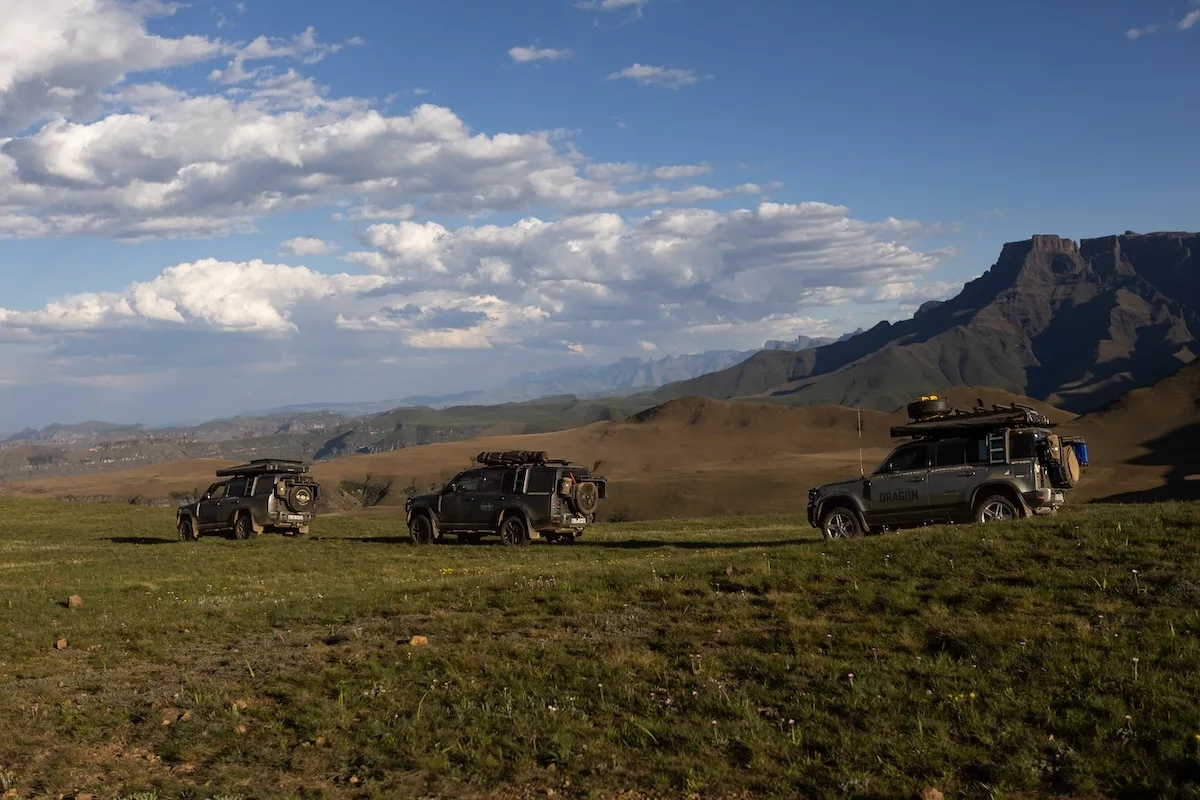
This trek marked the completion of the author's participation in the 44th geographical and humanitarian expedition 'Protector' led by Kingsley Holgate, titled 'Following the Dragon.' The expedition traced the entire Drakensberg range from Iron Crown in Limpopo to Rhodes in the Eastern Cape Highlands. Traveling in Defender 130 vehicles, the team connects remote valleys, high passes, and local communities along the escarpment, combining adventure with malaria prevention, spreading the spectacle Rite to Sight, supporting early childhood development, and providing environmental conservation education for schoolchildren. The foundation also notes the 25th anniversary of its partnership with Land Rover and Defender, which have helped Holgate's team make a difference since the beginning of the century.

For the first two days, the author spent time in a camp with the team in Golden Gate National Park, where eggs of Massospondylus, dating back 200 million years, were extracted from sandstone rocks above the camp, containing the oldest known dinosaur embryos. The park is also home to the Kgodumodumo Dinosaur Interpretation Centre, spanning 120 million kg, opened in June 2025, which consolidates the region's paleontological history in a center filled with full-scale models and interactive exhibits. The name is borrowed from a Basotho legend about a giant beast, fittingly near the Dragon itself. During these two days, park manager Paddy Gordon educated the group on the magic and history of the area.

From Golden Gate, the column ascended towards the border with Lesotho, where the ridge offered a perfect view of the peak they planned to conquer the next day, and of the vast amphitheater below. In the morning, guides advised waiting for the fog to clear but to bring a raincoat. When the sun broke through the 'Dragon's Breath' mist, they set off like hobbits on a seven-hour hike, feeling the pressure of altitude in their chests while trekking through the foothills in search of Sentinel, located at an altitude of 3165 meters above sea level.

There are three ways to reach the top of Tugela Falls: two nearly vertical ladders fixed to the rock, a steep ascent through the Bicorn Buttress gorge, or the 'Iron Path'—Africa's only Via Ferrata. Expedition member Mike Nixon explained that the existence of the 'Via' (Path) Ferrata (Iron) is linked to an unusual deal from World War I. In 1915, Italy was effectively bribed to join the Allies, receiving the promise of a significant portion of Austro-Hungarian territory according to a secret London treaty, and soon became involved in the mountain war on the front passing through the Dolomites. Moving troops and supplies across the vertical limestone using traditional methods was impossible, so both sides hammered iron steps, ladders, and fixed ropes into the rock, allowing ordinary soldiers to climb terrain previously intended for mountaineers. After the war, the equipment remained in place.

Unfortunately, the author learned a historical lesson when the group descended the gorge via a backup route. After experiencing the thrill of being connected to the mountain only by a rope and two carabiners while climbing the slopes at an altitude of about 3000 meters above sea level, overlooking the ravines below, adverse weather took over. The morning sun gave way to dense clouds and a stormy sky as lightning began to move rapidly across the landscape. After the first section of the Via Ferrata, there was no possibility of turning back. The guides decided to use the backup route for the group's safety. It was disappointing not to complete the route, but incredibly powerful to feel the energy of the elements and the immense heights during the first part of the ascent.

Although most of us feel that it is not over and we will try to return to climb Sentinel again, the trek was incredible nonetheless. The weather improved as they reached the bottom of the gorge, and while some returned to Witsishoek, several remained to blaze a new path to the Ladders to ascend the two steel strips attached to the side of the mountain. Some team members proceeded to Tugela Falls via the Ladders, and although they did not reach the summit, they accomplished the most important mission of the day: reaching Tugela Falls to fill the expedition calabash. Previously filled with a thin stream of water above a dinosaur footprint in the highlands of Golden Gate National Park, the calabash has traveled with every Holgate expedition since 1993, collecting symbolic water from the start of the journey and from iconic rivers and lakes along the route. The calabash will be emptied in a ceremony when the trip concludes in November.

On the first night in Golden Gate National Park, Paddy spoke about the spirit of the mountains, the intangible nature that permeates the sandy and clay slopes. Enveloped in the 'Dragon's Breath' and under the dominion of the elements, one truly understands the soul of these ancient escarpments.

Witsishoek

The Witsishoek mountain lodge, located beneath Sentinel Peak, serves as the gateway to the 'Dragon's Tail' Via Ferrata. Helmets, harness systems, and straps are available for rent at the lodge; day visitors are welcome, and a transfer by SUV to the Sentinel parking lot should be booked to conserve energy for the ascent.

Rare Macuco bird rescued and returned to nature on the coast of São Paulo
Read more
g1.globo.com

Rare Macuco bird rescued and returned to nature on the coast of São Paulo

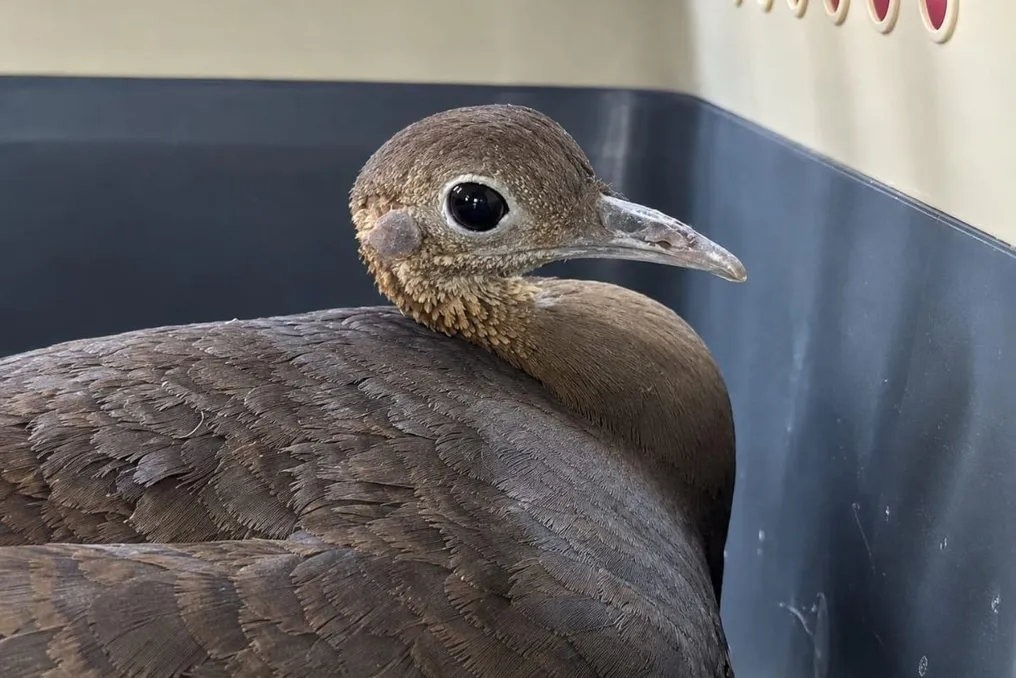
A macuco (Tinamus solitarius), an endemic species of the Atlantic Forest, was rescued and subsequently returned to its natural habitat after being found disoriented on a busy road in the city of Mongaguá, located on the coast of São Paulo.

The animal remained under observation for a period of 24 hours before being released. The encounter occurred on Tuesday, the 20th, when a local merchant spotted it in front of his establishment on Avenida São Paulo. Due to the high volume of traffic in the area and because this is not typical behavior for this species, the citizen collected the bird and transported it to the Zoonosis Surveillance Unit.

Environmental Inspection teams from the municipality took the macuco to the Mongaguá Ecological Park for a clinical evaluation. Biologist Daniel Bortone and veterinarian Marco Belmonte verified that the bird had no injuries and was in suitable condition to return to nature. After 24 hours of monitoring, the animal was released on Wednesday, the 21st.

Guidance for the Community

The Municipality of Mongaguá issued a statement advising residents not to attempt to capture wild animals that are injured, cornered, or at risk within the urban area. Instead, the recommendation is to immediately contact the municipality's specialized teams.

Characteristics of the Macuco

This bird has notable characteristics: it can reach a length of 48 centimeters and weigh up to 1.5 kilograms. Its coloration is described as grayish-brown on the back and light gray on the belly. Its natural environment consists of preserved areas of the Atlantic Forest, preferably in forests near streams. Regarding diet, it feeds on seeds, fruits, insects, and worms.

In the reproductive cycle, the female lays between three and five turquoise-green eggs. The male takes responsibility for incubation, which lasts from 19 to 21 days, in addition to caring for the chicks.

It is estimated that the mature population of this species is less than 10,000 individuals, according to ICMBio data, and it is recognized by birdwatchers as a rare sighting. The species is classified as vulnerable and faces threats such as deforestation and illegal hunting.

According to the Chico Mendes Institute for Biodiversity Conservation (ICMBio), linked to the Ministry of Environment and Climate Change (MMA), the macuco is categorized as nearly threatened with extinction, indicating that although it is not yet in this category, it is close to meeting the criteria for such classification.

Ecological Relevance

Since the macuco predominantly inhabits the interior of forests, its appearance in urban and commercial areas is unusual. Its presence serves as an indicator of the forest's conservation conditions, as it depends on preserved forest ecosystems. Furthermore, the city hall emphasizes that the species contributes significantly to forest regeneration by participating in the dispersal of native tree seeds.

Popular