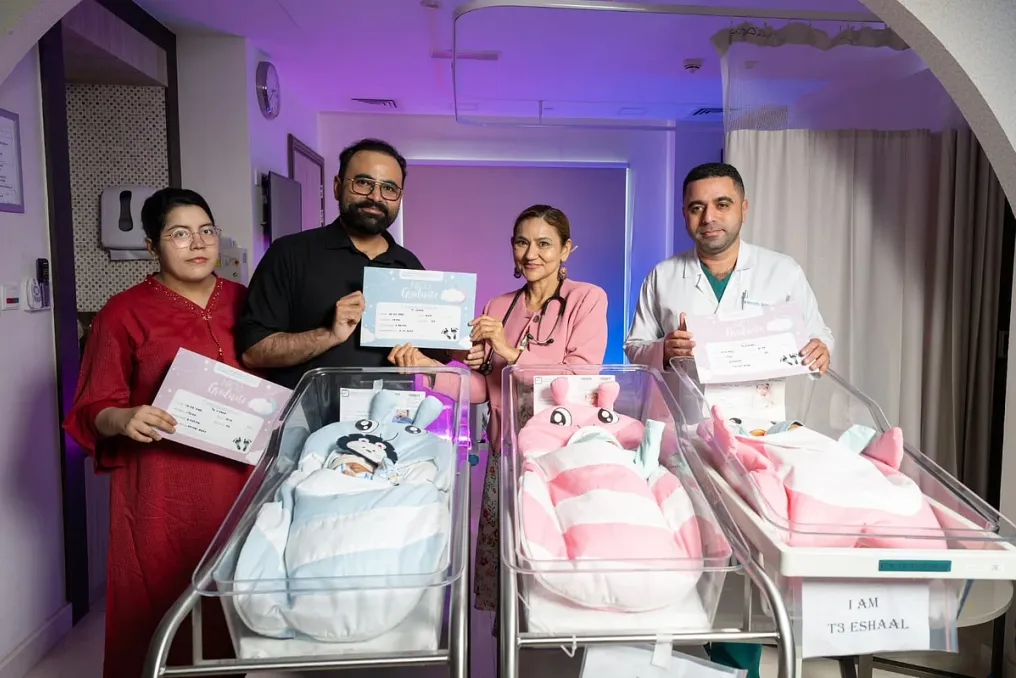
Three premature twins returned home with their parents after spending about a month in the neonatal intensive care unit at a Dubai hospital.
The children were born eight weeks earlier than the expected date due to complications that arose during a closely monitored pregnancy. At 32 weeks of gestation, all three newborns required hospitalization in the Neonatal Intensive Care Unit (NICU) at Emirates Specialty Hospital in Dubai Healthcare City.
The parents, Omar and Sahrish Iqbal, regularly attended prenatal consultations and underwent ultrasound examinations throughout the pregnancy, as doctors monitored the development of the infants and potential complications associated with carrying triplets.
Dr. Anfal Akram Al Mashahi, an obstetrician and gynecologist at the hospital, noted that a triplet pregnancy is associated with an increased risk of preterm birth, low birth weight, uneven fetal growth, and maternal problems, including anemia, hypertension, and gestational diabetes.
She emphasized that 'managing a triplet pregnancy requires a structured, multidisciplinary approach, with frequent prenatal assessments and individualized clinical planning.'
The situation became more critical when the mother was hospitalized with ruptured amniotic membranes and cervical dilation, indicating a possible imminent preterm delivery. Teams of obstetricians, fetal medicine specialists, anesthesiologists, and pediatricians were involved in the planning and management of the labor.
After birth, the three infants were transferred to the NICU, where they were monitored and treated according to their individual needs.
Dr. Monica Kaushal, a consultant in pediatrics and neonatology, stated that caring for premature triplets required advance preparation and clear division of responsibilities, especially from the delivery room to admission to the intensive care unit.
She explained: 'At 32 weeks, infants require careful monitoring because their organs and body systems are still developing.' Dr. Kaushal added that the focus was on meeting each child's clinical needs while informing and involving the parents in the care process, preparing them to take their children home.
Premature children may require support with issues such as breathing, feeding, thermoregulation, and infection prevention. With triplets, doctors and nurses also need to monitor each newborn separately, as their progress can differ in the first weeks after birth.
The hospital reported that its team of neonatal nurses provided continuous bedside observation, developed individualized care plans, and informed doctors of any changes in the infants' condition. Respiratory therapy specialists and other medical staff were also involved in the care.
For the parents, the hospital stay was marked by uncertainty and regular updates from the medical teams. They expressed relief that having obstetrics, fetal medicine, and neonatology services in one hospital provided them with confidence during pregnancy, labor, and NICU stay.
After approximately one month of specialized neonatal care, all three infants were discharged and returned to their family.