Tesla CEO Elon Musk announced on Friday that the company will stop producing the Cybertruck at its Texas Gigafactory around mid-2027. This decision came after several years of weak sales for the futuristic model, which was initially positioned as a competitor to traditional pickup trucks but sold only in a limited number of markets due to its massive and angular design.
Musk stated in a post on the social media platform X that halting production would allow the automaker to increase output of the recently launched Cybercab, which he considers a central element of Tesla's ambitions in robotaxis.
It was not immediately clear whether Cybertruck production would be moved to another facility or completely discontinued, but the Tesla plant in Austin is the only one known to be equipped to manufacture specialized components for this model. Responding to a user on X, Musk called the Cybertruck 'the best car Tesla has ever made,' and the cessation of production 'the end of an era.'
Tesla did not immediately respond to a request for comment sent outside of regular business hours.
The American electric vehicle manufacturer began delivering Cybertrucks to customers only at the end of 2023. According to Kelley Blue Book, only 20,237 units of the Cybertruck were sold in the US last year, which is 48% less than the 38,965 sold in 2024. Before the launch, Musk had projected annual sales of 250,000.
Former Aston Martin CEO Andy Palmer noted: 'It is pointless to continue its production if it does not meet target figures.' He added that any rational automotive expert would agree with this, and although it might be a minor deviation in Tesla's balance sheet, the statistics speak for themselves.
Controversies surrounding the Cybertruck
Since its debut in 2019, the Cybertruck has been controversial for Musk. Proponents of classic pickup trucks mocked its angular appearance, while safety experts predicted it would face difficulties obtaining approval in key markets such as Europe.
The presentation itself was marred by a moment when Musk attempted to demonstrate the car's shatterproof windows by throwing metal balls at them, resulting in large cracks forming on two of the windows. At the official Cybertruck launch in 2023, Musk presented it as a futuristic competitor to trucks from General Motors and Ford, stating: 'Finally, the future will look like the future.'
However, the vehicle failed to live up to these expectations. Automotive analyst Felipe Muñoz stated that while the Cybertruck is being labeled a failure due to poor sales, electric pickups from Ford and others have also struggled in the US. Muñoz emphasized: 'They all lost the competition because electric pickups are not popular in the US.'
Nevertheless, the sharp stainless steel design of the Cybertruck limited its chances in markets like Europe, where electric vehicles are more sought after. Obtaining regulatory approval in Europe proved impossible due to rules concerning pedestrian impact. Palmer stated: 'In any place where accident regulations considering pedestrian impact apply, the Cybertruck will not pass, it cannot pass.'
Musk's New Bet
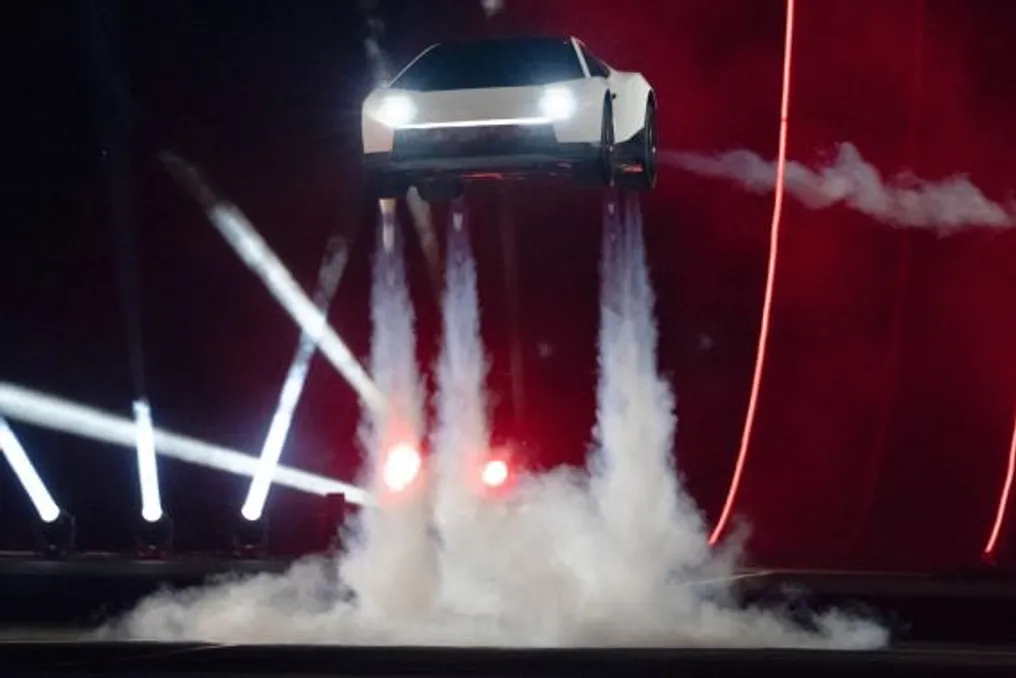
The Cybercab, which features gullwing doors and lacks a steering wheel, pedals, or mirrors, is one of Musk's key bets in his effort to transform Tesla from a mere car manufacturer into a company focused on artificial intelligence and robotics. Musk views it as Tesla's primary autonomous model, intended for servicing a global network of robotaxis.
After years of delays in achieving self-driving goals, Tesla began offering paid rides with a small fleet of Cybercabs in Austin in September. Nevertheless, the company still needs to answer questions from US vehicle safety regulators regarding whether it has properly certified the Cybercab as compliant with federal vehicle safety standards.
Weight Morrill, lead engineer of the Cybertruck, stated on X: 'The Cybertruck was an incredible technological platform for development and continues to live through the Cybercab.'