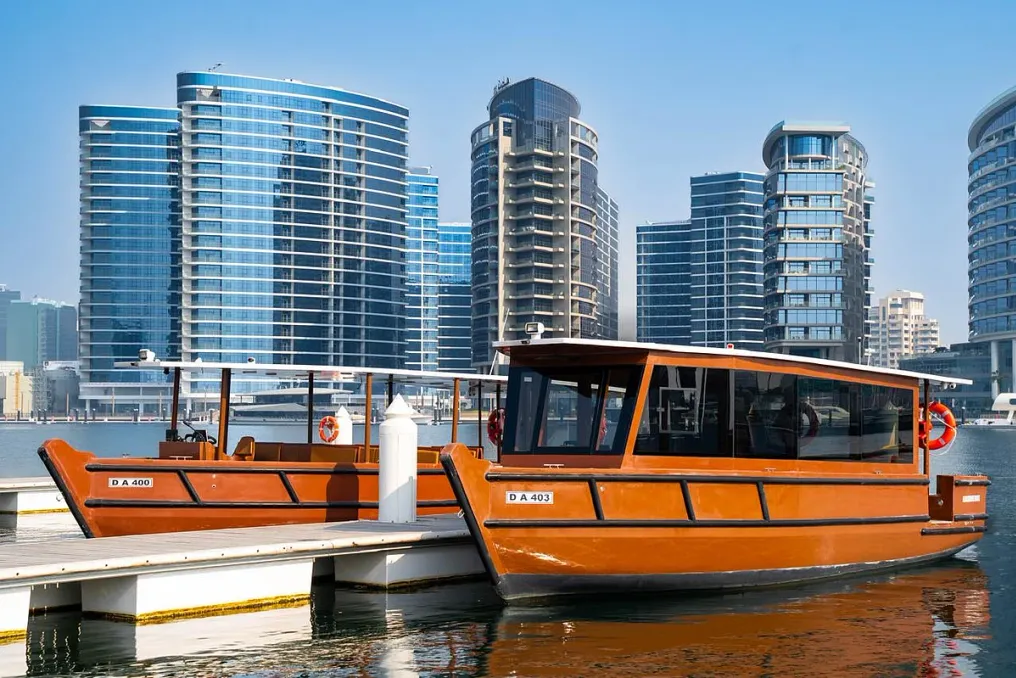
The Dubai Roads and Transport Authority (RTA) has expanded its marine transport fleet by adding four new fourth-generation traditional ferries. These vessels were manufactured in accordance with the latest approved technical specifications and designs for this model.
This move is part of RTA's continuous efforts to improve public transport services, enhance customer service quality, and achieve more effective integration of various modes of transport across Dubai.
Khalaf Belghozuz Al Zarani, Director of Marine Transport at the RTA Public Transport Agency, noted that this addition supports RTA's work in developing marine transport as a key element of Dubai's sustainable transport network. He emphasized that such initiatives strengthen Dubai's status as a leading global city in terms of quality of life, tourism, and business, providing residents and visitors with more diverse, safe, and comfortable means of travel.
Al Zarani stated that the introduction of the new ferries continues RTA's efforts to refine marine transport services and boost their operational efficiency, offering passengers an integrated, more comfortable, and safer travel experience. He added that this aligns with RTA's strategy to provide innovative and sustainable mobility solutions that meet Dubai's rapid growth.
Each new ferry is designed to carry 24 passengers. The vessels are engineered to comply with the highest approved engineering and technical standards and fully meet the health and safety requirements of the Dubai Universal Design Code. Al Zarani noted that this guarantees a safe and convenient travel environment that meets the needs of all segments of society.
The new ferries also took into account aspects of safety, security, and environmental sustainability. They have received compliance certificates according to applicable safety regulations and requirements under the relevant Gulf Standard Specifications.
RTA has implemented a comprehensive set of measures to improve operations and service quality to enhance passenger experience. These improvements include modernized seat and flooring designs, more efficient use of interior space, and dedicated areas for people with disabilities, which facilitates their movement and use of the transport. These changes aim to achieve the highest level of inclusivity and accessibility.
Furthermore, the new ferries are equipped with smart systems and modern technologies to enhance the journey and improve service quality. These include digital screens displaying real-time information, safety content, and informational messages, as well as electronic destination boards, which are installed for the first time on the fourth-generation model. These systems allow passengers to receive operational information easily and clearly while simultaneously increasing operational efficiency and customer satisfaction.
The modernization of the marine transport fleet is part of RTA's vision to create an integrated and sustainable transport network. The authority asserts that the new ferries support Dubai's future goals in 'smart' mobility, improve service quality for residents and visitors, and reinforce the emirate's position as a leading global model for modern, integrated transport systems.