Lungile Mkhize grew up watching her mother use gardening as a form of therapy, growing produce for the family in Edendale, Pietermaritzburg, KwaZulu-Natal. This early experience stayed with her, even after she studied opportunities outside of agriculture.
When unemployment forced her to reconsider her next steps, she decided to start small at home, utilizing the garden and a small starting capital. Today, this decision has transformed into the company Lugcwabe Agric Solutions.
After her father's death in 2000, Mkhize's mother, Thembi, turned to gardening for comfort. Mkhize notes that the family understood how gardening helped people cope with difficult times while also providing food. Every family member had responsibilities in the garden to ensure enough food was available.
Initially, she hoped to become a social worker, but her matriculation scores were insufficient to meet the requirements. Work in the corporate sector also attracted her attention, but her career took a different path, including a position as a teaching assistant.
Later, Mkhize studied entrepreneurship and business management at Umgungundlovu TVET College, gaining knowledge in finance, marketing, and customer service. Unfortunately, her mother passed away in 2018, and Mkhize took over responsibility for the family garden, which spans 269 square meters. With years of gardening experience, she began to see the potential of farming extending beyond simply feeding the family, prompting her to consider turning it into a business.
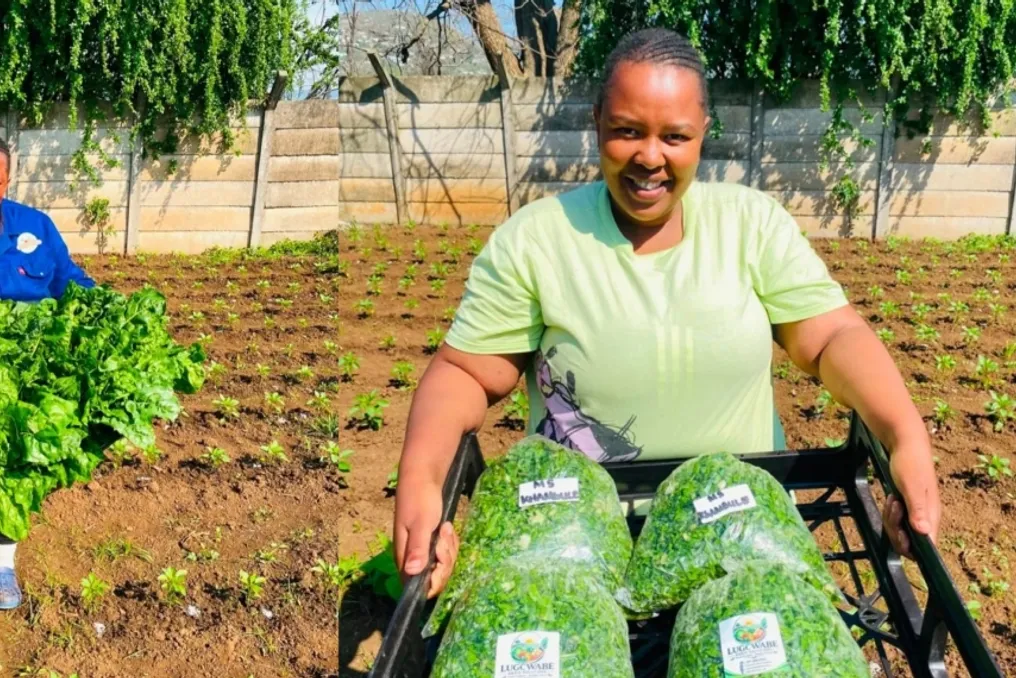
Lugcwabe Agric Solutions grows spinach and lettuce on the family land. Currently, Mkhize sells her produce through informal channels and hopes to expand her client base as the business develops. She has also analyzed local businesses and noticed a high concentration of coffee shops. Since many of them serve sandwiches, she sees an opportunity to supply them with lettuce as her business grows.
She states: 'My approach is to produce high-quality crops and let the product speak for itself. I also want to build strong relationships with customers.' Her marketing knowledge helps her identify potential buyers and think about what they need. She says her lettuce can sell out immediately once it is ready for the market.
'Spinach is also in demand. We sell it chopped, which simplifies use for busy customers,' Mkhize adds. She claims that her studies helped her understand how to manage the business side of farming, from budgeting and tracking income and expenses to managing cash flow and saving for future investments. 'My customer service training helps me work with different people, keep customers satisfied, and find new ones,' she concludes.
She completed an internship at the KwaZulu-Natal Department of Cooperative Governance and Traditional Affairs (Cogta) from 2024 to 2026.
Despite her gardening experience, Mkhize acknowledges that farming involves difficulties, especially when weather conditions and water scarcity affect the quality of her harvest. Such conditions can lead to losses if the vegetables do not meet the quality expected by customers. Mkhize emphasizes that appearance matters when selling fresh produce, as buyers often judge its quality before purchasing.
'When a product looks bad, it becomes a loss for the business,' she says. Although she has been involved in farming for years, Mkhize admits she only started taking the business seriously in 2026. Water access remains a challenge, but she recently received a JoJo tank donated by an office of a Nkosinathi Masoeu ward councilor from the Umsunduzi municipality. This donation, made about a month ago, should help her manage water on the plot.
'I want to improve my knowledge of pest and disease control because poor control affects crop quality and can hinder supply to larger markets,' she states. She hopes to learn more and afford irrigation systems to ease watering and reduce reliance on watering cans. She also wants to develop livestock management skills.
Mkhize's plans extend beyond vegetable production. She hopes to engage in poultry farming, focusing on egg production, as well as food processing. She views these areas as opportunities to meet her community's needs, create jobs, and provide training opportunities for students and interns in agriculture. She also wants to visit more children's centers as part of educational outreach, teaching children about agriculture and how it can open doors for them. 'I still have a love for serving people, but now I am doing it differently,' says Mkhize. For her, farming offers a way to continue serving people by using lessons learned in her family garden while building a business that can support her community.