Discussion on the connection between Ravana's voice in the film 'Ramayana' and Prabhas's image from 'Baahubali'
Read more
Aaj Tak
www.aajtak.in

Discussion on the connection between Ravana's voice in the film 'Ramayana' and Prabhas's image from 'Baahubali'

In cinema, voice plays a significant role as it is often a distinguishing feature of any character, allowing viewers to recognize the hero even without visual contact. The voice helps breathe life into the acting performance. However, a dissonance arises when a familiar voice is delivered by an actor who looks completely different from what the viewer expects.

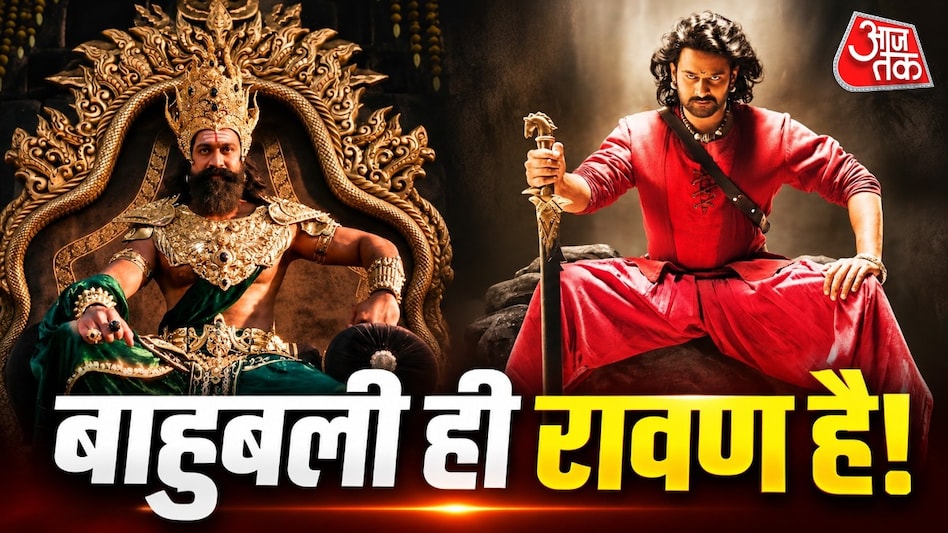
Such an experience occurred with viewers watching Nitesh Tiwari's highly anticipated epic film 'Ramayana,' which was made with a massive budget of 400 billion rupees. In this film, Yash plays Lankapati Ravana, known as 'Rocky Bhai' from Kannada. His screen presence, aggressive look, and charisma are impressive. But when he delivers dialogues in Hindi, a strange inconsistency is felt due to his Hindi dubbing.

For this important character in 'Ramayana,' the voice was provided by the renowned actor and voice artist Sharad Kelkar. Undoubtedly, Sharad's voice possesses incredible depth, power, and resonance. He has made many major characters immortal with his voice. However, the issue here is not the quality of the voice, but the 'cultural association' that has long been ingrained in the audience's consciousness.

As soon as Ravana Yash appears on screen, the mind immediately shifts to memories of the 2015 film 'Baahubali.' It was Sharad Kelkar who dubbed the characters Amarendra and Mahendra Baahubali in this historical film in Hindi. This voice still lives in the memory of viewers as the voice of a just and great warrior. When this same recognizable voice sounds from the mouth of the villain—'Ravana'—the viewer's attention is diverted from the plot and gets caught up in old memories.

The main difficulty in the dubbing process is that the voice of Baahubali possessed a sense of sanctity, duty, and dignity. Conversely, the image of Ravana was supposed to demonstrate arrogance, the pride of omniscience, and dangerous cruelty. When the same old tone is heard in the execution of a villain, the character's frightening and unique impact somewhat weakens. Frankly, if Yash himself had dubbed his films in Hindi, he might have achieved a greater congruence with this image, as his own voice possesses natural power and authority.

Although in the films K.G.F and Toxic, viewers perceived Yash in a new and different image, Sachin Ghale dubbed him then. Yash's modern and sharper screen presence does not seem entirely harmonious with Sharad Kelkar's traditional dramatic voice. Undoubtedly, Sharad Kelkar is an outstanding artist, but sometimes his iconic identity becomes too dominant over the character.

In the author's opinion, if a voice without such a large legacy as Baahubali's had been chosen for Yash in 'Ramayana,' this terrifying appearance of Ravana would have seemed even more convincing and new to Hindi audiences. Because every time the viewer closes their eyes and listens to Ravana's voice in the cinema hall, they will see not Yash, but Prabhas.
Similar stories

A.R. Rahman Responds to Criticism After His Ramayana Film Song Sparks Controversy
Read more
www.aajtak.in

A.R. Rahman Responds to Criticism After His Ramayana Film Song Sparks Controversy

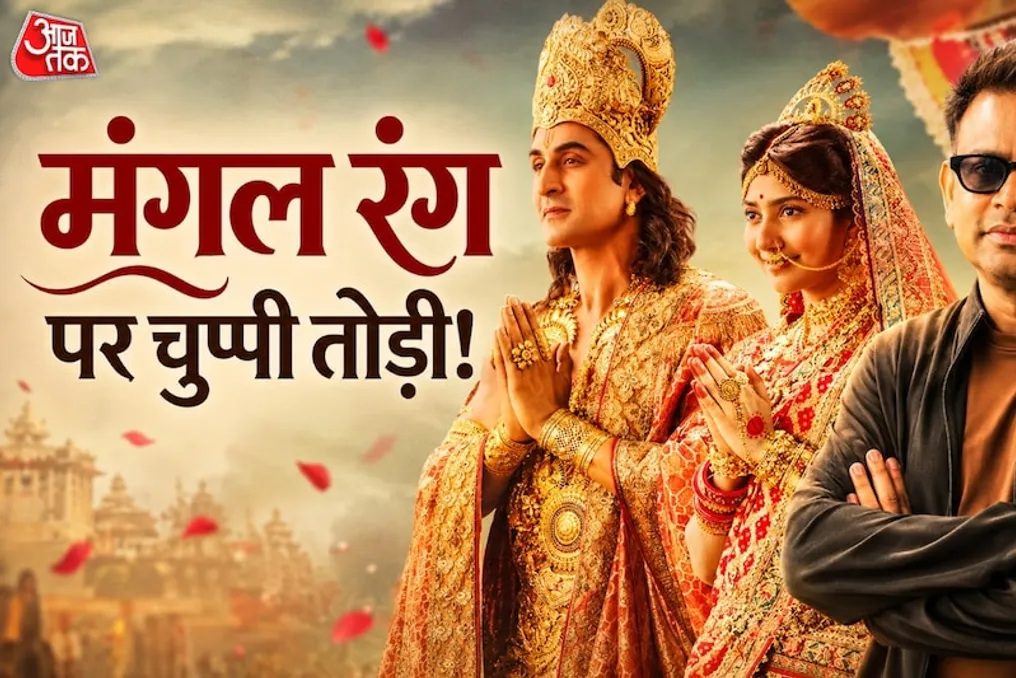
Music composer A.R. Rahman, an Oscar laureate, is currently in the spotlight due to songs from the film 'Ramayana'. While many of the composer's tracks have received positive reviews, some have faced criticism. The recent song 'Mangal Rang,' which depicts the love between Lord Rama and Mother Sita, led some audiences to associate it with 'qawwali,' resulting in active trolling directed at A.R. Rahman.

Since 'Ramayana' is a religious epic, many viewers disliked the qawwali style in the film. In response to the questions that arose, A.R. Rahman shared his opinion. He stated that he is his own strictest critic and does not always approve of every song he writes.

In an interview with Indian Express, the composer explained that creating any song is not a process that concludes in a single day. Often, the team works on one melody for months, developing a complete concept and process around it. To understand some elements, one must consider history and culture. It is important to take time, much like a pickled product matures. Some melodies improve with age.

He also noted that people sometimes focus only on one part of the song, failing to grasp the entire vision. Therefore, patience is sometimes required to understand over time why the melody was created in a particular way. A.R. Rahman admitted that at some point, an artist needs to stop reacting to everyone's opinions. Citing Apple co-founder Steve Jobs as an example, he joked: 'If you want to please everyone, then go sell ice cream.'

Rahman reported that when creating this song, he drew inspiration from various ragas of Indian classical music. He specified that the song uses the pure sounds of Raga Bilawal, as well as hints of Raga Mandar, which is often used in religious hymns and wedding songs. Furthermore, the composition includes some motifs from Raga Pahari.

Rahman's goal was to combine elements of Bhakti (devotional) music while preserving his own musical style. Despite the initial criticism regarding the song, it reached the number one spot on the YouTube trending music chart after its release.

Nitish Bhardwaj discusses the music of 'Ramayana: Part 1' and the role of Krishna
Read more
www.aajtak.in

Nitish Bhardwaj discusses the music of 'Ramayana: Part 1' and the role of Krishna

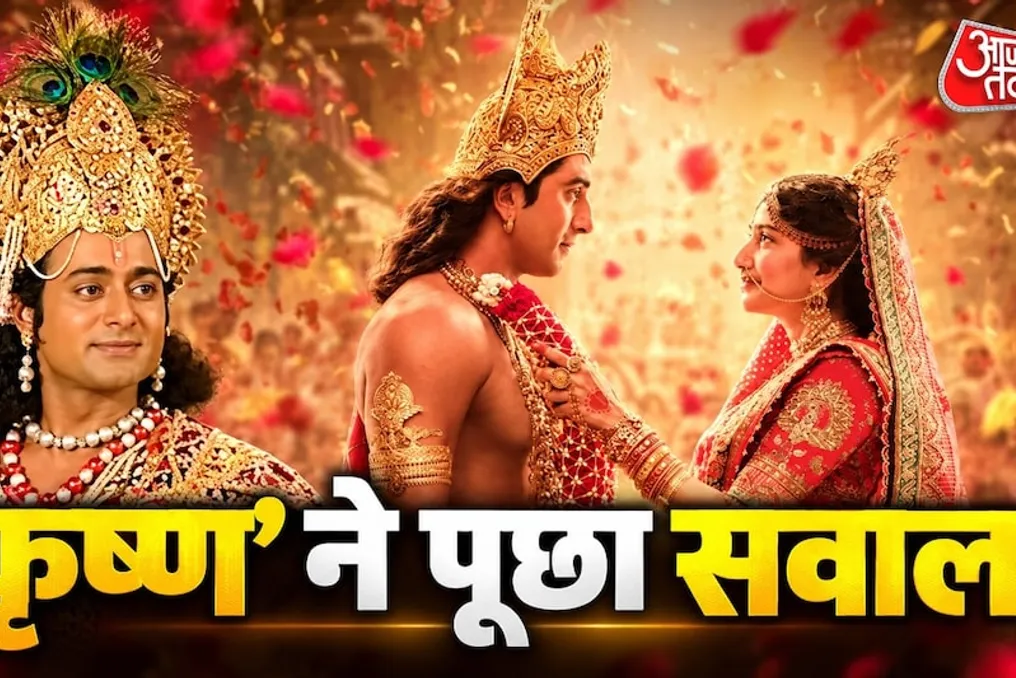
Nitish Bhardwaj has once again commented on the musical score of the upcoming film 'Ramayana: Part 1'. Known for his role as Lord Krishna in the 1988 film 'Mahabharata', he referenced a previous post where he expressed hope that audiences would accept Sai Pallavi in the role of Sita, and that he wished to hear Tulsidas's verses in the film.

On Instagram, Nitish Bhardwaj shared a screenshot of the song lyric 'Mangal Rang'—'I am the flute, you are the breath'—and questioned whether anyone could grasp its 'deep meaning'. In his caption, he emphasized: 'I want to draw attention to these lines from my previous post about 'Ramayana'—'I just hope Indians will accept Sai Pallavi as Sita. Furthermore, I would like to hear Tulsidas's verses amidst the mridangam and manjira in the film. This identity of the epic is present in the soul of every Indian.' He also asked: 'Who can understand its deep meaning?'

The filmmakers have decided to release it worldwide shortly before Diwali, on November 5, 2026. This film, directed by Nitish Tiwari, is a joint production with companies such as Prime Focus Studios Namit Malhotra, the eight-Oscar-winning company DNEG, and Monster Mind Creations Yash. 'Ramayana' is planned to be presented as an epic divided into two parts.

'Ramayana: Part 2' will be released during Diwali 2027. Both parts will be shown across India in Hindi, Tamil, Telugu, Kannada, and Malayalam languages. This project merges Indian mythological tales with large-scale visual effects, and the music was composed by A.R. Rahman and Hans Zimmer. It is considered one of the most anticipated premieres in Indian cinema.

Nitish, a former Member of Parliament, is primarily known for his role as Krishna in B. R. Chopra's 'Mahabharata'. He also played the roles of Lord Vishnu and his numerous incarnations in other Chopra works, such as 'Vishnu Purana'. Additionally, he began working in direction with the Marathi film 'Pitrurun'.

Tamil song sparks controversy after the release of 'Mangala Rang' from the film 'Ramayana'
Read more
www.aajtak.in

Tamil song sparks controversy after the release of 'Mangala Rang' from the film 'Ramayana'

The film 'Ramayana' continues to attract attention with the recent release of a new track titled 'Mangala Rang,' which is intended to reflect the love between Rama and Sita. However, the public reaction to this song has been mixed: some highly praised it, while others criticized it.

Some listeners believe that composer A. R. Rahman transformed 'Mangala Rang' more into a Sufi song than a religious anthem, noting that the melody resembles a qawwali. These remarks also led to producer Namit Malhotra becoming a subject of questioning.

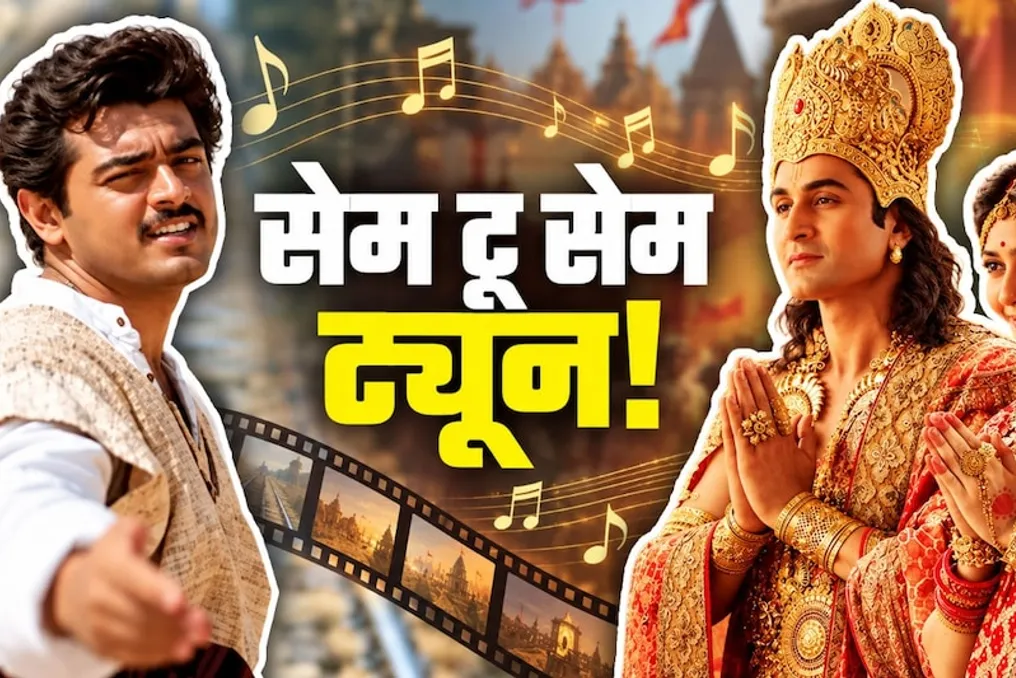
Against the backdrop of this debate, a 26-year-old track created by Rahman went viral. Users noticed a striking similarity between his melody and the song 'Mangala Rang.' This track belongs to the Thai film 'Kandukondan Kandukondan' from 2000, and its song 'Enna Solla Pogirai' became popular on YouTube and social media.

Many listeners, upon hearing this information, began trolling A. R. Rahman in the comments section of the song, expressing bewilderment at him using his own melody in a film like 'Ramayana.' Some users claimed that Rahman had betrayed them, expressing strong dissatisfaction.

It is worth noting that besides A. R. Rahman, the renowned Hollywood director Hans Zimmer is involved in the film 'Ramayana,' working on the soundtrack, although his contribution is limited to background music. The film 'Ramayana' is scheduled for a global release on November 5th, but before that, its world premiere will take place in America on October 27th, where famous filmmakers and actors are expected to attend.

Popular