Stargazing event featuring Jupiter and Saturn to be held in Wadi Orayah (UAE) on November 6
Read more
Khaleej Times
www.khaleejtimes.com

Stargazing event featuring Jupiter and Saturn to be held in Wadi Orayah (UAE) on November 6

Residents of the United Arab Emirates interested in exploring the night sky can visit the Wadi Orayah National Park in Fujairah on November 6. This event will combine astronomy and nature.

The program, titled 'Evening of Astronomy and Nature in Wadi Orayah,' is scheduled from 18:00 to 22:00, according to a statement from the UAE Ministry of Culture. The event will begin with an ecological introduction led by a park guide, followed by a night sky exploration involving specialists from Dubai Astronomy Group.

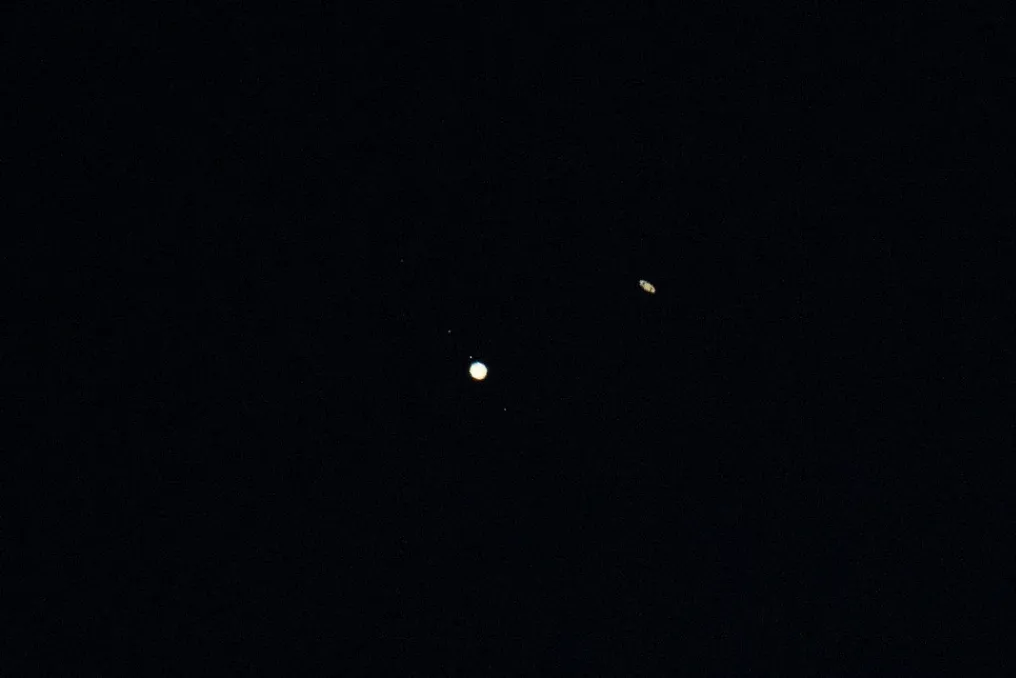
Participants will be invited to observe the sky with the naked eye. The astronomical program also includes observing nebulae, galaxies, as well as the planets Jupiter and Saturn. This evening will offer visitors an opportunity to familiarize themselves with the park's natural environment and learn about celestial objects, providing a different way to perceive Wadi Orayah in the darkness.

Wadi Orayah is the first natural attraction in the UAE included in the UNESCO World Heritage List. Located in the Hajar Mountains of Fujairah, this wadi is known for its streamlets fed by springs and waterfalls that sustain wildlife in an otherwise arid landscape.

According to UNESCO data, 1099 species of plants and animals are registered in this area, including at least 10 species that are globally endangered. Freshwater habitats provide vital water and food resources for fauna, making the wadi an important refuge for biodiversity, as described in the UNESCO Biosphere Reserve profile.

The Ministry of Culture announced this event jointly with the Fujairah Environment Agency, Wadi Orayah National Park, and Dubai Astronomy Group Astronomy. The Ministry invited the public to take part in this experience, and registration is available via a QR code posted in their social media announcement.

Similar stories

Astronomical Events of November 2026: Supermoon, Bolides, and Planetary Conjunction
Read more
nplus1.ru

Astronomical Events of November 2026: Supermoon, Bolides, and Planetary Conjunction

With the onset of longer nights, astronomers have more opportunities to observe celestial objects. The November period promises observers a rich program of events.

In particular, amateur astronomers will be able to observe bright bolides, as well as the rare conjunction of Mars and Jupiter. Additionally, a 'supermoon' and a morning planetary parade are scheduled.

This article details all the celestial phenomena that can be seen in November 2026.

Hunter's Moon visible in several countries, with sightings in Moscow and Rome
Read more
g1.globo.com

Hunter's Moon visible in several countries, with sightings in Moscow and Rome

The Hunter's Moon illuminated the skies of various nations last weekend, generating numerous images of the event globally.

The peak moment of the full moon occurred at 1:12 AM on Monday, the 26th, according to data provided by NASA, the United States space agency, using the Brasília time zone. The phenomenon could also be observed in Brazil, provided local weather conditions permitted.

Despite its specific name, the Hunter's Moon does not represent a distinct astronomical phenomenon from a common full moon. Its nomenclature derives from ancient traditions of the Northern Hemisphere, where October coincides with the beginning of autumn.

In this season, after the harvest, fields become more open, and moonlight aided hunters in locating animals and storing provisions for winter. Additionally, the Hunter's Moon is notable for appearing at similar times on several consecutive nights during the Northern Hemisphere's autumn, which extends the period of natural illumination after sunset.

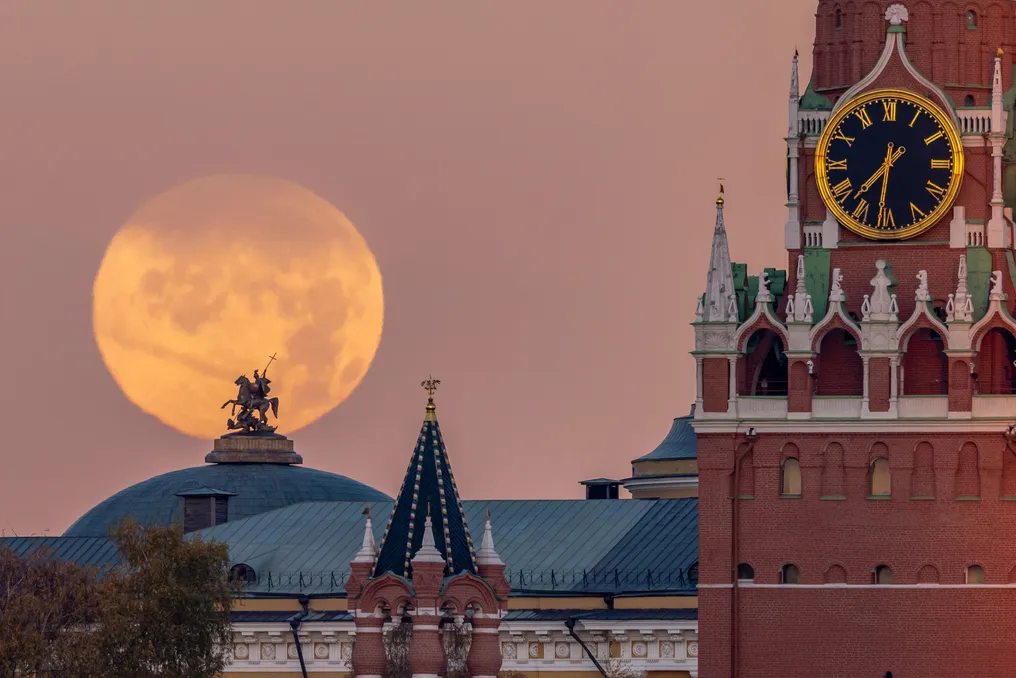
Various photos recorded the Hunter's Moon in different locations. In Moscow, Russia, it was seen setting behind the Kremlin and St. Basil's Cathedral, as well as behind the Spasskaya Tower, on Monday (26). Another record shows the moon, near the full phase known as the Hunter's Moon, appearing over the wing of Air Force One during a flight of Donald Trump back to Washington on Sunday (25).

In Rome, Italy, images were captured of the full moon rising behind a statue atop a column in Piazza Venezia, both on Monday (26) and on other occasions, as well as appearing between two columns in the same location. A moment was also recorded when the full moon appeared while the reflection of the sunset was visible on a glass panel in Piazza Venezia, on the same date.

Topography and altitude make Bom Sucesso de Itararé a location for solar halos
Read more
g1.globo.com

Topography and altitude make Bom Sucesso de Itararé a location for solar halos

The landscape of the municipality of Bom Sucesso de Itararé is characterized by valleys, canyons, and various rock formations. Due to its elevation, the city ranks as the eighth highest in the state of São Paulo relative to sea level. Regional climatic conditions are also notable, featuring average temperatures close to 16°C and frost records throughout the year.

Geologist Victoria Gomes explained to g1 that the combination of these geographical features with local atmospheric conditions facilitates the visualization of natural phenomena in the area. She pointed out that this scenario is unique to southwestern São Paulo, where the canyon and valley relief acts as a channelizer for humidity and winds, promoting a regional microclimate that combines with ice clouds, specifically cirrostratus, which are the highest in the atmosphere.

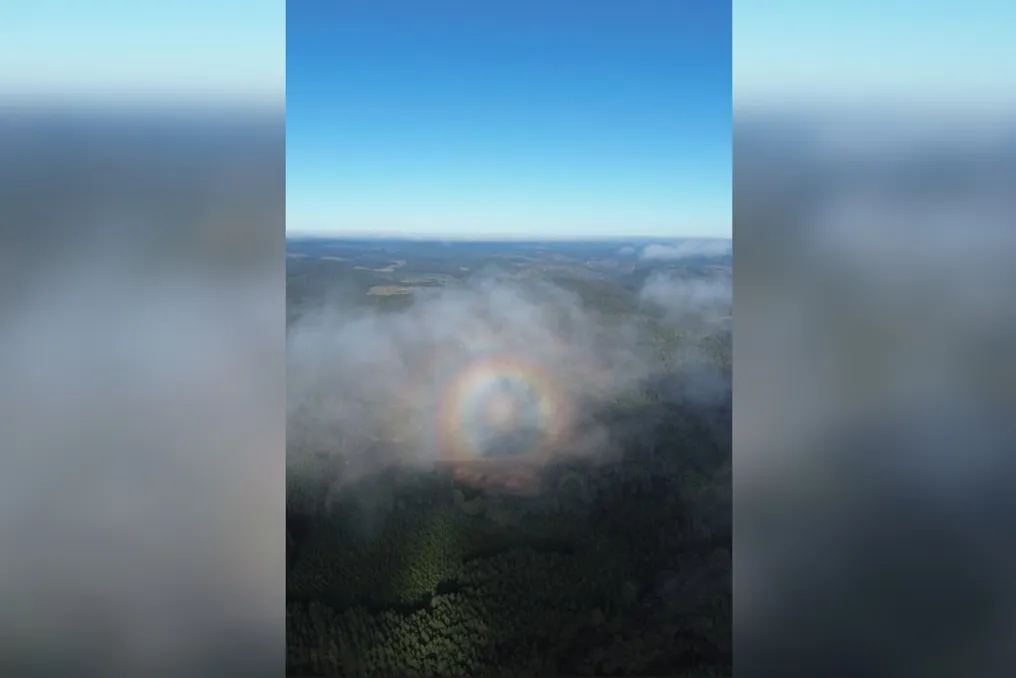
The specialist clarified that the solar halo requires precise atmospheric circumstances: it appears when sunlight interacts with ice crystals present in high clouds, creating a luminous arc around the sun. Generally, this event occurs in the early morning, when solar rays strike the ice crystals contained in these cirrostratus clouds.

Influence of relief on observation

According to Victoria, the altitude and topographical configuration of the region are fundamental for atmospheric phenomena to be observed with such clarity in Bom Sucesso de Itararé. The city is located in a transition zone between higher areas and valleys, exhibiting marked topographical changes, such as steep slopes and landscapes enveloped in rock formations.

The geologist detailed that this geographical arrangement favors the perception of atmospheric events, especially when the observer is in a high point or above any layer of fog. She emphasized that the steep relief, rocky cliffs, valleys, crevices, and canyon, with its rugged topography and sharp gradient, function as an 'amphitheater' for appreciating these optical phenomena, while simultaneously channeling winds and retaining masses of humidity.

Victoria noted that such conditions are not limited to Bom Sucesso de Itararé; neighboring municipalities can also offer suitable scenarios for observing similar phenomena. She highlighted that the observer's perspective above the fog is a unique differential of the region, allowing for the visualization of the solar halo.

Fogs are also common in the region

In addition to the solar halo, fog is a recurring atmospheric phenomenon in southwestern São Paulo. The geologist attributes this to the fact that the relief influences air circulation and humidity distribution, where air cooling can cause water vapor condensation, generating small suspended droplets that form the fog.

Both the appearance of the solar halo and the presence of fog depend on the interaction between local characteristics and atmospheric conditions.

Millions of years of history

The Pirituba Canyon is one of the most notable in the area, located approximately 40 km from the urban area of Itapeva, on the border with Bom Sucesso de Itararé. Bom Sucesso de Itararé has 3,6 thousand inhabitants and is 471 km from the capital of São Paulo, bordering São Paulo and Paraná.

The landscapes of Bom Sucesso de Itararé also tell the geological story of the region, as sandstone formations, valleys, and rocky cliffs were shaped over millions of years by natural processes. According to Victoria, the rocks reveal different past environments, including ancient river systems and shallow seas, with water and wind acting as sculpting agents over time.

These geological processes gave rise to tourist spots, such as Pedra da Galinha, in the Valley of Giants, which provides a comprehensive view of the local relief. Victoria mentioned that this easily accessible location allows one to observe the interaction between relief and climate at up to a 360-degree angle.

She advised that the best time to observe the phenomenon is in the early morning, during cold periods, typically between winter and spring, or before winter, when the sun is still warm but the weather is cold.

How to observe safely

Despite the fascination the phenomenon holds, Victoria warned about the risk of looking directly at the Sun when trying to spot the halo, recommending the use of a hat and glasses due to the inherent danger.

Since 2021, the Paulista Canyons Association has been carrying out initiatives aimed at preserving and valuing this natural and historical heritage. As a member of the entity, Victoria Gomes emphasized the growing need to protect the natural beauties of the Itapeva region, which attracts visitors, working on disseminating information about these places.

Popular