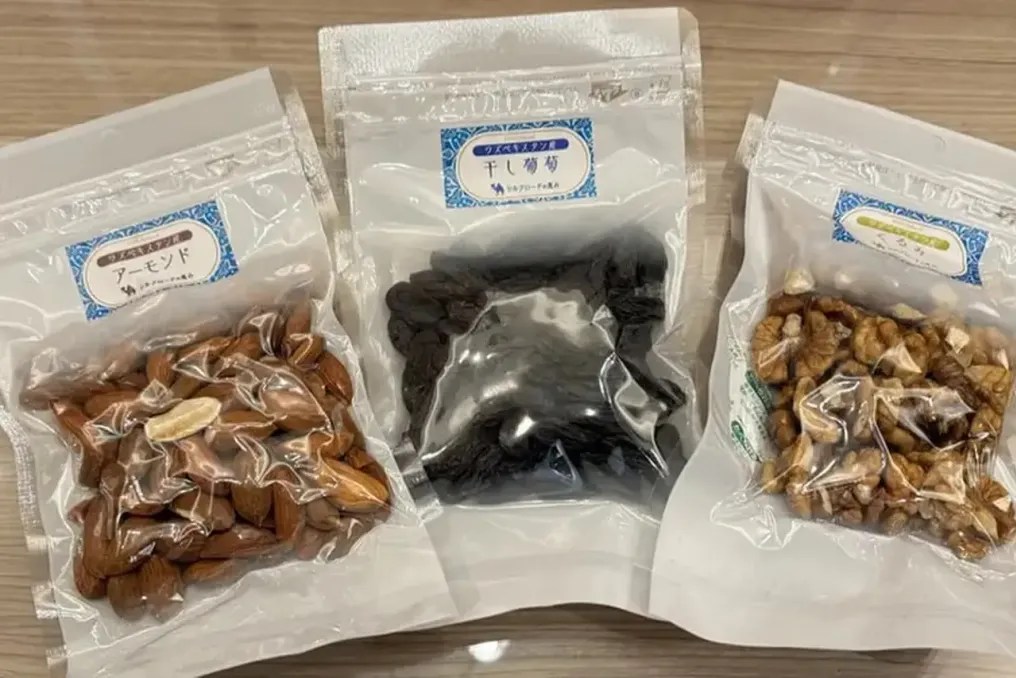
Uzbekistan enters the top five largest suppliers of prunes to Japan
Read more
UzDaily
uzdaily.uz

Uzbekistan enters the top five largest suppliers of prunes to Japan

According to data presented in a report on the development of trade cooperation between the two countries, Uzbekistan has become one of the top five suppliers of prunes to Japan and is among the top ten exporters of raisins to the Japanese market.

To increase supply volumes, representatives of the Embassy of Uzbekistan in Japan held a meeting in Osaka with Kengo Sugie, CEO of the Japanese company Kurosimo Inc.

Kurosimo Inc. imports black raisins, almonds, and walnuts from Uzbekistan, processes these products, and sells them in Japan under the brand name Gift from Silk Road. This product is available at Kintetsu Department Store, one of Japan's largest retail chains, and has attracted consumer interest, as noted by the meeting participants.

Japanese Market Requirements

The discussion also covered the requirements of the Japanese market for imported food products. Specifically, suppliers must comply with restrictions on pesticide residues within Japan's Positive List System. Laboratory tests are conducted depending on the type of product to check for pesticide residues, mycotoxins, microbiological indicators, and food additives.

Fresh fruits, vegetables, seeds, and certain types of plant products fall under phytosanitary standards, which include issuing relevant certificates and conducting import inspections. Furthermore, Japanese legislation establishes rules for packaging and labeling. Labels in Japanese must contain the product name, ingredients, allergen information, storage conditions, expiration date, country of origin, and importer details.

In accordance with Japan's Food Sanitation Act, notification must be submitted for every commercial import of food products. The goal of the discussions was to ensure that Uzbek products comply with Japanese regulations and to further expand supplies to the country's market.

Similar stories

Food production is the most common sector in Uzbekistan's industry
Read more
nuz.uz

Food production is the most common sector in Uzbekistan's industry

As of October 1, 2026, there were 66 thousand industrial enterprises operating in Uzbekistan. The most in-demand sector turned out to be food production, which covers every fifth registered company.

According to information from the National Committee on Statistics, the distribution of industrial facilities across main sectors is as follows: food production includes 13.3 thousand enterprises (accounting for 20.2%); next are enterprises producing other non-metallic mineral products—9.2 thousand (13.9%); clothing accounts for 6.8 thousand (10.3%); finished metal products number 5.4 thousand (8.2%); furniture has 4.5 thousand (6.9%); textile products—4 thousand (6.1%); and rubber and plastic products—3 thousand (4.6%).

The reason for the dominance of food production lies in the high demand for food. Previously, citing data from the US Department of Agriculture, it was noted that food accounts for 44.8% of the total consumer spending of Uzbek citizens.

For comparison, in Kazakhstan, the share of food expenses is 41.7%, in Belarus—30.6%, and in Russia—25.7%. Meanwhile, the highest share of food expenditure is recorded in Nigeria, which reaches 59.2%.

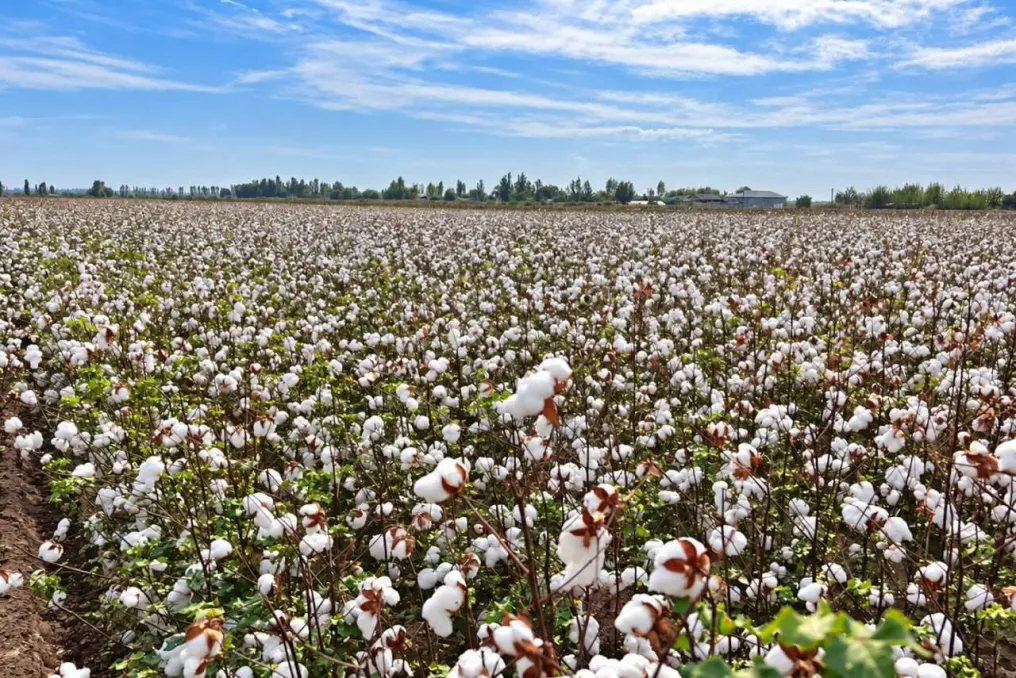
Uzbekistan achieved a record cotton harvest of 56.2 centners per hectare in 2026
Read more
uzdaily.uz

Uzbekistan achieved a record cotton harvest of 56.2 centners per hectare in 2026

According to current data, in 2026, the cotton harvest in Uzbekistan reached 56.2 centners per hectare, which is the highest level since 1990. A total of 5.002 million tons of cotton was collected from an area of 890,000 hectares.

In 2025, cotton was grown on an area of 876,000 hectares, resulting in a production of 3.986 million tons with an average yield of 45.5 centners per hectare. Over the past year, the sown area increased by 14,000 hectares, the total production volume grew by approximately 1.016 million tons, and the yield improved by 10.7 centners per hectare.

In 2024, Uzbekistan collected 3.181 million tons of cotton from 1.004 million hectares, achieving an average of 31.7 centners per hectare.

According to available information, the production in 2026 was the second largest over the entire period under review. The highest figure was recorded only in 1990, when Uzbekistan collected 5.058 million tons of cotton from 1.83 million hectares, with a yield of 27.6 centners per hectare.

Thus, the current harvest approaches the 1990 level, despite the sown area having been reduced by more than half, while the yield has nearly doubled.

The areas under cotton generally decreased throughout the period: from 1.83 million hectares in 1990 to 1.377 million hectares in 2000, then to 1.318 million hectares in 2010, and 1.034 million hectares in 2020. The smallest area was registered in 2025—876,000 hectares.

From 1990 to 2018, the cotton yield fluctuated between 20.6 and 27.6 centners per hectare, with the lowest figure noted in 2003.

The increase in yield began in 2019, when it reached 27.4 centners per hectare; in 2020, it was 29.6, in 2021—32.4, in 2022—33.8, and in 2023—36.6. Until 2025, the 2023 figure remained the highest in the statistics.

The lowest total cotton collection for this period was recorded in 2018, when Uzbekistan produced 2.31 million tons from 1.071 million hectares, with an average yield of 21.6 centners per hectare.

Popular