How the Apple ecosystem boosts small and medium-sized enterprise productivity
Read more
TechCentral
techcentral.co.za

How the Apple ecosystem boosts small and medium-sized enterprise productivity

In a complex economic climate, small and medium-sized enterprises face constant pressure requiring flexibility and competitiveness, and uninterrupted technology operation plays a significant role in this process.

In the second installment of the 'Mac for SME' series, sponsored by iStore Business, Sudesh Pillai, Executive Director of iStore Business in South Africa, and Kevin McLennan, Founder and CEO of the PR and marketing firm The Prophecy Group, discuss the value of the Apple ecosystem as a factor in increasing productivity for small businesses.

Pillai and McLennan examine several issues in detail, including the importance of a seamless IT experience for SMEs, where maximizing resources is key to success. They also analyze the pace of technological change and the possibility that investments in the Apple ecosystem can protect equipment from the development of artificial intelligence.

Furthermore, the discussion touches upon topics such as affordable support for SMEs during inevitable updates, the difficulty of employees transitioning to a new operating system, and the critical importance of built-in data protection for small companies facing security and compliance challenges.

They also discuss which software subscriptions, besides AI tools, small businesses can afford not to pay for.

Similar stories

CTO of Pine Labs, Sanjeev Kumar, discusses building an ecosystem for the agent economy, emphasizing trust and control
Read more
yourstory.com

CTO of Pine Labs, Sanjeev Kumar, discusses building an ecosystem for the agent economy, emphasizing trust and control

Artificial agents are beginning to perform real business functions, ranging from lead generation to complaint handling. For banks, fintech companies, and large enterprises, this raises a fundamental question: how much can one trust an autonomous agent?

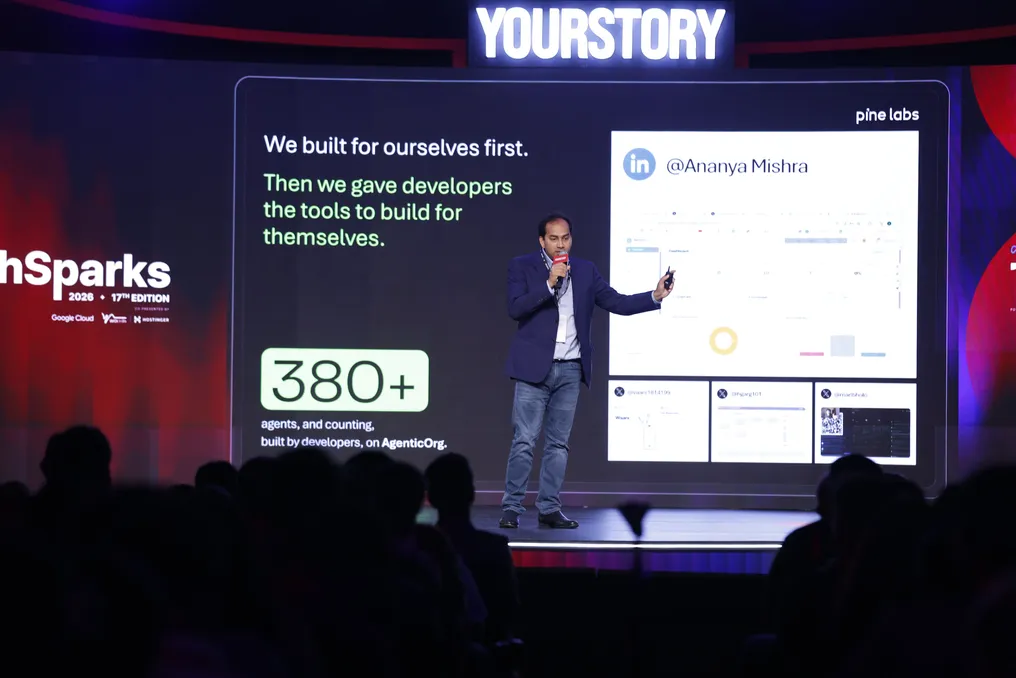
Pine Labs is addressing this issue by creating an ecosystem that allows AI agents to perform commercial tasks while ensuring accountability for their actions. During a product presentation at TechSparks 2026, Sanjeev Kumar, CTO of Pine Labs, stated that the company aims to make AI a full participant in its ecosystem.

Over the past year and a half, Pine Labs has been developing an operating system for commerce around AI agents. This system integrates tools for managing permissions and tracking agent activities with applications for sellers and enterprise teams. Through its Agent Store, the ecosystem will be open to third-party developers creating solutions for banks and sellers.

For agents to function in banking and corporate environments, organizations must clearly understand the limits of their authority and have the ability to audit their actions. Pine Labs developed Grantex, which Kumar described as 'Open Authorization 2.0 for AI Agents.' This tool assigns each agent a specific set of permissions, an expiration date, and records the identity of the person who granted the permission.

If an agent authorized to read and compose emails attempts to send such an email, the action can be blocked, and its permissions revoked, including those of any subordinate agents. All actions are recorded in an immutable audit trail based on a hash chain.

Kumar detailed the work related to system and tool connectivity, setting up Retrieval-Augmented Generation (RAG), conducting continuous evaluations, and identifying moments requiring human intervention. These components must work in concert before an agent can reliably handle tasks in a corporate environment.

Pine Labs initially implemented this technology within its internal compliance, finance, HR, and marketing teams, running all operations in its own environment. The company is also implementing this technology in collaboration with banks in India and abroad.

The Cora agent, responsible for compliance and issue resolution at Pine Labs, handles cyber fraud complaints from receipt to full closure. It matches complaints with transactions, classifies them, routes them to relevant teams, and prepares responses for review. Kumar noted that this allowed Pine Labs to close some complaints the same day, whereas the standard timeframe is three to five days.

The agent logs a 15-step trail of its work, which includes data verification, transaction searching, reconciliation, team notifications, as well as supporting evidence and confidence levels. If the system connector is unavailable, Cora can utilize Robotic Process Automation (RPA). During a demonstration, it accessed the state cyber police portal and filled out an action report, specifying transaction details and the disputed amount. Meanwhile, a human operator maintains control over the password and one-time code and reviews the form before submission.

After deploying agents in internal compliance, finance, HR, and marketing departments, Pine Labs opened its platform to developers and seller partners. The company is also collaborating with banks in India and internationally.

To demonstrate the potential application of the technology beyond its own operations, Kumar mentioned a hackathon organized by Pine Labs in collaboration with The Ken. Over 380 participants—students, recent graduates, and engineers from India—took part. The winning project helped people decide what to cook for dinner.

Developers can create skill files, connect tools, and define tasks using plain language, while AgenticOrg provides transparency regarding agents, confidence scores, and audit trails via Grantex. AgenticOrg is designed to assist third-party developers in building seller and bank applications using Pine Labs' infrastructure.

For small businesses, Pine Labs has also developed an advertising agent accessible through the seller interface. Sellers connect their Google Ads account, provide information about their business, budget, and campaign goal. The agent researches local demand and nearby competitors, then generates ad copy for search, display, and YouTube.

Sellers can request changes and approve the campaign before launch. The demonstration showed that setup takes about two minutes, and campaign performance and lead routing are available through the same interface.

From internal enterprise workflows and cyber fraud resolution to small business advertising—Pine Labs applies its agent infrastructure to various aspects of commerce. Grantex establishes the framework for agent actions; AgenticOrg helps teams, individuals, and AI enthusiasts build, manage, and execute tasks with agents. Pine Labs is betting that the future of commerce will be determined not only by what AI agents can do, but by how reliably they do it. By combining agent management infrastructure with applications that solve real business problems, the company aims to make autonomous AI a working part of commerce for enterprises, banks, and sellers.

Apple surpasses expectations and achieves best financial result in its history
Read more
olhardigital.com.br

Apple surpasses expectations and achieves best financial result in its history

Apple reported revenue of US$ 114.5 billion (about R$ 622.7 billion) in the fourth fiscal quarter of 2026, which ended on September 26. This figure represents a 12% growth compared to the same period last year, setting a new quarterly record. Net income also increased, reaching US$ 30.7 billion (R$ 167 billion), corresponding to an annual increase of approximately 12%.

The financial data was made public this Monday (2) and exceeded Wall Street forecasts. The success was mainly driven by sales of the iPhone 18 Pro, while the services division also recorded its highest revenue ever.

Diluted earnings per share were US$ 2.10 (approximately R$ 11.42), marking a 14% advance over the fourth fiscal quarter of 2025. The gross margin stood at 47.9%, positively benefited by a tariff adjustment of approximately one percentage point.

This was the first quarterly report under the management of John Ternus, who took over as CEO in September, succeeding Tim Cook. The smartphone division was the highlight of the balance sheet, with iPhone revenue reaching US$ 57.6 billion (approximately R$ 313.2 billion), a 17% growth compared to the third quarter of 2025.

This result surpassed analyst estimates, which predicted around US$ 56.5 billion (R$ 307.4 billion). Strong demand for the iPhone 18 Pro models contributed to sales, despite the company's new approach to distributing device launches throughout the year.

The services division also showed remarkable performance, with revenue of US$ 31.6 billion (R$ 171.7 billion), an increase of about 10% compared to last year and a new historical record. This segment includes activities such as Apple Music, iCloud, and the App Store.

Additionally, the Mac computer division generated US$ 10.8 billion (R$ 58.7 billion), representing a growth of approximately 24% compared to the same period last year, also exceeding market projections.

Conversely, two product categories registered a decline. The results indicate that Apple's growth remains primarily concentrated in the iPhone and services, although computers have shown considerable expansion.

Despite the positive performance, the company faces the challenge of increasing costs for components used in manufacturing its devices, particularly memory chips. This cost increase is attributed to higher demand for such components, which is also stimulated by the expansion of artificial intelligence (AI) infrastructure.

According to John Ternus, higher prices for certain products helped partially mitigate this pressure on margins. Apple raised the prices of specific models in the iPhone 17 line by US$ 100 and also adjusted the prices of some MacBook computers.

The gross margin of 47.9% was higher than the 47.5% projected by analysts consulted by LSEG. Another aspect highlighted by the CEO was the functioning of the revamped AI Siri, which currently processes about 2.5 billion requests daily.

Apple also commented on the launch of the iPhone Duo, the company's first foldable smartphone, which occurred in October. The device sold out quickly online and caused queues in stores, but demand remains above supply capacity. In an interview with Reuters, Ternus confirmed that only a small fraction of units were returned due to screen issues, and the company is replacing these devices. The executive admitted that there is still no forecast to match supply and demand.

Since the iPhone Duo was launched on October 23, its sales were not included in the balance sheet released this Monday; the results of this device should appear in the next fiscal quarter.

The fourth quarter performance allowed the company to conclude its best fiscal year in terms of revenue. In 2026 cumulatively, Apple generated US$ 28 billion (R$ 152.3 billion) in operating cash flow during the fourth quarter, an amount returned to shareholders via dividends and stock buybacks. The board of directors also announced a dividend of US$ 0.27 per share (approximately R$ 1.47), scheduled for payment on November 16.

Despite the financial surplus, Apple's shares suffered a slight drop of about 1% in after-hours trading, amid sector volatility.

Apple regained leadership in global company valuation ranking, surpassing Nvidia
Read more
uza.uz

Apple regained leadership in global company valuation ranking, surpassing Nvidia

Apple has once again taken the leading position in the global market capitalization ranking, overtaking Nvidia.

Popular