
China Approves New Rules for Activities in Antarctica to Protect the Environment and Conduct Research
Read more
Aaj Tak
www.aajtak.in

China Approves New Rules for Activities in Antarctica to Protect the Environment and Conduct Research

China has adopted a new law regulating its scientific activities and other operations in Antarctica. The goal of this legislation is not only to promote scientific discoveries but also to ensure environmental protection. This was reported by the state news agency Xinhua on Friday.

According to the new law, various conditions have been established for research, tourism, vessel movement, and other types of Chinese activities in Antarctica. Before commencing these activities, it is necessary to comply with ecological, safety, and other mandatory standards.

The new law places particular emphasis on protecting the flora and fauna of Antarctica. It requires that all Chinese actions take into account the state of the environment. In accordance with the law, waste generated must be disposed of properly. Furthermore, steps must be taken to prevent marine pollution and reduce the negative impact on the Antarctic environment.

Thus, China's research and other activities must be conducted in a manner that minimizes damage to the region's natural environment.

The new legislation also defines rules related to obtaining permits for various activities in Antarctica. Chinese research groups, tourists, and vessels will need to meet ecological and safety requirements before carrying out their activities. These rules will allow for the control of China's activities in Antarctica.

China has maintained an atmospheric monitoring station in Antarctica for two years, from which observations of atmospheric changes are made. The work of this station is also aimed at supporting global efforts to combat climate change.

Like the United States, China is increasing its presence in Antarctica and the Arctic. Its interest in these polar regions is also linked to resource exploration.

China is a signatory to the Antarctic Treaty. Under this treaty, Antarctica is recognized as a zone for scientific research, and military activities are prohibited there. Additionally, China is a party to the 1991 Environmental Protocol, which banned mineral extraction and oil exploration for 50 years.

Through this new law, China has established rules for advancing its scientific activities and ensuring environmental protection in Antarctica.

Similar stories

Tariff increases may stop large losses for old boiler houses and the system
Read more
uza.uz

Tariff increases may stop large losses for old boiler houses and the system

Questions about whether tariff increases will halt significant losses for old boiler houses and the entire system remain relevant. Centralized heat supply directly depends on natural gas and electricity.

As prices for energy resources gradually rise, this leads to increased costs for heating water and delivering it to residential buildings.

Air quality in Tashkent improved in October, but serious problems persist
Read more
podrobno.uz

Air quality in Tashkent improved in October, but serious problems persist

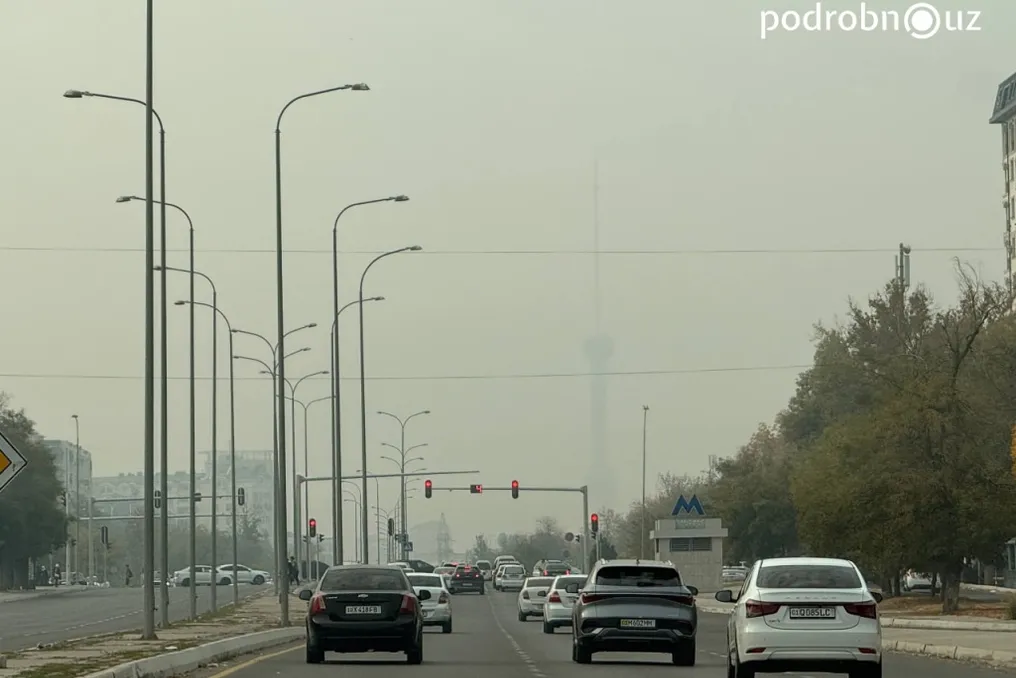
According to data from the National Committee on Ecology and Climate Change, air quality in Tashkent showed some improvement in October compared to the same period last year. Nevertheless, the situation in the capital has not become entirely favorable.

An analysis of data tracked by Podrobno.uz via IQAir shows that in most morning measurements, the air was in the orange or red zones. Furthermore, the average daily pollution index significantly increased during the final week of October.

Official Air Quality Statistics

On November 5, the National Committee on Ecology and Climate Change announced that the average monthly air quality indicator in Tashkent, according to the international AQI, decreased from 138 to 115 relative to October 2025. At the same time, the concentration of fine particulate matter PM2.5 decreased by 19%, and PM10 by 37%.

According to the agency, the number of days when air quality met national 'green' standards increased from three to fourteen. Simultaneously, the number of days with 'orange' and 'red' levels decreased from sixteen to four.

The Committee acknowledged that the observed improvement was uneven. During the first twenty days of the month, indicators were significantly better than the previous year, but from October 25 to 31, air quality began to deteriorate. The agency attributed this decline to lower temperatures, weak winds, temperature inversions, and lack of precipitation.

Morning Air Quality Readings

The editorial team of Podrobno.uz published IQAir data on the state of air in Tashkent throughout October, recording readings at eight in the morning on weekdays and ten in the morning on Saturdays. Out of twenty-seven days when publications were made, only one time did the index meet the 'green' level.

The 'yellow' level was recorded eight times, the 'orange' level ten times, and the 'red' level another eight times. Thus, in eighteen out of twenty-seven cases, the morning air quality was in zones posing a health risk, especially for highly sensitive individuals.

The Most Difficult Period of the Month

Analysis of the average daily IQAir indicators also allowed tracking the situation's dynamics throughout the month. From October 8 to 24, the average AQI remained around 103. However, during the period from October 25 to 31, this indicator rose to approximately 170.

The highest registered reading during this period was 187 AQI, recorded on October 28. On the other days of the last week, the average daily index fluctuated between 156 and 182 AQI.

Conclusions on Pollution Issues

Although the committee's data and IQAir data cannot be directly compared—as the agency provides monthly averages comparing them to the previous October, while Podrobno.uz publishes daily and morning values for parts of the month—the overall picture remains clear. Despite the declared improvement, air quality in Tashkent in October was not consistently favorable, and the situation noticeably worsened at the end of the month.

Residents of the capital continued to be exposed to air that repeatedly fell into unhealthy categories according to IQAir assessments. The increase in 'green' days does not negate the fact that the air pollution problem in Tashkent persists.

Woman saves koala joey from python strangulation in Australia
Read more
noticiasaominuto.com

Woman saves koala joey from python strangulation in Australia

The moment a woman saved a koala joey from being strangled by a python in the Brisbane forest area of Australia was recorded and shared on social media.

The small animal was near another member of the same species while the snake coiled around it, as seen in the gallery above.

In the post made by the woman who rescued the animal, she stated: 'I heard birds in the bushes and saw a koala on the ground, next to what I thought was a dead joey that had fallen from a tree (I saw other babies almost falling too)'.

The user further recounted running to the scene and discovering the snake strangling the joey, 'while the mother, in despair, was trying—unsuccessfully—to push it away.'

She continued writing: 'I took the joey and started untangling the snake from it. I stayed there with the joey pressed against my shoulder, the python in my other hand, my dog snuggling up to me, and the mother koala watching everything, worried. That's when I saw a man on the path observing the scene.'

The woman later explained that the man approached her and moved her dog, Pluto, away from her, which allowed her to reunite the koala joey with its mother. 'I moved the snake several meters away so it wouldn't happen again,' she specified, adding, 'The mother and joey koalas were in pure bliss.'

Popular