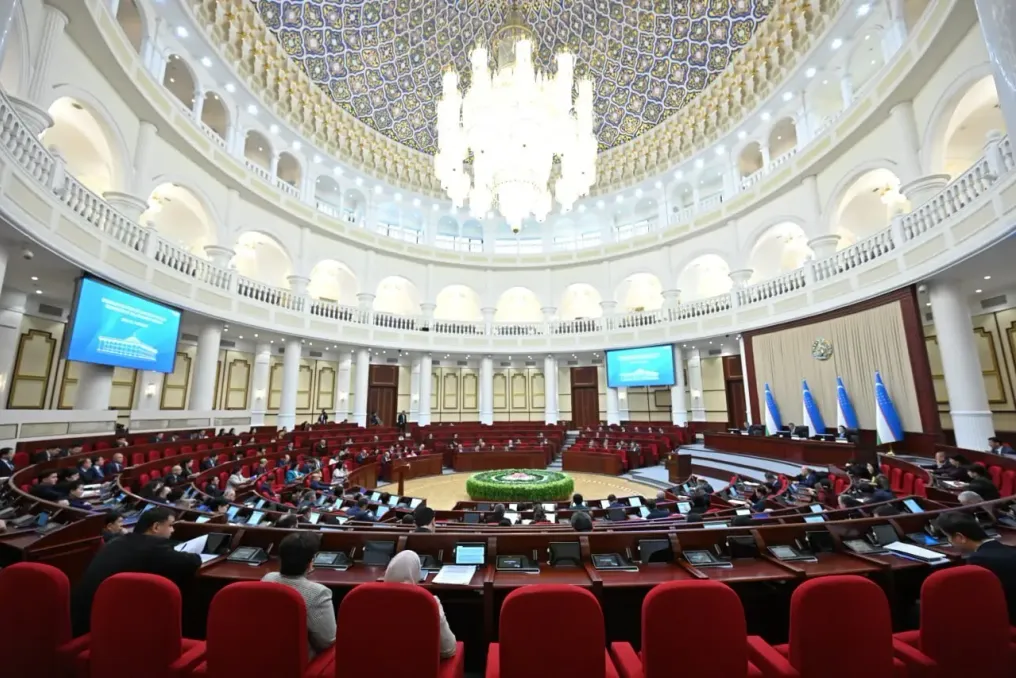
Uzbekistan reviewed the fulfillment of key performance indicators by deputies of the ministers of economy and finance
Read more
UzDaily
uzdaily.uz

Uzbekistan reviewed the fulfillment of key performance indicators by deputies of the ministers of economy and finance

The Committee on Budgetary and Economic Issues of the Oliy Majlis held a meeting to assess the fulfillment of Key Performance Indicators (KPIs) by the deputies of the ministers of economy and finance of Uzbekistan for the period from January to September 2026.

According to a message from the press service of the Ministry of Economy and Finance, the overall performance indicators for the first three quarters amounted to 100%, 99.4%, and 99.9%, respectively.

Ministry Activity Review

At the meeting held on November 5, the committee heard reports on the ministry's work, including the implementation of tasks related to macroeconomic policy, the state budget, and social policy, as well as the target indicators that must be achieved by the end of the current year.

The system for evaluating the work of heads of state bodies and economic associations operates based on Presidential Decree No. UP-49 dated March 13, 2024. The procedure for assessing these heads and their deputies against key indicators was approved by Cabinet of Ministers Resolution No. 463 dated July 31, 2024.

Reporting on KPI fulfillment is recorded quarterly on the electronic platform samaradorlik.uz. Annually, the Cabinet of Ministers approves the list of indicators, roadmaps for achieving them, and regional action programs.

Key Goals for 2026

The main objectives for 2026 include ensuring GDP growth of at least 6.6%, increasing GDP per capita to 52.3 million soms, expanding industrial production by 8.3%, and raising state budget revenues to 18.7% of the projected annual GDP.

Quarterly Results

In the first quarter, the aggregate KPI fulfillment rate for 46 KPIs reached 100%. With a target GDP growth of 6.1%, the actual growth was 8.7%. GDP per capita reached 11.7 million soms against a planned 10.1 million soms. Industrial added value amounted to 10.3 billion US dollars, exceeding the target of 8.4 billion US dollars. Optimization of expenses at large enterprises with state participation reached 5,057 billion soms compared to the planned 4,670 billion soms.

In the second quarter, the overall fulfillment rate for 51 indicators was 99.4%. GDP growth reached 8.5% against a target of 6.3%, and GDP per capita increased to 28 million soms compared to the planned 23.8 million soms. Industrial added value amounted to 22.5 billion US dollars, exceeding the target of 19.3 billion US dollars. The goal of increasing industrial production by 8% was fully realized.

In the third quarter, the aggregate KPI fulfillment rate for 50 KPIs reached 99.9%. GDP growth was 8.3% against a target level of 6.4%, and industrial added value reached 37.4 billion US dollars against a target of 30.5 billion US dollars.

The meeting also emphasized the need for timely and effective achievement of the targets set for the deputy ministers for the remainder of the year, in accordance with the instructions of the President and the Cabinet of Ministers.

The presented materials also included an indicator on financing subsidies, loans, and grants for family members included in the Social Register. With a target of 50 trillion soms, the declared execution amounted to 53.6 billion soms. These figures differ significantly, and their relationship requires further clarification.
Similar stories

Audit Chamber identified financial errors in expenditures totaling 2 trillion soums since the beginning of the year
Read more
podrobno.uz

Audit Chamber identified financial errors in expenditures totaling 2 trillion soums since the beginning of the year

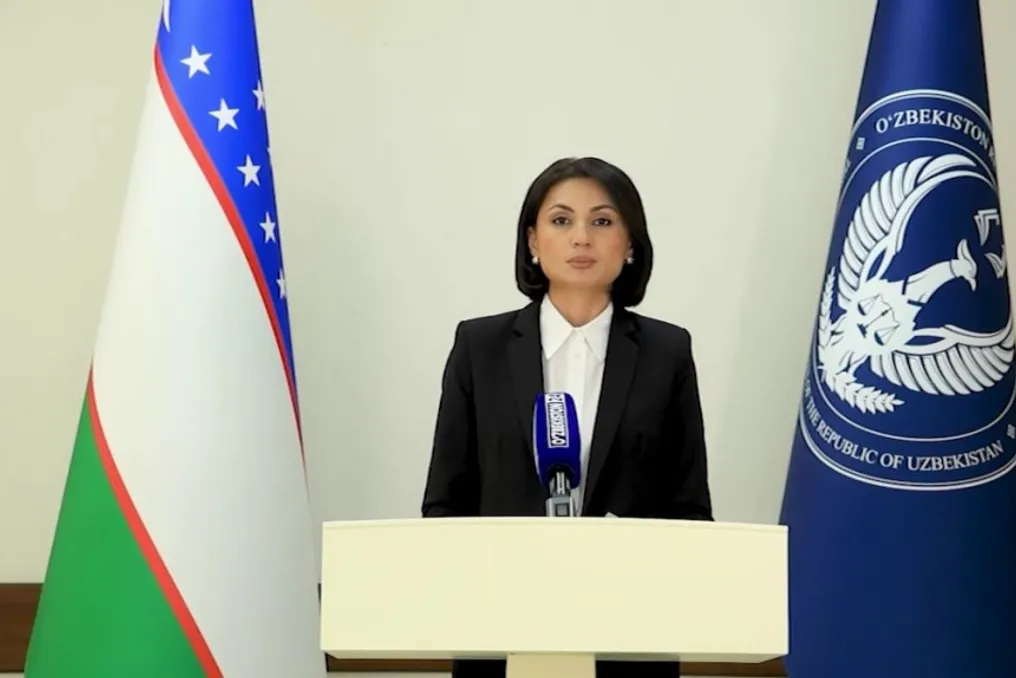
The Press Secretary of the Audit Chamber, Dildor Khashimov, presented the agency's results for the first nine months of 2026 during a briefing. The report covered changes in the state audit system and its significance for ensuring the effectiveness of reforms being implemented in the republic.

During the reporting period, specialists from the Audit Chamber conducted 84 audit activities, including 46 conducted remotely. An external audit of the reports on the execution of the State Budget and the budgets of state target funds for the first half of the current year was also carried out.

As a result of the review, financial shortcomings amounting to 2 trillion soums were discovered in budget expenditures, steps have already been taken to correct these. Additionally, a reduction in expenses of 4.2 trillion soums was noted, and illegal spending of 23.6 billion soums was prevented, while 250.2 billion soums were recovered into the budget.

In terms of revenues, auditors established the existence of additional sources of taxes and mandatory payments amounting to 1.6 trillion soums; of this amount, 656.3 billion soums have already been received into the state treasury. However, violations of legislation were recorded in the public procurement sector totaling 10.2 trillion soums.

Materials worth 4.8 trillion soums have been transferred to law enforcement agencies for legal assessment, and officials associated with violations amounting to 222.3 billion soums must be held administratively responsible. Prescriptions that are mandatory for execution have been sent to the responsible structures, whose implementation is under constant control.

OSCE Parliamentary Assembly reviewed Uzbekistan's labor migration reforms
Read more
uzdaily.uz

OSCE Parliamentary Assembly reviewed Uzbekistan's labor migration reforms

A delegation from the Parliamentary Assembly of the Organization for Security and Co-operation in Europe (OSCE PA), led by Assembly President Joan Pons Sampietro, visited Uzbekistan on October 22 to study the country's reforms in the field of labor mobility.

During the visit, the delegation familiarized itself with the work of the Migration Service and the International Center INTIL for language and professional training. The main focus was on measures aimed at ensuring safe and legal employment abroad, protecting citizens' rights, training qualified personnel for foreign labor markets, and expanding international cooperation.

The Migration Service reported that Uzbekistan's state policy in this area is aimed not only at facilitating employment abroad but also at forming competitive specialists with foreign language skills and qualifications that meet international requirements.

To achieve these goals, the country is improving mechanisms for assessing the needs of foreign employers, providing targeted training for specific vacancies, aligning qualifications with global standards, and organizing employment based on legal labor contracts.

In the first nine months of 2026, over 287,000 vacancies were identified with an average monthly salary of $1,500 in 34 countries, with more than 145,000 of them located in Europe and North America. During the same period, 39,500 Uzbek citizens underwent foreign language training and received professional training focused on skills in demand in the international labor market.

The delegation was also informed about joint projects with Germany, Italy, France, the United Kingdom, Slovakia, Slovenia, and other countries, as well as mechanisms for providing legal and social assistance to Uzbek citizens abroad.

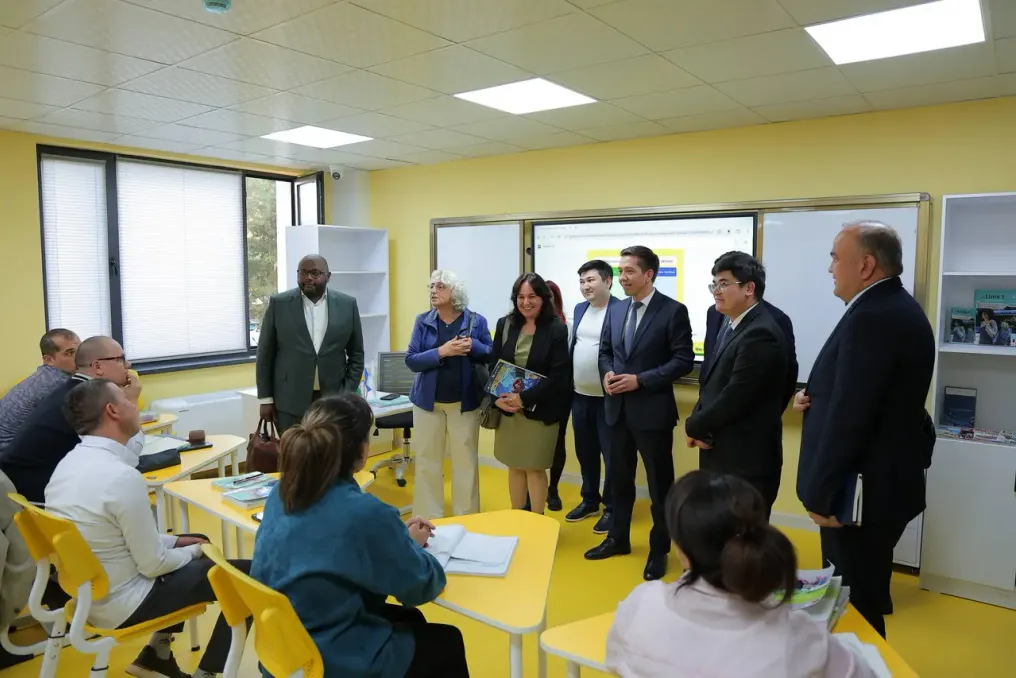
At the INTIL center, OSCE PA representatives toured classrooms, workshops, examination rooms, and student accommodation. The center offers foreign language teaching, vocational training, and international certification, and also organizes interviews with foreign employers.

Issues discussed included aligning vocational education with international standards, recognizing qualifications abroad, the effectiveness of state investments in human capital, and the quality of preparation before citizens depart. Special attention was paid to how knowledge, technology, and professional experience gained abroad can contribute to the further economic development of Uzbekistan.

Gudrun Kugler, Vice-President of OSCE PA and member of the Austrian Parliament, highly praised the organization of the INTIL center, the learning conditions, and the involvement of participants in the educational process. She emphasized that in the context of growing demand for workers in European countries, it is important to develop mutually beneficial cooperation with countries like Uzbekistan, which have young and dynamically growing populations.

Kugler noted: 'In the OSCE, we call this process not 'brain drain,' but 'brain circulation'.' She stressed that working abroad allows people to acquire not only income but also new knowledge, professional skills, and international experience that can subsequently be used to develop their home country.

Kugler also highlighted the importance of language and professional training, including familiarizing potential migrants with the culture and traditions of the destination countries.

Another delegation representative noted Uzbekistan's client-oriented approach to organizing labor migration. He stated that the country's experience could be useful for discussions within OSCE PA, including assessing how countries prepare their citizens for employment in international markets.

The parties discussed the possibility of expanding interaction with European states, monitoring compliance with labor contracts, strengthening social protection for workers, and increasing opportunities for legal employment abroad.

Representatives of the Migration Service emphasized that the reliability of foreign employers, safe working conditions, and guaranteed protection of citizens' rights are key criteria for international partnership. The delegation was also informed about the development of digital services, plans to implement AI-based solutions, improvement of legal aid for citizens abroad, and support for their employment after returning to Uzbekistan.

Following the meeting, the Uzbek side offered to help raise awareness among the wider international parliamentary community about the country's current reforms and its capacity to train qualified workers. This visit served as a platform for exchanging experiences in labor mobility and discussing future cooperation between Uzbekistan and its European partners.

Popular