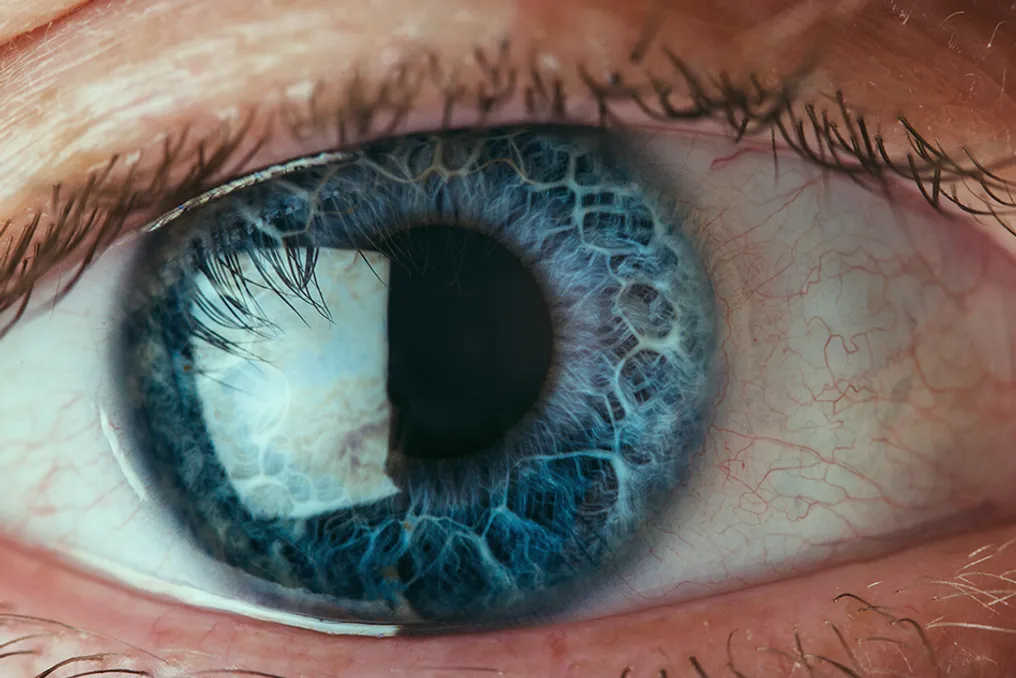
Explanation of what déjà vu is and its scientific causes
Read more
Super Abril
super.abril.com.br

Explanation of what déjà vu is and its scientific causes

The sensation of experiencing something and, simultaneously, having a strong conviction that such an event has occurred before is called déjà vu. This expression, which means 'already seen' in French, was introduced in the 18th century by parapsychologist Émile Boirac to characterize this intriguing phenomenon.

Despite being a very common experience, science does not yet have a complete understanding of déjà vu, although it is known that it is not of a paranormal nature. Throughout history, various approaches have attempted to elucidate this mystery, from discussions in Ancient Greece to varied interpretations.

For the field of parapsychology, déjà vu can be interpreted as a form of premonition, while spiritualists link it to out-of-body experiences during sleep. Sigmund Freud also sought to unravel the enigma, associating the phenomenon with unconscious desires or past fantasies. However, the scientific perspective firmly points to an entirely biological origin.

Scientists agree that the cause of déjà vu lies in an error in information transmission within the brain. The human nervous system is continuously comparing new data with scenarios it can predict. One example of this is when the brain, upon observing two high-speed vehicles, anticipates a possible accident.

These two signals—that of current perception and that of prediction—reach the hippocampus, the brain region responsible for making this comparison, almost simultaneously. Déjà vu occurs when there is a desynchronization between these two stimuli upon reaching the hippocampus. If, due to some modification in neuronal activity, the prediction arrives slightly before the perception of the present moment, the brain begins to interpret what is happening as something that has already been experienced.

This lack of synchronization generates the false impression that the current situation is part of our history. In this brief lapse, the individual may perceive a complete scene, including sounds and smells, and feel absolutely certain of having gone through it before, even believing they can 'anticipate' subsequent details. However, it is a temporary illusion, lasting only a few seconds, until the brain can restore its usual synchronization.


Similar stories

Mercury enters inferior solar conjunction, making it difficult to observe in the sky
Read more
olhardigital.com.br

Mercury enters inferior solar conjunction, making it difficult to observe in the sky

On Wednesday (4th), at 11:20 AM Brasília time, Mercury began a phase termed by astronomers as 'inferior solar conjunction.' During this event, the planet passed between the Earth and the Sun, approaching approximately 0.674 astronomical units (AU), which corresponds to about 100.8 million kilometers.

According to information from the astronomical observation guide In-The-Sky.org, this conjunction occurs once every synodic cycle of the planet, which is the time required for Mercury to return to the same position relative to the Sun when viewed from Earth; this cycle lasts 116 days.

At the moment of the inferior solar conjunction, Mercury was located only 0°22' (zero degrees and twenty-two arcminutes) from the Sun. This extreme proximity causes the bright light of the main star to obscure the planet, which had already made its observation challenging in previous days. This phase represents Mercury's 'disappearance' in the night sky and its subsequent movement to become a morning object in the coming weeks.

The unit 'arcminutes' is used in astronomy to measure very small angles in the firmament. Considering that a full arc has 360°, 60 arcminutes equal one degree, meaning the apparent distance between Mercury and the Sun will be slightly more than one-third of that value.

Simultaneously with reaching inferior conjunction with the Sun, Mercury also reaches perihelion, which is the point closest to Earth, reaching a distance of 0.67 AU from us. This implies that the smallest planet in the Solar System will be only 100.2 million kilometers from Earth.

Regarding when it can be seen again, Marcelo Zurita, president of the Paraíba Astronomy Association (APA), member of the Brazilian Astronomical Society (SAB), technical director of the Brazilian Meteor Observation Network (BRAMON), and columnist for Olhar Digital, informed that Mercury will become visible again on the eastern horizon, shortly before dawn, around November 20th, when it will be further away from the star in the sky.

Additionally, an article published in the scientific journal Icarus mentions the possibility that fragments of Mercury have been found on Earth. Meteorites analyzed by British scientists exhibit characteristics suggesting a probable origin on this planet closest to the Sun. If this hypothesis is confirmed, it would constitute the first record of Mercurian rocks on terrestrial soil, providing a valuable opportunity for study.

How repellent use can help achieve quality sleep
Read more
g1.globo.com

How repellent use can help achieve quality sleep

Irritation caused by a bite can be a factor in disturbance precisely when one wants to rest. The discomfort that might go unnoticed during the day becomes prominent when lying down, and the need to scratch hinders the relaxation process. Thus, a bite that occurs during a walk or while on the balcony can negatively interfere with the night's sleep.

To prevent this situation, preventive measures should be started before going to bed. Protecting the skin during exposure periods helps reduce the number of bites that may cause later discomfort, while preventing insects from entering the room contributes to a more serene night. The ÉX! Repellent line, manufactured by H2O Evolution, offers solutions for both adults and children, presenting options with a dry touch and ease of application.

The discomfort caused by itching can appear sooner

Bites do not always occur inside the room. Time spent on the balcony or an activity in the yard can leave marks that are only noticed when the person lies down. When distractions decrease, it becomes harder to ignore the urge to scratch.

During these exposure moments, ÉX! H2O Adult helps repel mosquitoes and biting flies, also having action against mosquitoes like Aedes aegypti. Its non-oily formulation is advantageous for those who avoid application for fear of feeling sticky on the skin.

ÉX! H2O Adult allows for simple application without leaving the skin oily. It is available in 100 ml and 200 ml packages, and its composition has a pleasant fragrance that provides a feeling of freshness. For those who prefer another format, there is the ÉX! H2O Aerosol of 150 ml, also aimed at adults.

Protection during activities, clean skin for resting

Repellent serves to prevent bites while a person is exposed to insects. To benefit from this protection, it is essential to follow the packaging instructions regarding application areas and the necessary interval for reapplication. After finishing activities, the product must be removed with soap and water, ensuring the skin is clean for bedtime. In this way, the application accompanies the necessary moments, and hygiene completes the preparation for rest.

Prevention for children during play

If a child returns from the yard with signs of bites, it is advisable to include protection in the routine before playing. ÉX! H2O Kids is formulated to be hypoallergenic and non-oily, offering easy application and a fresh scent. This children's version is available in 100 ml and 200 ml containers. Preventing bites during playful activities helps reduce the itching that may bother little ones later, during rest.

The room also needs care

To avoid new bites during sleep, the environment needs to be prepared. Installing screens on windows helps block the entry of mosquitoes without the need to keep all openings closed. Furthermore, using a mosquito net creates a barrier around the bed, provided it is properly fitted and intact. Such measures help reduce contact with mosquitoes while sleeping.

This combined approach makes sense because it acts at different times. The ÉX! line offers protection during exposure, while physical barriers safeguard the sleeping area. With fewer bites to bother and fewer interruptions to locate the intruder, it becomes easier to settle down and rest.

Popular