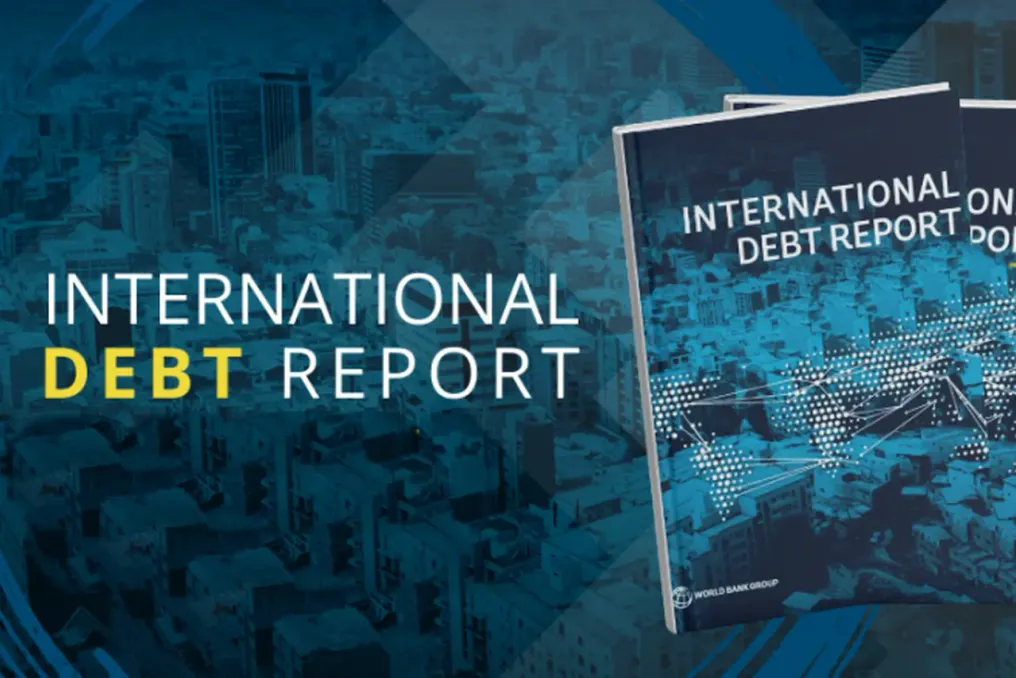
The total external debt of developing countries increased by 5.5% in 2025, reaching a record high of $9.4 trillion. This growth is the fastest since 2021 and is approximately four times higher than the average annual increase recorded between 2022 and 2024. The data is presented in the World Bank's International Debt Report for 2026, which was published on November 5.
The main factor driving the debt increase was the attraction of funds from private creditors. The issuance of bonds by state structures in developing countries grew by almost 35%, reaching $251 billion—the highest level in five years, indicating that many governments have returned to international capital markets.
Nevertheless, the pace of recovery in access to financing outpaced the improvement in borrowing conditions. The most vulnerable states continue to face particularly high debt servicing costs. The external debt of countries eligible for concessional financing from the International Development Association (IDA) increased by 8.1% to $1.3 trillion.
In 2025, these countries paid an average of 8.2% annually on new loans from private creditors, the highest figure since 1989. Average interest rates on new bond issues reached 9.4%. The gap between the cost of borrowing from official and private creditors widened from 3.4 percentage points in 2016 to 5.5 percentage points in 2025.
In comparison, countries that can only rely on financing from the International Bank for Reconstruction and Development (IBRD) placed new bonds at an average interest rate of 5.5%, which is lower than 5.8% the previous year.
Debt servicing pressure rises amid high global rates
Pressure related to debt servicing continues to intensify due to elevated global interest rates. In 2025, low- and middle-income countries paid $1.4 trillion in principal and interest, an increase of 1.9% from the previous year. This marks the fifth consecutive year of rising debt service payments.
Payments to bondholders reached $363 billion. This was partly due to debt buybacks and early repayments financed by the issuance of new bonds.
Between 2022 and 2025, developing countries paid $436 billion more for debt servicing than they received in new financing. However, this trend reversed in 2025: the net outflow from long-term debt flows, which reached $118 billion in 2024, turned into a net inflow of $45 billion.
Currency exchange rate fluctuations also influenced the dynamics of external debt. More than a quarter of the increase in public and government-guaranteed debt, amounting to $303 billion, is attributed to the weakening of the US dollar, which raised the dollar equivalent of obligations denominated in other currencies.
Haishan Fu, Chief Statistician of the World Bank Group and Director of Development Data, noted that the return of private lending opens up additional opportunities for developing countries but simultaneously increases borrowing volumes and debt servicing costs. Consequently, many governments have fewer resources for long-term investments in development and social sectors.
The World Bank also stated that demand for international bond financing remained high at the beginning of 2026, despite high borrowing costs. By mid-August, more than 10 countries had already exceeded their total bond issuance for 2025, with some governments returning to international capital markets.